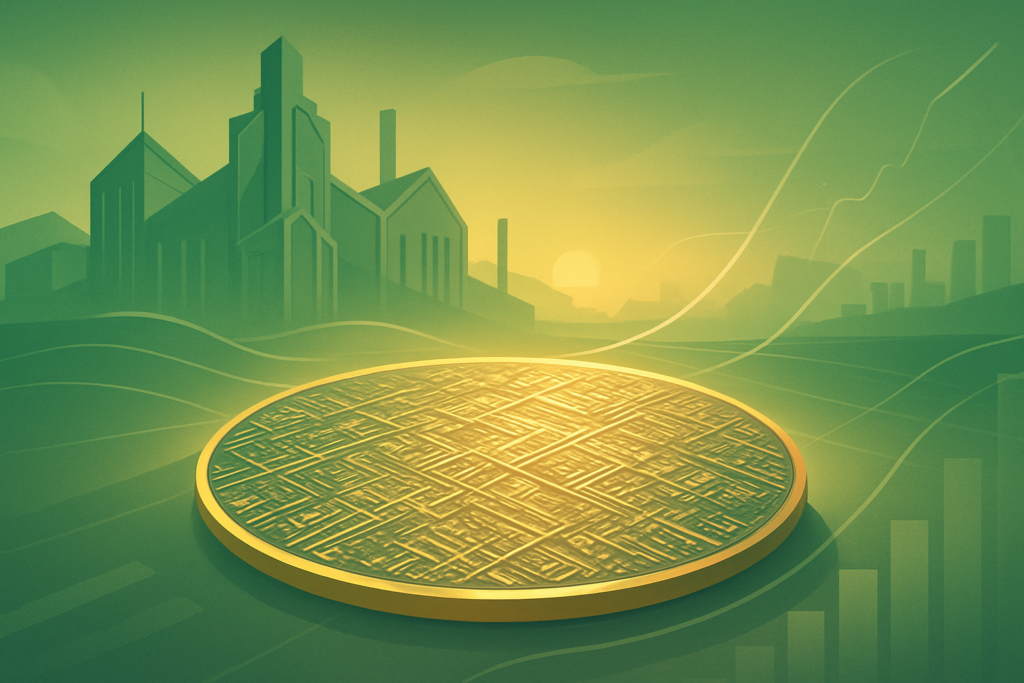
As of March 5, 2026, Intel Corporation (Nasdaq: INTC) stands at the most critical juncture in its 58-year history. After a tumultuous period characterized by manufacturing delays, leadership changes, and a stinging loss of market dominance to NVIDIA (Nasdaq: NVDA) and AMD (Nasdaq: AMD), the Silicon Valley pioneer is attempting a "Great Pivot." Under the new leadership of CEO Lip-Bu Tan, who took the helm in early 2025, Intel is no longer just a chipmaker; it is attempting to become the Western world’s premier foundry while simultaneously defending its remaining strongholds in the PC and Data Center markets. With its flagship 18A process node finally in high-volume production, the company is fighting to prove that it can once again lead the world in transistor density and power efficiency.
Historical Background
Founded in 1968 by Robert Noyce and Gordon Moore, Intel was the architect of the personal computing revolution. Its x86 architecture became the global standard, and the "Intel Inside" campaign of the 1990s made it a household name. However, the 2010s saw the company stumble significantly. Prolonged delays in transitioning to 10nm and 7nm manufacturing allowed Taiwan Semiconductor Manufacturing Co. (NYSE: TSM) and Samsung to pull ahead. This manufacturing gap enabled AMD to seize massive market share in CPUs, while NVIDIA capitalized on the GPU-driven AI explosion—a wave Intel largely missed. Former CEO Pat Gelsinger’s "IDM 2.0" strategy, launched in 2021, laid the groundwork for the current transition by opening Intel's factories to external customers, a move being accelerated and disciplined under the current Tan administration.
Business Model
Intel’s business model in 2026 is bifurcated into two distinct but interdependent units:
- Intel Products: This includes the Client Computing Group (CCG), which focuses on PC and laptop processors like the new "Panther Lake" series, and the Data Center and AI (DCAI) group.
- Intel Foundry: Formerly IFS, this segment operates as a semi-independent commercial foundry. It aims to manufacture chips not only for Intel but for rivals and tech giants like Microsoft (Nasdaq: MSFT) and Amazon (Nasdaq: AMZN).
- Strategic Partnerships: A notable 2026 revenue stream includes the co-development of x86 RTX SoCs with NVIDIA, combining Intel's CPU expertise with NVIDIA’s graphics and AI capabilities.
Stock Performance Overview
The journey for INTC shareholders has been a volatile "U-shaped" recovery.
- 1-Year Performance: The stock saw a spectacular 84% rally in 2025, rebounding from 2024 lows of $17.66 to reach approximately $47 by early 2026.
- 5-Year Performance: Despite the 2025 rally, the stock remains down nearly 20% over a 5-year horizon, reflecting the massive value destruction during the 2021-2023 manufacturing crisis.
- 10-Year Performance: Intel has significantly underperformed the PHLX Semiconductor Index (SOX), trailing peers like NVIDIA and Broadcom (Nasdaq: AVGO) by triple-digit percentages.
Financial Performance
Intel’s FY 2025 results were a study in transition. Total revenue remained flat at $52.9 billion, but Q4 2025 showed signs of life with $13.7 billion in revenue.
- Margins: Gross margins remain pressured, hovering around 40-42% as the company absorbs the massive capital expenditures (CapEx) of the 18A ramp.
- Q1 2026 Guidance: In January 2026, management issued conservative guidance, forecasting a breakeven non-GAAP EPS. This "trough" guidance led to a recent 10% pullback in the stock as investors digest the costs of scaling new factories.
- Liquidity: Intel bolstered its balance sheet in late 2025 with a $5 billion private stock sale to NVIDIA and a $7 billion investment from SoftBank, providing the "dry powder" needed to survive the 18A rollout.
Leadership and Management
The "Lip-Bu Tan Era" began in early 2025 following Pat Gelsinger’s retirement. Tan, the former CEO of Cadence Design Systems, has brought a "judicious and disciplined" approach to Intel’s CapEx. Unlike the "moonshot" style of his predecessor, Tan has focused on pruning non-core businesses and slowing down "mega-projects" like the Ohio Fab (now delayed to 2030) to align with actual cash flows. Alongside Tan, CFO David Zinsner and newly elected Board Chair Dr. Craig H. Barratt are credited with restoring institutional investor confidence through a more transparent, milestone-based reporting style.
Products, Services, and Innovations
Intel’s technological future hinges on the Intel 18A node.
- 18A & Panther Lake: 18A is the first node to utilize PowerVia (backside power delivery) and RibbonFET (gate-all-around) technology at scale. "Panther Lake," Intel’s 2026 flagship PC chip, is the first volume product on this node, showing promising performance-per-watt gains.
- AI Accelerators: The Gaudi 3 and upcoming "Jaguar Shores" (expected late 2026) represent Intel's attempt to offer a "cost-effective" alternative to NVIDIA’s Blackwell and Rubin architectures.
- Foundry Wins: Intel has secured 18A commitments from Microsoft for custom AI silicon and Amazon for custom Xeon 6 variants.
Competitive Landscape
- The AMD Threat: AMD’s Zen 6 ("Venice") architecture remains a formidable opponent in the data center, leveraging TSMC’s mature N2 process.
- The NVIDIA Dynamic: While a competitor in AI, NVIDIA is now also a strategic investor and partner. Their $5 billion stake in Intel acts as a "floor" for the stock and signals NVIDIA's desire for a viable US-based manufacturing alternative to TSMC.
- ARM Intrusion: Qualcomm (Nasdaq: QCOM) and Apple (Nasdaq: AAPL) continue to push ARM-based architectures into the laptop market, forcing Intel to innovate aggressively with "AI PCs" to retain its OEM partners.
Industry and Market Trends
The semiconductor industry in 2026 is moving toward "Hybrid AI"—the idea that AI workloads will be split between massive data centers and local "Edge" devices (AI PCs and phones). Intel is heavily positioned in this trend, banking on the idea that every laptop sold in 2026 will require an integrated NPU (Neural Processing Unit), a field where Intel’s "Lunar Lake" and "Panther Lake" currently lead in software compatibility.
Risks and Challenges
- Execution Risk: If 18A yields (currently estimated at 65-75%) do not reach 80%+ by 2027, the Foundry business will struggle to be profitable.
- Market Share Erosion: The persistent shift toward ARM-based chips in the mobile and laptop space remains a structural threat to Intel’s high-margin CCG segment.
- Capital Intensity: Intel’s "IDM 2.0" is incredibly expensive. Any further delays in CHIPS Act disbursements or customer wins could lead to a liquidity crunch.
Opportunities and Catalysts
- The Apple "Whale": Rumors persist that Apple is evaluating Intel’s 18A-P (Performance) node for 2027/2028 iPad or MacBook production. A formal announcement would be a re-rating event for the stock.
- Sovereign AI: As nations seek "digital sovereignty," Intel’s status as the only US-based firm with leading-edge manufacturing makes it the natural partner for government-funded compute projects.
- Jaguar Shores Launch: Success of this next-gen AI GPU in late 2026 could finally give Intel a seat at the high-end AI table.
Investor Sentiment and Analyst Coverage
Wall Street remains divided. Many analysts maintain a "Hold" or "Sector Perform" rating, citing the high CapEx and weak Q1 2026 guidance. However, "smart money" has been moving in; the NVIDIA investment and SoftBank’s entry have turned the tide among hedge funds who view Intel as a "long-term manufacturing moat" play. Retail sentiment is cautiously optimistic, buoyed by the 2025 price action but wary of "another false dawn."
Regulatory, Policy, and Geopolitical Factors
Intel is the primary beneficiary of the US CHIPS and Science Act. In late 2024, the Department of Commerce finalized a $7.86 billion direct funding award. However, the 2026 landscape is complicated by ongoing trade tensions with China, which remains a vital market for Intel’s legacy CPUs. The delay of the "Ohio One" fab to 2030 highlights the difficulty of reshoring manufacturing in a high-interest-rate environment.
Conclusion
Intel in early 2026 is a company that has survived its near-death experience but has not yet fully recovered. The stock's recent decline reflects the reality that turning around a semiconductor giant is a marathon, not a sprint. While the 18A node is a technical triumph, the financial payoff is still years away. For investors, Intel represents a high-conviction bet on the future of Western manufacturing and the "AI PC" cycle. The key milestones to watch over the next 12 months will be the 18A yield improvements and the announcement of a third "anchor" foundry customer.
This content is intended for informational purposes only and is not financial advice.