Introduction
A PVC valve can often be cleaned when poor flow or sealing is caused by scale, biofilm, or other removable buildup rather than material damage. The key is knowing which symptoms point to reversible fouling and which indicate wear, cracking, deformation, or chemical attack that cleaning will not fix. This article explains how to tell the difference, what operating conditions make cleaning practical, and when replacement is the safer choice for system performance and reliability. It also outlines the basic risks of trying to restore a valve that has already lost its original shape or strength, helping you make a faster maintenance decision with less guesswork.
Can a PVC valve be cleaned instead of replaced
Facility managers and process engineers frequently face a critical maintenance decision when fluid systems experience flow restrictions or poor sealing: whether to clean or replace a PVC valve. Polyvinyl chloride (PVC) components are highly valued for their exceptional chemical resistance and cost-effectiveness, and they are commonly deployed in water treatment, chemical processing, and agricultural irrigation.
Standard Schedule 80 PVC valves are engineered to handle pressures up to 150 PSI at a baseline temperature of 73°F (23°C). When performance degrades, operators must determine if the loss of efficiency is due to temporary fouling or permanent structural degradation, which directly impacts the maintenance approach and overall system reliability.
Failure modes that allow cleaning
Reversible fouling represents the primary scenario where cleaning is highly effective. Accumulations of calcium carbonate scale, biological growth such as algae, or non-abrasive particulate settling can restrict flow passages without damaging the underlying polymer structure. In industrial applications, if an installed valve exhibits a flow coefficient (Cv) reduction of 15% to 20% due to soft blockages, mechanical or chemical cleaning can fully restore its original hydrodynamic performance. Conversely, failures stemming from chemical attack or abrasive wear alter the internal geometry and are not reversible through maintenance.
Operating conditions that make cleaning viable
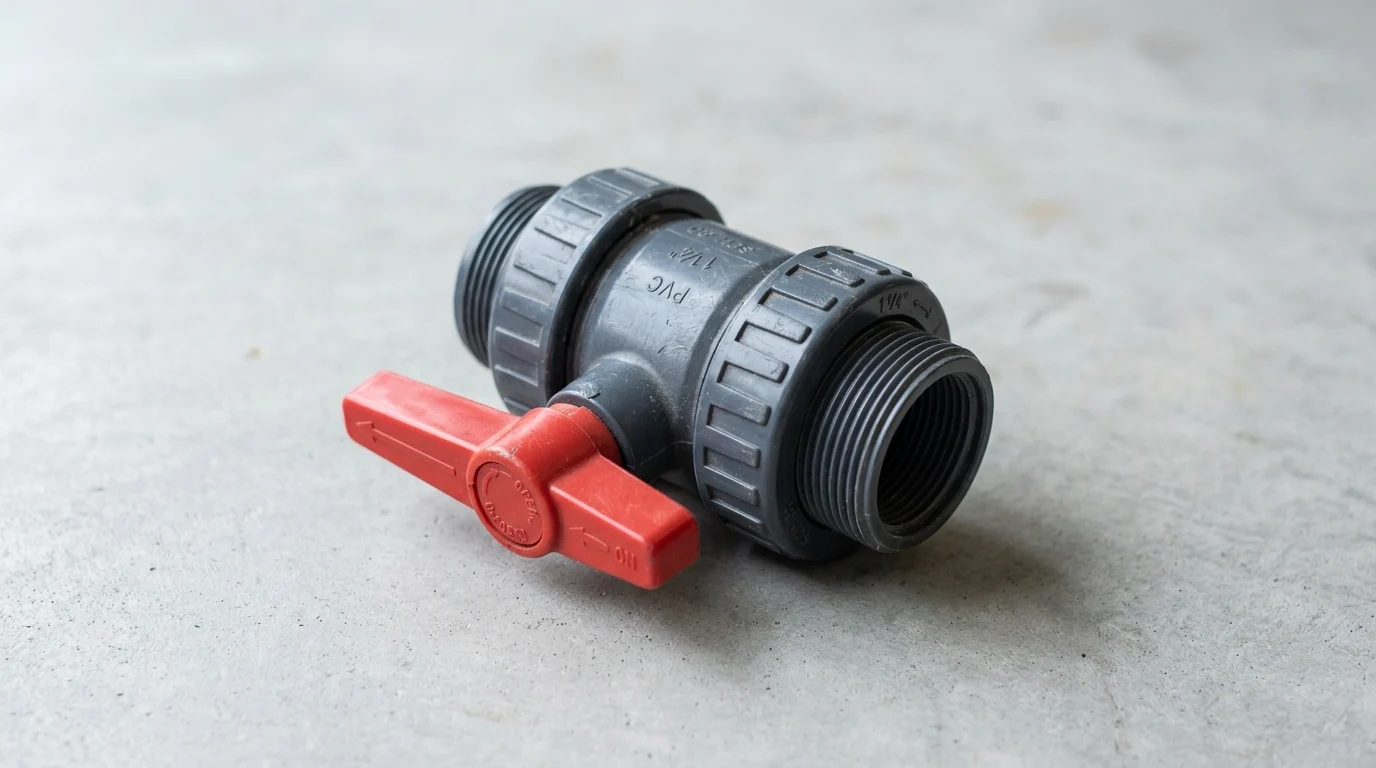
The viability of cleaning heavily depends on the operational environment and the specific valve design. True union ball valves are ideal candidates for cleaning because their modular design allows technicians to remove the valve body from the pipeline without cutting the pipe. Cleaning is also highly viable for systems operating strictly within the thermal limits of standard PVC, specifically below the 140°F (60°C) maximum threshold. Systems operating near or above this thermal limit may induce microscopic polymer warping, rendering cleaning ineffective, as the geometric tolerances required for a bubble-tight seal have been permanently altered.
How should a PVC valve be inspected and cleaned
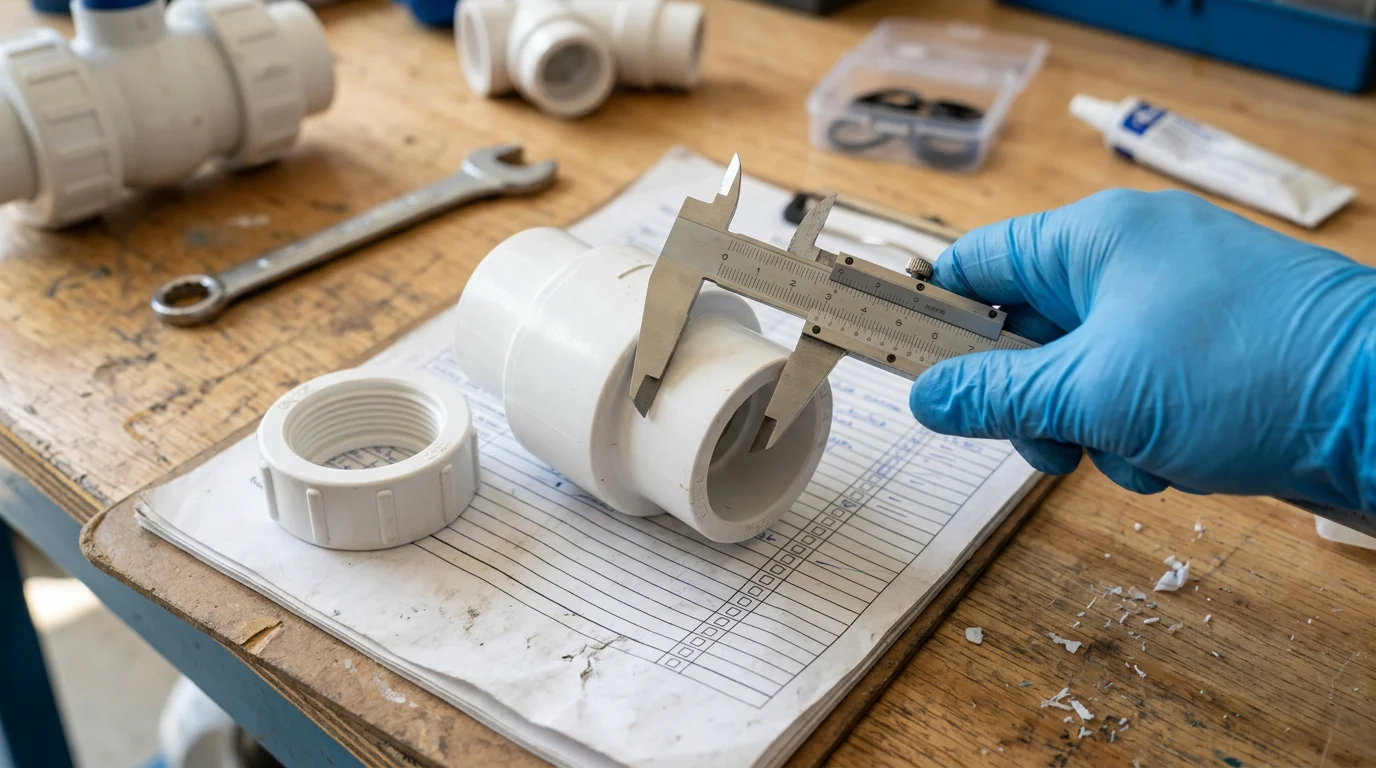
Executing a proper cleaning protocol requires rigorous adherence to industrial maintenance standards to ensure both personnel safety and component integrity. Before initiating any maintenance on a thermoplastic piping system, the line must be completely depressurized, drained, and secured using strict lockout/tagout (LOTO) procedures to prevent accidental fluid release.
Because PVC is a rigid thermoplastic, it requires specific handling during extraction and disassembly. Technicians must avoid applying excessive torsional stress to the adjacent piping, which could induce micro-fractures in the solvent-welded joints or threaded connections.
What to inspect before cleaning
Once the valve is removed from the pipeline, a comprehensive visual and tactile inspection dictates whether cleaning should proceed. Technicians must examine the internal PTFE (Teflon) seats and elastomeric O-rings (typically EPDM or FPM/Viton) for signs of compression set, chemical swelling, or extrusion. The surface of the ball, gate, or diaphragm must be evaluated for abrasive scoring. As a general industry threshold, if surface scoring depth exceeds 0.1 mm, the internal geometries are compromised, and cleaning will fail to restore a reliable seal.
Safe PVC valve cleaning steps
The cleaning process must utilize agents that dissolve the foulant without attacking the polyvinyl chloride matrix. Harsh organic solvents, such as acetone, methyl ethyl ketone (MEK), or toluene, must be strictly avoided, as they will rapidly dissolve and compromise PVC. For mineral scaling, soaking the disassembled components in a mild acidic solution—such as 5% to 10% acetic acid or citric acid—for 30 to 60 minutes is highly effective. Mechanical agitation should be restricted to soft nylon brushes; wire brushes will permanently scar the polymer surface.
During reassembly, O-rings should be lightly lubricated with a silicone-based grease, avoiding petroleum-based lubricants, which degrade EPDM elastomers. Finally, union nuts should be tightened to the manufacturer’s specifications—typically hand-tight plus a quarter turn, or approximately 15 to 25 ft-lbs of torque depending on the valve diameter—to prevent thread distortion.
When is replacement the better choice
While cleaning can extend the operational lifecycle of thermoplastic components, replacement often emerges as the superior strategic choice when factoring in the total cost of ownership. The decision matrix must balance direct component costs against labor expenditures and the financial impact of prolonged system downtime.
In many commercial and industrial scenarios, the low capital cost of standard PVC components shifts the economic advantage toward immediate replacement, particularly in mission-critical fluid handling pathways where reliability is paramount.
Cost and downtime: cleaning vs replacement
A standard 2-inch Schedule 80 PVC true union ball valve typically carries a procurement cost ranging from $25 to $60. Conversely, industrial maintenance labor rates frequently span $75 to $150 per hour. If disassembling, soaking, scrubbing, and re-testing a valve requires more than 45 minutes, the labor expenditure immediately eclipses the cost of a new unit.
| Maintenance Strategy | Upfront Component Cost | Labor Time Requirement | Risk of Post-Maintenance Leak | Ideal Application Scenario |
|---|---|---|---|---|
| Routine Cleaning | $0 (existing valve) | 45 – 90 minutes | Moderate to High | High-cost specialty or actuated valves |
| Full Replacement | $25 – $60 (typical 2-inch) | 10 – 15 minutes | Low (factory tested) | Standard manual valves; high labor-rate environments |
Decision criteria for replacement
Beyond simple economics, irreversible physical damage dictates mandatory replacement. Ultraviolet (UV) degradation, characterized by surface chalking and discoloration, causes embrittlement that cleaning cannot resolve. Stripped union threads, signs of severe cavitation damage, or chemical leaching also mandate immediate disposal of the unit.
Furthermore, if a cleaned valve is subjected to a post-maintenance hydrostatic bench test and fails to hold 1.5 times its maximum operating pressure without weeping, it is unfit for redeployment. Ultimately, lifecycle management requires operators to view standard manual PVC valves as consumable assets in high-wear applications, reserving labor-intensive cleaning protocols for high-value automated or specialty thermoplastic valves.
Key Takeaways
- The most important conclusions and rationale for PVC valve
- Specs, compliance, and risk checks worth validating before you commit
- Practical next steps and caveats readers can apply immediately
Frequently Asked QuestionsCan a PVC valve be cleaned instead of replaced?
Yes, if the issue is soft fouling like scale, algae, or sediment and the valve body, seats, and seals are undamaged.
When should I replace a PVC valve instead of cleaning it?
Replace it if you find chemical attack, warping, cracked parts, swollen O-rings, or scoring deeper than about 0.1 mm.
Which PVC valve style is easiest to clean?
A true union ball valve is usually easiest because it can be removed from the line without cutting pipe.
What cleaner is safe for a PVC valve?
Use a mild 5%–10% acetic or citric acid soak for mineral scale and a soft nylon brush. Avoid acetone, MEK, toluene, and wire brushes.
What should I do before taking apart a PVC valve?
Fully depressurize and drain the line, apply lockout/tagout, and remove the valve without twisting adjacent PVC piping.
Media Contact
Company Name: ZHEJIANG DONSEN ENVIRONMENTAL TECHNOLOGY CO.LTD
Email: Send Email
Country: China
Website: https://www.donsen.com/