As of today, March 25, 2026, the landscape of Human Capital Management (HCM) has undergone a seismic shift, driven by rapid artificial intelligence integration and high-stakes consolidation. At the center of this transformation stands Paychex, Inc. (NasdaqGS: PAYX), a stalwart of the American payroll industry that has recently reinvented itself.
Long perceived as a "steady-eddie" dividend play catering primarily to small businesses, Paychex has spent the last 24 months aggressively pivoting toward the mid-market and enterprise segments. The catalyst for this shift was the landmark 2025 acquisition of Paycor, which effectively fused Paychex’s massive scale and service infrastructure with a modern, cloud-native technology stack. Today, Paychex is no longer just a payroll processor; it is a technology-first HCM powerhouse grappling with a complex macroeconomic environment where falling interest rates are challenging its historical "float" revenue model even as AI offers unprecedented margin expansion opportunities.
Historical Background
The Paychex story is a classic American entrepreneurial saga. Founded in 1971 by B. Thomas Golisano with just $3,000 and a vision to bring professional payroll services to the neglected small-business sector, the company began in Rochester, New York. Golisano’s insight was simple but profound: small businesses faced the same regulatory complexities as large corporations but lacked the resources to manage them.
Paychex went public in 1983, and for the next four decades, it became a compounding machine. The company’s growth was defined by steady geographical expansion and a series of strategic pivots. In the 1990s, it transitioned from paper checks to digital processing; in the 2010s, it embraced the Professional Employer Organization (PEO) model, allowing small businesses to pool their employees to gain the bargaining power of a large corporation for health insurance and benefits. The 2018 acquisition of Oasis Outsourcing solidified its position as a top-tier PEO provider, setting the stage for the current era of technology-led growth under the leadership of John Gibson.
Business Model
Paychex operates through a high-margin, recurring revenue model split into two primary segments:
- Management Solutions (approx. 75% of revenue): This core segment encompasses payroll processing, tax filing, and HR technology. Following the integration of the Paycor platform, this segment now serves a broader range of clients, from "mom-and-pop" shops to mid-market firms with thousands of employees. Revenue is generated through per-employee-per-month (PEPM) fees and administrative charges.
- PEO and Insurance Solutions (approx. 25% of revenue): In this segment, Paychex acts as a co-employer for its clients’ workers. This allows Paychex to provide comprehensive benefits packages, workers' compensation insurance, and 401(k) administration.
A critical, though often overlooked, component of the Paychex business model is Interest on Funds Held for Clients (The Float). Paychex collects tax and payroll funds from clients several days before they are due to employees or the government. During this window, Paychex invests these billions of dollars in short-term, investment-grade securities, keeping the interest for itself.
Stock Performance Overview
Paychex has historically been a darling of income-oriented investors, though the last year has been a period of consolidation and adjustment.
- 1-Year Performance (-20%): Over the past 12 months, the stock has faced headwinds. The heavy capital expenditure required for the Paycor integration and the market's anticipation of Federal Reserve rate cuts—which directly impact "float" revenue—led to a rotation out of the stock.
- 5-Year Performance (+41%): Despite the recent dip, the five-year trajectory remains positive, reflecting the company’s resilience through the post-pandemic labor shortage and its successful digital transformation.
- 10-Year Performance (+220%): On a decade-long horizon, Paychex has been an exceptional performer. Including dividends, the total return has outperformed many traditional "Big Tech" peers, demonstrating the power of a dominant market position and disciplined capital management.
Financial Performance
The fiscal year 2025 (ending May 31, 2025) was a year of transition. Paychex reported total revenue of approximately $5.6 billion, a 6% increase year-over-year. While GAAP diluted EPS saw a slight 2% decline to $4.58 due to one-time acquisition costs, Adjusted Diluted EPS grew 6% to $4.98.
Entering the second half of fiscal 2026, the outlook is significantly more aggressive. Management has guided for total revenue growth of 16.5% to 18.5%. This spike is attributed to the full-year contribution of the Paycor acquisition and the cross-selling of Paychex’s insurance products to Paycor’s existing client base. Operating margins remain robust at over 40%, although they are currently under slight pressure as the company scales its AI infrastructure.
Leadership and Management
John B. Gibson, Jr. has served as President and CEO since October 2022. Gibson’s tenure has been marked by a move away from the traditional "service-first" model toward an "innovation-first" strategy. He is supported by Bob Schrader, a CFO known for conservative financial forecasting and a focus on maintaining Paychex’s "Dividend Aristocrat" trajectory.
The leadership team's governance reputation is high, characterized by transparency and a "slow and steady" approach to M&A. However, the Paycor deal was a departure from this norm, signaling a more aggressive stance in the fight for the mid-market. The board remains heavily weighted toward financial and operational expertise, with a growing focus on cybersecurity and data privacy experts.
Products, Services, and Innovations
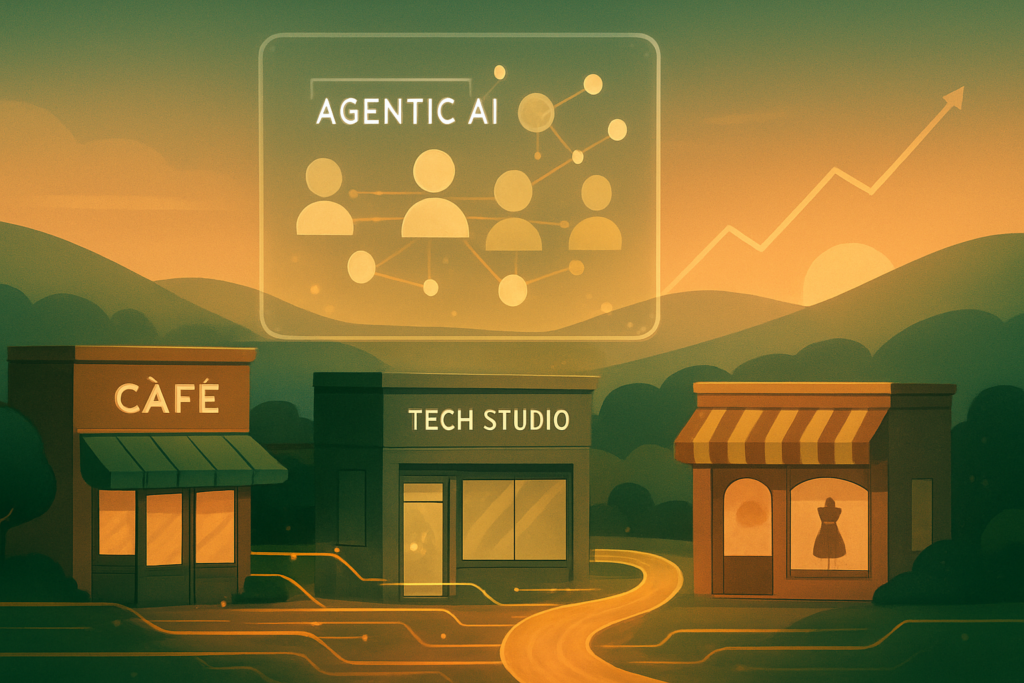
The crown jewel of Paychex’s current offering is Paychex Flex, an all-in-one HCM platform. In late 2025, the company introduced "Agentic AI" modules within Flex. These AI agents can now handle complex payroll inquiries, adjust tax withholdings, and manage shift scheduling via natural language interfaces with minimal human intervention.
Key innovations include:
- Predictive Analytics: Using data from over 700,000 clients to help businesses predict employee turnover before it happens.
- Compliance-as-a-Service: A generative AI tool that monitors local, state, and federal labor law changes in real-time, automatically updating client handbooks and payroll rules.
- Paycor Synergy: The integration of Paycor’s API-first architecture has allowed Paychex to offer much deeper integrations with third-party software like Slack, Microsoft Teams, and specialized ERP systems.
Competitive Landscape
The HCM market is a battle of the giants.
- ADP (Nasdaq: ADP): The primary competitor. While ADP has a massive global footprint and dominates the Fortune 500 space, Paychex has traditionally won on personalized service for smaller firms. The gap between the two is narrowing as Paychex moves up-market.
- Paycom (NYSE: PAYC): A formidable tech-forward rival. Paycom’s "Beti" automated payroll tool set the standard for employee-driven payroll, a standard Paychex is now matching with its new AI suite.
- Paylocity (Nasdaq: PCTY): Paylocity remains a favorite for younger, high-growth tech companies. Paychex’s acquisition of Paycor was a direct defensive move to prevent Paylocity from capturing more of the mid-market share.
Industry and Market Trends
Three macro trends are currently shaping the industry:
- The AI Efficiency Frontier: As payroll becomes more automated, the "service" element is shifting from data entry to strategic consulting.
- Labor Complexity: With remote and hybrid work becoming permanent, companies are dealing with "nexus" issues—employees working in multiple states with different tax and labor laws. This complexity makes third-party providers like Paychex more essential.
- Monetary Policy Pivot: After years of high rates, the Federal Reserve’s move toward a lower-rate environment is a double-edged sword: it encourages business expansion (more hiring) but shrinks the interest earned on the float.
Risks and Challenges
- Float Revenue Sensitivity: A 100-basis-point drop in interest rates can impact Paychex’s operating income by roughly 4%. If rates fall faster than expected in 2026, it could lead to earnings misses.
- Integration Risk: Merging the Paycor and Paychex technology stacks is a multi-year project. Any significant technical glitches could lead to client churn in the highly competitive mid-market.
- Cybersecurity: As a repository for millions of Social Security numbers and bank accounts, Paychex is a prime target for state-sponsored and criminal cyberattacks.
Opportunities and Catalysts
- Margin Expansion through AI: By automating the 24/7 service desk with AI agents, Paychex can significantly reduce its head-count-to-client ratio, driving higher long-term margins.
- PEO Expansion: The PEO market is still under-penetrated. As healthcare costs continue to rise, more small businesses are expected to join Paychex’s PEO to leverage its scale.
- International Potential: While primarily a domestic player, the modern Paycor stack provides a scalable foundation for potential European or Latin American expansion.
Investor Sentiment and Analyst Coverage
Wall Street currently views Paychex as a "Show Me" story. Analysts are generally "Hold" or "Sector Perform" rated, waiting to see if the Paycor acquisition yields the promised synergies. Institutional ownership remains high, with giants like Vanguard and BlackRock holding significant stakes, attracted by the company’s consistent dividend growth and low beta. Retail sentiment is mixed, with some investors concerned about the short-term stock price decline and others viewing it as a generational buying opportunity for a high-quality income asset.
Regulatory, Policy, and Geopolitical Factors
The regulatory environment remains a tailwind for Paychex. The expiration of the Employee Retention Tax Credit (ERTC) removed a temporary revenue boost but also simplified the compliance landscape. New Department of Labor rules regarding overtime and independent contractor classification continue to drive businesses toward the safety of professional HCM providers. Geopolitically, Paychex is largely insulated as its operations are almost entirely based in the United States, making it a "safe haven" during periods of global trade tension.
Conclusion
Paychex is a company in the midst of a sophisticated metamorphosis. It is successfully navigating the transition from a traditional service-led business to a modern AI-powered technology platform. While investors must weigh the short-term impact of falling interest rates on float revenue and the execution risks of the Paycor integration, the underlying fundamentals—high recurring revenue, a dominant market position, and a culture of fiscal discipline—remain intact. For the patient investor, Paychex represents a bet on the enduring complexity of the American labor market and the company's ability to automate the solution to that complexity.
This content is intended for informational purposes only and is not financial advice.