
Why the Future of Business Will Depend on Organizations That Balance Artificial Intelligence with Human Intelligence
BENGALURU, IN / ACCESS Newswire / May 11, 2026 / Bengaluru, Karnataka, India, May 11th, 2026- Dr. Sushant Rajput's professional journey does not fit neatly into a conventional corporate narrative.
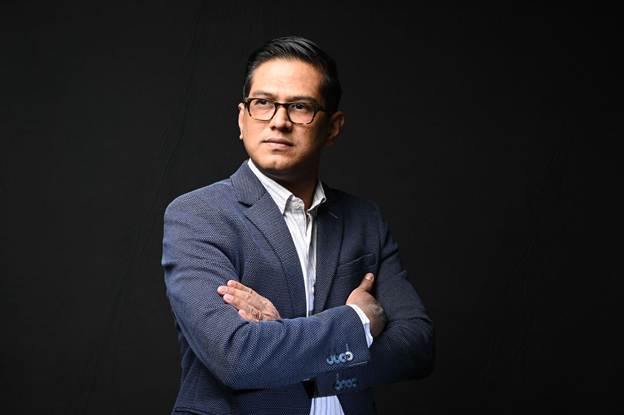
Over the years, his career has evolved across multiple worlds from computer science and marketing to capital markets, business transformation, corporate leadership, mentoring and writing. Alongside his corporate leadership journey, Rajput has also emerged as an author and thought leader whose work increasingly explores themes such as overthinking, emotional resilience, human adaptability, consistency and the psychological realities of modern ambition.
What makes his perspective particularly relevant in today's rapidly evolving business environment is the intersection from which he observes change.
Having spent years inside high-performance corporate ecosystems while simultaneously engaging with students, young professionals, and leadership communities through writing and speaking, Rajput has developed a growing interest in one central question:
As artificial intelligence reshapes industries and automates workflows, what will continue to make human beings valuable?
According to Rajput, the answer may have less to do with technical superiority alone and far more to do with qualities successful organisations historically believed in, like emotional intelligence, adaptability, communication, resilience, trust, and the ability to remain psychologically grounded in environments defined by constant change.
At a time when businesses across the world are aggressively accelerating AI adoption, Rajput believes the conversation around the future of work is becoming incomplete without discussing the future of human capability alongside it.
"The AI economy will not simply reward technological intelligence," Rajput says. "It will increasingly reward human intelligence, the ability to think critically, communicate meaningfully, adapt continuously and lead people through uncertainty."
The AI Acceleration Era
Businesses Are Becoming Faster. Humans Are Becoming More Overwhelmed.
Artificial intelligence is no longer a future possibility being discussed inside innovation labs and strategy meetings. It is already reshaping the foundations of modern business in real time.
Across industries, organizations are accelerating investments in automation, generative AI, predictive analytics, and intelligent systems in pursuit of speed, efficiency, scale, and competitive advantage. Business models are evolving faster than ever before. Roles are being redefined. Entire workforce structures are beginning to shift.
Yet beneath the excitement surrounding technological acceleration lies another reality that receives far less attention: the growing human complexity of the AI era.
As companies race to become technologically advanced, many leaders are simultaneously confronting rising levels of uncertainty, burnout, emotional fatigue, disengagement, and psychological overwhelm across teams and workplaces.
For Rajput, this emerging tension represents one of the defining challenges of modern business transformation.
With years of experience across capital markets, transformation initiatives, corporate leadership, and professional development, he has spent significant time observing how rapidly industries evolve when technology advances faster than human adaptability.
According to Rajput, while organizations are investing aggressively in technological transformation, many are underestimating the psychological demands being placed on individuals navigating that transformation.
"Technology transformation is happening faster than psychological transformation," he explains. "And that gap is beginning to show up inside workplaces everywhere"
Professionals today are expected to continuously learn, adapt, upskill, multitask, remain visible, and stay relevant in environments where certainty itself has become increasingly temporary.
At the same time, the modern workforce is operating within an ecosystem dominated by information overload, shrinking attention spans, comparison-driven digital culture, constant notifications, and increasing pressure to appear consistently successful.
The result, Rajput believes is a workforce that is becoming increasingly informed, yet emotionally exhausted.
This pattern became particularly visible to him through years of mentoring students, interacting with young professionals, and working across high-performance corporate environments.
Despite producing more degrees, certifications, and technically skilled professionals than ever before, organizations are simultaneously witnessing increasing levels of indecision, burnout, overthinking, fear of failure, emotional fatigue, and difficulty handling uncertainty.
In many ways, professional life has quietly become paradoxical: people have access to more information than ever before, yet often struggle with clarity, emotional steadiness and sustained focus.
And according to Rajput, artificial intelligence is accelerating this reality rather than slowing it down.
As automation increasingly handles repetitive execution and information retrieval, human contribution itself is beginning to shift.
The question is no longer simply:
"What can individuals do?"
Increasingly, the question is becoming:
"How effectively can individuals think, adapt, collaborate, communicate, and remain emotionally resilient in constantly changing environments?"
The Human Leadership Gap
The Greatest Risk May Not Be AI, but Emotionally Unprepared Organizations
One of the most overlooked consequences of rapid technological transformation is the growing emotional and psychological pressure it places on organizations and the people operating within them.
While companies often focus heavily on digital capability, operational efficiency, and innovation frameworks, Rajput believes many are under investing in a far more important area: human adaptability.
"The need for human intelligence does not decrease during uncertainty," Rajput says. "It becomes even more important"
According to him, AI-driven transformation is not merely changing workflows. It is changing how people experience work psychologically.
Employees today are navigating constant uncertainty around relevance, performance expectations, changing skill requirements, workplace visibility, and long-term career stability. In such environments, organizations can no longer rely purely on systems, automation, and productivity metrics to sustain high-performance cultures.
It requires communication clarity, emotional steadiness, trust-building, and psychologically aware leadership.
Rajput believes this is where many organizations may face their greatest challenge over the next decade.
Not because they lack technological capability, but because many are not adequately preparing people to navigate continuous uncertainty.
"The future workplace will not only require technologically capable professionals," he explains. "It will require psychologically adaptable individuals"
Throughout his corporate and mentoring experiences, Rajput observed that some of the most effective professionals were rarely defined only by technical superiority. More often, they were individuals who remained calm during pressure, adapted quickly to change, communicated clearly during uncertainty, and created trust within teams even in volatile situations.
Ironically, many of these qualities were once categorized as "soft skills"
Today, they are becoming strategic organizational assets.
According to Rajput, organizations that succeed in the AI economy may ultimately be the ones that recognize a critical truth:
technology may optimize systems, but human intelligence still determines culture, resilience, trust, collaboration, and long-term sustainability.
Why Human Skills Are Becoming Economic Assets
The Most Valuable Skills of the Future May Be the Most Human Ones
For decades, professional success was often associated primarily with technical expertise, qualifications, and specialized knowledge.
Those capabilities still matter deeply.
But Rajput believes the modern economy is quietly redefining what creates long-term professional value.
"In an AI-driven world, what differentiates individuals may not simply be what they know," he says. "It may increasingly become how they think, communicate, adapt, and work with other human beings"
According to him, many of the skills traditionally viewed as secondary are now emerging as primary economic differentiators.
Critical thinking
Adaptability
Communication
Storytelling
Emotional intelligence
Learning agility
Consistency
Ethical judgment
The ability to simplify complexity
The ability to build trust
These are no longer optional personality traits. They are becoming future-relevant business capabilities.
Rajput often emphasizes that while AI can generate information at extraordinary scale, it still struggles to replicate deeply human experiences such as emotional resonance, empathy, trust, meaning, ethical nuance, and authentic connection.
"In a world filled with information, people remember clarity," he explains. "They remember perspective, authenticity, and individuals who can create human connection."
This belief also became one of the driving forces behind his writing journey.
Through his books and speaking engagements, Rajput increasingly explored themes surrounding overthinking, emotional resilience, consistency, discipline, and the psychological realities of modern ambition - particularly among younger professionals navigating environments shaped by constant comparison and uncertainty.
According to him, one of the defining behavioral patterns of modern professional life is not lack of intelligence, but over consumption without action.
"People consume enormous amounts of information, yet hesitate to move," he says. "They seek certainty in environments where certainty rarely exists."
Meaningful progress, Rajput believes, rarely comes from perfect planning. More often, it emerges through imperfect action, continuous learning, discomfort, reinvention, and the willingness to evolve publicly through uncertainty.
And as industries continue transforming, he believes organizations will increasingly value individuals who can combine technological understanding with deeply human strengths:
professionals who can balance critical thinking with empathy, ambition with self-awareness, and speed with trust.
The New Definition of Leadership
Future-Ready Organizations Will Need Emotionally Intelligent Cultures
As artificial intelligence becomes more deeply integrated into business ecosystems, Rajput believes organizational success itself is entering a period of redefinition.
Future-ready organizations, according to him, will not be evaluated solely by efficiency, execution speed, or operational output.
They will increasingly be evaluated by their ability to build psychologically resilient cultures in environments defined by continuous change.
This means the future of leadership will require far more than strategic intelligence alone.
It will require emotional steadiness during uncertainty.
Clarity during complexity.
Ethical judgment during rapid transformation.
And the ability to help people remain grounded while industries continue evolving around them.
"The organizations that succeed long term may not necessarily be the ones adopting AI the fastest," Rajput says. "They may be the ones that integrate AI without losing human depth, trust, empathy, and adaptability."
According to him, the future workplace will increasingly reward organizations capable of balancing technological acceleration with human understanding, organizations that can drive innovation without disconnecting from the emotional realities of the people building that innovation.
Because ultimately, while technology may continue transforming how industries function, human qualities will continue defining how people collaborate, create, communicate, and inspire.
And perhaps that, Rajput believes, is the larger challenge of the AI era, not merely learning how to work alongside intelligent machines, but learning how to remain deeply human while doing so.
The Human Side of the AI Economy
Technology may Shape the Future, but Humanity will Define It
When reflecting on his own journey across corporate leadership, transformation roles, writing, mentoring, and professional development, Rajput does not describe it as a perfectly planned path.
Instead, he sees it as a series of reinventions, uncertainties, transitions, and moments of discomfort that gradually shaped his understanding of growth, leadership and purpose.
Some of the most meaningful opportunities in his life emerged from paths he had never originally planned to pursue.
And perhaps that is why he remains optimistic about the future, not because change will slow down, but because human beings have consistently shown an extraordinary ability to evolve during uncertain times.
Technology will continue advancing. Industries will continue transforming. The rules of work may continue changing rapidly.
But qualities such as empathy, integrity, curiosity, discipline, trust, communication, and human connection are unlikely to lose relevance.
And in the end, Rajput believes, those qualities may continue separating truly successful organizations from truly meaningful ones.
More about Dr. Sushant Rajput's work across leadership, professional development, writing, and future-of-work conversations can be explored at: www.sushantrajput.com
Media Contact:
Name: Dr. Sushant Rajput
email: sushant_krajput@yahoo.co.uk
Organisation: eClerx Services Ltd.
Website: www.sushantrajput.com
SOURCE: Dr. Sushant Rajput's
View the original press release on ACCESS Newswire