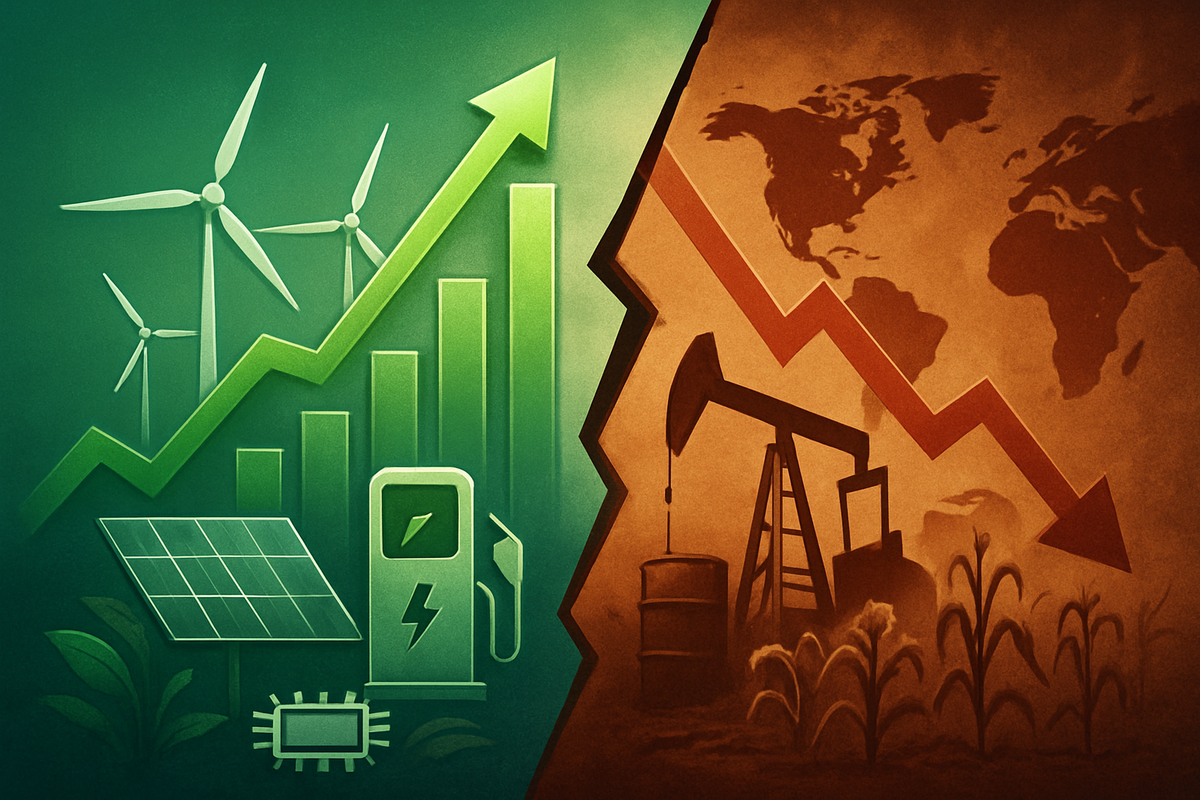
As of December 16, 2025, global commodity markets are navigating a landscape of profound divergence, marked by a robust surge in industrial metals driven by the accelerating green energy transition, juxtaposed against persistent downward pressure on energy and agricultural commodities. This "great divergence" is fueled by a complex interplay of supply and demand dynamics, significant geopolitical developments, and overarching macroeconomic trends, presenting a nuanced and often contradictory picture for investors and consumers alike.
The immediate implications of this market schism are significant. While the broad commodity index surprised with a 17% performance in 2025, the overarching outlook points towards a potential decline to their lowest levels in six years by 2026. This anticipated downturn is primarily driven by forecasts of subdued global economic growth from leading institutions, which inherently dampens industrial activity and consumer spending. Despite this bearish sentiment for the aggregate market, volatility is expected to remain high, with recession fears and central bank monetary policy decisions, such as the U.S. Federal Reserve's rate cuts in late 2025, significantly influencing daily price fluctuations and investor sentiment.
A Multifaceted Market: Oversupply, Green Demand, and Geopolitical Undercurrents
The current state of commodity markets is a mosaic of contrasting fortunes. In the energy sector, crude oil is grappling with a significant oversupply, with global inventories reaching four-year highs by December 2025. The International Energy Agency (IEA) forecasts an unprecedented surplus for 2026, solidifying bearish sentiment among traders, evidenced by West Texas Intermediate (WTI) crude oil falling to $55.53 USD/Bbl, a more than 20% decline from the previous year. OPEC+ (Organization of the Petroleum Exporting Countries Plus) actions have been a mixed bag; a modest production increase for December 2025 was followed by a three-month pause on further hikes, influenced by global surplus concerns and U.S. sanctions constraining Russian output. However, reports also indicate a two million barrels per day (b/d) production cut extended until December 31, 2026, by some members. Concurrently, non-OPEC+ production, particularly from the U.S. (which hit an all-time high in 2025) and South American producers like Brazil and Guyana, continues to grow, often offsetting OPEC+'s efforts. Soft demand in Europe and China, coupled with energy efficiency gains and electric vehicle adoption, further contributes to the decline.
In contrast, industrial metals are experiencing a boom. Copper has surged 30% in 2025, aluminum gained 12%, and silver has seen an extraordinary 110% rally year-to-date. This remarkable performance is primarily driven by the "green and digital supercycle," fueled by insatiable demand from the global green energy transition, electrification initiatives, AI infrastructure, and data-center expansion. Copper, a bellwether for economic health, has particularly benefited, rising approximately 27% in 2025, exacerbated by multiple supply disruptions that created a market deficit. Aluminum prices are supported by China's 45 million tonnes production cap, while silver inventories at the Shanghai Futures Exchange (SFE) are at a decade low, down 41%, due to significant stockpiling by U.S. buyers ahead of potential tariffs. Iron ore, however, has fallen to US$100 per tonne, a victim of China's economic pivot away from infrastructure-heavy growth and its ongoing property sector crisis.
Precious metals also present a compelling narrative. Gold has seen a significant rally in 2025, up 60%, with expectations for continued strength and new record highs, trading over $4300/oz in December 2025. This upward trend is underpinned by heightened geopolitical risks, falling real yields, a weaker U.S. dollar, and robust purchases by central banks, a trend that intensified after the freezing of Russian assets. Silver's extraordinary 110% surge is attributed to both its traditional safe-haven appeal and its critical industrial role in green energy technologies, notably surpassing oil prices—a market inversion not seen since the late 1970s.
Agricultural commodities face significant volatility and a "cost-price squeeze." High input costs for fertilizer, fuel, and labor are often met with subdued or unpredictable prices for major row crops, causing financial strain for farmers. Extreme weather events, including droughts and floods (such as Brazil's large-scale floods in June 2025 affecting coffee production), are causing widespread supply disruptions. While the FAO Food Price Index recorded declines in sugar, dairy, vegetable oils, and meat in November 2025, cereal prices (wheat and maize) saw upward movements due to factors like potential Chinese demand and Black Sea geopolitical tensions. However, expectations of rising global supply from record crops in Argentina and Australia, alongside a rebound in EU and Russian output, are currently pressuring wheat prices downwards. The U.S. is also producing a record corn crop for the 2025/2026 season, increasing supplies despite strong ethanol production and export demand. Soybean prices are declining due to increased production and reduced purchases from China. Coffee and cocoa, after a strong rebound in 2025 due to weather issues (cocoa hitting a 60-year high), anticipate moderation and a surplus, respectively, in 2026.
Geopolitical influences remain a potent, albeit sometimes counterbalanced, factor. Ongoing conflicts in the Middle East, including the Israel-Hamas War, an Israel-Iran confrontation in June 2025, and Houthi rebel attacks in the Red Sea, have injected risk premiums into crude oil prices and disrupted global supply chains. However, the oil market has increasingly prioritized fundamental oversupply over geopolitical speculation, with a White House-backed peace plan and Gaza ceasefire in October 2025 leading to an easing of oil prices. The persistent Russia-Ukraine conflict continues to create uncertainty, with sanctions impacting Russia's oil output. U.S. sanctions targeting Russia's oil sector and tariffs on agricultural inputs further contribute to market distortions. Escalating U.S.-Venezuelan tensions and new U.S. sanctions on shipping companies doing business with Venezuela have led to supply disruptions, currently balancing some of the global oversupply concerns for crude oil.
Corporate Fortunes: Winners and Losers in the Commodity Crossroads
The "great divergence" in commodity markets will inevitably create a clear delineation of winners and losers among public companies. Companies heavily invested in the extraction, processing, and distribution of industrial metals stand to gain significantly. Mining giants like BHP Group (ASX: BHP), Rio Tinto (ASX: RIO), and Freeport-McMoRan (NYSE: FCX), with their substantial copper and aluminum operations, are poised for continued strong performance. Their profitability will be boosted by high prices and robust demand from sectors like renewable energy, electric vehicle manufacturing, and data centers. Similarly, companies involved in the silver supply chain, from miners to refiners, such as Pan American Silver Corp. (NASDAQ: PAAS) and Wheaton Precious Metals Corp. (NYSE: WPM), will capitalize on silver's dual role as a safe-haven asset and a critical industrial metal. Manufacturers of green energy components, such as First Solar (NASDAQ: FSLR), which rely on these metals, will face higher input costs but are operating in a high-demand environment, potentially allowing them to pass on some of these costs.
Conversely, companies deeply entrenched in the traditional energy sector, particularly those focused on crude oil and natural gas, face significant headwinds. Major oil producers like ExxonMobil (NYSE: XOM), Chevron (NYSE: CVX), and Shell plc (NYSE: SHEL) will contend with persistent oversupply and subdued demand, leading to downward pressure on their revenues and profit margins. While some may benefit from cost-cutting measures or strategic shifts towards renewables, the immediate future for their core fossil fuel operations appears challenging. Similarly, LNG exporters, despite new capacity coming online, might face pricing pressure due to global oversupply, particularly with reduced imports from China. Companies in the agricultural sector, including large agribusinesses like Archer-Daniels-Midland Company (NYSE: ADM) and Bunge Global SA (NYSE: BG), will navigate a volatile environment marked by high input costs and unpredictable commodity prices. While some may benefit from hedging strategies or diversified portfolios, the "cost-price squeeze" on farmers will ultimately impact the entire supply chain, potentially affecting demand for agricultural services and products. Fertilizer producers, despite projected price increases for their products, will also be affected by the broader economic health of the agricultural sector and potential government interventions to support farmers.
The divergence also creates opportunities for companies that can adapt or pivot. Logistics and shipping companies, for instance, will experience varied impacts; while Red Sea disruptions create challenges and increased costs, the overall movement of commodities remains essential. Companies specializing in energy efficiency technologies or alternative energy solutions will see increased investment and demand as nations seek to reduce reliance on volatile fossil fuels. Furthermore, financial institutions and commodity traders with robust analytical capabilities and diversified portfolios are better positioned to capitalize on the heightened volatility and price discrepancies across different commodity classes, leveraging sophisticated hedging and arbitrage strategies to generate returns in this complex market.
Broader Implications: A Shifting Global Economic Order
The current commodity market dynamics fit squarely into broader industry trends emphasizing decarbonization, supply chain resilience, and the geopolitical fragmentation of global trade. The robust demand for industrial metals is a direct manifestation of the accelerating global push towards renewable energy, electric vehicles, and digital infrastructure—a structural shift that will redefine industrial consumption for decades. This "green and digital supercycle" is not merely a cyclical uptick but a fundamental reorientation of industrial demand, making metals like copper, lithium, and rare earths strategically vital. The emphasis on securing these critical minerals will continue to drive investment in mining and processing, but also raise concerns about environmental impact and labor practices in extraction regions.
The ripple effects on competitors and partners are substantial. For instance, traditional energy companies face increasing pressure from renewable energy developers, necessitating strategic pivots and greater investment in sustainable alternatives to maintain relevance and attract capital. Geopolitical tensions, particularly the ongoing conflicts in the Middle East and Eastern Europe, underscore the fragility of global supply chains and the imperative for nations to enhance energy and food security. This will likely lead to increased regionalization of supply chains, diversification of sourcing, and greater investment in domestic production capacities, potentially altering established trade routes and commodity flows. Regulatory and policy implications are also significant; governments are likely to intensify efforts to secure critical mineral supplies, potentially through subsidies, strategic alliances, or even protectionist measures like tariffs, as seen with U.S. refined copper tariffs. Simultaneously, policies aimed at accelerating the energy transition, such as carbon pricing and incentives for renewable energy adoption, will continue to shape demand patterns for various commodities.
Historically, periods of commodity price divergence are not unprecedented. The 1970s, for example, saw energy crises alongside agricultural booms and busts. However, the current divergence is unique in its drivers: a climate-driven demand surge for specific metals intersecting with a fossil fuel industry grappling with both oversupply and the long-term threat of obsolescence. The role of central banks and their monetary policies, particularly interest rate decisions, also echoes past cycles where liquidity and borrowing costs significantly influenced speculative investment in commodities. The current focus on inflation control versus economic growth further complicates the picture, as tighter monetary conditions can dampen overall demand, while looser policies might fuel speculative bubbles in certain assets. The increased frequency and intensity of extreme weather events due to climate change also represent a relatively new, yet profoundly impactful, variable for agricultural commodity markets, introducing a layer of unpredictability that was less pronounced in previous decades.
The Road Ahead: Navigating Volatility and Strategic Shifts
Looking ahead, the short-term future for commodity markets promises continued volatility and divergence. Energy markets, particularly crude oil, are expected to remain under downward pressure into early 2026, with Brent crude forecasted to average around $55 per barrel in Q1 2026. This outlook is contingent on global economic growth remaining subdued and OPEC+ production discipline. Any unexpected geopolitical flare-ups could provide temporary price spikes, but the fundamental oversupply appears robust. Natural gas markets, especially in the U.S., might see localized price increases due to cold snaps, but global LNG supply additions will likely temper significant long-term rallies.
In the long term, the structural demand for industrial metals driven by the green and digital transitions is expected to remain strong, potentially leading to further gains for copper, silver, and aluminum. This will necessitate significant investment in new mining capacity and processing technologies. Agricultural markets will continue to grapple with the dual challenges of climate change-induced supply disruptions and the "cost-price squeeze" on farmers. This could lead to increased government intervention through subsidies or price support mechanisms, and a greater focus on resilient and sustainable farming practices. Strategic pivots will be essential for companies across all sectors. Energy companies will need to accelerate their transition to cleaner energy sources, while agricultural firms may need to diversify crop portfolios and invest in climate-resilient technologies.
Market opportunities will emerge for investors focused on the "green economy" – companies involved in renewable energy infrastructure, electric vehicle manufacturing, and critical mineral extraction. Conversely, challenges will persist for traditional fossil fuel producers and those agricultural businesses unable to adapt to changing climate patterns and input costs. Potential scenarios range from a continued "great divergence" where industrial metals outperform significantly, to a broader commodity market recovery if global economic growth surprises on the upside, or even a deeper downturn if recessionary fears materialize more severely. Another scenario involves heightened geopolitical instability leading to sustained supply disruptions, particularly in energy and food, which could override fundamental supply/demand balances in the short term.
A Market in Transition: Key Takeaways for Investors
The current commodity landscape, as of December 16, 2025, is defined by a significant "great divergence." Industrial metals are experiencing a powerful surge, driven by the irreversible momentum of the green energy transition and the expansion of digital infrastructure. This structural demand contrasts sharply with the challenges facing energy and agricultural commodities, which are contending with persistent oversupply, moderating demand, and the escalating impacts of climate change. Geopolitical tensions remain a pervasive, albeit often localized, factor, capable of injecting volatility and disrupting supply chains, but increasingly, fundamental supply and demand dynamics are asserting their dominance, particularly in the oil markets.
Moving forward, the market will likely remain highly volatile, requiring astute analysis and strategic positioning. The overall assessment points towards continued downward pressure on the broad commodity index into 2026, primarily due to subdued global economic growth forecasts. However, beneath this aggregate trend lies a nuanced reality where specific sectors will thrive. The lasting impact of this period will be a re-evaluation of commodity importance, with critical minerals for the green economy ascending in strategic value, while traditional energy sources face increasing pressures.
Investors should watch for several key indicators in the coming months. Firstly, monitor global economic growth figures, particularly from China and Europe, as these will significantly influence overall commodity demand. Secondly, keep a close eye on central bank monetary policies, especially interest rate decisions by the U.S. Federal Reserve and the European Central Bank, as these impact liquidity and investor sentiment. Thirdly, track geopolitical developments, particularly in the Middle East and Eastern Europe, for potential supply disruptions or escalations. Finally, pay attention to weather patterns and climate-related events, as these will continue to exert a profound influence on agricultural commodity prices and food security. Understanding these intersecting forces will be crucial for navigating the complex and evolving commodity markets in the years to come.
This content is intended for informational purposes only and is not financial advice