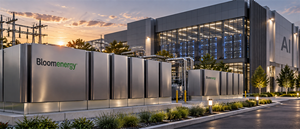

As of early 2026, the artificial intelligence landscape has shifted from a battle of algorithms to a war of industrial capacity. At the center of this transformation is the "Stargate" Project, a staggering $500 billion infrastructure venture that has evolved from a rumored supercomputer plan into a foundational pillar of U.S. national and economic strategy. Formally launched in early 2025 and accelerating through 2026, the initiative represents a coordinated effort by OpenAI, SoftBank Group Corp. (OTC: SFTBY), Oracle Corporation (NYSE: ORCL), and the UAE-backed investment firm MGX to build the physical backbone required for Artificial General Intelligence (AGI).
The sheer scale of the Stargate Project is unprecedented, dwarfing previous tech investments and drawing frequent comparisons to the Manhattan Project or the Apollo program. With a goal of deploying 10 gigawatts (GW) of compute capacity across the United States by 2029, the venture aims to ensure that the next generation of "Frontier" AI models—expected to feature tens of trillions of parameters—have the power and cooling necessary to break through current reasoning plateaus. As of January 9, 2026, the project has already deployed over $100 billion in capital, with major data center sites breaking ground or entering operational phases across the American Heartland.
Technical Foundations: A New Blueprint for Hyperscale AI
The Stargate Project marks a departure from traditional data center architecture, moving toward "Industrial AI" campuses that operate on a gigawatt scale. Unlike the distributed cloud clusters of the early 2020s, Stargate's facilities are designed as singular, massive compute blocks. The flagship site in Abilene, Texas, is already running training workloads on NVIDIA Corporation (NASDAQ: NVDA) Blackwell and Vera Rubin architectures, utilizing high-performance RDMA networking provided by Oracle Cloud Infrastructure. This technical synergy allows for the low-latency communication required to treat thousands of individual GPUs as a single, cohesive brain.
To meet the project's voracious appetite for power, the consortium has pioneered a "behind-the-meter" energy strategy. In Wisconsin, the $15 billion "Lighthouse" campus in Port Washington is being developed by Oracle and Vantage Data Centers to provide nearly 1 GW of capacity, while a site in Doña Ana County, New Mexico, utilizes on-site natural gas and renewable generation. Perhaps most significantly, the project has triggered a nuclear renaissance; the venture is a primary driver behind the restart of the Three Mile Island nuclear facility, intended to provide the 24/7 carbon-free "baseload" power that solar and wind alone cannot sustain for AGI training.
The hardware stack is equally specialized. While NVIDIA remains the primary provider of GPUs, the project heavily incorporates energy-efficient chip architectures from Arm Holdings plc (NASDAQ: ARM) to manage non-compute overhead. This "full-stack" approach—from the nuclear reactor to the custom silicon—is what distinguishes Stargate from previous cloud expansions. Initial reactions from the AI research community have been a mix of awe and caution, with experts noting that while this "brute force" compute may be the only path to AGI, it also creates an "energy wall" that could exacerbate local grid instabilities if not managed with the precision the project promises.
Strategic Realignment: The New Titans of Infrastructure
The Stargate partnership has fundamentally realigned the power dynamics of the tech industry. For OpenAI, the venture represents a move toward infrastructure independence. By holding operational control over Stargate LLC, OpenAI is no longer solely a software-as-a-service provider but an industrial powerhouse capable of dictating its own hardware roadmap. This strategic shift places OpenAI in a unique position, reducing its long-term dependency on traditional hyperscalers while maintaining a critical partnership with Microsoft Corporation (NASDAQ: MSFT), which continues to provide the Azure backbone and software integration for the project.
SoftBank, under the leadership of Chairman Masayoshi Son, has used Stargate to stage a massive comeback. Serving as the project's Chairman, Son has committed tens of billions through SoftBank and its subsidiary SB Energy, positioning the Japanese conglomerate as the primary financier of the AI era. Oracle has seen a similar resurgence; by providing the physical cloud layer and high-speed networking for Stargate, Oracle has solidified its position as the preferred infrastructure partner for high-end AI, often outmaneuvering larger rivals in securing the specialized permits and power agreements required for these "mega-sites."
The competitive implications for other AI labs are stark. Companies like Anthropic and Google find themselves in an escalating "arms race" where the entry fee for top-tier AI development is now measured in hundreds of billions of dollars. Startups that cannot tap into this level of infrastructure are increasingly pivoting toward "small language models" or niche applications, as the "Frontier" remains the exclusive domain of the Stargate consortium and its direct competitors. This concentration of compute power has led to concerns about a "compute divide," where a handful of entities control the most powerful cognitive tools ever created.
Geopolitics and the Global AI Landscape
Beyond the technical and corporate spheres, the Stargate Project is a geopolitical instrument. The inclusion of MGX, the Abu Dhabi-based AI investment fund, signals a new era of "Sovereign AI" partnerships. By anchoring Middle Eastern capital and energy resources to American soil, the U.S. aims to secure a dominant position in the global AI race against China. This "Silicon Fortress" strategy is designed to ensure that the most advanced AI models are trained and housed within U.S. borders, under U.S. regulatory and security oversight, while still benefiting from global investment.
The project also reflects a shift in national priority, with the current administration framing Stargate as essential for national security. The massive sites in Ohio's Lordstown and Texas's Milam County are not just data centers; they are viewed as strategic assets that will drive the next century of economic productivity. However, this has not come without controversy. Environmental groups and local communities have raised alarms over the project's massive water and energy requirements. In response, the Stargate consortium has promised to invest in local grid upgrades and "load flexibility" technologies that can return power to the public during peak demand, though the efficacy of these measures remains a subject of intense debate.
Comparisons to previous milestones, such as the 1950s interstate highway system, are frequent. Just as the highways reshaped the American physical landscape and economy, Stargate is reshaping the digital and energy landscapes. The project’s success is now seen as a litmus test for whether a democratic society can mobilize the industrial resources necessary to lead in the age of intelligence, or if the sheer scale of the requirements will necessitate even deeper public-private entanglement.
The Horizon: AGI and the Silicon Supercycle
Looking ahead to the remainder of 2026 and into 2027, the Stargate Project is expected to enter its most intensive phase. With the Abilene and Lordstown sites reaching full capacity, OpenAI is predicted to debut a model trained entirely on Stargate infrastructure—a system that many believe will represent the first true "Level 3" or "Level 4" AI on the path to AGI. Near-term developments will likely focus on the integration of "Small Modular Reactors" (SMRs) directly into data center campuses, a move that would further decouple AI progress from the limitations of the national grid.
The potential applications on the horizon are vast, ranging from autonomous scientific discovery to the management of entire national economies. However, the challenges are equally significant. The "Silicon Supercycle" triggered by Stargate has led to a global shortage of power transformers and specialized cooling equipment, causing delays in secondary sites. Experts predict that the next two years will be defined by "CapEx fatigue" among investors, as the pressure to show immediate economic returns from these $500 billion investments reaches a fever pitch.
Furthermore, the rumored OpenAI IPO in late 2026—with valuations discussed as high as $1 trillion—will be the ultimate market test for the Stargate vision. If successful, it will validate the "brute force" approach to AI; if it falters, it may lead to a significant cooling of the current infrastructure boom. For now, the momentum remains firmly behind the consortium, as they continue to pour concrete and install silicon at a pace never before seen in the history of technology.
Conclusion: A Monument to the Intelligence Age
The Stargate Project is more than a collection of data centers; it is a monument to the Intelligence Age. By the end of 2025, it had already redefined the relationship between tech giants, energy providers, and sovereign wealth. As we move through 2026, the project’s success will be measured not just in FLOPS or gigawatts, but in its ability to deliver on the promise of AGI while navigating the complex realities of energy scarcity and geopolitical tension.
The key takeaways are clear: the barrier to entry for "Frontier AI" has been raised to an atmospheric level, and the future of the industry is now inextricably linked to the physical world of power plants and construction crews. The partnership between OpenAI, SoftBank, Oracle, and MGX has created a new blueprint for how massive technological leaps are funded and executed. In the coming months, the industry will be watching the first training runs on the completed Texas and Ohio campuses, as well as the progress of the nuclear restarts that will power them. Whether Stargate leads directly to AGI or remains a massive industrial experiment, its impact on the global economy and the future of technology is already indelible.
This content is intended for informational purposes only and represents analysis of current AI developments.
TokenRing AI delivers enterprise-grade solutions for multi-agent AI workflow orchestration, AI-powered development tools, and seamless remote collaboration platforms.
For more information, visit https://www.tokenring.ai/.