NEW DELHI — In a landmark move that signals a paradigm shift in the global technology landscape, India and the Netherlands have finalized a series of strategic agreements aimed at securing the physical foundations of artificial intelligence. On December 19, 2025, during a high-level diplomatic summit in New Delhi, officials from both nations concluded six comprehensive Memoranda of Understanding (MoUs) that bridge Dutch excellence in semiconductor lithography with India’s massive "IndiaAI" mission and manufacturing ambitions. This partnership, described by diplomats as the "Indo-Dutch Strategic Technology Alliance," prioritizes "secure-by-design" hardware—a critical move to ensure that the next generation of AI infrastructure is inherently resistant to cyber-tampering and state-sponsored espionage.
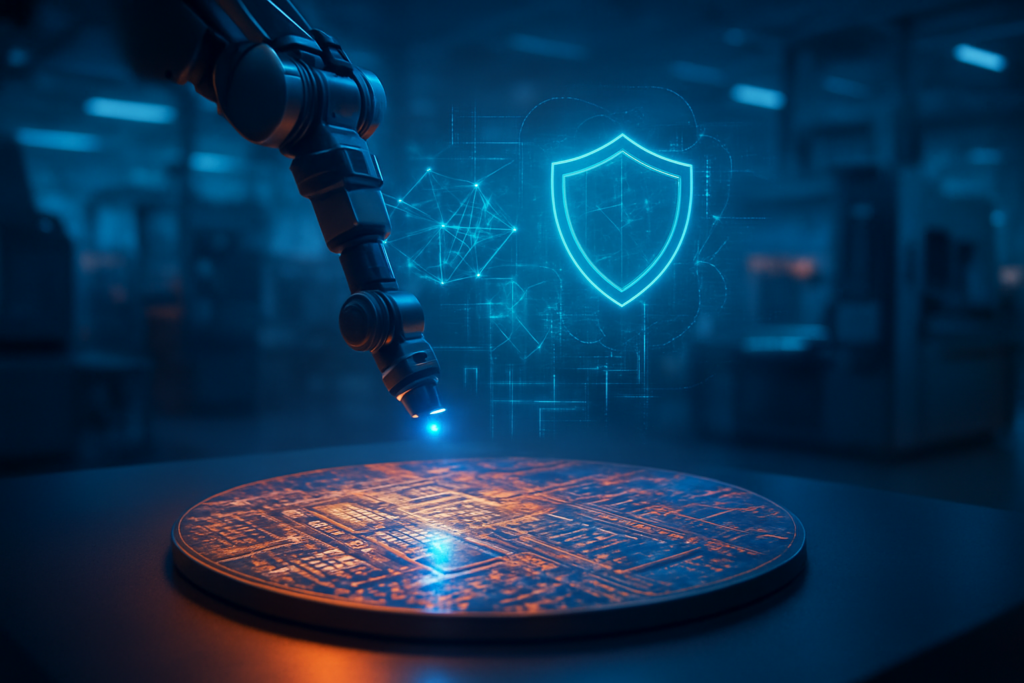
The immediate significance of this alliance cannot be overstated. As AI models become increasingly integrated into critical infrastructure—from autonomous power grids to national defense systems—the vulnerability of the underlying silicon has become a primary national security concern. By moving beyond a simple buyer-seller relationship, India and the Netherlands are co-developing a "Silicon Shield" that integrates security protocols directly into the chip architecture. This initiative is a cornerstone of India’s $20 billion India Semiconductor Mission (ISM) 2.0, positioning the two nations as a formidable alternative to the traditional technology duopoly of the United States and China.
Technical Deep Dive: Secure-by-Design and Hardware Root of Trust
The technical core of this partnership centers on the "Secure-by-Design" philosophy, which mandates that security features be integrated at the architectural level of a chip rather than as a software patch after fabrication. A key component of this initiative is the development of Hardware Root of Trust (HRoT) systems. Unlike previous security measures that relied on volatile software environments, HRoT provides a permanent, immutable identity for a chip, ensuring that AI firmware cannot be modified by unauthorized actors. This is particularly vital for Edge AI applications, where devices like autonomous vehicles or industrial robots must make split-second decisions without the risk of their internal logic being "poisoned" by external hackers.
Furthermore, the collaboration is heavily invested in the RISC-V architecture, an open-standard instruction set that allows for greater transparency and customization in chip design. By utilizing RISC-V, Indian and Dutch engineers are creating specialized AI accelerators that include Memory Tagging Extensions (MTE) and confidential computing enclaves. These features allow for Federated Learning, a privacy-preserving AI training method where models are trained on local data—such as patient records in a hospital—without that sensitive information ever leaving the secure hardware environment. This technical leap directly addresses the stringent requirements of India’s Digital Personal Data Protection (DPDP) Act and the EU’s GDPR.
Initial reactions from the AI research community have been overwhelmingly positive. Dr. Arjan van der Meer, a senior researcher at TU Delft, noted that "the integration of Dutch lithography precision with India's design-led innovation (DLI) scheme represents the first time a major manufacturing hub has prioritized hardware security as a baseline requirement for sovereign AI." Industry experts suggest that this "holistic lithography" approach—which combines hardware, computational software, and metrology—will significantly increase the yield and reliability of India’s emerging 28nm and 14nm fabrication plants.
Corporate Impact: NXP and ASML Lead the Charge
The market implications of this alliance are profound, particularly for industry titans like NXP Semiconductors (NASDAQ: NXPI) and ASML (NASDAQ: ASML). NXP has announced a massive $1 billion investment to double its R&D presence in India by 2028, focusing specifically on automotive AI and secure-by-design microcontrollers. By embedding its proprietary EdgeLock secure element technology into Indian-designed chips, NXP is positioning itself as the primary hardware provider for India’s burgeoning electric vehicle (EV) and IoT markets. This move provides NXP with a strategic advantage over competitors who remain heavily reliant on manufacturing hubs in geopolitically volatile regions.
ASML (NASDAQ: ASML), the world’s leading provider of lithography equipment, is also shifting its strategy. Rather than simply exporting machines, ASML is establishing specialized maintenance and training labs across India. These hubs will train thousands of Indian engineers in the "holistic lithography" process, ensuring that India’s new fabrication units can maintain the high standards required for advanced AI silicon. This deep integration makes ASML an indispensable partner in India’s industrial ecosystem, effectively locking in long-term service and supply contracts as India scales its domestic production.
For Indian tech giants like Tata Electronics, a subsidiary of the Tata Group (NSE: TATAELXSI), and state-backed firms like Bharat Electronics Limited (NSE: BEL), the partnership provides access to cutting-edge Dutch intellectual property that was previously difficult to obtain. This disruption is expected to challenge the dominance of established AI hardware players by offering "trusted" alternatives to the Global South. Startups under India’s Design-Linked Incentive (DLI) scheme are already leveraging these new secure architectures to build niche AI hardware for healthcare and finance, sectors where data sovereignty is a non-negotiable requirement.
Geopolitical Shifts and the Quest for Sovereign AI
On a broader scale, the Indo-Dutch partnership reflects a global trend toward "strategic redundancy" in the semiconductor supply chain. As the "China Plus One" strategy matures, India is emerging not just as a backup manufacturer, but as a leader in secure, sovereign technology. The creation of Sovereign AI stacks—where a nation owns the entire stack from the physical silicon to the high-level algorithms—is becoming a matter of national survival. This alliance ensures that India’s national AI infrastructure is free from the "backdoor" vulnerabilities that have plagued unvetted imported hardware in the past.
However, the move toward hardware-level security is not without its concerns. Some experts worry that the proliferation of "trusted silicon" standards could lead to a fragmented global internet, often referred to as the "splinternet." If different regions adopt incompatible hardware security protocols, the seamless global exchange of data and AI models could be hampered. Furthermore, the high cost of implementing "secure-by-design" principles may initially limit these chips to high-end industrial and governmental applications, potentially slowing down the democratization of AI in lower-income sectors.
Comparatively, this milestone is being likened to the 1990s shift toward encrypted web traffic (HTTPS), but for the physical world. Just as encryption became the standard for software, "Hardware Root of Trust" is becoming the standard for silicon. The Indo-Dutch collaboration is the first major international effort to codify these standards into a massive manufacturing pipeline, setting a precedent that other nations in the Quad and the EU are likely to follow.
The Horizon: Quantum-Ready Systems and Advanced Materials
Looking ahead, the partnership is set to expand into even more advanced frontiers. Plans are already in motion for joint R&D in Quantum-resistant encryption and 6G telecommunications. By early 2026, the two nations expect to begin trials of secure 6G architectures that use Dutch-designed photonic chips manufactured in Indian fabs. These chips will be essential for the ultra-low latency requirements of future AI applications, such as remote robotic surgery and real-time global climate modeling.
Another area on the horizon is the use of lab-grown diamonds as thermal management substrates for high-power semiconductors. As AI models grow in complexity, the heat generated by processors becomes a major bottleneck. MeitY and Dutch research institutions are currently exploring how lab-grown diamond technology can be integrated into the packaging process to create "cool-running" AI servers. The primary challenge remains the rapid scaling of the workforce; while the goal is to train 85,000 semiconductor professionals, the complexity of Dutch lithography requires a level of expertise that takes years to master.
Conclusion: A New Standard for Global Tech Collaboration
The partnership between India and the Netherlands represents a significant turning point in the history of artificial intelligence and digital security. By focusing on the "secure-by-design" hardware layer, these two nations are addressing the most fundamental vulnerability of the AI era. The conclusion of these six MoUs on December 19, 2025, marks the end of an era of "blind trust" in global supply chains and the beginning of an era defined by verified, hardware-level sovereignty.
Key takeaways from this development include the massive $1 billion commitment from NXP Semiconductors (NASDAQ: NXPI), the strategic ecosystem integration by ASML (NASDAQ: ASML), and the shift toward RISC-V as a global standard for secure AI. In the coming weeks, industry watchers should look for the first batch of "Trusted Silicon" certifications to be issued under the new joint framework. As the AI Impact Summit approaches in February 2026, the Indo-Dutch corridor is poised to become the new benchmark for how nations can collaborate to build an AI future that is not only powerful but inherently secure.
This content is intended for informational purposes only and represents analysis of current AI developments.
TokenRing AI delivers enterprise-grade solutions for multi-agent AI workflow orchestration, AI-powered development tools, and seamless remote collaboration platforms.
For more information, visit https://www.tokenring.ai/.