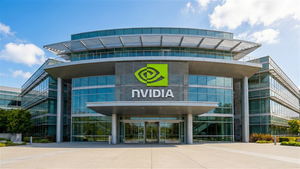

In a groundbreaking move set to redefine the landscape of AI chip development, NVIDIA (NASDAQ: NVDA) has announced a strategic partnership with Synopsys (NASDAQ: SNPS), solidified by a substantial $2 billion investment in Synopsys common stock. This multi-year collaboration, unveiled on December 1, 2025, is poised to revolutionize engineering and design across a multitude of industries, with its most profound impact expected in accelerating the innovation cycle for artificial intelligence chips. The immediate significance of this colossal investment lies in its potential to dramatically fast-track the creation of next-generation AI hardware, fundamentally altering how complex AI systems are conceived, designed, and brought to market.
The partnership aims to integrate NVIDIA's unparalleled prowess in AI and accelerated computing with Synopsys's market-leading electronic design automation (EDA) solutions and deep engineering expertise. By merging these capabilities, the alliance is set to unlock unprecedented efficiencies in compute-intensive applications crucial for chip design, physical verification, and advanced simulations. This strategic alignment underscores NVIDIA's commitment to deepening its footprint across the entire AI ecosystem, ensuring a robust foundation for the continued demand and evolution of its cutting-edge AI hardware.
Redefining the Blueprint: Technical Deep Dive into Accelerated AI Chip Design
The $2 billion investment sees NVIDIA acquiring approximately 2.6% of Synopsys's shares at $414.79 per share, making it a significant stakeholder. This private placement signals a profound commitment to leveraging Synopsys's critical role in the semiconductor design process. Synopsys's EDA tools are the backbone of modern chip development, enabling engineers to design, simulate, and verify the intricate layouts of integrated circuits before they are ever fabricated. The technical crux of this partnership involves Synopsys integrating NVIDIA’s CUDA-X libraries and AI physics technologies directly into its extensive portfolio of compute-intensive applications. This integration promises to dramatically accelerate workflows in areas such as chip design, physical verification, molecular simulations, electromagnetic analysis, and optical simulation, potentially reducing tasks that once took weeks to mere hours.
A key focus of this collaboration is the advancement of "agentic AI engineering." This cutting-edge approach involves deploying AI to automate and optimize complex design and engineering tasks, moving towards more autonomous and intelligent design processes. Specifically, Synopsys AgentEngineer technology will be integrated with NVIDIA’s robust agentic AI stack. This marks a significant departure from traditional, largely human-driven chip design methodologies. Previously, engineers relied heavily on manual iterations and computationally intensive simulations on general-purpose CPUs. The NVIDIA-Synopsys synergy introduces GPU-accelerated computing and AI-driven automation, promising to not only speed up existing processes but also enable the exploration of design spaces previously inaccessible due to time and computational constraints.
Furthermore, the partnership aims to expand cloud access for joint solutions and develop Omniverse digital twins. These virtual representations of real-world assets will enable simulation at unprecedented speed and scale, spanning from atomic structures to transistors, chips, and entire systems. This capability bridges the physical and digital realms, allowing for comprehensive testing and optimization in a virtual environment before physical prototyping, a critical advantage in complex AI chip development. Initial reactions from the AI research community and industry experts have been overwhelmingly positive, with many hailing it as a strategic masterstroke that will cement NVIDIA's leadership in AI hardware and significantly advance the capabilities of chip design itself. Experts anticipate a wave of innovation in chip architectures, driven by these newly accelerated design cycles.
Reshaping the Competitive Landscape: Implications for AI Companies and Tech Giants
This monumental investment and partnership carry profound implications for AI companies, tech giants, and startups across the industry. NVIDIA (NASDAQ: NVDA) stands to benefit immensely, solidifying its position not just as a leading provider of AI accelerators but also as a foundational enabler of the entire AI hardware development ecosystem. By investing in Synopsys, NVIDIA is directly enhancing the tools used to design the very chips that will demand its GPUs, effectively underwriting and accelerating the AI boom it relies upon. Synopsys (NASDAQ: SNPS), in turn, gains a significant capital injection and access to NVIDIA’s cutting-edge AI and accelerated computing expertise, further entrenching its market leadership in EDA tools and potentially opening new revenue streams through enhanced, AI-powered offerings.
The competitive implications for other major AI labs and tech companies are substantial. Companies like Advanced Micro Devices (NASDAQ: AMD) and Intel (NASDAQ: INTC), both striving to capture a larger share of the AI chip market, will face an even more formidable competitor. NVIDIA’s move creates a deeper moat around its ecosystem, as accelerated design tools will likely lead to faster, more efficient development of NVIDIA-optimized hardware. Hyperscalers such as Amazon (NASDAQ: AMZN), Google (NASDAQ: GOOGL), and Microsoft (NASDAQ: MSFT), which are increasingly designing their own custom AI chips (e.g., AWS Inferentia, Google TPU, Microsoft Maia), will also feel the pressure. While Synopsys maintains that the partnership is non-exclusive, NVIDIA’s direct investment and deep technical collaboration could give it an implicit advantage in accessing and optimizing the most advanced EDA capabilities for its own hardware.
This development has the potential to disrupt existing products and services by accelerating the obsolescence cycle of less efficient design methodologies. Startups in the AI chip space might find it easier to innovate with access to these faster, AI-augmented design tools, but they will also need to contend with the rapidly advancing capabilities of industry giants. Market positioning and strategic advantages will increasingly hinge on the ability to leverage accelerated design processes to bring high-performance, cost-effective AI hardware to market faster. NVIDIA’s investment reinforces its strategy of not just selling chips, but also providing the entire software and tooling stack that makes its hardware indispensable, creating a powerful flywheel effect for its AI dominance.
Broader Significance: A Catalyst for AI's Next Frontier
NVIDIA’s $2 billion bet on Synopsys represents a pivotal moment that fits squarely into the broader AI landscape and the accelerating trend of specialized AI hardware. As AI models grow exponentially in complexity and size, the demand for custom, highly efficient silicon designed specifically for AI workloads has skyrocketed. This partnership directly addresses the bottleneck in the AI hardware supply chain: the design and verification process itself. By infusing AI and accelerated computing into EDA, the collaboration is poised to unleash a new wave of innovation in chip architectures, enabling the creation of more powerful, energy-efficient, and specialized AI processors.
The impacts of this development are far-reaching. It will likely lead to a significant reduction in the time-to-market for new AI chips, allowing for quicker iteration and deployment of advanced AI capabilities across various sectors, from autonomous vehicles and robotics to healthcare and scientific discovery. Potential concerns, however, include increased market consolidation within the AI chip design ecosystem. With NVIDIA deepening its ties to a critical EDA vendor, smaller players or those without similar strategic partnerships might face higher barriers to entry or struggle to keep pace with the accelerated innovation cycles. This could potentially lead to a more concentrated market for high-performance AI silicon.
This milestone can be compared to previous AI breakthroughs that focused on software algorithms or model architectures. While those advancements pushed the boundaries of what AI could do, this investment directly addresses how the underlying hardware is built, which is equally fundamental. It signifies a recognition that further leaps in AI performance are increasingly dependent on innovations at the silicon level, and that the design process itself must evolve to meet these demands. It underscores a shift towards a more integrated approach, where hardware, software, and design tools are co-optimized for maximum AI performance.
The Road Ahead: Anticipating Future Developments and Challenges
Looking ahead, this partnership is expected to usher in several near-term and long-term developments. In the near term, we can anticipate a rapid acceleration in the development cycles for new AI chip designs. Companies utilizing Synopsys's GPU-accelerated tools, powered by NVIDIA's technology, will likely bring more complex and optimized AI silicon to market at an unprecedented pace. This could lead to a proliferation of specialized AI accelerators tailored for specific tasks, moving beyond general-purpose GPUs to highly efficient ASICs for niche AI applications. Long-term, the vision of "agentic AI engineering" could mature, with AI systems playing an increasingly autonomous role in the entire chip design process, from initial concept to final verification, potentially leading to entirely novel chip architectures that human designers might not conceive on their own.
Potential applications and use cases on the horizon are vast. Faster chip design means faster innovation in areas like edge AI, where compact, power-efficient AI processing is crucial. It could also accelerate breakthroughs in scientific computing, drug discovery, and climate modeling, as the underlying hardware for complex simulations becomes more powerful and accessible. The development of Omniverse digital twins for chips and entire systems will enable unprecedented levels of pre-silicon validation and optimization, reducing costly redesigns and accelerating deployment in critical applications.
However, several challenges need to be addressed. Scaling these advanced design methodologies to accommodate the ever-increasing complexity of future AI chips, while managing power consumption and thermal limits, remains a significant hurdle. Furthermore, ensuring seamless software integration between the new AI-powered design tools and existing workflows will be crucial for widespread adoption. Experts predict that the next few years will see a fierce race in AI hardware, with the NVIDIA-Synopsys partnership setting a new benchmark for design efficiency. The focus will shift from merely designing faster chips to designing smarter, more specialized, and more energy-efficient chips through intelligent automation.
Comprehensive Wrap-up: A New Chapter in AI Hardware Innovation
NVIDIA's $2 billion strategic investment in Synopsys marks a defining moment in the history of artificial intelligence hardware development. The key takeaway is the profound commitment to integrating AI and accelerated computing directly into the foundational tools of chip design, promising to dramatically shorten development cycles and unlock new frontiers of innovation. This partnership is not merely a financial transaction; it represents a synergistic fusion of leading-edge AI hardware and critical electronic design automation software, creating a powerful engine for the next generation of AI chips.
Assessing its significance, this development stands as one of the most impactful strategic alliances in the AI ecosystem in recent years. It underscores the critical role that specialized hardware plays in advancing AI and highlights NVIDIA's proactive approach to shaping the entire supply chain to its advantage. By accelerating the design of AI chips, NVIDIA is effectively accelerating the future of AI itself. This move reinforces the notion that continued progress in AI will rely heavily on a holistic approach, where breakthroughs in algorithms are matched by equally significant advancements in the underlying computational infrastructure.
Looking ahead, the long-term impact of this partnership will be the rapid evolution of AI hardware, leading to more powerful, efficient, and specialized AI systems across virtually every industry. What to watch for in the coming weeks and months will be the initial results of this technical collaboration: announcements of accelerated design workflows, new AI-powered features within Synopsys's EDA suite, and potentially, the unveiling of next-generation AI chips that bear the hallmark of this expedited design process. This alliance sets a new precedent for how technology giants will collaborate to push the boundaries of what's possible in artificial intelligence.
This content is intended for informational purposes only and represents analysis of current AI developments.
TokenRing AI delivers enterprise-grade solutions for multi-agent AI workflow orchestration, AI-powered development tools, and seamless remote collaboration platforms.
For more information, visit https://www.tokenring.ai/.