The Cash Machine: A Deep Dive into Shell’s Strategic Resilience (SHEL)
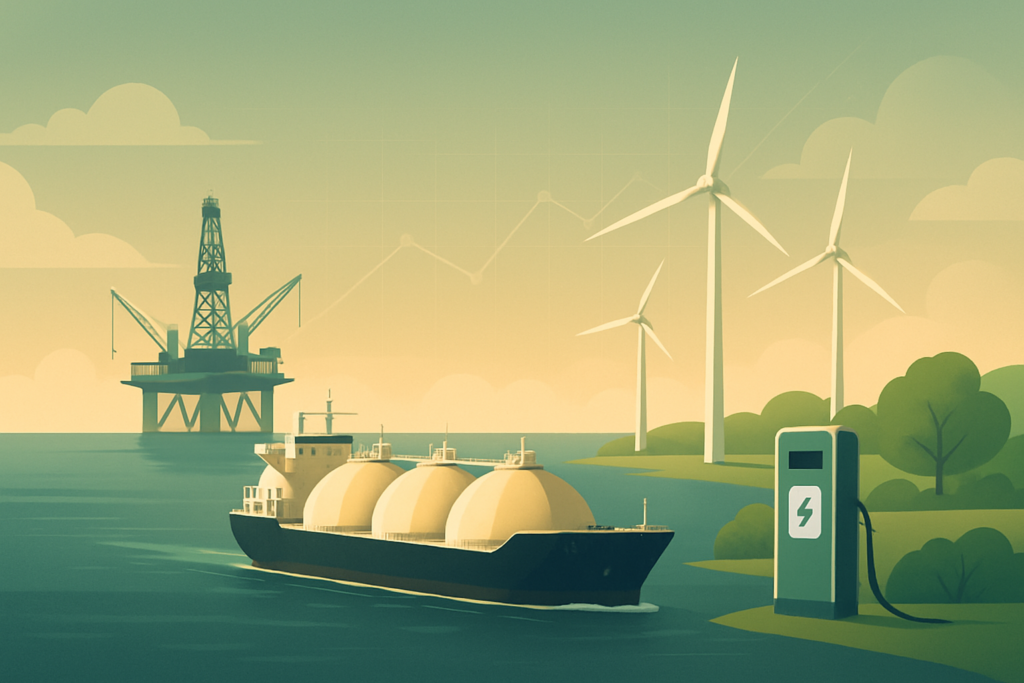
As of March 18, 2026, the global energy landscape remains caught in a delicate tug-of-war between the immediate imperatives of energy security and the long-term mandate of decarbonization. At the center of this storm stands Shell PLC (NYSE: SHEL), a company that has spent the last three years reinventing its identity. Under a "performance-first" leadership, Shell has pivoted from an aggressive—and some say premature—green transition back to its core strengths: high-margin hydrocarbons and a world-leading liquefied natural gas (LNG) portfolio. Today, Shell is less of a "struggling oil major" and more of a "resilient cash machine," attracting investors with its disciplined capital allocation and robust shareholder returns.
Historical Background
The story of Shell is one of strategic mergers and global expansion. Founded in 1907 through the merger of the Royal Dutch Petroleum Company and the "Shell" Transport and Trading Company, the firm was created to compete with the dominance of Standard Oil. For over a century, it operated under a complex dual-headed structure between the Netherlands and the United Kingdom.
A pivotal transformation occurred in 2021-2022. Facing pressure from the Dutch tax system and a landmark climate court ruling in The Hague, Shell simplified its structure. It abolished its A and B share classes, moved its headquarters and tax residence to London, and dropped "Royal Dutch" from its name. This unification was a catalyst for the "New Shell," enabling more aggressive share buybacks and a clearer strategic direction that would eventually be spearheaded by the current CEO.
Business Model
Shell operates as an integrated energy company, with its business model now streamlined into five primary segments:
- Integrated Gas: The company's "crown jewel," accounting for roughly 40% of its cash flow. This includes its massive LNG business, where Shell is the undisputed global leader.
- Upstream: Focused on oil and gas exploration and production, particularly in high-margin deep-water assets in the Gulf of Mexico and Brazil.
- Marketing: A global retail network of over 44,000 service stations, which is increasingly being converted to support electric vehicle (EV) charging and premium fuel offerings.
- Renewables & Energy Solutions: Focuses on wind, solar, and hydrogen. Under current strategy, this segment is tasked with proving profitability rather than just adding capacity.
- Chemicals & Products: Includes refining and chemical manufacturing. Shell has been divesting non-core refineries to focus on high-value chemical products.
Stock Performance Overview
Shell’s stock has staged a remarkable recovery following the pandemic-induced lows of 2020.
- 1-Year Performance: Over the past twelve months, SHEL has seen a steady 12% climb, buoyed by consistent quarterly share buybacks and stabilizing energy prices.
- 5-Year Performance: Looking back to March 2021, the stock has surged over 130%. This period captures the recovery from the "great dividend cut" of 2020 and the subsequent valuation re-rating following its structural unification.
- 10-Year Performance: Long-term investors have endured volatility. While the stock has outperformed many European peers, it has historically lagged behind U.S. giants like ExxonMobil (NYSE: XOM), a gap management is now desperate to close.
Financial Performance
In the 2025 fiscal year, Shell demonstrated a masterclass in capital discipline. The company reported annual revenue of approximately $267 billion. While this was lower than the record-breaking 2022 levels, its adjusted earnings of $18.5 billion reflected higher margins due to aggressive cost-cutting.
Most impressive was the Free Cash Flow (FCF) generation, which reached $26.1 billion for the year. This cash has been funneled directly back to investors. In February 2026, Shell announced its 17th consecutive quarter of $3 billion+ in share buybacks and raised its quarterly dividend to $0.372 per share. The company's balance sheet is arguably its strongest in a decade, with a net debt-to-capital ratio well within its target range of 15-20%.
Leadership and Management
CEO Wael Sawan, who took the helm in January 2023, has brought a pragmatic, "no-nonsense" approach to the C-suite. Sawan’s strategy—summarized as "Performance, Discipline, and Simplification"—marked a departure from his predecessor’s more idealistic focus on rapid green expansion.
Under Sawan, Shell has prioritized projects with the highest internal rates of return (IRR). This shift has earned him the respect of Wall Street but the ire of environmental activists. Sawan’s leadership team is focused on closing the "valuation gap" between Shell and its U.S. peers, even going as far as to hint at a potential primary listing move to New York if European markets continue to undervalue the company's oil and gas assets.
Products, Services, and Innovations
Shell’s competitive edge in 2026 lies in its technical expertise in "carbon-competitive" molecules.
- LNG Dominance: Shell’s mastery of the gas value chain allows it to arbitrage gas prices globally, providing energy security to Europe and Asia.
- Deep-water Tech: Innovations in subsea engineering have allowed Shell to keep production costs in the Gulf of Mexico among the lowest in the industry.
- Carbon Capture and Storage (CCS): Shell is a leader in CCS technology, with projects like the Polaris and Atlas developments in Canada reaching full operational status. This allows Shell to produce "lower-carbon" oil and gas that meets increasingly stringent industrial standards.
Competitive Landscape
Shell competes primarily with the "Big Oil" cohort:
- ExxonMobil (NYSE: XOM) and Chevron (NYSE: CVX): These U.S. giants enjoy a significant valuation premium (often trading at double the P/E ratio of Shell). They have been more aggressive in acquiring domestic shale assets (e.g., the Pioneer and Hess deals).
- BP (NYSE: BP): Shell’s closest UK rival has also attempted a "pivot back to oil," but is often seen as being a step behind Shell in terms of operational efficiency and LNG scale.
- TotalEnergies (NYSE: TTE): The French major is Shell’s biggest European competitor in the LNG and renewables space, often seen as more committed to the green transition than Sawan’s Shell.
Industry and Market Trends
The "Energy Trilemma"—balancing security, affordability, and sustainability—is the defining trend of 2026. Global demand for natural gas is projected to grow through 2040, especially as Asian economies move away from coal. Shell is perfectly positioned to capitalize on this "bridge fuel" narrative. Furthermore, the volatility in oil prices has settled into a $70-$90 range, which is the "sweet spot" for Shell’s high-margin upstream projects.
Risks and Challenges
Despite its financial strength, Shell faces significant headwinds:
- Legal & Climate Litigation: While a Dutch appeals court recently overturned a ruling that would have forced Shell to cut emissions by 45%, the battle has moved to the Dutch Supreme Court. Similar "duty of care" lawsuits are pending in other jurisdictions.
- Operational Risk: As an offshore specialist, Shell is always exposed to the risk of environmental accidents or technical failures in harsh environments.
- The "Green Gap": By scaling back its renewable investments to focus on oil and gas, Shell risks being left behind if the global energy transition accelerates faster than expected in the 2030s.
Opportunities and Catalysts
- LNG Canada: The massive LNG Canada project is expected to reach full ramp-up in late 2026, providing a massive boost to export capacity from North America to Asia.
- U.S. Listing Chatter: Any formal announcement regarding a primary listing move from London to New York (NYSE) could trigger a massive re-rating of the stock as it gains access to the deeper pool of U.S. capital.
- Continued Buybacks: With $26 billion in annual FCF, Shell is essentially "buying itself back" at a discount, which should inherently boost Earnings Per Share (EPS) over time.
Investor Sentiment and Analyst Coverage
Analyst sentiment in early 2026 is overwhelmingly bullish. The consensus rating is a "Strong Buy," with price targets hovering around the $100 mark for the NYSE-listed ADRs. Institutional investors, including BlackRock (NYSE: BLK) and Vanguard, have maintained or increased their positions, citing the attractive yield and the company’s pivot back to value. Retail sentiment is more mixed, with ESG-focused investors divesting while value-oriented "income seekers" flock to the stock for its defensive characteristics.
Regulatory, Policy, and Geopolitical Factors
Geopolitics remains a double-edged sword. While the ongoing instability in the Middle East and Eastern Europe has kept energy prices elevated—benefiting Shell’s bottom line—it has also led to increased "windfall taxes" in various jurisdictions. In the UK, the Energy Profits Levy continues to be a point of contention for Shell management. Meanwhile, in the U.S., a potential shift in federal policy following the 2024 election cycle has created a more favorable environment for hydrocarbon investment, further incentivizing Shell’s pivot toward North American assets.
Conclusion
Shell PLC in 2026 is a company that has chosen a side. By prioritizing "value over volume," it has successfully navigated the post-pandemic era to become a lean, disciplined, and highly profitable entity. For investors, the thesis is clear: Shell offers a world-class LNG business and a disciplined upstream portfolio that generates massive cash flow.
While the legal and environmental risks are non-negligible, they appear increasingly factored into the stock's discounted valuation compared to U.S. peers. As long as the company maintains its current trajectory of $3 billion+ quarterly buybacks and avoids major operational pitfalls, Shell remains one of the most compelling value plays in the global energy sector. Investors should keep a close eye on the LNG Canada startup and any further signals regarding a potential New York listing—either of which could be the final catalyst to close the valuation gap once and for all.
This content is intended for informational purposes only and is not financial advice.
If you believe this article contains misleading, harmful, or spam content, please let us know.
Report this articleMore News
View More


Recent Quotes
View MoreQuotes delayed at least 20 minutes.
By accessing this page, you agree to the Privacy Policy and Terms Of Service.