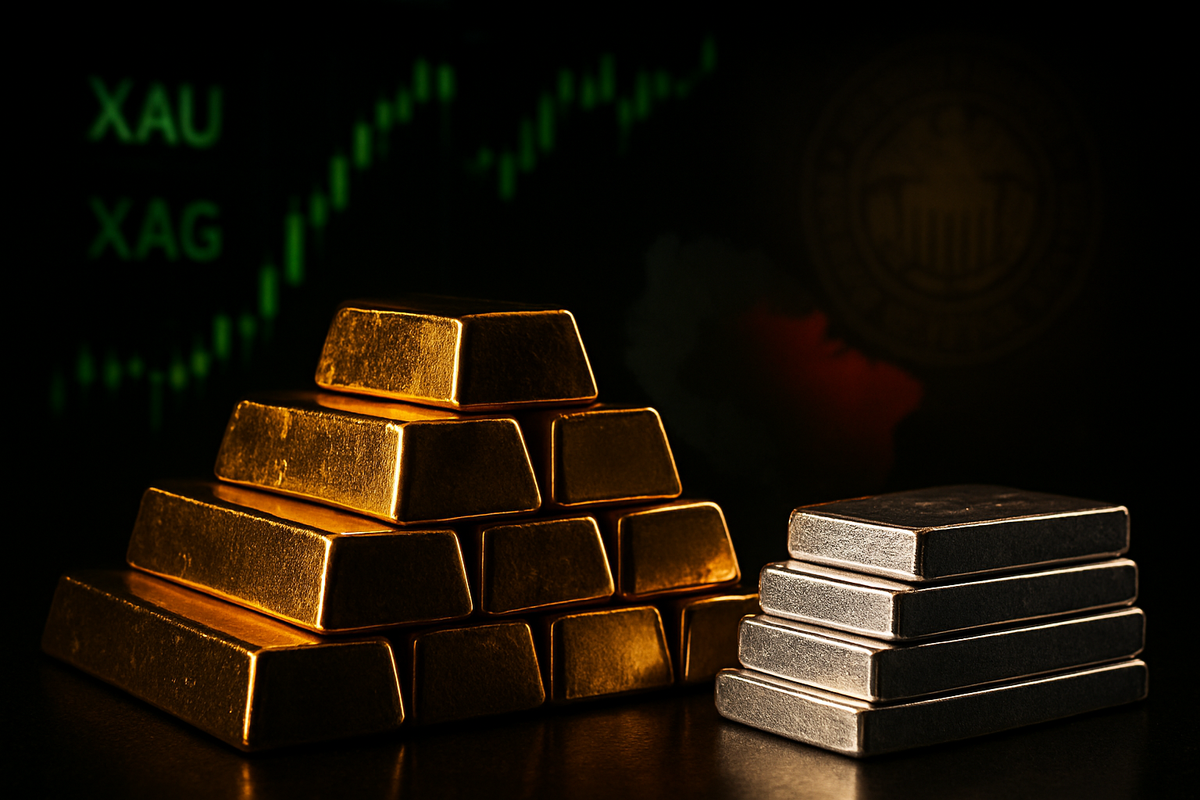
As the 2025 calendar winds down, the global financial landscape is witnessing an unprecedented surge in precious metals. On December 22, 2025, gold and silver prices vaulted to new all-time highs, driven by a potent combination of aggressive Federal Reserve rate-cut expectations and a dangerous escalation of geopolitical tensions in South America. Spot gold prices jumped nearly 2% to reach a staggering $4,420 per ounce, while silver outpaced its yellow counterpart, rallying over 3.4% to hit $69.44 per ounce.
This late-year surge has solidified 2025 as a generational milestone for commodity investors. With gold posting year-to-date gains of approximately 70%, the metal is currently on track for its best annual performance since 1979. The immediate implications for the market are profound: a massive rotation out of fixed-income assets into hard commodities is underway as investors scramble for safety amidst a weakening U.S. dollar and the specter of regional conflict.
The Perfect Storm: Monetary Easing and Geopolitical Strife
The rally witnessed on December 22 is the culmination of a months-long trend characterized by cooling economic data and rising global instability. Throughout 2025, the U.S. Federal Reserve has already implemented three interest rate cuts in response to a softening labor market, which saw the national unemployment rate climb to 4.6% in November. As of this morning, market participants are now pricing in at least two additional cuts for early 2026, significantly lowering the opportunity cost of holding non-yielding assets like gold and silver.
The timeline of this specific surge accelerated rapidly over the weekend. Tensions in Venezuela reached a boiling point after the U.S. administration intensified its blockade against Venezuelan oil tankers. Reports surfaced early Monday that a tanker was seized by U.S. naval forces, sparking fears of a direct military confrontation in the Caribbean. This "geopolitical anxiety" has sent shockwaves through the commodities complex, with institutional desks at major banks like JPMorgan Chase & Co. (NYSE: JPM) and Goldman Sachs Group Inc. (NYSE: GS) reporting record inflows into gold-backed exchange-traded funds (ETFs).
Mining Giants Reap the Rewards of Record Margins
The meteoric rise in spot prices has translated into massive windfalls for the world’s largest mining companies. Newmont Corporation (NYSE: NEM), the world’s leading gold producer, saw its stock rise 2.9% in early Monday trading, bringing its year-to-date return to a staggering 170%. The company’s focus on high-grade Tier-1 assets has allowed it to maintain relatively stable all-in sustaining costs (AISC), meaning nearly every dollar of gold’s price increase is flowing directly to the bottom line.
Similarly, Barrick Gold Corporation (NYSE: GOLD) gained over 2% as investors cheered the company’s increasing exposure to copper-gold synergies, which are also benefiting from the broader commodity rally. In the silver space, Pan American Silver Corp. (NYSE: PAAS) has been a standout performer, jumping 3.7% on the news of silver’s approach to the $70 mark. The company recently raised its production guidance and increased its quarterly dividend, signaling high confidence that the current price environment is sustainable. Conversely, manufacturing sectors that rely heavily on silver for industrial applications—such as solar panel producers and electronics firms—are beginning to feel the squeeze of rising input costs, potentially leading to margin compression in the first half of 2026.
A Historical Comparison: Echoes of 1979
The current market environment bears a striking resemblance to the late 1970s, a period defined by high inflation and intense geopolitical friction. Gold’s 70% return in 2025 is the strongest performance since 1979, a year marked by the Iranian Revolution and the subsequent oil crisis. Today, the "debasement trade" is being fueled not just by inflation, but by concerns over massive G7 sovereign debt and the weaponization of global financial systems.
This event fits into a broader industry trend of "de-dollarization," where central banks—particularly in the BRICS nations—have been aggressively diversifying their reserves away from U.S. Treasuries and into physical gold. The ripple effect on competitors is clear: as gold and silver prices remain elevated, smaller junior miners are becoming attractive acquisition targets for majors like Agnico Eagle Mines Limited (NYSE: AEM) who are looking to replenish their reserves at any cost. Furthermore, the regulatory focus is shifting toward the environmental impact of this renewed mining boom, as governments balance the need for critical minerals with tightening ESG standards.
The Road Ahead: 2026 and the $5,000 Gold Forecast
Looking ahead, the trajectory for precious metals remains skewed to the upside, though volatility is expected to remain high. In the short term, the market will be hyper-focused on the Federal Reserve’s January meeting. If the Fed signals a pause rather than the expected cut, we could see a sharp, albeit temporary, correction in metal prices. However, the long-term outlook is bolstered by structural supply deficits in the silver market and the ongoing instability in South America.
Strategic pivots are already occurring within the investment community. Wealth managers are increasingly recommending a 10–15% allocation to physical metals or mining equities, up from the traditional 5%. If the Venezuela crisis escalates into a broader regional conflict, analysts at several major firms have suggested that gold could breach the $5,000 mark by the end of 2026. The primary challenge for the industry will be managing the inflationary pressures on their own operations, as energy and labor costs continue to track the broader commodity surge.
Conclusion: A New Era for Hard Assets
The events of December 22, 2025, mark a definitive turning point in the current market cycle. The simultaneous record highs in gold and silver are not merely a "Santa Claus rally" but a fundamental repricing of risk in a world characterized by monetary easing and geopolitical fragility. Investors have clearly signaled that they value the permanence of hard assets over the uncertainty of fiat-denominated debt in the current climate.
Moving forward, the market will likely remain in a "buy the dip" mode as long as the Federal Reserve maintains its dovish stance and the situation in Venezuela remains unresolved. For investors, the key takeaways are clear: diversification into precious metals has moved from a defensive strategy to a primary driver of portfolio alpha in 2025. Watch for upcoming production reports from major miners and any shifts in central bank gold purchasing patterns as the ultimate barometers for the next leg of this historic bull run.
This content is intended for informational purposes only and is not financial advice