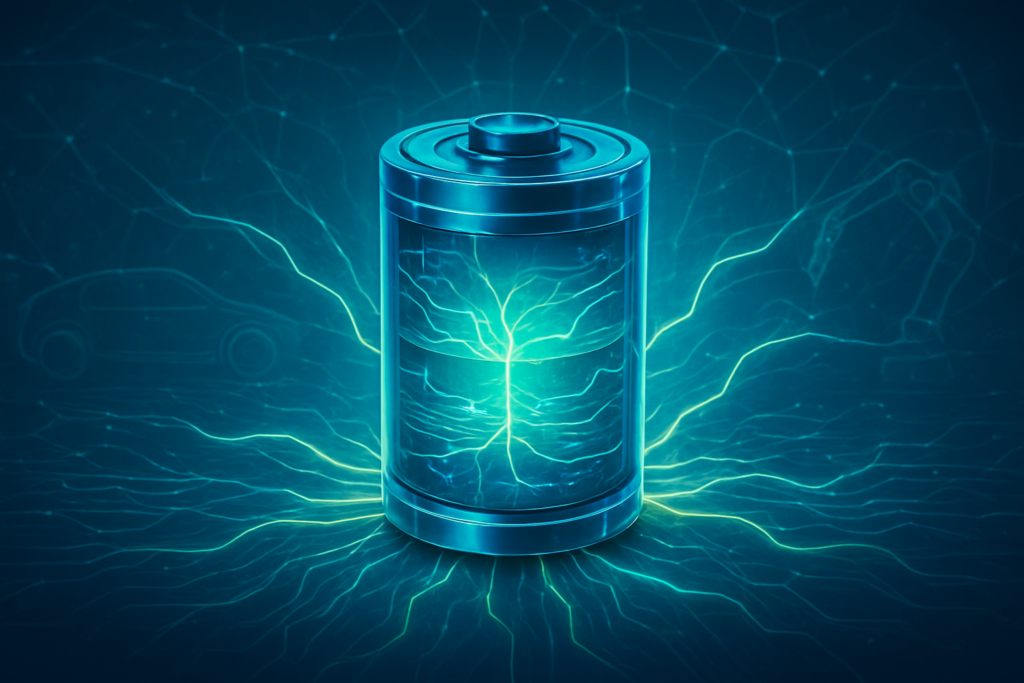
In a landmark move poised to reshape the landscape of energy storage and electric mobility, South Korean battery materials giant POSCO Future M (KRX: 003670) and U.S.-based all-solid-state battery innovator Factorial have officially joined forces. The strategic cooperation, formalized through a Memorandum of Understanding (MOU) signed on November 25, 2025, in Berlin, Germany, aims to accelerate the development and commercialization of next-generation all-solid-state battery technology. This collaboration represents a significant leap forward in the quest for safer, higher-energy-density, and faster-charging batteries, promising profound implications for the electric vehicle (EV) sector, robotics, and broader energy storage systems.
This partnership is not merely an agreement but a fusion of specialized expertise, bringing together POSCO Future M's prowess in advanced battery materials with Factorial's cutting-edge solid-state battery architecture. The timing of this announcement, coinciding with the "Future Battery Forum," underscores the urgency and global focus on transitioning away from conventional lithium-ion batteries, which, despite their widespread adoption, present limitations in safety and performance. The synergy between these two industry players is expected to catalyze innovation, streamline the supply chain, and ultimately drive down the costs associated with this transformative technology, setting the stage for a new era of electric power.
Technical Synergy: Unpacking the All-Solid-State Revolution
The core of this collaboration lies in combining distinct, yet complementary, technological strengths to overcome the formidable challenges of all-solid-state battery development. POSCO Future M, a cornerstone of the global battery supply chain, is focusing its extensive research and development on creating high-performance cathode and anode materials specifically optimized for solid-state applications. Their current efforts are concentrated on advanced cathode materials for all-solid-state batteries and innovative silicon-based anode materials. Furthermore, the broader POSCO Group is actively engaged in pioneering lithium metal anode materials and sulfide-based solid electrolytes, crucial components for unlocking the full potential of solid-state designs. Factorial's decision to partner with POSCO Future M was not arbitrary; rigorous testing of cathode material samples from various international suppliers reportedly demonstrated POSCO Future M's materials to possess superior quality, competitive cost structures, and excellent rate capability, making them an ideal fit.
Factorial, on the other hand, brings its proprietary all-solid-state battery technology to the table, notably its FEST® (Factorial Electrolyte System Technology) and Solstice platforms. These innovations are designed to replace the flammable liquid electrolytes found in traditional lithium-ion batteries with a solid counterpart, fundamentally enhancing safety by eliminating the risk of thermal runaway and fire. Beyond safety, all-solid-state batteries promise significantly higher energy density, allowing for longer driving ranges in EVs without increasing battery size or weight, and superior charging performance, drastically reducing charging times. This represents a monumental shift from previous approaches, where the trade-offs between energy density, safety, and cycle life were often unavoidable. The partnership aims to leverage Factorial's established network of collaborations with global automakers, including Mercedes-Benz (ETR: MBG), Stellantis (NYSE: STLA), Hyundai (KRX: 005380), and Kia (KRX: 000270), to accelerate the market integration of these advanced batteries.
Initial reactions from the AI research community and industry experts have been overwhelmingly positive, recognizing the immense potential of this alliance. Experts highlight that the combination of a materials giant like POSCO Future M with an innovative battery startup like Factorial could significantly de-risk the commercialization pathway for solid-state batteries. The focus on both cathode and anode materials, alongside Factorial's electrolyte technology, addresses critical bottlenecks in the solid-state battery ecosystem. The industry views such collaborations as essential for overcoming the complex engineering and manufacturing challenges inherent in scaling up this next-generation technology, moving it from laboratory success to mass production.
Competitive Implications and Market Dynamics
This collaboration is poised to create significant ripple effects across the AI industry, particularly within the electric vehicle and energy storage sectors. Companies that stand to benefit most directly include POSCO Future M and Factorial themselves, as they solidify their positions at the forefront of advanced battery technology. For POSCO Future M, this partnership is a strategic move to secure a dominant role in the emerging all-solid-state battery materials market, diversifying its offerings beyond traditional lithium-ion components. Factorial gains a powerful ally with deep expertise in materials science and a robust supply chain, which is crucial for scaling production and meeting the rigorous demands of automotive manufacturers.
The competitive implications for major battery manufacturers like Contemporary Amperex Technology Co. Limited (CATL), LG Energy Solution (KRX: 373220), and Panasonic (TYO: 6752) are substantial. While these giants are also investing heavily in solid-state research, the POSCO Future M-Factorial alliance, backed by commitments from major automakers, could establish a formidable new contender. This development could disrupt existing product lines and accelerate the timeline for solid-state battery adoption, forcing competitors to intensify their own R&D efforts or seek similar strategic partnerships. For tech giants heavily invested in EV production or energy storage solutions, such as Tesla (NASDAQ: TSLA), this collaboration signals a potential shift in the performance benchmarks for battery technology, demanding continuous innovation to maintain market leadership.
Moreover, the involvement of automakers like Mercedes-Benz, Stellantis, Hyundai, and Kia through Factorial's existing partnerships grants them a strategic advantage. Early access to and input on the development of these advanced batteries could allow them to launch EVs with superior range, safety, and charging capabilities, differentiating their products in an increasingly competitive market. This move underscores a broader trend of automakers directly engaging with battery developers to secure future supply and influence technological direction. The market positioning of companies involved in this collaboration is significantly enhanced, as they are seen as pioneers in a technology widely regarded as the "game changer" for future mobility.
Broader Significance: A Leap Towards Sustainable Energy
The POSCO Future M and Factorial collaboration fits seamlessly into the AI landscape and the accelerating global shift towards sustainable energy solutions. All-solid-state battery technology is not merely an incremental improvement; it represents a foundational change that can unlock new possibilities in electric vehicles, grid-scale energy storage, and even advanced robotics. By eliminating the flammable liquid electrolyte, these batteries offer an unparalleled level of safety, which is a critical factor for consumer adoption and regulatory approval, especially in high-density applications. Furthermore, their potential for higher energy density translates directly into extended range for EVs, making electric travel more convenient and comparable to traditional gasoline vehicles, thereby accelerating the transition away from fossil fuels.
The impacts of successful commercialization are far-reaching. Environmentally, widespread adoption could significantly reduce carbon emissions from transportation and energy generation. Economically, it could create new industries, jobs, and supply chains, while technologically, it could enable smaller, lighter, and more powerful electronic devices and vehicles. Potential concerns, however, revolve around the scalability of manufacturing, the cost of raw materials, and the overall production cost compared to established lithium-ion technologies. While solid-state batteries promise superior performance, achieving cost parity and mass production at a competitive price point remains a significant hurdle. This development draws comparisons to previous AI milestones such as the initial breakthroughs in lithium-ion battery technology itself, or the rapid advancements in solar panel efficiency, both of which fundamentally altered their respective industries and contributed to a more sustainable future.
This partnership signifies a major step in addressing these challenges, as it combines material expertise with battery architecture innovation. The move reflects a global trend where governments, corporations, and research institutions are pouring resources into developing next-generation battery technologies, recognizing them as central to achieving climate goals and energy independence. The collaboration's success could set a new benchmark for battery performance and safety, propelling the entire industry forward and potentially making electric vehicles a more viable and attractive option for a wider segment of the population.
The Road Ahead: Future Developments and Expert Predictions
The strategic alliance between POSCO Future M and Factorial signals a clear path towards the near-term and long-term commercialization of all-solid-state battery technology. In the near term, we can expect intensified joint research and development efforts, focusing on optimizing the interface between POSCO Future M's advanced materials and Factorial's battery architecture. The goal will be to refine prototypes, enhance cycle life, and further improve energy density and charging rates. Factorial's existing pilot plant in Cheonan, South Chungcheong Province, South Korea, alongside its Massachusetts, USA headquarters, will likely play a crucial role in scaling up initial production and testing.
Looking further ahead, the long-term developments will hinge on successfully transitioning from pilot production to large-scale manufacturing. This will involve significant capital investment in new production facilities and the establishment of a robust, localized supply chain for solid electrolyte materials, which are still relatively nascent. Potential applications and use cases on the horizon extend beyond electric vehicles to include grid-scale energy storage, urban air mobility (UAM), high-performance drones, and even advanced medical devices where safety and energy density are paramount. Experts predict that while initial adoption might be in premium EV segments due to potentially higher costs, continuous innovation and economies of scale will gradually bring these batteries to the mainstream market within the next decade.
However, several challenges need to be addressed. Scaling production of solid electrolytes and ensuring their long-term stability and performance under various operating conditions are critical. Reducing manufacturing costs to compete with established lithium-ion batteries is another significant hurdle. Additionally, the development of new manufacturing processes compatible with solid materials, which differ significantly from liquid electrolyte-based systems, will require substantial engineering effort. Experts predict that the next few years will see a "race to scale" among solid-state battery developers, with partnerships like this one being crucial for sharing risks and accelerating progress. The industry will be closely watching for definitive commercialization timelines and the first mass-produced vehicles powered by these revolutionary batteries.
A New Horizon for Energy Storage
The collaboration between POSCO Future M and Factorial marks a pivotal moment in the evolution of energy storage technology. It represents a strategic convergence of material science excellence and innovative battery design, aimed at overcoming the limitations of current lithium-ion batteries. The key takeaways from this development are the enhanced safety, higher energy density, and superior charging performance promised by all-solid-state technology, which are critical for accelerating the global energy transition. This partnership's significance in AI history is profound, as it could usher in an era where electric vehicles become truly mainstream, energy grids more resilient, and portable electronics more powerful and safer.
This development serves as a testament to the power of cross-border and cross-company collaboration in tackling complex technological challenges. It underscores the industry's collective commitment to innovation and sustainability. The long-term impact could be transformative, fundamentally altering how we power our world and interact with technology. As the world moves rapidly towards electrification, the race for superior battery technology is intensifying, and this alliance positions both companies at the vanguard of that charge.
What to watch for in the coming weeks and months will be further announcements regarding specific material specifications, pilot production milestones, and any definitive agreements that outline the commercial supply of these next-generation batteries to Factorial's automotive partners. The progress of this collaboration will be a key indicator of the broader trajectory of all-solid-state battery technology and its potential to redefine the future of energy.
This content is intended for informational purposes only and represents analysis of current AI developments.
TokenRing AI delivers enterprise-grade solutions for multi-agent AI workflow orchestration, AI-powered development tools, and seamless remote collaboration platforms.
For more information, visit https://www.tokenring.ai/.