Anticipation Builds: Fed Rate Cut Poised to Ignite Precious Metals Rally
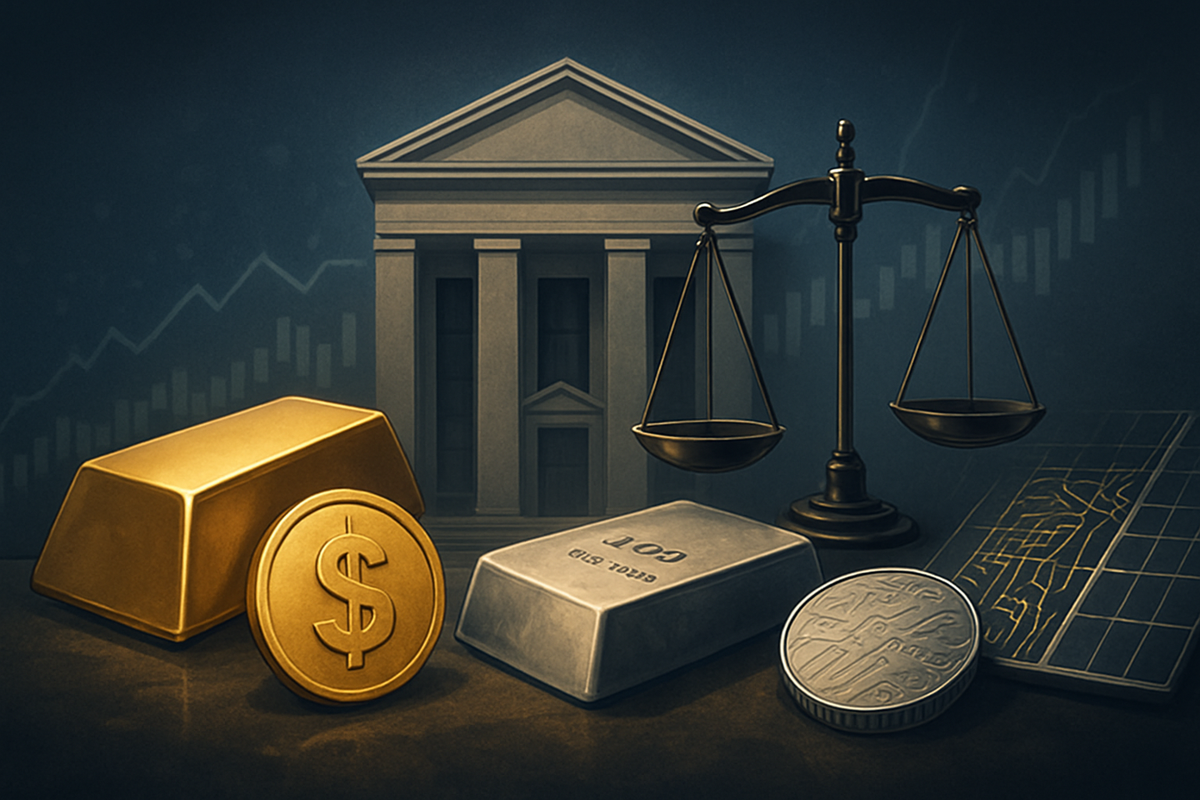
The financial markets are on high alert, fixated on the impending interest rate decision by the US Federal Reserve, scheduled for December 10, 2025. With widespread anticipation of a rate cut, the stage is set for a potentially significant shift in the landscape of precious metals. This expected easing of monetary policy is already sending ripples through the market, notably bolstering the appeal and prices of gold and silver, which are traditionally viewed as safe havens and inflation hedges.
Market sentiment is overwhelmingly leaning towards a 25-basis-point reduction, which would mark the third such cut this year. This strategic move by the Fed is largely driven by a cooling labor market, despite lingering inflation concerns, and aims to stimulate economic activity. The immediate implication is a reduction in the opportunity cost of holding non-yielding assets like gold and silver, making them more attractive to investors seeking refuge from a potentially weakening US dollar and broader economic uncertainties.
The Fed's Pivotal December Meeting: A Deep Dive
The upcoming Federal Open Market Committee (FOMC) meeting on December 10, 2025, is poised to be a pivotal moment for global financial markets. Market probabilities for a 25-basis-point (bps) interest rate cut are exceptionally high, ranging between 87% and 90%. This anticipated reduction follows similar cuts in September and October, signaling a clear trajectory towards more accommodative monetary policy. The decision comes under the leadership of Federal Reserve Chair Jerome Powell, whose statements and forward guidance will be meticulously scrutinized for clues about the trajectory of future rate adjustments into 2026.
The FOMC, comprising the seven members of the Board of Governors and five of the twelve Federal Reserve Bank presidents, utilizes the federal funds rate as its primary tool to influence economic activity. A rate cut typically makes borrowing cheaper, stimulating investment and consumption. Leading up to this decision, the FOMC has been weighing a multitude of economic data, including inflation metrics like the Consumer Price Index (CPI) and Personal Consumption Expenditures (PCE), as well as employment figures such as the unemployment rate and non-farm payrolls.
Initial market reactions have been pronounced, particularly in the precious metals sector. Silver has emerged as a standout performer, experiencing a dramatic surge to new record highs, climbing above $61 per ounce and even touching over $62 in some instances on the day of this report. This impressive rally is fueled by a confluence of factors: the anticipated Fed rate cut, tightening supply conditions, and robust industrial demand from high-growth sectors such as solar energy, electric vehicles, and data centers. Gold prices have also benefited, maintaining stability around $4,200 to $4,210 per ounce, reflecting its enduring appeal as a safe haven amidst economic uncertainties.
While the market widely expects a rate cut, there's also considerable attention on the Fed's tone. Some analysts suggest a "hawkish cut" is possible, where the Fed reduces rates but signals a more cautious approach or a higher hurdle for further reductions. Such nuanced communication could temper market reactions, especially for gold, which tends to react more to signals about the long-term rate trajectory. Nevertheless, the prevailing sentiment for precious metals in the immediate aftermath of an expected rate cut remains largely bullish.
Companies Poised to Win or Face Challenges
An anticipated interest rate cut by the US Federal Reserve is largely expected to create a favorable environment for the precious metals sector, driving up the prices of gold and silver and positively impacting the stock performance, operational costs, and investment appeal of many associated public companies. Conversely, some companies, particularly those reliant on precious metals as industrial inputs, may face increased costs.
Mining Companies: The Direct Beneficiaries Gold and silver mining companies are arguably the most direct beneficiaries. Higher commodity prices translate directly into increased revenues and improved profit margins. This operational leverage means that even a modest increase in metal prices can lead to a disproportionately larger boost in profits. Lower interest rates also reduce borrowing costs, which is crucial for capital-intensive mining operations that require significant funds for exploration, development, and expansion.
Among the potential winners are major gold producers like Newmont Corporation (NYSE: NEM) and Barrick Gold Corp. (NYSE: GOLD), both global giants with extensive operations that would see substantial boosts to their top and bottom lines. Many major gold miners also produce silver as a by-product, further enhancing their profitability. Silver-focused miners such as Pan American Silver Corp. (TSX: PAAS) and First Majestic Silver Corp. (NYSE: AG) are exceptionally well-positioned to capitalize on surging silver prices, especially given the metal's strong industrial demand. Smaller exploration and development firms, often called junior miners, like Coeur Mining Inc. (NYSE: CDE) and Hecla Mining Company (NYSE: HL), are highly sensitive to price movements and could find it easier to secure financing for new projects, leading to significant appreciation in their market valuations.
Investment Vehicles: Riding the Wave Exchange-Traded Funds (ETFs) that provide exposure to precious metals are also set to benefit. Physically-backed ETFs, such as SPDR Gold Shares (NYSEARCA: GLD), iShares Gold Trust (NYSEARCA: IAU), and iShares Silver Trust (NYSEARCA: SLV), will see their values directly track the rising prices of the underlying physical bullion. ETFs that invest in a basket of precious metals mining companies, like VanEck Vectors Gold Miners ETF (NYSEARCA: GDX) and Global X Silver Miners ETF (NYSEARCA: SIL), offer leveraged exposure, potentially outperforming the physical metals themselves as the profitability of their constituent companies soars.
Potential Challenges for Industrial Users While most of the precious metals sector stands to gain, companies heavily reliant on silver as a significant industrial input could face challenges. The surging price of silver, driven by both monetary and industrial demand, could translate into higher input costs for manufacturers that use silver in products like solar panels, electronics, and electric vehicles. Unless these companies can effectively pass on these increased costs to consumers, their profit margins could be squeezed. For instance, manufacturers in the solar industry, such as First Solar, Inc. (NASDAQ: FSLR), might experience increased material costs.
Wider Significance: A Shift in Global Financial Tides
The anticipated US Federal Reserve interest rate cut holds wider significance, signaling a potential shift in global financial tides that extends beyond the immediate impact on precious metals. This move integrates into broader industry trends, creates ripple effects across various commodity markets, and carries implications for regulatory frameworks and international monetary policy.
Historically, Fed rate cuts diminish the appeal of interest-bearing assets like bonds and money market funds, making non-yielding assets such as gold and silver relatively more attractive. This "opportunity cost" principle is a fundamental driver. Furthermore, rate cuts typically lead to a weaker US dollar, making dollar-denominated commodities more affordable for international buyers, thereby boosting global demand. The context of economic uncertainty or slowdowns, which often precede rate cuts, also reinforces the safe-haven appeal of gold and silver as investors seek to preserve wealth during turbulent times.
For gold, this event reinforces its role as a premier safe-haven asset amidst persistent economic uncertainties and geopolitical instability. A key trend supporting gold prices is the continued aggressive accumulation of physical bullion by central banks, particularly in emerging markets, as part of their reserve diversification strategies. This signals long-term confidence in gold and contributes to tighter supply. Silver, with its unique dual identity as both a precious metal and a critical industrial commodity, is experiencing a powerful surge driven by both monetary policy and escalating industrial demand from sectors like solar panels, electric vehicles, and data centers. This industrial demand is often price-inelastic, meaning manufacturers continue to require silver even with rising prices due to its essential role.
The ripple effects are widespread. Competitors, such as interest-bearing assets, become less attractive, leading to capital reallocation. Partners, including mining companies and precious metals ETFs, benefit significantly from enhanced profitability and increased investor inflows. Other commodities also feel the impact; lower interest rates stimulate broader economic activity, increasing demand for industrial metals like copper, crude oil, and agricultural products. In currency markets, a weaker US dollar typically sees other major currencies gain ground, while equity markets may see a boost from lower borrowing costs.
Regulatory and policy implications are also noteworthy. Periods of sustained low rates can lead to increased scrutiny on the Fed's policies. The ongoing trend of central banks diversifying reserves by accumulating gold reflects growing concerns about currency debasement and the stability of traditional dollar-centric systems, a sentiment potentially amplified by aggressive rate-cutting policies. Moreover, the increasing recognition of silver as a "critical mineral" by nations like the U.S. underscores its strategic importance, which could influence trade policies and supply chain resilience. Historical precedents consistently show a positive response from precious metals to Fed rate cuts, with gold typically seeing significant gains in the 24 months following such decisions, and silver also demonstrating robust performance.
What Comes Next: Navigating the Precious Metals Landscape
The anticipated US Federal Reserve interest rate cut sets the stage for a compelling future for precious metals, influencing both short-term market dynamics and long-term investment strategies. The move towards a more accommodative monetary policy is largely expected to sustain the bullish momentum for gold and silver, albeit with potential volatility depending on the Fed's forward guidance.
In the short-term, gold prices are expected to remain well-supported, potentially pushing towards the $4,300–$4,380 range if the Fed delivers a dovish signal about future easing. Geopolitical risks and US fiscal concerns will continue to underpin its safe-haven appeal. Silver, having already shown exceptional strength, is poised for further gains, with forecasts suggesting it could reach $65.22 by mid-December, driven by its unique supply-demand dynamics.
Long-term possibilities for gold are predominantly bullish, with historical data supporting significant price increases in the 24 months following Fed rate cuts. Analysts project gold to maintain elevated levels through mid-2026, with some forecasts reaching $4,600 per ounce by 2026 and potentially higher in subsequent years, fueled by continued central bank accumulation and inflation concerns. For silver, the long-term outlook is even more robust, driven by a structural supply/demand imbalance and accelerating industrial consumption from green technologies. Some analysts even envision "triple-digit silver prices" in the long term, citing a looming "supply demand brick wall."
Market participants will need to adapt strategically. Investors should consider diversifying portfolios to include precious metals, viewing current pullbacks in gold as buying opportunities. Monitoring central bank communications for signals on future easing will be crucial. Mining companies, empowered by higher metal prices and lower borrowing costs, may assess production expansion and increase investment in exploration, with junior miners potentially becoming attractive acquisition targets. Industrial users of silver, however, may need to explore greater efficiency or alternatives as prices rise.
Several scenarios and outcomes could unfold. The most likely "base case" is a bullish one for precious metals, with the Fed delivering the cut and signaling further dovish policy, leading to a weaker dollar and increased demand. This could see gold moving towards $4,500-$4,800 in the medium term and silver breaking past $65. A "hawkish Fed post-cut" scenario, where the Fed cuts rates but signals caution on future reductions, could lead to profit-taking and temporary pullbacks. Conversely, a "global economic doom loop" scenario, triggered by escalating crises, would likely result in aggressive Fed cuts and a pronounced "flight-to-safety" into gold, potentially driving significant gains. The least favorable scenario for precious metals would be "high-growth reflation," where strong economic growth and renewed inflation prompt the Fed to consider rate hikes, increasing the opportunity cost of holding gold and silver.
Wrap-Up: A New Era for Precious Metals
The anticipated interest rate cut by the US Federal Reserve on December 10, 2025, marks a significant inflection point, ushering in what is widely expected to be a new era of strength and prominence for precious metals. The fundamental shift towards a more accommodative monetary policy fundamentally enhances the appeal of non-yielding assets, reinforcing their traditional roles as safe havens and hedges against economic uncertainty and inflation.
The key takeaway is that both gold and silver are poised for sustained positive momentum. Gold's enduring appeal as a store of value, buttressed by consistent central bank demand and geopolitical tensions, suggests it will continue its upward trajectory, potentially setting new record highs. Silver, however, stands out with its exceptional performance in 2025, driven by a powerful combination of monetary easing, a severe supply squeeze, and soaring industrial demand from critical sectors like solar energy and electric vehicles. This dual identity positions silver not just as gold's traditional counterpart, but as an indispensable industrial commodity with its own robust growth drivers.
Moving forward, the market for precious metals is expected to remain dynamic and influenced by a complex interplay of factors. The lasting impact of this anticipated Fed rate cut will likely be the solidification of gold and silver as crucial components for portfolio diversification, offering protection and growth potential in an uncertain global economic landscape.
Investors in the coming months should maintain a sharp focus on several key indicators. Foremost among these is the Federal Reserve's forward guidance; any nuances in Chair Powell's statements regarding the pace and extent of future easing could trigger market reactions. Economic data, including inflation reports and employment figures, will continue to shape the Fed's policy outlook. The strength of the U.S. dollar, ongoing geopolitical developments, and reports of central bank gold purchases will also be critical. For silver, specifically, investors should closely monitor industrial demand trends and mining production levels, given the persistent structural deficit. Watching key technical support and resistance levels for both metals will also provide valuable insights into market sentiment and potential price movements.
This content is intended for informational purposes only and is not financial advice
More News
View More



Recent Quotes
View More
Quotes delayed at least 20 minutes.
By accessing this page, you agree to the Privacy Policy and Terms Of Service.