Oil and Gas Sector Under Siege as Commodity Prices Plummet, Sending Stocks Sliding
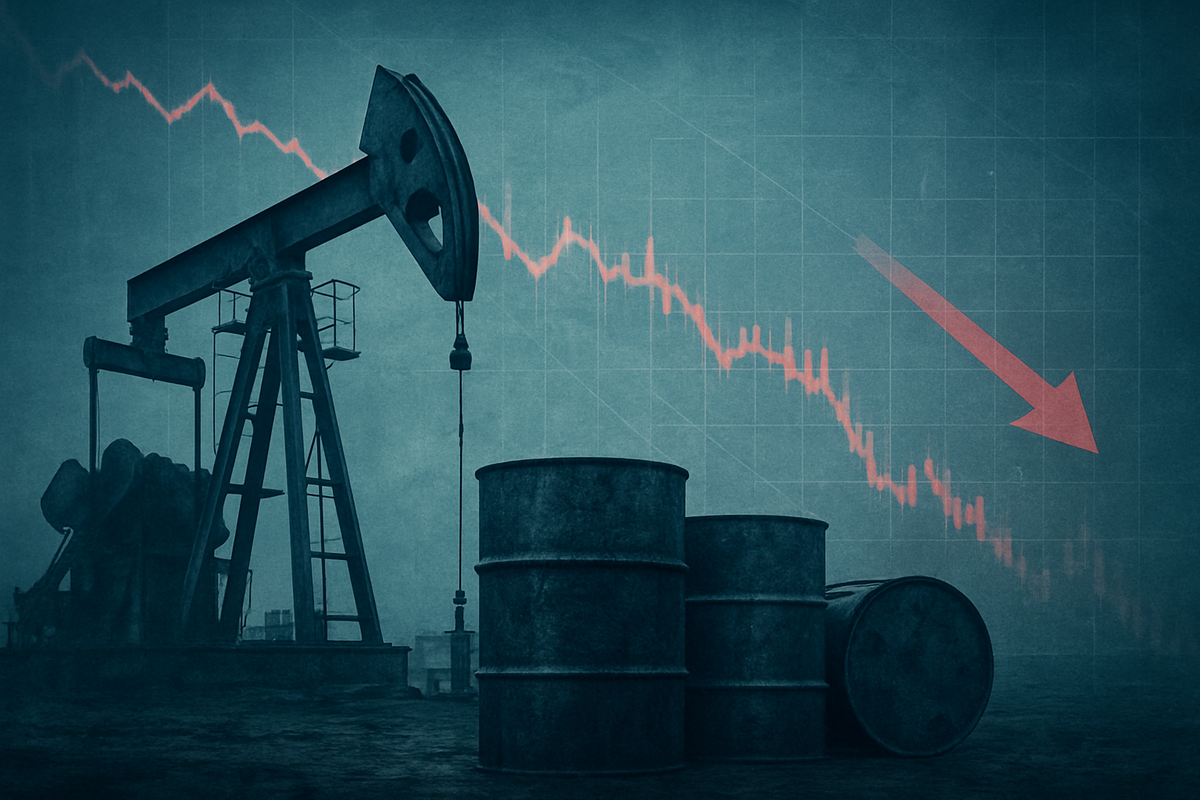
The global energy sector finds itself in turbulent waters as oil and gas company stocks experience a significant downturn, directly correlating with a persistent drop in commodity prices. As of December 16, 2025, a confluence of oversupply, weakening global demand, and broader macroeconomic headwinds has sent shockwaves through the market, pushing crude oil prices to near five-year lows and casting a shadow of uncertainty over an industry grappling with evolving dynamics. This immediate shift signals a challenging period for producers and investors alike, prompting a reevaluation of strategies and market expectations.
This pronounced slump, particularly evident in the latter half of 2025, has seen major energy indexes and key companies trending downwards. With West Texas Intermediate (WTI) crude oil trading at approximately $55.53 USD/Bbl, marking a substantial drop over the past month and year, the implications are far-reaching. While consumers may welcome lower energy costs, upstream exploration and production firms face considerable pressure on profitability, necessitating stringent cost controls and potentially accelerating a broader industry transformation towards efficiency and diversification.
Crude Awakening: A Deep Dive into the Energy Market's Tumultuous Descent
The recent slide in oil and gas stocks is a direct consequence of a sustained and significant decline in commodity prices, particularly crude oil, throughout 2024 and 2025. Brent crude, the international benchmark, which averaged around $80 per barrel in 2024, saw prices dip into the low $70s and even below $70 by September 2024. This downward trajectory intensified, with Brent settling at $60.56 per barrel and WTI at $56.82 per barrel by December 2025. On December 16, 2025, WTI crude hit $55.53 USD/Bbl, a 2.28% daily drop, a 7.24% monthly decline, and a staggering 20.28% decrease year-over-year, marking a near five-year low. This decline was partly fueled by hopes of a Russia-Ukraine peace deal, which could reduce geopolitical risk premiums. In contrast, natural gas prices at Henry Hub, after a historically low average of $2.21 per MMBtu in 2024, are projected to rebound to $3.56 per MMBtu in 2025 and $4.01 per MMBtu in 2026, indicating a more nuanced market for gas.
The timeline leading to this precarious market position is marked by a series of geopolitical events and fundamental supply-demand shifts. The Israel-Hamas War in October 2023 initially injected a geopolitical risk premium, with warnings of price spikes. This was compounded by Houthi attacks on Red Sea shipping lanes from November 2023 onwards, disrupting global supply chains. However, the dominant narrative quickly shifted to oversupply. OPEC+ (Organization of the Petroleum Exporting Countries and its allies), led by Saudi Arabia and Russia, implemented deep production cuts throughout 2023 and 2024, extending them until the end of 2025, to counter surging output from non-OPEC+ nations like the United States. Despite these efforts, global oil demand growth slowed significantly in 2024, influenced by a stalling post-pandemic recovery, China's economic struggles, and the increasing adoption of electric vehicles. By October 2025, a White House-backed Gaza ceasefire plan further eased geopolitical tensions, contributing to a notable drop in oil prices. The culmination arrived in December 2025, with global oil inventories reaching four-year highs and the International Energy Agency (IEA) forecasting an unprecedented surplus for 2026, solidifying bearish sentiment among traders.
Key players navigating this volatile landscape include the OPEC+ alliance, whose decisions on production cuts profoundly impact global supply. Non-OPEC+ producers such as the United States, Canada, Brazil, and Guyana continue to increase output, often offsetting OPEC+'s curtailments. Major International Oil Companies (IOCs) like ExxonMobil (NYSE: XOM), Shell plc (NYSE: SHEL), Chevron Corporation (NYSE: CVX), BP p.l.c. (LSE: BP), and TotalEnergies SE (EPA: TTE) are central to the industry, actively adapting through diversification into low-carbon technologies and significant investments in natural gas and LNG. Consuming nations like China and India dictate demand trends, while governmental bodies, including the new US administration under President Donald Trump, influence domestic production policies. Financial institutions, traders, and speculators also play a critical role, with their bearish positioning reflecting expectations of continued price weakness.
Initial market reactions have been a mix of caution and strategic adjustments. While the energy sector's overall performance in 2024 was modest, underperforming the broader S&P 500, the midstream segment, encompassing infrastructure companies like Enbridge (NYSE: ENB), delivered strong returns due to stable cash flows. Upstream producers, however, generally struggled. Early 2025 saw a temporary rebound in energy stocks, particularly for natural gas, but the sustained crude price decline has prompted oil and gas companies to double down on cost efficiency and operational resilience. There's also a clear acceleration in diversification efforts into hydrogen, carbon capture, and biofuels among major players. Notably, green energy stocks experienced a significant surge in 2025, outperforming traditional oil sectors, signaling a potential shift in investor focus towards long-term energy resilience.
Shifting Fortunes: Winners and Losers in a Low-Price Environment
The sustained downturn in crude oil prices creates a distinct bifurcation within the energy sector, distinguishing clear winners and losers. Upstream exploration and production (E&P) companies, whose revenues are directly tied to commodity prices, bear the brunt of the impact. Firms heavily invested in costly extraction methods or those with high debt loads will face significant pressure on their profit margins and cash flows. Companies like ConocoPhillips (NYSE: COP) and EOG Resources, Inc. (NYSE: EOG), with significant upstream exposure, will see their earnings negatively affected by lower crude prices. Similarly, natural gas-focused E&P companies such as Chesapeake Energy (NYSE: CHK) and Southwestern Energy (NYSE: SWN) have already seen production cuts impacting midstream systems. These companies are likely to experience reduced capital expenditure budgets, project delays, and potential asset impairments, challenging their ability to maintain dividends and share buybacks.
Oilfield Services (OFS) companies, which provide equipment and support to E&P firms, also face significant headwinds. Reduced E&P activity translates to lower demand for OFS equipment and services, leading to decreased revenues and tighter profit margins. Major players like Schlumberger (NYSE: SLB), Halliburton (NYSE: HAL), and Baker Hughes (NASDAQ: BKR) are likely to be negatively impacted, with Baker Hughes forecasting a low double-digit drop in North American spending. These firms may experience reduced pricing power and potential underutilization of expensive assets.
Conversely, downstream operations, such as refining and petrochemicals, often thrive in a low crude price environment. Companies like Valero Energy Corporation (NYSE: VLO), Marathon Petroleum Corporation (NYSE: MPC), and Phillips 66 (NYSE: PSX) benefit from cheaper feedstock costs. If refined product prices do not fall as sharply or quickly as crude prices, refining margins (crack spreads) improve, leading to increased profitability and higher refinery utilization rates. Petrochemical companies also benefit from reduced input costs, enhancing their profitability and competitiveness, especially those utilizing natural gas or natural gas liquids (NGLs) as feedstock.
The midstream sector, comprising companies that transport and store oil and gas, often demonstrates more resilience. Companies like Kinder Morgan, Inc. (NYSE: KMI), MPLX LP (NYSE: MPLX), and The Williams Companies, Inc. (NYSE: WMB) generate stable, fee-based revenues from long-term contracts, making their cash flows less dependent on commodity prices. While significant production cuts can eventually reduce volumes, impacting gathering systems like DT Midstream's (NYSE: DTM) Blue Union, these companies are generally more insulated. Integrated oil majors like ExxonMobil (NYSE: XOM), Chevron Corporation (NYSE: CVX), BP p.l.c. (LSE: BP), TotalEnergies SE (EPA: TTE), and Shell plc (LSE: SHEL) have diversified portfolios spanning upstream, midstream, and downstream. Their robust downstream and petrochemical operations can partially offset losses from their upstream businesses, providing a buffer against commodity price swings and making them more resilient than pure-play E&P firms.
Broader Ripples: Analyzing the Wider Significance of the Energy Downturn
The current slump in oil and gas prices is more than just a cyclical downturn; it represents a significant inflection point within broader industry trends, signaling a potential acceleration of the global energy transition. This event fits into a narrative of increasing supply from non-OPEC+ sources, particularly the Permian Basin in the U.S., coupled with a structural moderation in demand driven by energy efficiency gains, the proliferation of electric vehicles, and slower global economic growth. The consistent oversupply, even in the face of OPEC+ cuts, underscores a fundamental shift where the market is less susceptible to traditional supply-side management.
The ripple effects extend far beyond immediate producers. Competitors in the renewable energy space stand to gain as the relative cost competitiveness of fossil fuels diminishes. As oil and gas projects become less profitable, capital may increasingly flow towards solar, wind, and other clean energy initiatives, potentially accelerating their development and deployment. Partners in the oilfield services sector, such as Schlumberger (NYSE: SLB) and Halliburton (NYSE: HAL), will face reduced demand for their services as E&P companies scale back drilling and exploration activities, leading to potential layoffs and consolidation within the service industry. This could force service providers to diversify their offerings or seek opportunities in other energy segments.
Regulatory and policy implications are also significant. Governments of oil-producing nations, particularly those heavily reliant on hydrocarbon revenues, will face budget pressures, potentially leading to social unrest or a reevaluation of economic diversification strategies. For consuming nations, lower energy prices offer a reprieve from inflationary pressures, potentially giving central banks more room to maneuver on interest rates, which could stimulate broader economic growth. However, this also presents a challenge to climate policies, as cheaper fossil fuels might reduce the immediate incentive for consumers and businesses to switch to more expensive green alternatives, despite long-term environmental goals.
Historically, periods of sustained low oil prices have often led to industry consolidation, technological innovation aimed at cost reduction, and shifts in geopolitical power dynamics. The mid-1980s and the 2014-2016 oil price crashes serve as precedents, demonstrating how such events can reshape the industry landscape, forcing companies to become leaner and more efficient. The current situation, however, is arguably more complex, intertwined with the existential challenge of climate change and the accelerating pace of technological disruption in the energy sector. Unlike previous downturns, the long-term demand outlook for oil is increasingly under scrutiny due to the irreversible momentum of the energy transition, adding a layer of structural vulnerability to the current cyclical pressures.
Charting the Course Ahead: What Comes Next for the Energy Sector
Looking ahead, the energy sector is poised for a period of continued volatility and strategic reorientation. In the short term, the persistent oversupply and muted demand are likely to keep crude oil prices subdued, potentially hovering around the $50-$65 per barrel range into early 2026, as forecasted by the EIA. This will compel oil and gas companies to double down on cost-cutting measures, operational efficiencies, and capital discipline. Expect further deferrals of high-cost projects, increased focus on maximizing returns from existing assets, and a cautious approach to new investments. Mergers and acquisitions, particularly among smaller, financially strained producers, could accelerate as larger, more robust players seek to acquire assets at distressed valuations.
In the long term, the industry faces an existential pivot. The sustained pressure on commodity prices, coupled with growing environmental concerns and policy mandates, will likely accelerate the strategic shift towards diversified energy portfolios. Traditional oil and gas majors will continue to expand their investments in renewable energy, carbon capture technologies, hydrogen production, and liquefied natural gas (LNG), recognizing the need to future-proof their businesses. This strategic pivot will manifest in increased R&D spending on low-carbon solutions, divestment of non-core fossil fuel assets, and a re-skilling of their workforce to adapt to emerging energy technologies.
Market opportunities may emerge for companies that can innovate in carbon capture utilization and storage (CCUS), green hydrogen production, and advanced biofuels, as these technologies become increasingly critical for decarbonization efforts. Furthermore, the midstream sector, with its stable cash flows from infrastructure, may continue to be an attractive investment for those seeking yield and defensive plays within the energy complex. Challenges will include navigating evolving regulatory frameworks, securing financing for new energy projects, and managing the decline of legacy fossil fuel assets without incurring significant stranded asset risks.
Potential scenarios range from a gradual stabilization of oil prices as global economic growth eventually picks up and some high-cost production is curtailed, to a more prolonged period of low prices that fundamentally reshapes the energy landscape, pushing many traditional players towards aggressive diversification or even consolidation. Another scenario involves an unexpected geopolitical event that temporarily disrupts supply, causing a short-term price spike, but the underlying fundamentals of oversupply and moderating demand would likely reassert themselves. Investors should prepare for a market where agility, efficiency, and a clear long-term vision for the energy transition are paramount for survival and growth.
The End of an Era? Navigating a Transformed Energy Market
The recent slide in oil and gas stocks, driven by plummeting commodity prices, marks a critical juncture for the global energy sector. The key takeaway is the undeniable shift in market dynamics: a persistent oversupply, fueled by resilient non-OPEC+ production, is clashing with moderating global demand, exacerbated by economic headwinds and the accelerating energy transition. This convergence has pushed crude oil to near five-year lows, fundamentally altering the profitability landscape for upstream producers and signaling a challenging period ahead.
Moving forward, the market will likely remain characterized by volatility and uncertainty. Investors should assess energy companies not just on their current hydrocarbon output, but increasingly on their strategic resilience, cost efficiency, and their commitment to and progress in diversifying into cleaner energy sources. Companies with strong balance sheets, diversified revenue streams (e.g., integrated majors with robust downstream or midstream assets), and a clear roadmap for the energy transition will be better positioned to navigate these turbulent waters.
The lasting impact of this event will likely be an acceleration of structural changes already underway. It will compel traditional oil and gas companies to embrace innovation, streamline operations, and aggressively pursue new growth avenues in renewables and low-carbon technologies. For the broader economy, lower energy prices offer a potential boost by reducing inflationary pressures and consumer costs, but they also highlight the urgent need for robust climate policies that can withstand the allure of cheaper fossil fuels.
Investors should watch for several key indicators in the coming months: OPEC+'s adherence to production quotas, the pace of global economic recovery, the continued growth of non-OPEC+ supply, and, crucially, the capital allocation strategies of major energy companies towards new energy ventures. The long-term narrative for energy is no longer solely about supply and demand for fossil fuels, but about the transition to a more sustainable, diversified, and resilient energy system.
This content is intended for informational purposes only and is not financial advice
More News
View More




Recent Quotes
View More
Quotes delayed at least 20 minutes.
By accessing this page, you agree to the Privacy Policy and Terms Of Service.