The Stimulus Debate: Will Rate Cuts Ignite Economic Growth for Businesses and Consumers?
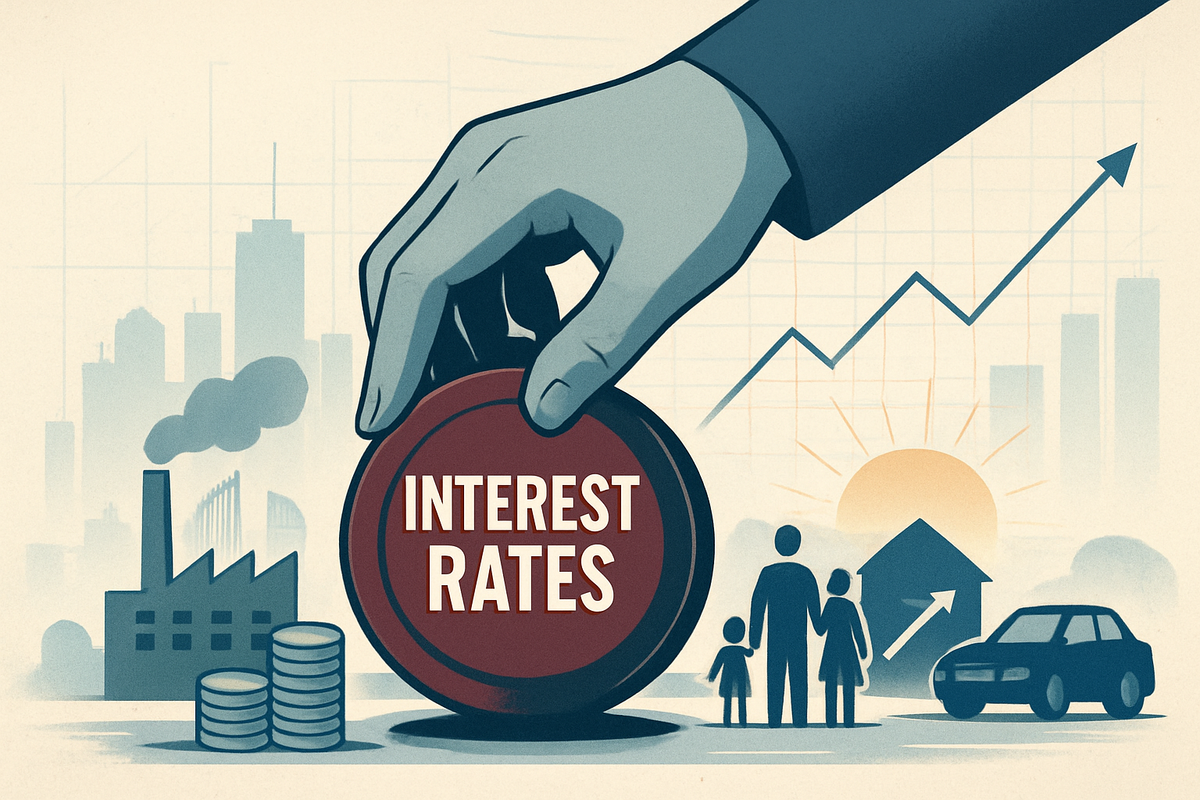
Central banks globally are constantly evaluating monetary policy in response to economic indicators. A perennial question in this discourse is the efficacy of interest rate cuts as a catalyst for economic growth. As of late 2025, with varying economic signals across major economies, the prospect of central banks easing monetary policy through rate reductions is a topic of intense discussion. Such a move is widely anticipated to inject vitality into the economy by reducing the cost of borrowing for both corporations and individual consumers.
The immediate implications of a rate cut are generally understood to be a significant boost to economic activity. For businesses, cheaper access to capital could unlock new investment opportunities, facilitate expansion, and improve profitability. Simultaneously, consumers stand to benefit from lower interest payments on loans, freeing up disposable income and making major purchases more affordable. This dual impact on both supply-side (business investment) and demand-side (consumer spending) is the theoretical cornerstone of why rate cuts are often considered a potent stimulus.
Central Banks Grapple with Data as Rate Cut Expectations Mount
As of December 5, 2025, the global economic landscape presents a nuanced picture, characterized by slowing, yet positive, GDP growth, persistent but easing inflationary pressures, and a cooling, though generally resilient, labor market. This complex environment has intensified central bank debates regarding the appropriate timing and magnitude of potential interest rate adjustments, with market participants eagerly anticipating moves that could significantly reshape financial conditions.
The Federal Reserve (Fed) in the United States has been a focal point of these discussions. Having already initiated rate cuts in September and October 2025, the Federal Open Market Committee (FOMC) is set to meet on December 9-10, with another potential cut on the table. Economic indicators influencing this decision include a U.S. annual inflation rate that rose to 3% in November, slightly above expectations but still a concern given the Fed's 2% target. More significantly, the private sector shed 32,000 jobs in November, a surprising decline that has heightened concerns about labor market weakening. While the GDPNow model estimates a robust 3.8% real GDP growth for Q3 2025, the employment figures are pushing the Fed towards a more dovish stance. Fed Chair Jerome Powell has maintained a cautious tone, stating that another cut is "not necessarily a given," reflecting divisions within the FOMC. However, dovish statements from officials like New York Fed President John Williams and Fed Governor Christopher Waller, who see "room for a further adjustment in the near term," have fueled market expectations. The CME FedWatch tool currently indicates an approximately 80-90% probability of a 25-basis-point cut at the upcoming December meeting, leading major financial institutions like Morgan Stanley (NYSE: MS), J.P. Morgan (NYSE: JPM), and BofA Global Research (NYSE: BAC) to revise their forecasts to anticipate a December reduction.
Across the Atlantic, the European Central Bank (ECB) faces a slightly different scenario. Euro area annual inflation edged up to 2.2% in November, slightly exceeding market expectations and keeping the ECB's focus firmly on its 2% target. Services inflation, in particular, remained sticky at 3.5%. While employment increased modestly by 0.2% in Q3 2025 and Eurozone GDP grew by 0.3% quarter-on-quarter, the persistent inflation figures have tempered expectations for immediate rate cuts. The ECB held its key interest rates unchanged in October, and economists largely anticipate a similar decision in December, with any potential cuts likely pushed into early 2026.
In the United Kingdom, the Bank of England (BoE) is also navigating a delicate balance. UK inflation remained high at 3.8% in November, nearly double the Bank's 2% target. However, the BoE has signaled that inflation has peaked and is on a downward trajectory. The UK labor market is showing clear signs of softening, with the unemployment rate increasing to 5.0% and payrolled employment falling in both September and October. GDP growth was a modest 0.1% in Q3 2025. The Monetary Policy Committee (MPC) voted 5-4 in November to keep borrowing costs unchanged, but the narrow margin, with four members advocating for a cut, underscores a strong dovish sentiment. Governor Andrew Bailey has expressed a desire to "wait and see" but also acknowledged a "gradual path downwards" for rates. Market pricing now indicates a 90% chance of a quarter-point reduction on December 18, with Goldman Sachs Research (NYSE: GS) forecasting a December cut followed by three more in the first half of 2026, bringing the policy rate down to 3% by summer 2026.
Several significant events and data releases have shaped these central bank considerations. A 43-day U.S. federal government shutdown earlier in the year complicated the Fed's data analysis, creating a "data blackout." The series of consecutive Fed rate cuts in September and October 2025 marked a clear pivot. The surprising weakness in the U.S. November employment data has been a critical factor for the Fed. For the Eurozone, the slight uptick in November inflation has pushed back immediate rate cut hopes. In the UK, the softening labor market, combined with the implications of the recent budget, has strengthened the case for a BoE rate cut, despite the still-high inflation figures. The divided opinions within central banks highlight the ongoing uncertainty in the economic outlook, reflecting the challenging task of balancing inflation control with supporting economic growth.
Corporate Winners and Losers: Navigating the Rate Cut Landscape
The prospect of interest rate cuts sends ripples through the corporate world, creating distinct winners and losers based on their financial structures, debt profiles, and sensitivity to consumer spending. For many, particularly those in capital-intensive sectors or with significant debt, a reduction in borrowing costs could be a significant boon, unlocking investment and boosting profitability.
A primary beneficiary of cheaper capital is capital-intensive industries. Companies in sectors such as manufacturing, utilities, and real estate and construction stand to gain immensely. Manufacturers can access more affordable loans to invest in new equipment, automation, and research and development, enhancing efficiency and reducing operational costs. Similarly, utilities, which often carry substantial debt to finance infrastructure projects like power grid upgrades and renewable energy expansion, would see their financing costs drop, improving margins. Companies like Duke Energy (NYSE: DUK) and Constellation Energy Corp. (NASDAQ: CEG), with their extensive infrastructure needs, could experience enhanced financial flexibility. In the real estate and construction sectors, lower rates translate to reduced borrowing costs for developers and investors, potentially reigniting paused projects and stimulating new construction. This, in turn, benefits suppliers of construction equipment, such as Caterpillar (NYSE: CAT), as demand for their machinery increases.
Furthermore, highly leveraged companies, especially those with a substantial portion of floating-rate debt, would experience an immediate and direct reduction in their interest expenses. This improvement in cash flow can alleviate financial pressure, enhance profitability, and free up capital for reinvestment or shareholder returns. For instance, Six Flags Entertainment (NYSE: FUN), known for its considerable annual interest expense, could see a material improvement in its bottom line from declining rates. Companies across various sectors, including information technology, that have taken on significant debt, could also find their financial health improving.
The consumer discretionary sector is another area poised for growth. Lower interest rates typically translate to reduced borrowing costs for consumers on mortgages, auto loans, and credit cards. This effectively increases disposable income, encouraging greater spending on non-essential goods and services. Retailers, automotive manufacturers, travel and leisure companies, and home improvement businesses are well-positioned to capitalize on this surge in consumer confidence and purchasing power. Companies such as Royal Caribbean Cruises Ltd. (NYSE: RCL), Crocs, Inc. (NASDAQ: CROX), Traeger, Inc. (NYSE: COOK), Mohawk Industries, Inc. (NYSE: MHK), and payment processing giant PayPal (NASDAQ: PYPL) could all see increased demand and sales volumes.
However, not all companies stand to benefit equally, and some may even face headwinds. Banks and financial institutions often experience a compression of their net interest margins (NIM) when interest rates fall. Banks profit from the spread between the interest they charge on loans and the interest they pay on deposits. While lower rates might stimulate loan demand, the inability to lower deposit rates as quickly or significantly as lending rates can narrow this crucial spread, impacting profitability. Major U.S. banks, while potentially seeing increased loan volumes, may find their overall net interest income reduced. Synchrony Financial (NYSE: SYF), a consumer financing company, could see a mixed impact, benefiting from lower interest expenses on its own funding but facing NIM compression on its lending activities. Additionally, entities heavily reliant on high interest rates for revenue, such as fixed-income investors, cash-heavy companies, or certain insurance companies with large fixed-income portfolios, may see reduced investment income as yields decline. The overall impact of a rate cut on a company is thus a complex interplay of its business model, capital structure, and the broader economic response.
A Broader Lens: Rate Cuts in the Global Economic Tapestry
Interest rate cuts are not merely isolated policy adjustments; they are deeply interwoven into broader economic trends and carry significant implications for industries, international relations, and regulatory frameworks. Central banks, acting on mandates to stabilize prices and maximize employment, deploy these cuts as a primary tool to counteract economic slowdowns or address disinflationary pressures.
The current discussions around rate cuts, particularly as of December 2025, fit into a global narrative of central banks navigating the aftermath of synchronized post-pandemic tightening. The challenge lies in carefully balancing the need to stimulate growth without reigniting inflation, especially with persistent services inflation in some economies. The interconnectedness of the global economy means that decisions by one major central bank, such as the Federal Reserve, can trigger ripple effects worldwide. For industries, lower rates directly stimulate interest-sensitive sectors like housing and automotive, making big-ticket purchases more accessible. This can boost sales for companies like Tesla (NASDAQ: TSLA) and General Motors (NYSE: GM), leading to increased production and job creation. The stock market often reacts positively, as reduced borrowing costs can enhance corporate profits and lower the discount rate for future earnings, thereby boosting equity valuations. Conversely, the appeal of gold as a safe-haven asset typically increases in a lower-rate environment, as the opportunity cost of holding non-yielding assets diminishes. Competitive landscapes can also shift, as cheaper borrowing can provide a competitive advantage and fuel mergers and acquisitions (M&A), intensifying global competition.
On the international front, rate cuts have profound implications for currency markets and global trade. A U.S. rate cut, for instance, can lead to a depreciation of the U.S. dollar, making American exports more competitive while potentially increasing import costs for U.S. consumers. This can also lead to capital outflows from the U.S. as investors seek higher returns in emerging markets, potentially strengthening their currencies. Debt-laden countries, particularly those with significant U.S. dollar-denominated debt, could experience relief from reduced interest payments, freeing up funds for domestic investment. The trend towards a "globalization of policy rates" suggests that central banks worldwide are increasingly influenced by global economic conditions, often leading to synchronized policy adjustments, albeit with variations based on domestic circumstances.
However, the widespread use of rate cuts and the potential for prolonged low-interest rate environments also raise regulatory and policy implications. A sustained period of low rates can encourage financial institutions to engage in a "search for yield," leading to excessive risk-taking and potentially inflating asset bubbles. This can create fragility within the financial system, with banks potentially facing solvency issues if rates were to snap back abruptly. There are also concerns about the effectiveness of monetary policy when rates approach the zero-lower bound (ZLB), potentially leading to a "point of no return" where further stimulus yields diminishing returns and future normalization becomes costly. To mitigate these risks, central banks and banking supervisors increasingly emphasize the coordination of monetary policy with macroprudential policies, which aim to build resilience in the financial system and curb excessive risk-taking.
Historical precedents offer valuable insights into the potential outcomes of rate cuts. Since 1974, the Federal Reserve has undergone seven distinct cycles of rate cuts, almost invariably coinciding with or immediately preceding U.S. recessions, underscoring their role as a primary stimulus tool during downturns. The aggressive rate cuts during the 2008 Global Financial Crisis (GFC) and the March 2020 COVID-19 pandemic demonstrated the power of monetary easing to cushion economic blows and eventually fuel recoveries. In 2019, the Fed's "mid-cycle adjustment" of three modest rate cuts, in response to trade tensions and low inflation, had a positive effect on the economy. The post-pandemic era has also highlighted a significant trend: after a period of synchronized global monetary tightening to combat inflation, many central banks, including the European Central Bank and the Swiss National Bank, have begun to cut rates, signaling a global shift towards easing. Some central banks have even experimented with Negative Interest Rate Policies (NIRP), pushing rates below zero to provide additional stimulus, though their long-term effectiveness and impact on bank profitability remain subjects of debate. These historical patterns underscore the complex interplay of monetary policy with economic cycles and the evolving challenges central banks face.
The Road Ahead: Navigating Post-Rate Cut Economic Horizons
As central banks globally, including the Federal Reserve, European Central Bank, and Bank of England, navigate the complex terrain of monetary policy in late 2025, the prospect of interest rate cuts ushers in a period of both anticipation and uncertainty. While the Reserve Bank of India has already implemented several cuts, and the Reserve Bank of Australia surprisingly contemplates hikes, the prevailing sentiment in major Western economies leans towards easing. This divergence and the internal divisions within central banks underscore a nuanced outlook for the coming months and years.
In the short term, the immediate effects of rate cuts are expected to manifest in increased consumer spending and business investment. Consumers will likely see reduced costs on various loans, from credit cards to auto loans, potentially freeing up disposable income and stimulating retail activity. Businesses, benefiting from cheaper financing, are expected to greenlight capital expenditures, expand operations, and potentially engage in more hiring. Stock markets typically react favorably, as lower borrowing costs can boost corporate profitability and encourage a shift from lower-yielding bonds to equities. This could continue to support the S&P 500, which has been near record highs, with growth stocks, particularly in technology, along with cyclical and small-cap stocks, poised for strong performance. However, a key short-term challenge remains the risk of an overheated economy, where aggressive cuts could reignite inflationary pressures, eroding purchasing power and potentially leading to excessive borrowing.
Looking to the long term, rate cuts are fundamentally designed to foster sustained economic growth. Forecasts suggest a stronger global growth trajectory in 2026, bolstered by these monetary policy adjustments. Lower mortgage rates are anticipated to invigorate the housing market, benefiting homebuilders and related industries. Gold may also retain its appeal as an attractive asset amidst ongoing geopolitical uncertainties. For governments and corporations, reduced interest rates will translate into lower debt servicing costs, enhancing overall debt sustainability. Nevertheless, central banks and markets will remain vigilant for any signs of renewed inflation, as overly robust growth could necessitate a reversal of policy and renewed rate hikes in late 2026 or 2027.
Businesses will need to execute strategic pivots to capitalize on this evolving environment. Cheaper financing will enable companies to pursue significant capital expenditures, fostering innovation and expansion, especially in technology-driven sectors that may have deferred projects during periods of higher rates. While borrowing becomes easier, a continued focus on sustainable profitability and efficient financial management will be paramount. Investors, in turn, may reallocate capital from cash holdings to assets with higher return potential, such as higher-quality bonds and intermediate-term Treasuries. Agility in adjusting investment and hiring plans will be crucial for navigating the dynamic interest rate landscape.
Emerging markets (EMs) present a mixed bag of opportunities and challenges. Lower interest rates in developed economies tend to direct capital flows towards EM stocks and bonds, as investors seek higher yields and growth prospects. This can reduce the debt burden for many developing nations with U.S. dollar-denominated debt and potentially strengthen EM currencies, making their exports more competitive. Countries like Brazil (NYSE: EWZ), Vietnam (NASDAQ: VNM), and India (NYSE: INDA) are identified as attractive investment destinations due to their strong economic fundamentals and higher growth trajectories. However, challenges persist, including the risk of capital outflows if EM central banks cut rates faster than advanced economies, leading to narrowing interest rate differentials. Currency volatility, geopolitical tensions, and inflationary pressures from global sources also pose significant risks, with performance expected to vary significantly across different EM sectors and countries.
Ultimately, several economic scenarios could unfold. The most widely anticipated is a soft landing, where economic growth decelerates without tipping into a recession, and central banks successfully contain inflation while supporting activity. This would likely entail moderate U.S. economic growth, gradual inflation moderation, and continued Fed rate cuts, leading to positive but subdued stock market gains. An upside risk scenario involves stronger-than-expected growth driven by fiscal stimulus or significant AI investments, potentially leading to robust market performance but also a higher risk of persistent inflation. Conversely, a recessionary or hard landing remains a downside risk if rate cuts are insufficient or delayed, leading to economic contraction and higher unemployment. A challenging stagflationary scenario, combining persistent inflation with weak growth, or an inflationary rebound if cuts are too aggressive, also cannot be entirely ruled out. The future remains a complex interplay of these factors, demanding careful monitoring from policymakers, businesses, and investors alike.
The Path Forward: A Cautious Optimism Amidst Evolving Monetary Policy
As 2025 draws to a close, central banks globally are navigating a pivotal juncture, with interest rate cuts emerging as a dominant theme in monetary policy discussions. The overarching goal remains consistent: to stimulate economic activity, address labor market weaknesses, and steer inflation towards targeted levels. The Federal Reserve, having already initiated cuts in September and October, faces strong market expectations for another reduction in December, a sentiment echoed by the Bank of England's anticipated easing. However, internal divisions among policymakers and varying regional economic conditions underscore the inherent complexities of this path.
The immediate and longer-term market outlook is characterized by a blend of cautious optimism. Equity markets have shown resilience, with a lower interest rate environment generally providing a tailwind, particularly for growth stocks and cyclical sectors. Bond markets have also responded positively, with opportunities emerging across the yield curve. For consumers, the impact is mixed: while lower borrowing costs on mortgages, auto loans, and credit cards offer relief and can stimulate spending, savers will likely face reduced returns on deposits. Businesses, benefiting from cheaper capital, are poised for increased investment and potentially a surge in deal activity. However, the risk of an overheated economy and a resurgence of inflationary pressures remains a critical concern, demanding continuous vigilance from policymakers.
The significance of these monetary policy shifts extends far beyond immediate economic indicators. While rate cuts serve as short-term stabilizers, their lasting impact can profoundly shape an economy's productive potential, influencing everything from research and development investments to long-term labor market dynamics. The debate continues on whether merely lowering rates can fully mitigate the long-term scarring effects of previous tightening cycles or if prolonged low rates could, paradoxically, foster unsustainable debt and financial instability. The global economy is entering a phase where the synchronization of central bank actions, or their divergence, will have lasting consequences for international trade, currency markets, and capital flows.
For investors, the coming months demand a keen eye on a multifaceted array of indicators. Close monitoring of inflation data—particularly the Consumer Price Index (CPI), Producer Price Index (PPI), and the Fed's preferred Personal Consumption Expenditures (PCE) report—will be paramount. Employment data, including non-farm payrolls, the unemployment rate, and wage growth, will provide crucial insights into labor market health. Economic growth indicators such as GDP forecasts, Purchasing Managers' Index (PMI), and retail sales will signal overall economic momentum. Furthermore, investors must remain attuned to central bank communications, including FOMC minutes, speeches from key officials, and "dot-plot" projections. Observing corporate performance, the yield curve, and broader geopolitical and fiscal developments will be essential for navigating this dynamic landscape, informing strategies such as diversification, sector rotation, and strategic asset allocation in a world shaped by evolving monetary policy.
This content is intended for informational purposes only and is not financial advice
More News
View More




Recent Quotes
View More
Quotes delayed at least 20 minutes.
By accessing this page, you agree to the Privacy Policy and Terms Of Service.