US and Vietnam Forge Strategic Semiconductor Alliance: A New Era for Global Supply Chains
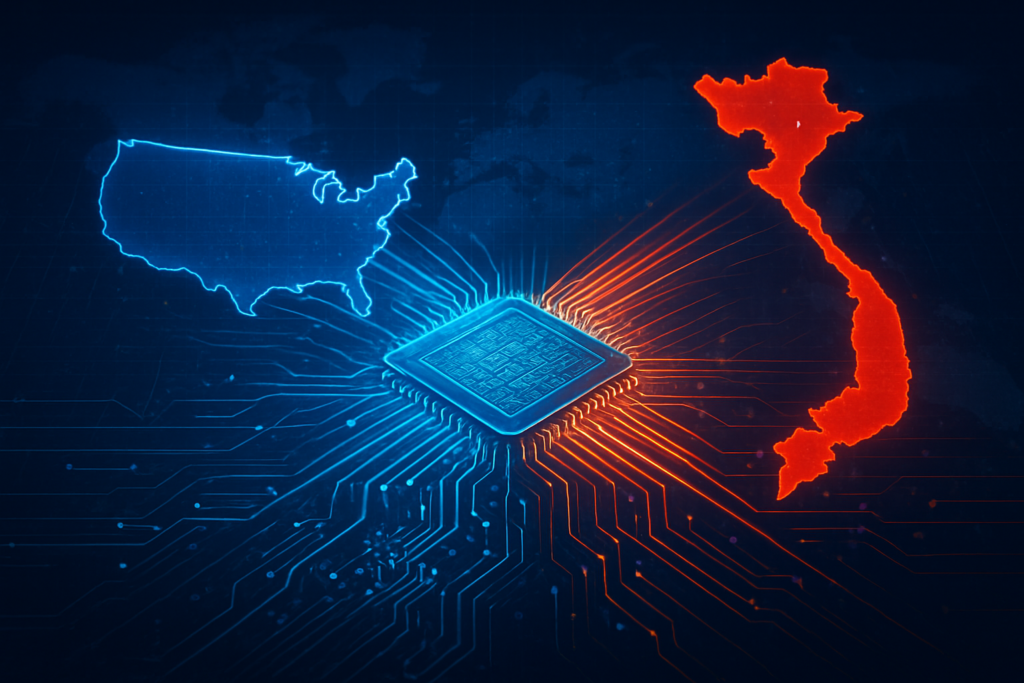
In a significant realignment of global technology power, the United States and Vietnam have solidified a comprehensive strategic partnership aimed at fortifying the semiconductor supply chain and drastically reducing reliance on existing manufacturing hubs. This burgeoning alliance, which gained substantial momentum throughout 2023 and 2024, represents a pivotal moment for both nations, promising to reshape the landscape of semiconductor production, foster economic resilience, and deepen geopolitical ties. The collaboration is a direct response to the urgent need for supply chain diversification, driven by recent geopolitical tensions and the lessons learned from pandemic-induced disruptions.
The immediate significance of this partnership lies in its potential to create a more robust and geographically distributed semiconductor ecosystem. For the United States, it offers a crucial pathway to enhance national security and economic stability by securing access to vital microchips. For Vietnam, it represents an unparalleled opportunity to ascend as a major player in the high-tech manufacturing sector, attracting substantial foreign investment, fostering advanced technological capabilities, and cultivating a highly skilled workforce, aligning with its ambitious goal of becoming a regional technology hub by 2050.
Deepening the Silicon Ties: Technicalities and Strategic Shifts
The strategic push between the US and Vietnam is underpinned by a series of concrete agreements and initiatives, marking a significant departure from previous approaches to global semiconductor manufacturing. A pivotal moment occurred in September 2023, when US President Joe Biden's visit to Hanoi elevated bilateral relations to a "Comprehensive Strategic Partnership." This visit formalized a deal for semiconductor and mineral procurement and saw both nations pledge support for the "rapid development of Vietnam's semiconductor ecosystem." A Memorandum of Cooperation on Semiconductor Supply Chains, Workforce and Ecosystem Development was signed, immediately followed by an initial US seed funding of $2 million for critical workforce development initiatives.
Technically, the partnership leverages the US CHIPS and Science Act of 2022, particularly the International Technology Security and Innovation (ITSI) Fund, which allocates $500 million over five years to enhance semiconductor capabilities globally. Vietnam, with its established strengths in semiconductor assembly, testing, and packaging (ATP), is a prime beneficiary. The collaboration involves jointly developing hands-on teaching labs and training courses for ATP, aiming to train 50,000 semiconductor engineers by 2030. Arizona State University (ASU) has been awarded $13.8 million by the US Department of State to lead talent development and public policy recommendations, offering free online courses and certification opportunities through its ITSI-SkillsAccelerator portal. This proactive investment in human capital and infrastructure distinguishes this partnership, moving beyond mere trade agreements to foundational ecosystem building.
This strategic shift differs significantly from previous approaches that often concentrated manufacturing in a few highly specialized regions. By actively investing in Vietnam's nascent yet rapidly developing capabilities, the US is not just diversifying but also helping to build an entirely new, resilient node in the global supply chain. Initial reactions from the AI research community and industry experts have been largely optimistic, viewing it as a pragmatic step towards de-risking supply chains and fostering innovation through broader collaboration. However, some experts caution that while Vietnam holds immense potential, it will require sustained investment and a clear strategic roadmap to fully meet the high expectations for advanced, secure semiconductor production.
Corporate Ripples: Impact on AI Companies and Tech Giants
This elevated partnership carries profound implications for AI companies, tech giants, and startups alike. Major global semiconductor corporations have already signaled their confidence in Vietnam's potential through significant investments. Intel (NASDAQ: INTC), for example, operates its largest global facility for semiconductor assembly and testing in Vietnam, a testament to the country's existing capabilities and strategic importance. Other industry titans like Samsung and Micron Technology (NASDAQ: MU) have also made substantial commitments, positioning themselves to benefit directly from Vietnam's growing role in the supply chain.
For these companies, the partnership offers a strategic advantage by diversifying their manufacturing footprint and mitigating risks associated with geopolitical instability or natural disasters in traditional production hubs. It provides access to a growing pool of skilled labor, preferential investment incentives offered by the Vietnamese government—such as tax policies and streamlined land access—and a supportive policy environment designed to attract foreign direct investment. This competitive advantage extends to enhanced supply chain resilience, allowing for more stable and predictable production cycles, which is crucial for the high-demand, high-innovation sectors like AI.
The potential disruption to existing products or services is less about immediate displacement and more about strategic evolution. Companies that can leverage Vietnam's emerging capabilities will gain market positioning and strategic advantages, potentially leading to faster time-to-market for new chips and technologies. Vietnamese companies, such as FPT Semiconductor, which has already launched the country's first "Made in Vietnam" semiconductor chip, stand to benefit immensely. They gain access to advanced US technology, expertise, and a global market, fostering local innovation and creating a vibrant domestic tech ecosystem. Startups in both countries could find new opportunities in specialized component manufacturing, design services, and AI-driven optimization of semiconductor processes.
Broader Significance: Geopolitics, Resilience, and the AI Frontier
This strategic semiconductor alliance between the US and Vietnam fits squarely into the broader AI landscape and ongoing global trends towards supply chain de-risking and technological sovereignty. It represents a significant step in the US's "friend-shoring" strategy, aimed at building secure and resilient supply chains with trusted partners. For Vietnam, it solidifies its position as a crucial player in the global technology arena, balancing its foreign policy to collaborate with various tech powers while strategically aligning with the US.
The impacts extend beyond mere economics. Geopolitically, it strengthens ties between the US and a key Southeast Asian nation, providing a counterweight to regional influences and enhancing stability. For the global semiconductor industry, it means a more diversified and resilient supply chain, reducing the vulnerability of critical technologies to single points of failure. This increased resilience is paramount for the continuous advancement of AI, which relies heavily on a steady supply of cutting-edge processors. Potential concerns, however, include the speed and scale at which Vietnam can truly ramp up advanced manufacturing capabilities, as well as the need for robust intellectual property protections and cybersecurity measures to safeguard sensitive technologies.
Comparisons to previous AI milestones reveal a shift in focus from purely computational breakthroughs to the foundational infrastructure that supports them. While milestones like the development of large language models captivated headlines, this partnership addresses the underlying hardware dependency, which is equally critical for AI's sustained growth. It acknowledges that the future of AI is not just about algorithms but also about the secure and reliable production of the silicon brains that power them. The alliance is a proactive measure to ensure that the physical infrastructure for AI innovation remains robust and unconstrained.
The Road Ahead: Future Developments and Expert Predictions
Looking ahead, the US-Vietnam semiconductor partnership is poised for several key developments in the near and long term. Near-term focus will remain on the ambitious workforce development goals, particularly the target of training 50,000 semiconductor engineers by 2030. This will involve continued investment in educational programs, vocational training, and the establishment of advanced research centers. The ongoing workshops and policy dialogues, such as those launched in September 2024 as part of the ITSI Fund initiative, will continue to refine Vietnam's regulatory framework and investment incentives to attract more foreign direct investment.
In the long term, experts predict that Vietnam will progressively move beyond assembly, testing, and packaging into more complex stages of semiconductor manufacturing, including chip design and potentially even fabrication, though the latter presents significant capital and technological hurdles. Potential applications and use cases on the horizon include specialized chip manufacturing for AI, IoT, and automotive industries, leveraging Vietnam's cost-effective manufacturing capabilities and burgeoning engineering talent. The collaboration could also foster joint R&D projects, leading to innovations in materials science and advanced packaging technologies.
Challenges that need to be addressed include scaling up infrastructure rapidly, ensuring a consistent supply of clean energy, and maintaining a competitive regulatory environment. Experts also highlight the importance of intellectual property protection and cybersecurity as Vietnam integrates more deeply into the global semiconductor ecosystem. What experts predict will happen next is a gradual but steady increase in Vietnam's contribution to the global semiconductor output, particularly in niche areas and advanced packaging, making it an indispensable link in the diversified supply chain. The partnership is expected to serve as a model for how developed nations can collaborate with emerging economies to build resilient technological ecosystems.
A New Chapter in Global Tech: Comprehensive Wrap-Up
The elevated strategic partnership between the United States and Vietnam to strengthen semiconductor supply chains marks a watershed moment in global technology and geopolitics. The key takeaways include a deliberate push for supply chain diversification, significant US investment through the CHIPS Act's ITSI Fund, Vietnam's strategic emergence as a semiconductor hub, and a strong emphasis on workforce development and ecosystem building. This development's significance in AI history is profound, as it addresses the foundational hardware infrastructure critical for AI's continued growth and resilience, moving beyond purely software-centric advancements.
This alliance is a testament to the proactive measures being taken to safeguard the future of technology against geopolitical risks and economic disruptions. It underscores the understanding that a robust AI future requires not just intelligent algorithms but also secure, diversified, and resilient manufacturing capabilities for the microchips that power them.
In the coming weeks and months, observers should watch for further announcements regarding investment incentives from the Vietnamese government, progress reports on the workforce development programs, and potential new partnerships between US and Vietnamese companies. The sustained commitment from both nations will be crucial in realizing the full potential of this strategic collaboration, ultimately shaping a more secure and innovative future for the global tech industry.
This content is intended for informational purposes only and represents analysis of current AI developments.
TokenRing AI delivers enterprise-grade solutions for multi-agent AI workflow orchestration, AI-powered development tools, and seamless remote collaboration platforms.
For more information, visit https://www.tokenring.ai/.
More News
View More




Recent Quotes
View More
Quotes delayed at least 20 minutes.
By accessing this page, you agree to the Privacy Policy and Terms Of Service.