Graphite-Based SiC-Coated Materials vs. Solid (Bulk) SiC: How to Choose Materials for Semiconductor Process Components
By:
AB Newswire
August 23, 2026 at 18:30 PM EDT
ⓘ This article is third-party content and does not represent the views of this site. We make no guarantees regarding its accuracy or completeness.
Ningbo, Zhejiang, China - August 23, 2026 - Material selection has a direct impact on equipment yield, maintenance cost, and service life. Two mainstream technical approaches currently dominate the industry:
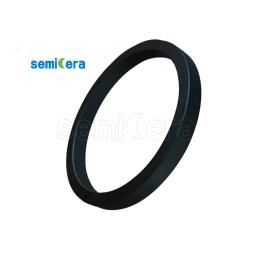
These two materials may appear to “converge on the same destination”—the surface ultimately exposed to the process atmosphere is silicon carbide in both cases—but their differing internal structures lead to significant differences in performance, cost, and application scenarios. 1. Material Structure and Manufacturing Principles1. Graphite-Based SiC-Coated Material This material uses high-purity isostatically pressed graphite as the substrate, onto which a polycrystalline SiC coating—typically 100 to 300 μm thick—is grown via chemical vapor deposition (CVD). The graphite substrate provides mechanical strength, machinability, and relatively low density, while the SiC coating serves to block corrosive gases, prevent particle contamination, and increase surface hardness. Structurally, this can be understood as a “graphite skeleton + SiC armor”: performance is highly dependent on the coating’s density, thickness uniformity, and bond strength with the substrate. 2. Solid (Bulk) SiC Material This material is also typically produced via CVD, but does not rely on a graphite substrate. Instead, prolonged deposition forms a self-supporting SiC body that can reach several millimeters or more in thickness, which is then precision-machined into its final shape. The bulk material is SiC throughout, from surface to core, eliminating the substrate/coating interface issue entirely. 2. Key Performance Comparison
3. Typical Application ScenariosGraphite-Based SiC-Coated Material Is Better Suited For:
Solid SiC Material Is Better Suited For:
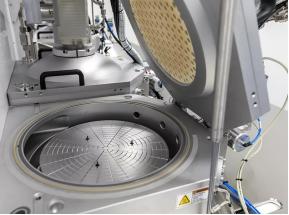
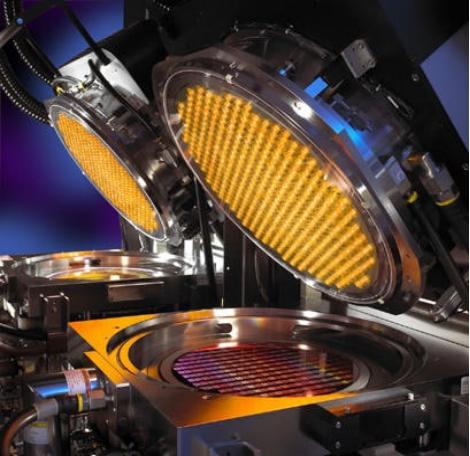
4. Key Considerations for Material Selection Looking at specific equipment types, there is a clear divergence in the proportion of graphite SiC-coated versus solid SiC materials actually used in production lines. This reflects differing emphases across process steps regarding corrosion intensity, thermal cycling characteristics, and particle control requirements: 1. 12-Inch Etch Equipment: The usage rate of solid SiC is significantly higher than that of graphite SiC-coated material. Etch chambers (particularly in high-concentration halogen plasma environments such as Cl₂ and F-based chemistries) are highly corrosive, and 12-inch advanced process nodes are extremely sensitive to particle contamination—once the coating develops pinholes or edge chipping, flaking particles directly impact yield. Solid SiC has a uniform cross-section throughout with no risk of coating delamination, and is therefore more widely adopted for electrostatic chucks, edge rings, and liners in 12-inch etch equipment, despite higher procurement and machining costs.
2. RTP (Rapid Thermal Processing) Equipment: Solid SiC is likewise the dominant choice. The core characteristic of RTP processes is rapid heating and cooling with repeated thermal cycling, which places extremely high demands on a component’s thermal shock resistance and temperature uniformity. The mismatch in thermal expansion coefficients between the graphite substrate and the SiC coating makes the coating prone to microcracking or even delamination under intense temperature cycling, whereas solid SiC is uniform throughout with no interfacial mismatch issues, offering more stable thermal shock resistance. As a result, key RTP chamber components such as susceptors and support rings tend to favor solid SiC.
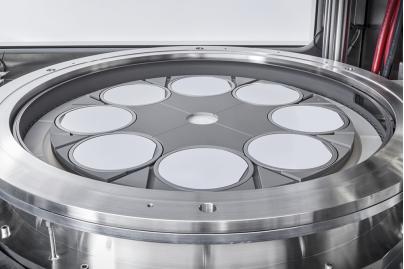
3. Epitaxy Equipment: Graphite SiC-coated material is more commonly used here. The temperature window and corrosion intensity of epitaxy processes (such as conventional MOCVD and LPCVD epitaxy furnaces) are relatively milder than those of etch or RTP, making coating integrity easier to maintain. At the same time, components such as wafer boats and trays in epitaxy equipment tend to be larger in size and used in greater quantities—the graphite substrate is lighter, easier to machine, and significantly lower in cost, while also being more conducive to automated handling. This makes graphite SiC-coated material a better overall value proposition for epitaxy, a process step with somewhat less extreme particle control requirements than etch, but with greater sensitivity to cost and throughput.
Conclusion Graphite-based SiC-coated material and solid SiC are not simply a matter of one being “better” than the other—rather, they represent two different trade-offs between cost and performance. The former meets moderate-duty requirements at a lower cost, while the latter trades a higher upfront investment for longer service life, lower particle risk, and more stable process performance. Material selection should be based on specific process conditions, process-node requirements, and an overall cost model, with small-batch trials used where necessary to compare actual performance under real operating conditions before making a full-scale rollout decision. About us Our company boasts a full suite of production facilities, including molding, sintering, machining, and coating, ensuring comprehensive control over product quality and the ability to implement the most cost-effective production strategies. This integrated approach not only lowers costs but also enhances our competitiveness, allowing us to offer customers superior products at more competitive prices. Media Contact
Report this content
If you believe this article contains misleading, harmful, or spam content, please let us know. Report this articleMore NewsView More

Arcturus Highlights ARCT-810 Phase II Data, Unveils Next-Gen OTC Therapy Platform ↗
September 24, 2026
Via MarketBeat
Tickers
ARCT

TELUS Sharpens Telecom, AI Focus as It Reviews Digital and Health Assets ↗
September 24, 2026

ING Group Raises 2027 ROE Target Above 16% as Revenue, AI Drive Growth ↗
September 24, 2026

Compass Pathways Targets Q4 COMP360 NDA Completion, Eyes 2027 Launch ↗
September 24, 2026
Recent QuotesView More
Stock Quote API & Stock News API supplied by www.cloudquote.io
Quotes delayed at least 20 minutes. By accessing this page, you agree to the Privacy Policy and Terms Of Service.
© 2025 FinancialContent. All rights reserved.
|