NSOCKS Proxy Solutions for Different Online Needs
By:
BusinesNews Wire
September 16, 2026 at 03:32 AM EDT
ⓘ This article is third-party content and does not represent the views of this site. We make no guarantees regarding its accuracy or completeness.
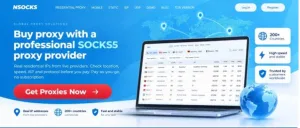
Modern online work rarely depends on one network requirement for every task. A localization team may need a realistic regional address, while a monitoring tool may need speed and long session stability, so the official website becomes useful as a place to compare several route types in one environment. NSOCKS combines residential, mobile, ISP, static, datacenter, and UDP capable options with SOCKS5 and HTTPS support. This guide shows how to match those options to practical needs instead of choosing a proxy category only by price. Matching proxy solutions to the actual workloadThe first decision should be the job that the route must perform, because network identity, speed, geography, and session length matter differently across workflows. NSOCKS shows available IPs with details such as location, ISP, connection speed, and supported protocol before purchase. That visibility makes it easier to compare routes by operational fit rather than by a broad product label.
Regional tasks need realistic location signalsLocalization, advertising checks, public research, and regional QA often depend on what a service shows from a specific market. Residential proxies can provide consumer ISP addresses that fit this kind of work, while location filters help narrow the route to the required country, city, ZIP code, or provider. The route should still be selected according to the exact business question rather than simply because residential access sounds more realistic. Mobile tasks need carrier contextMobile proxies use addresses associated with cellular networks and can support app testing, mobile search checks, and advertising verification where carrier context matters. NSOCKS describes its mobile offering around 4G and 5G carrier IPs, which separates this category from ordinary residential or datacenter access. A team should choose mobile routing only when the mobile network itself contributes to the test result. Choosing between stable and flexible proxy typesSome tasks need a route that stays consistent, while others benefit from easier replacement or different network identities. Static and ISP options are useful when continuity matters, whereas residential, mobile, and datacenter choices can serve more varied testing or research requirements. The correct model depends on how much change the application can tolerate during normal work. ISP proxies support longer sessionsISP proxies combine provider based identity with the stability needed for repeated access. They can fit account based tools, SEO monitoring, ecommerce checks, and other workflows where changing the route too often would create unnecessary variation. When continuity matters, keeping network conditions predictable can simplify both daily work and troubleshooting. Static proxies create a fixed reference pointStatic proxies keep the same endpoint across the rental period and work well for recurring monitoring or tools that expect a consistent address. A fixed route also makes it easier to compare results over time because fewer network variables change between sessions. Teams should document the role of each static address so an old route is not renewed without a clear reason. Comparing performance focused and identity focused optionsProxy selection often involves a tradeoff between network realism and technical efficiency. Residential and mobile routes emphasize how the connection appears from a consumer or carrier network, while datacenter and UDP capable routes emphasize performance characteristics. The table below highlights how these priorities differ so teams can avoid paying for features that do not help the workload.
Performance focused routes fit technical workloadsDatacenter routes can be practical for monitoring, automation, and other approved tasks where fast connections matter more than appearing residential. UDP capable SOCKS5 routes address a different performance need by supporting low latency traffic for applications such as VoIP, streaming, gaming, or other real time services. Technical teams should verify application compatibility before buying because a fast route provides little value when the software cannot use it correctly. Identity focused routes fit context sensitive checksResidential, mobile, and ISP routes are more useful when network origin forms part of the test. A localization team may care about consumer ISP context, while a mobile QA team may care about carrier identity and a long running workflow may need a stable ISP route. Choosing by context keeps the purchase connected to a measurable requirement instead of a generic preference. Practical steps for building a task based setupA useful proxy toolkit should start small and grow only after individual routes prove that they fit the intended work. Teams should define the application, target location, network identity, protocol, and expected session duration before selecting an endpoint. A written requirement keeps the technical choice aligned with the business purpose. Step one describe the online needWrite down exactly what must be tested, monitored, researched, or accessed and identify the software that will perform the task. Note whether the requirement depends on geography, carrier identity, a fixed IP, fast throughput, or low latency. This short description makes the next filtering step much more efficient. Step two filter the live inventoryUse the dashboard to narrow current stock by proxy type, country, city, ZIP code, ISP, domain, or other relevant details. Compare speed and protocol information only after unsuitable routes have been removed. A smaller shortlist makes cost comparison more meaningful because every remaining option already meets the core requirement. Step three test one route in the real applicationConfigure the selected endpoint in the browser, application, or tool that will use it during normal work. Check location, authentication, stability, speed, and expected behavior before adding more routes to the same workflow. Testing one route first limits waste and gives the team a reference configuration for future purchases. Recommendations for different operating needsDifferent teams should manage proxy access according to the way they work rather than applying one universal rule. Marketing teams often care about geography, QA teams care about reproducibility, and technical teams may care about performance or session stability. Clear ownership makes these differences easier to manage inside one account. Recommendations for marketing and research
Recommendations for QA and monitoring
Recommendations for performance sensitive work
Pros and cons of a multi type proxy toolkitUsing several proxy categories gives a business more precision, but it also creates more configuration and account management work. NSOCKS supports pay as you go purchasing and shows route details before purchase, which can make controlled testing easier than committing immediately to a large package. The value of that flexibility depends on whether the team maintains clear rules for selection, credentials, renewals, and spending. Main advantages
Main limitations
Building a balanced NSOCKS setupA balanced setup gives every route a defined purpose. Each network type should match a real task. Routes should be renewed or replaced only when operational needs justify the decision.
Report this content
If you believe this article contains misleading, harmful, or spam content, please let us know. Report this articleMore NewsView More
Via MarketBeat
Tickers
WPM


Via MarketBeat

Aeluma Q4 Earnings Call Highlights ↗
Today 19:02 EDT

Recent QuotesView More
Stock Quote API & Stock News API supplied by www.cloudquote.io
Quotes delayed at least 20 minutes. By accessing this page, you agree to the Privacy Policy and Terms Of Service.
© 2025 FinancialContent. All rights reserved.
|


 More proxy categories create more management decisions