Amazon.com (AMZN) Deep-Dive: Navigating the 2026 Capex Cycle and the Tariff Windfall
By:
Finterra
February 23, 2026 at 09:48 AM EST
ⓘ This article is third-party content and does not represent the views of this site. We make no guarantees regarding its accuracy or completeness.
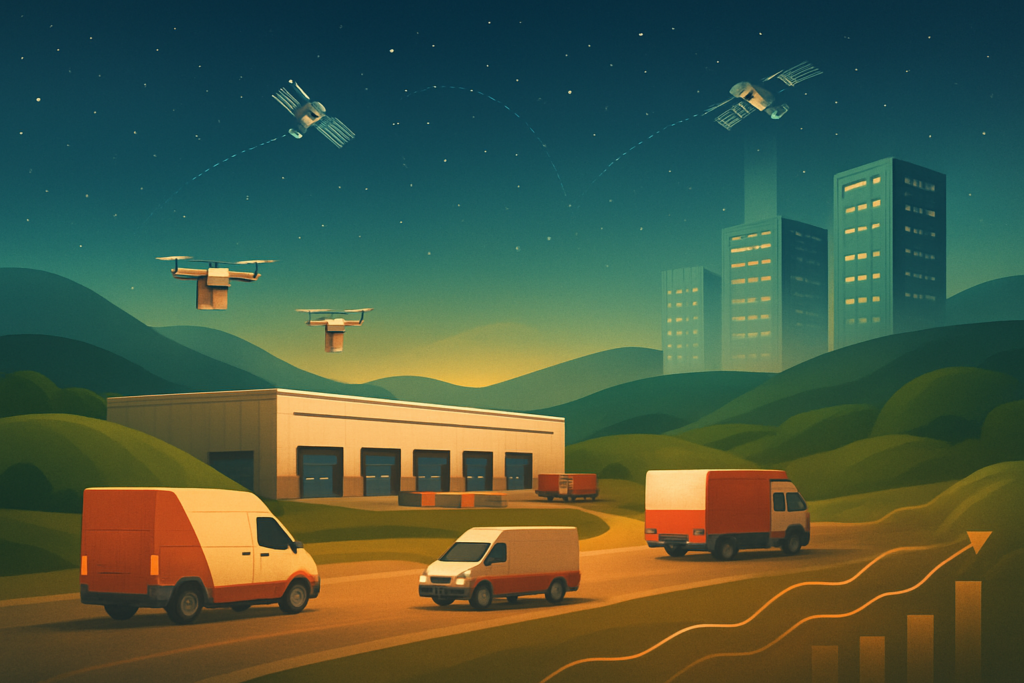
As of February 23, 2026, Amazon.com, Inc. (NASDAQ: AMZN) finds itself at a pivotal crossroads between legacy retail dominance and a future defined by orbital connectivity and generative artificial intelligence. While the company has long been a bellwether for consumer spending and cloud computing, today’s market focus has shifted toward a surprising fiscal windfall: a massive series of potential tariff refunds stemming from recent federal court rulings. This development comes at a critical time. After a period of "Capex shock" following CEO Andy Jassy’s announcement of a record-breaking $200 billion investment cycle into AI infrastructure and satellite internet, the prospect of billions in returned duties provides a much-needed liquidity cushion. Today, we dive deep into the mechanics of the "Everything Store," analyzing whether its aggressive pivot into high-cost frontiers like the "Amazon Leo" satellite constellation and custom AI silicon justifies its current valuation in an increasingly complex geopolitical landscape. Historical BackgroundFounded in 1994 by Jeff Bezos as an online bookstore operating out of a garage in Bellevue, Washington, Amazon has undergone one of the most significant corporate metamorphoses in history. What began as a disruptive force in publishing quickly expanded into a general merchandise "Everything Store," underpinned by a relentless focus on logistics and customer obsession. The company’s true transformation, however, occurred in 2006 with the launch of Amazon Web Services (AWS). By monetizing its internal infrastructure, Amazon effectively invented the modern cloud computing industry. Over the subsequent two decades, the "Amazon Flywheel"—where low prices drive customer traffic, which attracts more third-party sellers, which further lowers prices—evolved. Today, the flywheel is powered by high-margin segments like advertising and AWS, which subsidize the capital-intensive retail and logistics operations that keep Amazon embedded in the daily lives of billions. Business ModelAmazon’s business model is a sophisticated ecosystem of interlocking segments that feed one another:
Stock Performance OverviewOver the last decade, AMZN has been a cornerstone of the "Magnificent Seven," though its path has not been linear.
Financial PerformanceAmazon’s fiscal year 2025 results, reported in early 2026, showcased a company of immense scale:
Leadership and ManagementUnder CEO Andy Jassy, who succeeded Jeff Bezos in 2021, Amazon has moved from a period of unbridled expansion to one of rigorous operational discipline. Jassy has been credited with streamlining the fulfillment network into a regionalized model, which significantly lowered the cost-to-serve. The management team—including CFO Brian Olsavsky and AWS CEO Matt Garman—is currently focused on the "Three Pillars of 2026":
Products, Services, and InnovationsThe Amazon of 2026 is no longer just an e-commerce platform; it is a technology stack.
Competitive LandscapeAmazon faces multi-front warfare in 2026:
Industry and Market TrendsThree macro trends are currently defining Amazon’s trajectory:
Risks and Challenges
Opportunities and Catalysts
Investor Sentiment and Analyst CoverageAnalyst sentiment as of February 2026 remains "Overweight" to "Strong Buy." Wall Street is largely looking past the current year's high spending, viewing it as a necessary price for 2030 dominance.
Regulatory, Policy, and Geopolitical FactorsThe geopolitical landscape of 2026 is defined by "Trade Fluidity." The tariff refund story is a direct result of a shift in trade policy aimed at easing consumer inflation. However, the ongoing tech rivalry with China continues to create risks for Amazon’s "Amazon Leo" supply chain, which relies on specialized components that are subject to strict export controls. Furthermore, Amazon’s expansion into satellite internet puts it under the jurisdiction of the International Telecommunication Union (ITU), adding a layer of global regulatory complexity the company has never faced before. ConclusionAmazon.com, Inc. enters late February 2026 as a company that has successfully defended its cloud throne while doubling down on the next frontier of human connectivity. The "Capex Shock" of its $200 billion investment plan remains the primary concern for short-term investors, yet today’s news of potential tariff refunds acts as a significant stabilizing force. For the long-term investor, Amazon represents a play on the infrastructure of the future. Whether it is the chips that run AI, the satellites that provide global internet, or the logistics network that delivers the world’s goods, Amazon is increasingly the "Operating System of Modern Life." Investors should closely watch the Q1 2026 earnings for the first concrete signs of "Amazon Leo" revenue and further updates on the billion-dollar tariff recovery process. This content is intended for informational purposes only and is not financial advice. 
Report this content
If you believe this article contains misleading, harmful, or spam content, please let us know. Report this articleMore NewsView More

Could Nike’s Brutal Sell-Off Finally Be Running Out of Steam? ↗
Today 13:25 EDT
Via MarketBeat

Northern Technologies Targets Higher Margins Through Oil & Gas, Compostable Plastics Growth ↗
Today 13:02 EDT
Via MarketBeat
Tickers
NTIC
Recent QuotesView More
Stock Quote API & Stock News API supplied by www.cloudquote.io
Quotes delayed at least 20 minutes. By accessing this page, you agree to the Privacy Policy and Terms Of Service.
© 2025 FinancialContent. All rights reserved.
|