The AI Infrastructure King: A Deep Dive into Dell Technologies’ $50 Billion Transformation
By:
Finterra
February 27, 2026 at 09:37 AM EST
ⓘ This article is third-party content and does not represent the views of this site. We make no guarantees regarding its accuracy or completeness.
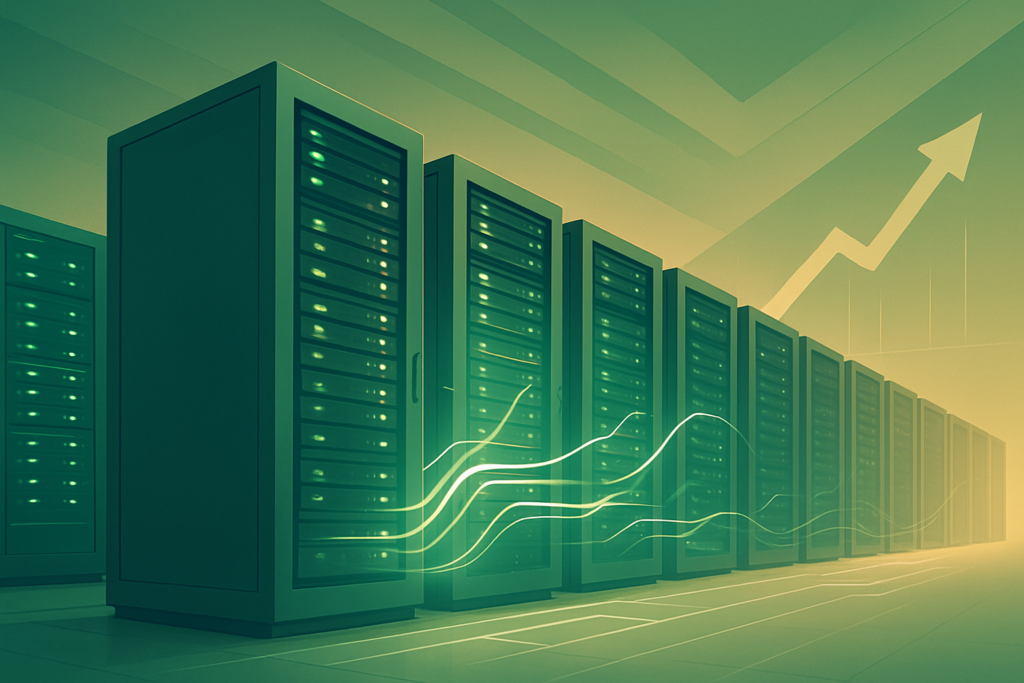
On February 27, 2026, the financial markets are witnessing a historic recalibration of one of technology’s most enduring titans. Dell Technologies (NYSE: DELL) has shattered the narrative that it is a legacy hardware manufacturer, emerging instead as the undisputed "backbone of the AI era." Following a record-breaking Fourth Quarter Fiscal 2026 earnings report released yesterday, Dell’s stock surged 11%, reaching new all-time highs as investors digested a blowout guidance for Fiscal 2027 that includes a staggering $50 billion AI revenue target. The company is currently in focus not just for its massive sales figures, but for its strategic pivot. By positioning itself as the primary architect of the "AI Factory"—a concept developed in lockstep with NVIDIA (NASDAQ: NVDA)—Dell has successfully decoupled its valuation from the cyclical PC market. As enterprises and sovereign nations race to build localized artificial intelligence infrastructure, Dell has become the one-stop-shop for the compute, storage, and services required to power the next industrial revolution. Historical BackgroundThe story of Dell is one of relentless reinvention. Founded in 1984 by Michael Dell in a University of Texas dorm room with just $1,000, the company originally disrupted the industry by selling custom-built PCs directly to consumers, bypassing the traditional retail markup. This "direct model" propelled Dell to become the world’s largest PC maker by 2001. However, the 2010s brought challenges as the PC market matured and mobile computing took center stage. In a bold and controversial move in 2013, Michael Dell and private equity firm Silver Lake took the company private in a $24.4 billion deal, aiming to transform the business away from the public eye. During this private period, Dell executed the largest tech acquisition in history at the time—the $67 billion purchase of EMC Corporation in 2016. This move was pivotal, giving Dell the enterprise storage and virtualization (via VMware) capabilities it needed to compete in the data center. Dell returned to the public markets in 2018. Since then, it has streamlined its operations, spinning off its stake in VMware in 2021 and focusing intensely on its core infrastructure and client businesses. This long-term strategic maneuvering set the stage for the company's current explosion in the AI infrastructure space. Business ModelDell operates through two primary segments that reflect its dual-threat capability in the hardware and services world:
Dell’s business model increasingly leans on a "services-first" approach. Through Apex, its multi-cloud and as-a-service offering, Dell allows customers to consume infrastructure with the flexibility of the cloud but the security of on-premises hardware. Stock Performance OverviewDell’s stock performance over the last several years reflects its transition from a value play to a high-growth AI favorite.
Yesterday’s 11% surge pushed the company’s market capitalization toward the $120 billion mark, a level once thought unreachable for a "hardware" firm. Financial PerformanceThe Q4 Fiscal 2026 results were nothing short of a "masterclass in execution," according to Wall Street analysts.
Leadership and ManagementAt the helm is Founder, Chairman, and CEO Michael Dell, who remains one of the longest-tenured and most successful leaders in tech. His vision to take the company private and merge with EMC is now viewed as one of the most successful corporate turnarounds in history. Supporting him is Jeff Clarke, Vice Chairman and Chief Operating Officer, who is widely credited with Dell’s supply chain prowess. In an era of chip shortages and GPU scarcity, Clarke’s ability to secure priority allocations from partners like NVIDIA has been a critical competitive advantage. The management team is known for "operational excellence"—a polite way of saying they are experts at squeezing margins out of complex supply chains while maintaining high quality. Products, Services, and InnovationsDell’s current innovation pipeline is dominated by the Dell AI Factory with NVIDIA. This is not a physical factory, but a comprehensive suite of hardware and software designed to help enterprises build their own AI models.
Competitive LandscapeDell competes in an increasingly crowded but lucrative market:
Industry and Market TrendsThe "Sovereign AI" trend is perhaps the most significant tailwind for Dell. Many nations—including the UK, Japan, and several Middle Eastern countries—are investing billions to build their own domestic AI capabilities to ensure data sovereignty. Unlike cloud providers (Hyperscalers) who provide compute as a service, Dell sells the actual hardware to these nations, allowing them to own their infrastructure. Additionally, the "Edge AI" trend is growing. As AI moves from massive data centers to local factories, hospitals, and retail stores, Dell’s presence in edge computing provides a massive footprint for future growth. Risks and ChallengesDespite the optimism, Dell faces several significant risks:
Opportunities and Catalysts
Investor Sentiment and Analyst CoverageWall Street is currently "uber-bullish" on Dell. Following the Q4 results:
Regulatory, Policy, and Geopolitical FactorsGeopolitics remain a double-edged sword for Dell.
ConclusionAs of February 27, 2026, Dell Technologies has successfully navigated a transition that few legacy hardware companies ever achieve. By leveraging its historic strengths—supply chain excellence, direct sales relationships, and massive scale—it has captured the pole position in the AI infrastructure race. While the $50 billion AI revenue target for Fiscal 2027 is ambitious, the $43 billion backlog suggests it is well within reach. Investors should keep a close eye on the "attach rate" of storage and services to these AI server sales, as this will determine if Dell can turn this massive revenue growth into long-term margin expansion. For now, Dell is no longer just a PC company; it is the physical engine of the AI revolution. This content is intended for informational purposes only and is not financial advice.
Report this content
If you believe this article contains misleading, harmful, or spam content, please let us know. Report this articleMore NewsView More
Bumble Q2 Earnings Call Highlights ↗
Today 19:04 EDT
biote Q2 Earnings Call Highlights ↗
Today 19:04 EDT

Beyond Meat Q2 Earnings Call Highlights ↗
Today 19:04 EDT

Caris Life Sciences Q2 Earnings Call Highlights ↗
Today 19:04 EDT
Recent QuotesView More
Stock Quote API & Stock News API supplied by www.cloudquote.io
Quotes delayed at least 20 minutes. By accessing this page, you agree to the Privacy Policy and Terms Of Service.
© 2025 FinancialContent. All rights reserved.
|