Conagra Brands (CAG) Deep-Dive: A High-Yield Bellwether Navigating a New Consumer Era
By:
Finterra
March 30, 2026 at 10:08 AM EDT
ⓘ This article is third-party content and does not represent the views of this site. We make no guarantees regarding its accuracy or completeness.
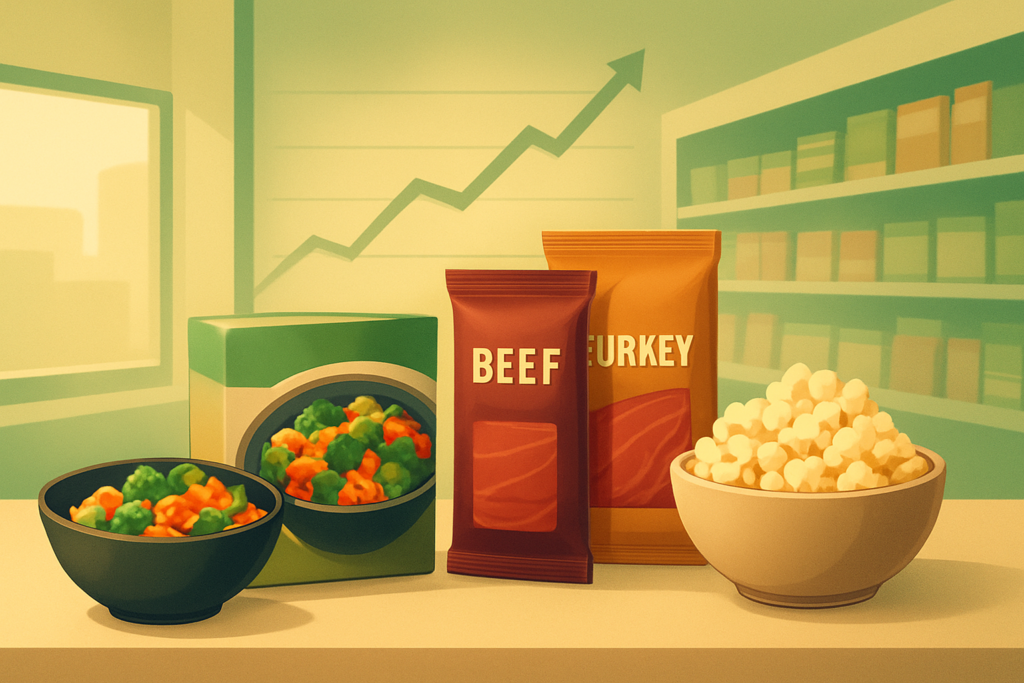
As we approach the end of March 2026, all eyes in the consumer staples sector are on Conagra Brands (NYSE: CAG). Long considered a "middle-of-the-aisle" bellwether, the Chicago-based food giant is currently at a critical crossroads. With its fiscal 2026 third-quarter earnings report looming in early April, investors are parsing every data point to determine if the company’s pivot from "price-led" to "volume-led" growth is finally taking root. Conagra has spent the last year grappling with a complex consumer environment: a "high-yield" valuation that has attracted income seekers, a massive portfolio "pruning" strategy, and the looming specter of GLP-1 weight-loss medications. Today, Conagra stands as a test case for whether a traditional packaged food company can modernize fast enough to capture the shifting habits of a protein-obsessed, digitally-native consumer base. Historical BackgroundConagra’s story began over a century ago in 1919 as Nebraska Consolidated Mills. For its first fifty years, the company was primarily a flour miller. However, the 1970s marked a radical shift toward diversification, leading to the adoption of the "ConAgra" name (meaning "with the land"). The 1980s and 90s were decades of aggressive acquisition, bringing brands like Banquet, Hunt's, and Orville Redenbacher into the fold. However, the most defining moment of its modern era came in 2018 with the $10.9 billion acquisition of Pinnacle Foods. This move effectively doubled down on the frozen food category—a bet that proved prescient during the COVID-19 pandemic but left the company with a significant debt load that it has been working to de-layer ever since. Under CEO Sean Connolly, the company has transitioned from a disparate collection of labels into a focused powerhouse of "snackification" and "premium frozen." Business ModelConagra operates through four primary reporting segments:
The model relies on a "virtuous cycle" of innovation: using cash flow from mature brands (like Hunt's tomatoes) to fund R&D and marketing for high-growth snacks and premium frozen bowls. Stock Performance OverviewThe last decade has been a rollercoaster for CAG shareholders. Over a 10-year horizon, the stock has largely underperformed the S&P 500, weighed down by the debt of the Pinnacle acquisition and the subsequent inflationary shocks of 2022-2023. In the 5-year window, the stock saw a massive "pantry-loading" spike in 2020 followed by a multi-year slide as interest rates rose and consumers began trading down to private labels. Over the past year (2025-2026), the stock has traded in a tight, depressed range, resulting in a dividend yield that has spiked into the 8% to 9% range. This high yield reflects a "show me" attitude from the market—investors are waiting for proof that volume declines have bottomed out before rewarding the stock with a higher multiple. Financial PerformanceHeading into the Q3 2026 print, Conagra’s balance sheet is the primary focus for analysts.
Leadership and ManagementCEO Sean Connolly has led the company since 2015, steering it through its most significant structural changes. Connolly is widely respected for his "Conagra Way" strategy—a disciplined approach to brand building and premiumization. The board of directors saw a strategic refresh in early 2026 with the addition of John Mulligan (former Target COO) and Pietro Satriano (former US Foods CEO). These appointments signal a tactical shift toward improving supply chain efficiency and strengthening retail partnerships at a time when shelf space is more competitive than ever. Products, Services, and InnovationsConagra has leaned heavily into the "protein" and "convenience" trends.
Competitive LandscapeConagra competes in a crowded arena of giants:
Industry and Market TrendsThe defining trend of 2026 is the "Volume Over Price" transition. For three years, food companies grew revenue by raising prices. Now, that elasticity has snapped. Consumers are exhausted, leading to a surge in private-label (store brand) growth. Conagra’s response has been "horses for courses"—selectively lowering prices through trade promotions on core items (like frozen vegetables) while maintaining premium pricing on innovative snacks. Additionally, the shift toward "Clean Label" (removing artificial colors/FD&C dyes) has become a mandatory entry requirement for the modern grocery aisle. Risks and Challenges
Opportunities and Catalysts
Investor Sentiment and Analyst CoverageWall Street is currently divided. Institutional investors have largely treated CAG as a "source of funds" or a defensive play. However, recent filings show a slight uptick in hedge fund interest, attracted by the valuation floor. Analysts at firms like Morgan Stanley and Evercore ISI have moved to "Hold" or "Neutral" ratings, waiting for the "hockey stick" recovery in volumes. The consensus price target suggests a modest 10-15% upside, but the real "bull case" rests on the dividend and the potential for a valuation multiple expansion if the debt-to-EBITDA ratio drops below 3.0x. Regulatory, Policy, and Geopolitical FactorsConagra faces increasing scrutiny over food additives. By the end of 2025, the company successfully removed all FD&C colors from its frozen portfolio to stay ahead of potential state-level bans (similar to the California Food Safety Act). Geopolitically, the company is relatively insulated compared to tech giants, as most of its supply chain is North American centric. However, fluctuations in global fertilizer and grain prices (impacted by ongoing overseas conflicts) continue to pose a risk to the "Grocery & Snacks" segment's input costs. ConclusionAs of March 30, 2026, Conagra Brands is the quintessential "show-me" stock. It offers a staggering yield that rivals some of the highest in the S&P 500, backed by a portfolio of brands that are household names. The management team has done the heavy lifting—integrating Pinnacle, pruning the portfolio, and pivoting toward the GLP-1 trend. However, the market remains skeptical of the "volume recovery" narrative. For long-term income investors, the current entry point offers a rare combination of high yield and low valuation. For growth-oriented investors, the upcoming Q3 earnings will be the ultimate litmus test. If Conagra can prove that shoppers are returning to its premium frozen bowls and meat snacks, the stock could finally break out of its multi-year malaise. Until then, it remains a high-yield bellwether in a sector fighting for every inch of the consumer's plate. This content is intended for informational purposes only and is not financial advice.
Report this content
If you believe this article contains misleading, harmful, or spam content, please let us know. Report this articleMore NewsView More
3 Stocks That Prove the AI Trade Isn't Over, It Moved ↗
Today 11:55 EDT


GlobalFoundries Q2 Earnings Call Highlights ↗
Today 11:04 EDT
FTC Solar Q2 Earnings Call Highlights ↗
Today 11:04 EDT

FRP Q2 Earnings Call Highlights ↗
Today 11:04 EDT
Recent QuotesView More
Stock Quote API & Stock News API supplied by www.cloudquote.io
Quotes delayed at least 20 minutes. By accessing this page, you agree to the Privacy Policy and Terms Of Service.
© 2025 FinancialContent. All rights reserved.
|