Walmart in 2026: The Retail King’s High-Margin Evolution
By:
Finterra
April 15, 2026 at 09:54 AM EDT
ⓘ This article is third-party content and does not represent the views of this site. We make no guarantees regarding its accuracy or completeness.
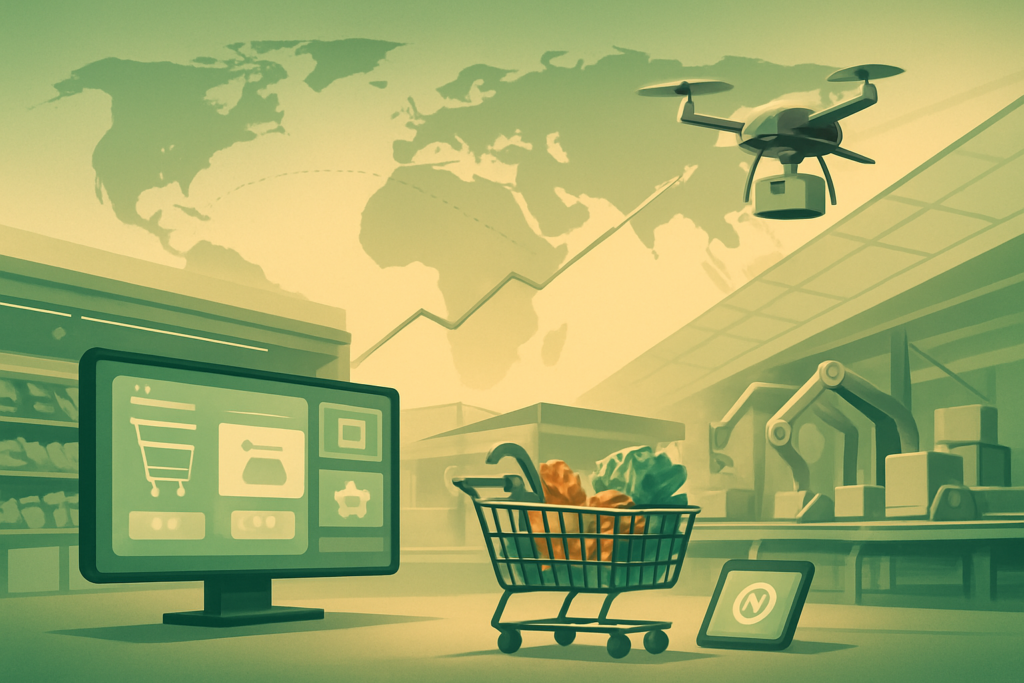
Date: April 15, 2026 IntroductionAs we enter the second quarter of 2026, Walmart Inc. (NYSE: WMT) stands not merely as the world’s largest brick-and-mortar retailer, but as a sophisticated tech-and-media powerhouse. While the "Everyday Low Price" mantra remains its cornerstone, the Walmart of 2026 is defined by a high-margin "flywheel" that integrates retail media, automated logistics, and a burgeoning digital membership ecosystem. With its recent integration of Vizio and a massive pivot toward automation, Walmart has successfully distanced itself from traditional retail rivals, positioning itself as a "growth-at-a-reasonable-price" (GARP) staple in an era of macroeconomic volatility. Historical BackgroundThe story of Walmart began in 1962, when Sam Walton opened the first "Wal-Mart Discount City" in Rogers, Arkansas. Walton’s vision was radical yet simple: offer the lowest prices possible by streamlining the supply chain and passing savings to the consumer. This model fueled an unprecedented expansion across rural America, eventually conquering the suburbs and urban centers. By the early 2000s, Walmart was the dominant force in global retail, but it faced a significant existential threat from the rise of e-commerce. The appointment of Doug McMillon as CEO in 2014 marked a turning point. McMillon steered the company through a massive digital transformation, acquiring Jet.com (2016), Flipkart (2018), and most recently Vizio (2024), effectively evolving the company from a "physical-first" retailer into an "omnichannel" ecosystem that competes head-to-head with digital natives. Business ModelWalmart’s business model is now a multi-pronged ecosystem designed to capture consumer spend across every touchpoint:
Stock Performance OverviewOver the last decade, Walmart has transitioned from a slow-moving defensive stock to a resilient performer that consistently outpaces the broader retail sector.
Financial PerformanceFor the fiscal year ending January 2026 (FY2026), Walmart reported a robust financial profile:
Leadership and ManagementCEO Doug McMillon remains at the helm, widely credited with modernizing the company’s culture and technical infrastructure. The leadership team has been praised for its "disciplined innovation"—testing new technologies like drone delivery and AI-driven inventory management extensively before scaling. The board’s strategy has focused on "profitable growth," ensuring that every digital dollar spent eventually translates into margin expansion rather than just top-line growth. Products, Services, and InnovationsInnovation at Walmart is no longer just about store layouts. In 2026, the company is a leader in several frontier categories:
Competitive LandscapeWalmart’s primary rivals remain Amazon.com (NASDAQ: AMZN), Costco Wholesale Corp. (NASDAQ: COST), and Target Corp. (NYSE: TGT).
Industry and Market TrendsThe retail industry in 2026 is defined by "Nearshoring" and "Automation."
Risks and ChallengesDespite its dominance, Walmart faces several headwinds:
Opportunities and Catalysts
Investor Sentiment and Analyst CoverageWall Street maintains a "Strong Buy" consensus on WMT. Analysts highlight the company’s ability to grow earnings faster than sales—a hallmark of a high-quality compounding stock. Institutional ownership remains high, with major funds viewing Walmart as a defensive hedge that now offers a "tech-like" growth kicker. Recent share buyback authorizations of $30 billion have further bolstered investor confidence. Regulatory, Policy, and Geopolitical FactorsWalmart is currently navigating a complex regulatory environment:
ConclusionWalmart Inc. has successfully navigated a decade of disruption to emerge as a hybrid retail and technology giant. In April 2026, the company’s investment in automation and retail media is finally yielding the margin expansion that investors have long anticipated. While labor costs and geopolitical trade tensions remain persistent risks, Walmart’s scale, data advantage, and grocery dominance provide a unique "moat" that few companies can match. For investors, Walmart remains a cornerstone asset—offering stability in volatile times and the potential for significant upside as its high-margin digital ecosystem matures. This content is intended for informational purposes only and is not financial advice.
Report this content
If you believe this article contains misleading, harmful, or spam content, please let us know. Report this articleMore NewsView More

Oruka’s ORKA-001 Delivers 61% Complete Skin Clearance in Phase IIb Psoriasis Study ↗
October 26, 2026
Via MarketBeat
Tickers
ORKA
Via MarketBeat
Tickers
INCY
What Elevra Lithium (ELVR) Said on Its Q1 Earnings Call ↗
October 26, 2026

Recent QuotesView More
Stock Quote API & Stock News API supplied by www.cloudquote.io
Quotes delayed at least 20 minutes. By accessing this page, you agree to the Privacy Policy and Terms Of Service.
© 2025 FinancialContent. All rights reserved.
|