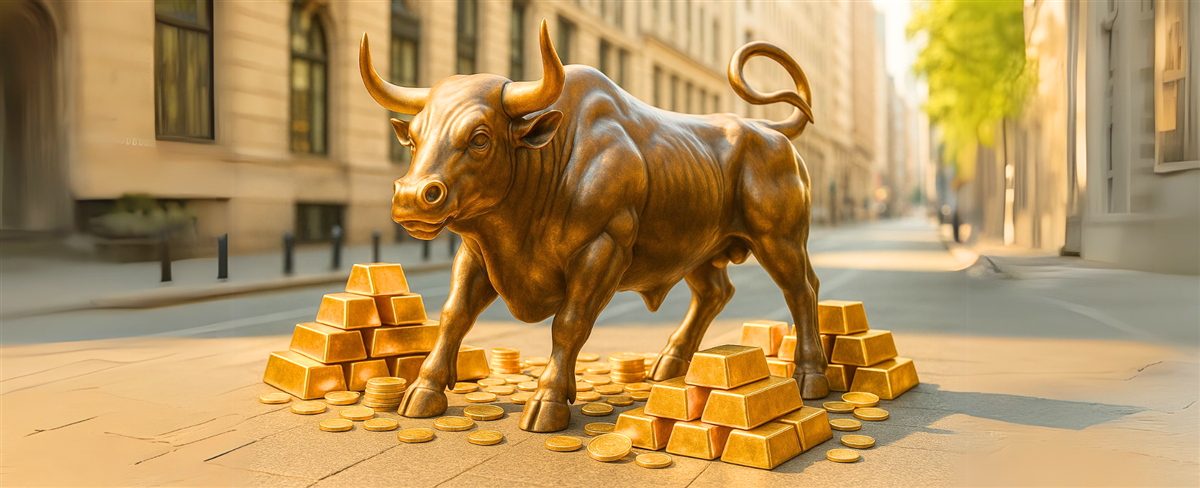
Gold and Commodities: Is the Bull Case Gaining Momentum?
By:
MarketBeat
June 13, 2025 at 07:06 AM EDT
The S&P 500 is finally approaching new all-time highs after a turbulent spring, driven by strong earnings and easing trade war tensions. And it’s not just domestic stocks rebounding; European markets are partying like it’s 1985 thanks to new accommodative monetary and fiscal policies. The urge to dive headfirst back into the pool is strong, but investors still have plenty of uncertainty to grapple with in the months ahead. Warren Buffett says, “Be fearful when others are greedy,” and despite all the green currently on your screens, the case for owning gold and commodities remains strong. Today, we’ll look at three reasons why owning gold and commodities makes sense in 2025 and three ways to add these assets to your portfolio. Owning Gold to Combat Secular TrendsGold has long been considered a safe-haven hedge against inflation. However, over the last two decades, it has also emerged as a systemic hedge against all types of economic risk, and investors (and institutions) have drastically increased their holdings since the pandemic. The spot price has surged by more than 43% over the last 12 months, with 23% of the increase occurring in the previous six months. Gold and other commodities are ideal “chaos hedges” since they have no counterparty risk, and their value isn’t threatened by currency debasement or government spending. Some secular shifts are underway that could keep interest rates and growth stagnant, strengthening the bull case for hard assets like gold.
Three Ways to Add Gold and Commodities to Your PortfolioAdding commodities like gold to your portfolio has never been easier. Unlike stocks and bonds, you’ll have the advantage of owning it physically, along with indirect or derivative ownership through stocks, ETFs, options, and futures contracts. However, be sure to select a sector or asset class that matches your risk tolerance and investment goals. If you’re trying to hedge against inflation, leveraging up with derivatives probably isn’t a sound strategy. Physical OwnershipYou might think the simplest way to add gold to your portfolio is to buy some bullion at your local Costco Wholesale Corp. (NASDAQ: COST), but owning physical gold comes with some unique downsides. If you own a substantial amount, you’ll need more than a safe in your attic to keep it secure, and storage comes with additional costs. Plus, gains on physical gold and other precious metals are taxed as collectibles, not capital assets. The tax rate for collectibles is a flat 28%, which is higher than the 20% maximum long-term capital gains rate. Stocks and ETFs[content-module:Forecast|NYSEARCA:GLD]The easiest way to get exposure to gold and other commodities is actually through your brokerage. If you buy a gold fund like the SPDR Gold Shares ETF (NYSEARCA: GLD), you’ll outsource the tediousness of ownership and storage to an investment company. ETFs like GLD track the spot price of gold very closely, and you won’t be hit with the 28% collectibles rate when taxed on your long-term gains. Other commodity-based ETFs, such as the U.S. Oil Fund (NYSEARCA: USO) and the Invesco DB Agriculture Fund (NYSEARCA: DBA), utilize futures contracts and cash instruments to achieve their objectives. In contrast, funds like the iShares S&P GSCI Commodities-Indexed Trust (NYSEARCA: GSG) offer exposure to a broad basket of commodities. Futures Contracts[content-module:Forecast|NYSEARCA:USO]You may recall that WTI crude oil briefly traded in negative territory during the COVID-19 pandemic. What actually happened was that the price of the May futures contract for a barrel of oil went negative, meaning that oil suppliers needed to pay their counterparties to receive delivery. WTI crude has traded for around $60 per barrel for much of 2025, and traders can bet on the price of oil, gold, and other commodities through the futures market. Trading futures contracts is an advanced strategy that requires a margin account at a futures-specific brokerage and involves contracts that trade 24 hours a day, Monday through Friday. But if you have the risk tolerance and understand how to navigate the futures markets, trading futures contracts can be a highly lucrative (if risky) endeavor. Where Should You Invest $1,000 Right Now?Before you make your next trade, you'll want to hear this. MarketBeat keeps track of Wall Street's top-rated and best performing research analysts and the stocks they recommend to their clients on a daily basis. Our team has identified the five stocks that top analysts are quietly whispering to their clients to buy now before the broader market catches on... and none of the big name stocks were on the list. They believe these five stocks are the five best companies for investors to buy now... More NewsView More
Ulta’s Stock May Be Set for a Glow-Up—20% Upside Ahead? ↗
Today 8:57 EST
Via MarketBeat
Tickers
ULTA
Via MarketBeat
Tickers
MSFT
MarketBeat Week in Review – 12/1 - 12/5 ↗
Today 7:00 EST

Rocket Lab’s Big Rebound? Analysts Suggest the Dip's a Gift ↗
December 05, 2025
Via MarketBeat
Tickers
RKLB

Meta’s AI Moment? New SAM 3 Model Has Wall Street Turning Bullish ↗
December 05, 2025
Recent QuotesView More
Stock Quote API & Stock News API supplied by www.cloudquote.io
Quotes delayed at least 20 minutes. By accessing this page, you agree to the Privacy Policy and Terms Of Service.
© 2025 FinancialContent. All rights reserved.
|