MOVA vs Global Financial Blockchains: A Structural Comparison of the Future of Settlement NetworksNovember 29, 2025 at 10:53 AM EST
DUBAI, United Arab Emirates, November 29, 2025 -- After a decade of explosive growth in the crypto industry, global capital, regulators, and institutions are shifting focus away from cycle-driven narratives such as GameFi, DeFi, and Meme tokens—back toward blockchain’s original mission: becoming the global infrastructure for value transfer. The next phase of real growth in blockchain will not come from token prices, but from real-world financial use cases such as cross-border payments, RWA settlement, on-chain custody, and compliant issuance of digital assets. However, as traditional finance begins moving on-chain, an unexpected reality has emerged: most leading blockchains were never designed for financial systems. Their ledger models, execution mechanisms, node architecture, and compliance semantics are fundamentally misaligned with the operational requirements of global payment and settlement networks. This is where MOVA presents a fundamentally different approach. But to understand its significance, MOVA must be examined alongside its closest blockchain peers in a structural comparison. This analysis places MOVA alongside four major blockchain categories: Ethereum — the most decentralized and secure smart contract platform By comparing MOVA across system architecture, network topology, finality models, node roles, compliance infrastructure, and RWA readiness, a decisive conclusion emerges: MOVA is not competing with other public chains—it is filling a gap that has never existed before: the global settlement chain. Divergent Design Philosophies: MOVA Is Not Built for the Same Purpose as Other Blockchains The difference between MOVA and other blockchains begins at first principles—their original design intent. Ethereum was built as a general-purpose compute engine. MOVA, from its inception, rejected all of these paths. It was not designed as a computing platform. MOVA was built specifically to become a global payment and settlement network. This single design choice impacts everything: ledger architecture, node structure, compliance logic, and data semantics. Ethereum’s global state machine ensures expressiveness—but forces linear execution. MOVA’s DAG-driven event ledger is not built for general computation, but for payment concurrency at scale. MOVA is the only blockchain architected for financial settlement first—compliance is not a patch, it is native to the protocol.
Ledger Architecture: DAG vs Blockchains Ethereum — Linear Global State Ethereum operates on a single chain with state transitions executed sequentially. While consistent, this structure makes real-time settlement at payment scale mathematically impossible. Solana — Parallel Execution, Still Block-Based Although Solana executes transactions in parallel, finality is still block-driven. Performance is achieved through engineering—but the paradigm remains block-based. Aptos / Sui — Object Parallelism, Serial Confirmation Move-based execution improves concurrency, but confirmation still requires sequential ordering. The block model remains intact. Avalanche — Parallel Networks Without a Global Ledger Subnets isolate chains but do not build a shared global financial ledger. MOVA — Event-Driven Asynchronous DAG Ledger MOVA replaces blocks with events. Transactions attach directly to the DAG, and finality is derived from network visibility—not block creation. This makes concurrency structural rather than forced, confirmation probabilistic by propagation, and settlement continuous. MOVA is built as a payment ledger, not a smart contract chain. Networking: Predictable Routing vs Random Gossip Mainstream blockchains depend on random gossip networking. Message propagation is probabilistic, variable, and uncontrollable in latency—unacceptable for financial systems. MOVA uses structured Hypercube Routing with mathematically bounded propagation latency. Network complexity grows logarithmically, not randomly. Finance requires predictability—not luck. Node Architecture: Why MOVA Mirrors Financial Institutions In most blockchains, nodes are homogeneous. Each node does everything. MOVA adopts deliberate financial role separation: Gateway nodes for system integration This mirrors real-world finance—not crypto abstractions. No mainstream blockchain uses this model. State Structure: Verkle Tree vs Merkle Tree Ethereum is migrating to Verkle—slowly. Merkle-based verification is expensive, heavy, and unsuitable for institutional auditing. MOVA uses Verkle Trees by default, enabling: Lightweight proofs For RWA and compliance, this is non-negotiable. RWA Capability: Native vs Retrofitted Compliance Ethereum requires Layer 2 patches. MOVA embeds regulatory infrastructure at the protocol level: Multi-asset modeling MOVA is a financial ledger first—not a DeFi sandbox. Performance Philosophy: Reliability Over Throughput Theater Solana, Aptos, and Sui chase laboratory TPS metrics. MOVA optimizes for real-world stability and predictable latency at global scale. Financial systems do not care about peak TPS. Token Economics: Clearing Network, Not Mining Platform Ethereum and Solana reward block producers. MOVA’s economy is built around financial infrastructure: Revenue from ledger maintenance MOVA is not a miner economy—it is a clearing economy. Final Conclusion: MOVA Is Not "Another Chain" Ethereum aims to be a world computer. MOVA is building: The next-generation SWIFT MOVA does not compete in the public chain race. It fills a void. About Mova Mova is a next-generation blockchain engineered for high performance, institutional-grade trust, and a versatile modular architecture — setting the new standard for compliant and scalable Web3 infrastructure. X:https://x.com/MovaChain Contact Info: Disclaimer: Release ID: 89177294 In case of identifying any problems, concerns, or inaccuracies in the content shared in this press release, or if a press release needs to be taken down, we urge you to notify us immediately by contacting error@releasecontact.com (it is important to note that this email is the authorized channel for such matters, sending multiple emails to multiple addresses does not necessarily help expedite your request). Our dedicated team will be readily accessible to address your concerns and take swift action within 8 hours to rectify any issues identified or assist with the removal process. We are committed to delivering high-quality content and ensuring accuracy for our valued readers. More NewsView More
The $100 Million Tell: Following Smart Money Into DoorDash ↗
Today 7:37 EST
Via MarketBeat

Wall Street’s Sleeping Giant: Is Amazon About to Wake Up? ↗
December 02, 2025
Via MarketBeat
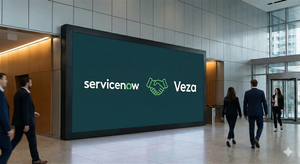
Checkmate in the Cloud: ServiceNow's Shopping Spree ↗
December 02, 2025
Via MarketBeat

The Contrarian Case for MSTR Amid MSCI Delisting Debacle ↗
December 02, 2025
Via MarketBeat
Tickers
MSTR

Worried About Mag 7 Concentration Risk? This ETF Could Help ↗
December 02, 2025
Recent QuotesView More
Stock Quote API & Stock News API supplied by www.cloudquote.io
Quotes delayed at least 20 minutes. By accessing this page, you agree to the Privacy Policy and Terms Of Service.
© 2025 FinancialContent. All rights reserved.
|
