Navigating the Economic Labyrinth: Investors Face Mixed Signals in a Shifting Global Landscape
By:
MarketMinute
October 01, 2025 at 10:42 AM EDT
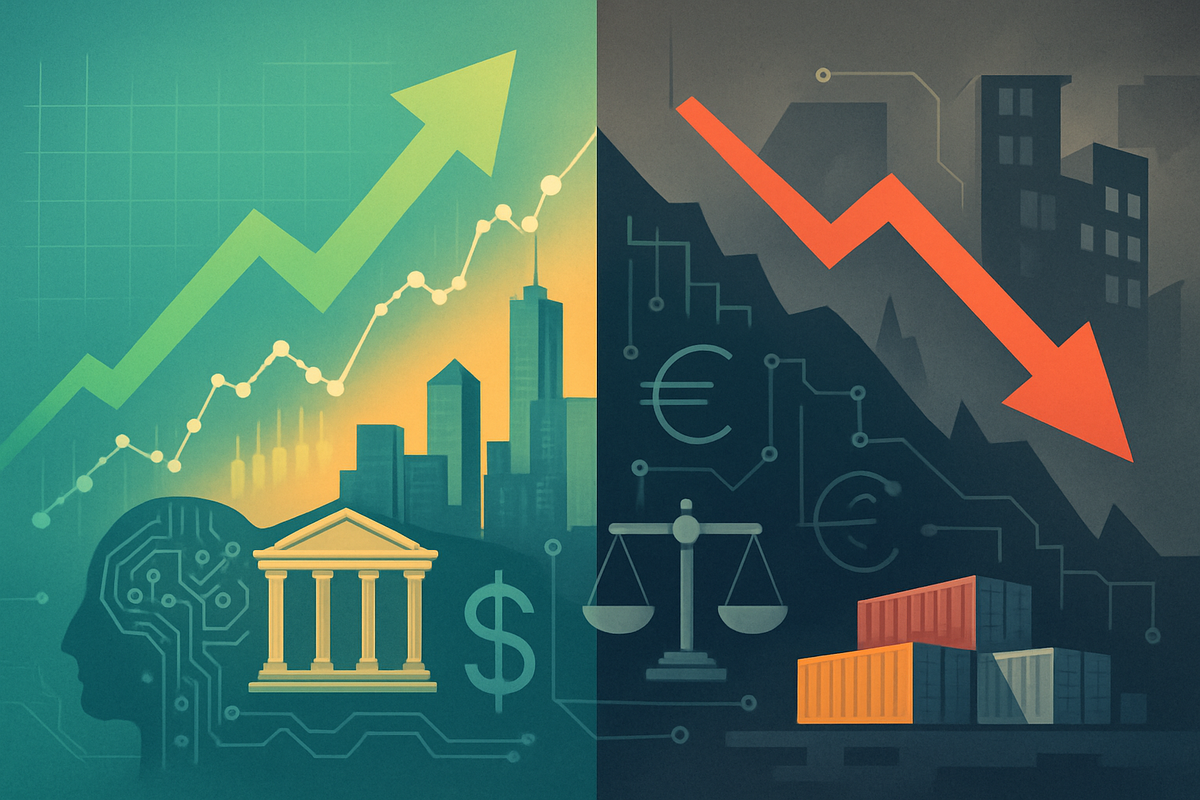
The global economy, as of October 1, 2025, presents a complex and often contradictory picture, challenging investors to decipher a mosaic of mixed signals. While pockets of resilience persist, particularly in the United States, persistent inflation, decelerating growth in many regions, divergent central bank policies, and escalating trade tensions are creating an environment of heightened uncertainty. This delicate balance demands an agile and nuanced approach from market participants, as traditional economic indicators often send conflicting messages, making strategic decision-making more critical than ever. The immediate implications for financial markets are increased volatility and a cautious sentiment. Equities are grappling with a "Rorschach test" environment, where strong earnings in some sectors contend with broader recessionary fears. Bond markets are reacting to the prospects of further rate cuts, yet sticky inflation could limit the extent of aggressive easing. Currency markets are seeing shifts based on relative central bank stances, and safe-haven assets like gold are surging amidst fiscal and monetary uncertainty. A Tapestry of Contradictions: Recent Economic Events UnfoldThe past few months have been defined by a series of events that underscore the prevailing economic contradictions. In the United States, the second quarter of 2025 saw a surprising upward revision of GDP growth to an impressive annual rate of 3.8%. However, this robust output clashed sharply with a clearly weakening labor market; August 2025 saw only 22,000 jobs added, and the unemployment rate rose to 4.3%, its highest since 2021. September brought further concerns with a private sector job loss of 32,000. This divergence placed the U.S. Federal Reserve (Fed) in a difficult position, ultimately leading to its first interest rate cut of the year in September 2025, lowering the federal funds rate by 25 basis points. This move, aimed at supporting employment, occurred against a backdrop of persistent, tariff-driven inflation, expected to push U.S. core inflation higher in the latter half of 2025. Across the Atlantic, the European Central Bank (ECB) maintained a more cautious stance. After a series of rate cuts earlier in the year (lowering the deposit rate to 2.00% in June), a slight uptick in eurozone inflation to 2.2% in September made a December rate cut less likely, highlighting a divergence in central bank approaches. Meanwhile, the Bank of Japan (BoJ) made a historic shift in July 2025, ending its negative interest rate policy and raising its target rate to 0.25%, despite the Japanese economy appearing to have nearly stalled in Q3. This normalization effort, however, has not entirely alleviated pressure on the yen. Globally, trade tensions have intensified throughout 2025, particularly between the U.S. and China. New tariffs, including 100% on imported branded drugs and 25% on heavy-duty trucks, have been implemented or are set to take effect. These measures, while aiming to boost domestic industries, simultaneously contribute to inflationary pressures by increasing import costs and disrupting efficient global supply chains. This ongoing trend creates a push-pull between national economic priorities and global price stability, forcing multinational corporations to actively re-evaluate their supply chain strategies. Winners and Losers in a Volatile ArenaThe current economic environment of sticky inflation, slowing growth, potential rate cuts, and trade tensions creates a distinct landscape of winners and losers among public companies and sectors. Companies and Sectors Poised for Gains:
Companies and Sectors Facing Headwinds:
Wider Significance: A New Economic ParadigmThe mixed economic signals of late 2025 are not merely transient fluctuations but indicative of broader, more profound shifts in the global economic order. The persistence of inflation, even amidst slowing growth, suggests a "stagflationary tilt" that challenges conventional monetary policy. This environment compels central banks to navigate a delicate balance: cutting rates to stimulate growth risks reigniting inflation, while maintaining high rates could deepen a slowdown. Broader Industry Trends: Businesses are actively restructuring global supply chains, moving away from hyper-globalization towards "reshoring" or "friendshoring" to mitigate geopolitical and trade risks. This era of increased protectionism and regionalization could foster domestic production and innovation, but often at the cost of efficiency. There's an intensified focus on productivity and technology, with companies investing heavily in AI and automation to offset rising input costs and labor market uncertainties. Geopolitical risk has emerged as a core concern, influencing financial stability, supply chains, and regulatory frameworks. Ripple Effects: The increased costs from tariffs and supply chain disruptions lead to squeezed profit margins and higher consumer prices, creating a competitive disadvantage for companies heavily reliant on imports. Partners in global supply chains face heightened uncertainty, pushing them towards more diversified and localized networks. Geopolitical shocks also directly impact banks' profitability and risk exposure, contributing to overall financial instability. Regulatory and Policy Implications: Governments and central banks are under immense pressure. Monetary policymakers face a dilemma, while trade policies are increasingly used as strategic tools, often leading to retaliatory actions. There's a growing need for fiscal stimulus in some regions to offset negative impacts, and a trend towards regulatory fragmentation complicates compliance for multinational corporations. The IMF's October 2025 World Economic Outlook highlights the increasing role of industrial policy in managing trade-offs for growth and resilience. Historical Precedents: Many economists draw parallels to the 1970s stagflation, characterized by high inflation, stagnant growth, and unemployment, exacerbated by supply shocks and, at times, misguided policies. The current "tariff tidal wave" also echoes past trade wars that significantly impeded global growth. The challenges central banks face in balancing inflation and growth are reminiscent of the Volcker Fed's aggressive rate hikes in the early 1980s to break an inflationary cycle. The current consumer spending, partly fueled by debt, also has parallels to the "borrowing binge" preceding the 2008 financial crisis. What Comes Next: Navigating the CrossroadsThe path forward for the global economy is fraught with both challenges and opportunities, demanding strategic foresight from businesses and investors. Short-Term Possibilities (Late 2025 - Early 2026): Expect continued subdued growth globally, with significant regional divergence. The U.S. economy may see growth moderate, while the Euro Area remains subdued. China's growth is projected to decline, influenced by tariffs and housing sector weakness. Sticky inflation is likely to persist, particularly in the U.S. due to tariffs, keeping it above target. Central banks will maintain cautious and divergent approaches, with the Fed likely to implement further rate cuts, while the ECB and Bank of England remain more conservative. Trade tensions are expected to intensify, becoming a primary disruption to global growth. Long-Term Possibilities (2026 and Beyond): The global economy faces a continued structural slowdown, with projected GDP growth averaging just 2.5% in the 2020s. A more fragmented global order is anticipated, driven by geoeconomic fragmentation and geopolitical tensions, reshaping business models. The impact of AI and technological transformation will be profound, offering both systemic risks and new growth opportunities. Climate change and sustainability will remain significant long-term challenges, driving business adaptations and investment. Strategic Pivots and Adaptations: Businesses must prioritize supply chain resilience and diversification, moving towards reshoring or nearshoring. Digital transformation and AI integration will be crucial for productivity gains. Fiscal responsibility and cash flow management are vital amidst uncertainty. Businesses must also closely monitor and adapt to evolving trade policies. For investors, diversification and hedging against uncertainty are paramount. Focus on resilient sectors like healthcare technology and clean energy. Emerging markets offer selective opportunities, particularly India, driven by domestic consumption. Closely monitoring central bank policies will be key for currency movements and asset valuations. Market Opportunities and Challenges: Opportunities lie in technology and AI, the green transition/sustainability, healthcare technology, infrastructure investment, and emerging market domestic demand. Challenges include persistent inflationary pressures, slowing global demand, escalating trade wars and protectionism, geopolitical instability, high government debt, and financial market volatility. Potential Scenarios:
Comprehensive Wrap-up: Navigating the New RealityThe global economy in October 2025 stands at a critical juncture, characterized by a complex interplay of resilient growth, persistent inflation, and escalating geopolitical and policy-related uncertainties. The "mixed signals" are not merely noise but reflect a fundamental reshaping of global economic dynamics. Key Takeaways highlight modest global growth with significant regional divergence, particularly the U.S. outperforming other developed markets. Persistent inflation, especially in the U.S. due to tariffs, is forcing central banks into divergent policy paths, with the Fed easing cautiously while others remain on hold. Escalating geopolitical volatility and trade tensions are now top business risks, impacting supply chains and regulatory environments. Assessing the Market Moving Forward, expect continued choppiness and volatility. Equity markets, while showing strong performance, could be tested by persistent inflation and policy uncertainties. Emerging markets face slower growth in the latter half of 2025. The shift towards a more fragmented global model, influenced by national interests and protectionist trade policies, will have a lasting impact on supply chains, international cooperation, and investment patterns. Higher and more volatile prices may become the norm. For investors, an agile and vigilant approach is paramount. Monitor central bank communications closely for shifts in policy stance, especially regarding inflation versus employment. Evaluate geopolitical developments and evolving trade policies, assessing portfolio exposure to supply chain disruptions and commodity price fluctuations. Focus on sectoral and regional differentiation, looking for opportunities in structural trends like AI and green energy, and consider diversification across regions. Assess inflationary pressures, particularly in the U.S., and consider inflation-protected assets. Finally, be prepared for volatility and build resilience through active positioning and scenario planning. The "new reality" demands a proactive and integrated approach to risk management. This content is intended for informational purposes only and is not financial advice. More NewsView More
Via MarketBeat

Via MarketBeat
Tickers
BOX

Can Alibaba’s Big Bets Pay Off After a Breakout Year? ↗
Today 10:40 EST
Via MarketBeat


Recent QuotesView More
Stock Quote API & Stock News API supplied by www.cloudquote.io
Quotes delayed at least 20 minutes. By accessing this page, you agree to the Privacy Policy and Terms Of Service.
© 2025 FinancialContent. All rights reserved.
|