Taiwan Rejects US Semiconductor Split, Solidifying 'Silicon Shield' Amidst Global Supply Chain Reshuffle
By:
MarketMinute
October 01, 2025 at 18:03 PM EDT
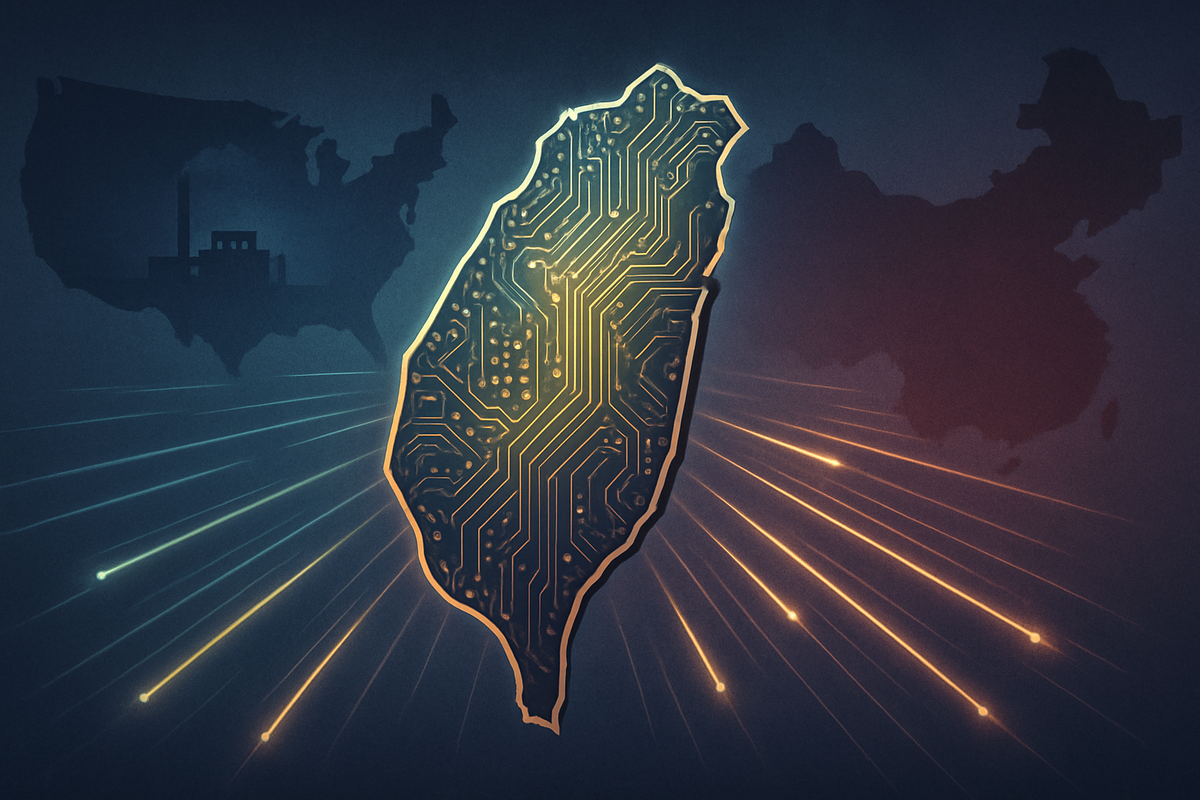
Taipei, Taiwan – October 1, 2025 – In a move poised to reshape global technology markets and geopolitical strategies, Taiwan today firmly rejected a United States proposal for a "50-50 split" in semiconductor production. This decisive stance, articulated by Taiwanese Vice Premier Cheng Li-chiun, unequivocally states that the proposal was "not discussed" during recent trade negotiations and that Taiwan "will not agree to such a condition." The decision underscores Taiwan's unwavering commitment to its indispensable "Silicon Shield," a strategy that leverages its unparalleled dominance in advanced chip manufacturing as a critical geopolitical asset. The US proposal, reportedly championed by Commerce Secretary Howard Lutnick, aimed to significantly rebalance the world's reliance on Taiwanese chip manufacturing. Citing national security concerns and the imperative for supply chain resilience, Washington has been pushing for a substantial portion of advanced chip production to be relocated to American soil. However, Taiwan's rejection highlights a fundamental divergence in strategic priorities, with Taipei prioritizing the maintenance of its domestic technological sovereignty and the protective function of its "Silicon Shield." This development comes amidst ongoing US-Taiwan trade negotiations, where Taiwanese exports—over 70% of which are chip-related—are currently subject to a 20% tariff. Unpacking Taiwan's Resolute Stance: A Detailed Look at the Semiconductor ShowdownTaiwan's rejection of the proposed semiconductor split on October 1, 2025, is the culmination of years of escalating pressure from the United States and Taiwan's strategic response to safeguard its economic lifeline and national security. The concept of the "Silicon Shield" has been central to Taiwan's defense and diplomatic strategy, positing that the world's reliance on its advanced chip production would deter potential aggression, particularly from mainland China, due to the catastrophic global economic consequences of any disruption. Taiwan Semiconductor Manufacturing Company (TSMC) (TWSE: 2330, NYSE: TSM), the world's leading contract chipmaker, produces an estimated 90% of the most advanced chips crucial for everything from AI to defense systems. The timeline leading to this moment is critical. The US CHIPS and Science Act, signed into law in August 2022, allocated over $52.7 billion to incentivize domestic semiconductor manufacturing, research, and workforce development. This act signaled a clear intent from the US to reduce its dependence on overseas supply chains. Following this, US officials, including Commerce Secretary Howard Lutnick, intensified calls for greater diversification, culminating in the "50-50 split" proposal. However, Taiwan, through Vice Premier Cheng Li-chiun, consistently maintained that such a drastic relocation was not viable nor desirable. Taiwan's own "Semiconductor Strategic Policy 2025" outlines a comprehensive roadmap to secure technological sovereignty, expand R&D dominance, and strengthen its leadership in global chip supply chains, including strategic domestic expansion and targeted overseas investments that supplement, rather than supplant, its home operations. Initial market reactions suggest a reaffirmation of TSMC's central role, though concerns persist regarding the long-term implications for US-Taiwan trade relations and global supply chain stability. Winners and Losers: Corporate Fortunes in the Wake of Taiwan's DecisionTaiwan's decision to reject a significant "US semiconductor split" on October 1, 2025, reverberates across the global technology landscape, creating distinct winners and those facing renewed challenges. The continued concentration of advanced chip manufacturing in Taiwan solidifies existing industry dynamics while intensifying competition in other regions. The Winners:
Those Facing Challenges:
Wider Significance: Geopolitical Chessboard and Industry EvolutionTaiwan's rejection of the US semiconductor split on October 1, 2025, is more than an industrial policy decision; it's a strategic maneuver on a global geopolitical chessboard, profoundly impacting broader industry trends and international relations. This event highlights the tension between the push for "de-globalization," "reshoring," and "friend-shoring" on one side, and the economic realities of a highly specialized and concentrated industry on the other. The US, through initiatives like the CHIPS Act, has championed "reshoring" to bring critical manufacturing back to its shores, driven by national security and supply chain resilience concerns. "Friend-shoring" encourages relocating production to allied nations. Taiwan's decision, however, signals a limit to how much it is willing to dilute its core technological capabilities, even with allies. It reaffirms that Taiwan views its "Silicon Shield" as an indispensable tool for national security and diplomatic leverage. This stance will likely intensify efforts in the US, Europe (EU Chips Act), and Japan to build their own domestic capacities, potentially leading to a more fragmented and regionalized global semiconductor supply chain in the long term, albeit at higher costs and with potential inefficiencies. The ripple effects extend beyond direct competitors. For the United States, Taiwan's decision underscores the immense difficulty and cost of replicating Taiwan's sophisticated ecosystem. It will likely prompt the US to re-evaluate the scope and incentives of future CHIPS Act funding and may lead to increased pressure or alternative trade measures. For China, Taiwan's continued consolidation of advanced chip production at home could exacerbate the US-China tech rivalry, potentially strengthening Beijing's resolve for semiconductor self-sufficiency. Other regions like South Korea and the EU will intensify their own efforts to reduce dependencies and bolster domestic industries. Historically, this struggle for control over critical technologies echoes the Cold War's "Crypto Wars" or the 1980s US-Japan semiconductor competition, where state-led industrial policies reshaped global power dynamics. Taiwan's decision firmly places it as a central actor, asserting its agency as a tech superpower in an increasingly contested region. What Comes Next: Navigating a Complex FutureTaiwan's resolute rejection of the US semiconductor split ushers in a new phase of strategic recalibration for global technology markets and geopolitical strategies. In the short term, the world will continue its heavy reliance on Taiwan for the most advanced chips, particularly for the burgeoning AI industry. This ensures TSMC's continued dominance in cutting-edge production. However, expect intensified efforts from the US, Europe, and Japan to build out their domestic semiconductor capabilities, leading to increased government incentives and private investments in new fabs outside Taiwan. This ongoing tension could introduce market volatility, especially if trade frictions or tariffs escalate. In the long term, the decision accelerates the trend towards more fragmented and regionalized semiconductor supply chains. While this may enhance resilience by reducing single points of failure, it could also lead to less efficient global production and higher manufacturing costs. New manufacturing hubs will emerge in the US, Europe, and Japan, though Taiwan will likely retain its lead in the absolute most advanced nodes and R&D. Geopolitical competition over semiconductors will remain fierce, influencing trade alliances and technological development. Strategic pivots will be necessary: the US may shift from aggressive "split" demands to more nuanced incentives under the CHIPS Act, focusing on specific critical components or fostering a broader "friend-shoring" network. Taiwan will continue its delicate balancing act, safeguarding its "Silicon Shield" while engaging in strategic overseas investments and seeking to mitigate potential US tariffs through other trade concessions. Market opportunities will surge in AI accelerators, high-performance computing, automotive semiconductors, and advanced packaging. However, challenges include potentially higher manufacturing costs, supply gaps for less profitable legacy chips, persistent geopolitical volatility, and intensifying global talent shortages. Optimistically, this could lead to a truly distributed and more resilient global semiconductor ecosystem with accelerated innovation. Pessimistically, it could result in a highly fragmented, inefficient, and costly supply chain, potentially straining US-Taiwan relations and inadvertently weakening Taiwan's long-term "Silicon Shield" if the US achieves significant self-sufficiency, making Taiwan more vulnerable in a contested Indo-Pacific. Wrap-Up: A Reaffirmed 'Silicon Shield' in a Shifting WorldTaiwan's definitive rejection of the US semiconductor split on October 1, 2025, marks a pivotal moment, reaffirming its 'Silicon Shield' strategy and solidifying its indispensable role in the global technology landscape. The key takeaway is Taiwan's unwavering commitment to maintaining its technological sovereignty, particularly through TSMC (TWSE: 2330, NYSE: TSM), which produces the vast majority of the world's most advanced chips. This decision highlights a strategic divergence with the US, which seeks greater domestic production for national security, and underscores the challenges of rapidly de-globalizing a highly integrated industry. Moving forward, the market will continue to grapple with the implications of this concentration. For global technology, especially the burgeoning AI industry, Taiwan remains the epicenter of advanced chip innovation and production. Economically, Taiwan's decision reinforces its leverage but also means that any future geopolitical instability in the Taiwan Strait carries potentially catastrophic global economic consequences. Geopolitically, the "Silicon Shield" remains Taiwan's primary deterrent, though its long-term efficacy will be continuously tested by US efforts to diversify and China's relentless pursuit of technological self-sufficiency. The lasting impact of this decision will be a prolonged era of "geoeconomics," where control over critical technologies like semiconductors directly translates into geopolitical power. Taiwan has asserted its agency, choosing to leverage its existing strength rather than dilute it. What Investors Should Watch For: In the coming months, investors should closely monitor:
This content is intended for informational purposes only and is not financial advice More NewsView More
Via MarketBeat

Could Ross Stores Stock Hit $200 by Christmas? Here Are 3 Reasons Analysts Think So ↗
Today 7:11 EST
Via MarketBeat
Tickers
ROST

The Trade Desk: After a 70% Plunge, This Could Be The Time to Buy ↗
December 04, 2025
Via MarketBeat
Tickers
TTD

Tap Into 2026 AI Infrastructure Gains With This High-Growth ETF ↗
December 04, 2025

Strong Quarter, Weak Reaction: Why GitLab Shares Dropped ↗
December 04, 2025
Via MarketBeat
Recent QuotesView More
Stock Quote API & Stock News API supplied by www.cloudquote.io
Quotes delayed at least 20 minutes. By accessing this page, you agree to the Privacy Policy and Terms Of Service.
© 2025 FinancialContent. All rights reserved.
|