Beyond Meat (NASDAQ:BYND) Hits All-Time Low Amid Analyst Downgrade and Dilutive Debt Restructuring
By:
MarketMinute
October 14, 2025 at 16:52 PM EDT
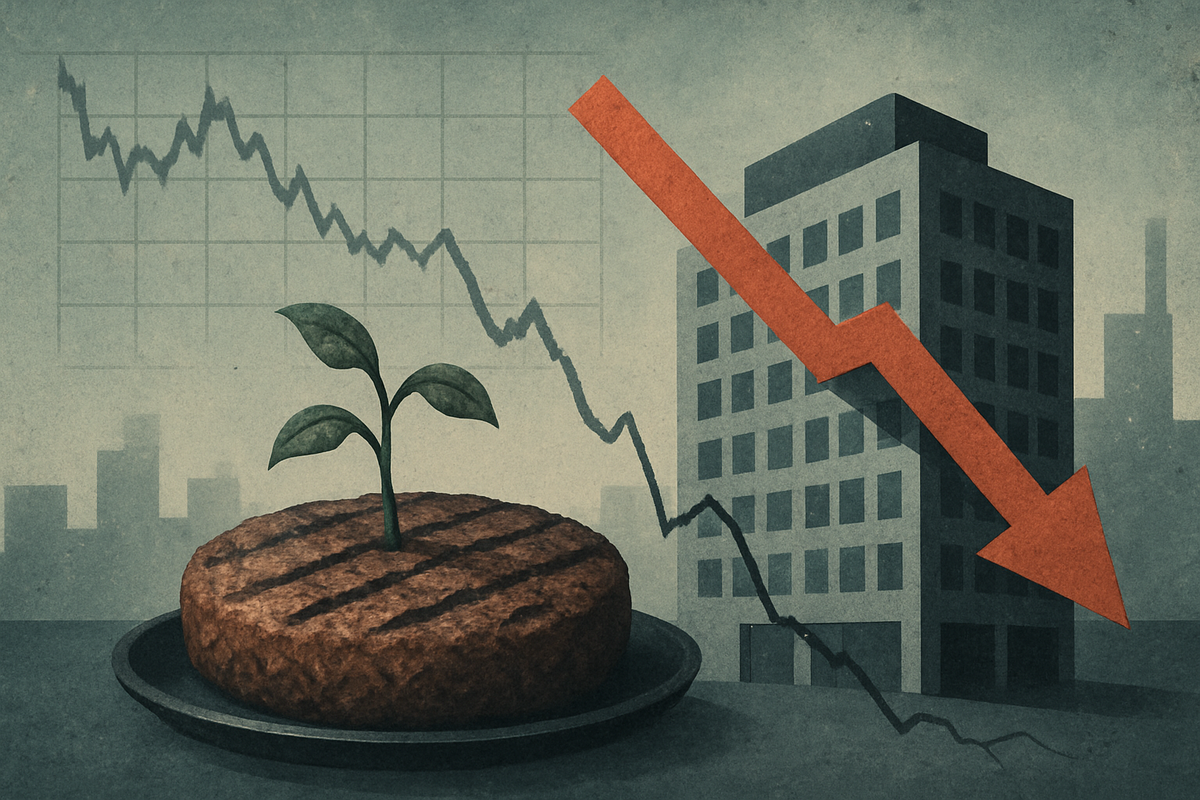
Beyond Meat (NASDAQ: BYND), once a darling of the plant-based food revolution, has plunged to a new all-time low today, trading below the $1.00 mark, following a significant analyst downgrade and the reverberations of a highly dilutive debt restructuring plan. The immediate implications for the company and its shareholders are overwhelmingly negative, signaling deep concerns about Beyond Meat's financial viability and future prospects in an increasingly challenging market. The stock's dramatic fall, which saw shares close down 24.56% at $0.78, marks a staggering decline from its 52-week high of $6.81 and a loss of over 99% of its value since its 2019 peak. This precipitous drop reflects a severe erosion of investor confidence, triggered by a massive shareholder dilution resulting from a recent debt-for-equity swap and persistent operational inefficiencies that have plagued the company for years. Deep Dive: The Downgrade and DeclineThe immediate catalyst for today's sharp decline was a downgrade by TD Cowen. Analyst Robert Moskow slashed Beyond Meat's price target from $2.00 to a mere $0.80, while maintaining a "Sell" rating on the stock. Moskow's rationale centered on the "significant shareholder dilution" stemming from the company's recent debt exchange offer, coupled with ongoing financial and operational difficulties. This downgrade is not an isolated incident but rather the latest in a series of increasingly pessimistic assessments from the analyst community throughout 2025. Argus Research downgraded Beyond Meat from "Hold" to "Sell" in September, citing challenges in the plant-based protein market and declining demand. JP Morgan initiated coverage with an "Underweight" rating in August, and BMO Capital Markets lowered its price target while maintaining a "Market Perform" rating. The consensus among analysts has firmly shifted to a "Strong Sell" or "Sell." The timeline leading to this precarious moment for Beyond Meat is marked by a steady stream of unfavorable developments:
Key players in this unfolding drama include Beyond Meat's management, grappling with a challenging market and a substantial debt load; the bondholders who accepted the debt-for-equity swap, thereby facilitating the dilution; and the analysts who have increasingly voiced their concerns, shaping market sentiment. The initial market reaction to the debt exchange was a sharp sell-off, continuing the negative momentum that has now driven the stock to unprecedented lows. Winners and Losers in a Shifting LandscapeBeyond Meat's (NASDAQ: BYND) dramatic decline is a clear indication of the company's struggles, but it also sends ripple effects across the food industry, creating both potential winners and losers. The most obvious loser is Beyond Meat itself. The company is in "survival mode," facing severe financial and operational challenges. The debt exchange, while reducing principal debt, came at the cost of massive shareholder dilution, more than quadrupling outstanding shares. This, combined with falling revenues, wider-than-expected losses, and dwindling consumer demand, paints a bleak picture for existing shareholders. Beyond Meat has already implemented cost-cutting measures, including layoffs and ceasing operations in China, yet profitability remains elusive. Other losers include other highly processed plant-based "meat mimic" producers. The issues plaguing Beyond Meat—such as high prices, concerns about "ultra-processing," and declining consumer interest in products that closely imitate animal meat—are symptomatic of broader market trends. This suggests that other companies heavily invested in similar products, especially those with long ingredient lists and higher price points, may also face significant challenges. The plant-based meat market has already seen a 28% reduction in the number of brands since 2020, signaling a period of consolidation where only the most resilient will survive. Even established players like Unilever are reportedly looking to sell their "The Vegetarian Butcher" brand due to underwhelming sales. Partners previously associated with Beyond Meat also face repercussions. McDonald's (NYSE: MCD), which co-developed the McPlant burger, canceled its U.S. trial in August 2023. Beyond Meat's continued struggles could lead McDonald's to further scale back or abandon the partnership entirely. Similarly, Yum! Brands (NYSE: YUM), which partnered with Beyond Meat for various plant-based offerings at KFC, Pizza Hut, and Taco Bell, may re-evaluate these collaborations. Retailers that heavily stocked Beyond Meat products could also experience reduced sales in the plant-based meat section if consumer demand continues to decline for these specific product types. On the flip side, traditional meat producers stand to be significant winners. Consumers are reportedly shifting back to conventional meat due to concerns over the price, taste, texture, and perceived ultra-processed nature of plant-based alternatives. Companies like Tyson Foods (NYSE: TSN), JBS S.A., and Pilgrim's Pride (NASDAQ: PPC), which primarily focus on animal protein, may benefit as consumers gravitate towards familiar and often cheaper options. Many traditional meat companies are also strategically introducing their own plant-based or hybrid products, adapting to sustainability trends without fully abandoning their core business. Plant-based companies focused on "whole foods" or niche markets could also emerge as winners. The consumer backlash against highly processed "meat mimic" products suggests a growing preference for simpler, more natural plant-based options. Brands offering products made from recognizable ingredients like lentils, beans, chickpeas, and vegetables, or those focusing on "clean ingredients" and "premium flavor experiences," might see increased demand. MorningStar Farms (owned by Kellogg's (NYSE: K)) and Dr. Praeger's are examples of brands that offer less-processed veggie burgers with transparent ingredient lists. Finally, adaptable plant-based competitors like Impossible Foods, Beyond Meat's primary rival, could benefit from a market recalibration. While the entire "fake meat" sector faces headwinds, Impossible Foods' different protein base (soy vs. pea) and established partnerships might allow it to navigate the turbulent market better than Beyond Meat, especially if it can address consumer concerns about processing and price effectively. Other specialized brands like Meati and Abbott's have already demonstrated sales growth by targeting specific market niches. Wider Significance: A Bubble Bursts?Beyond Meat's (NASDAQ: BYND) stock decline on October 14, 2025, is more than just a corporate crisis; it is a profound indicator of a broader recalibration within the plant-based alternatives industry. What was once heralded as a high-growth, disruptive sector is now facing a harsh reality check, echoing historical patterns seen in other speculative markets. This event fits squarely into broader industry trends for plant-based alternatives, which, after years of exponential growth, are experiencing a significant slowdown, particularly in the U.S. post-2020. Several factors are at play:
The ripple effects on competitors and partners are substantial. The negative performance of a prominent public company like Beyond Meat can dampen overall investor enthusiasm for the entire plant-based sector, making it harder for other startups to secure funding or achieve high valuations. While some competitors like Impossible Foods may continue to grow, they too face the same market challenges. Fast-food chains and retailers that partnered with Beyond Meat are already re-evaluating their plant-based strategies, potentially diversifying their offerings or scaling back promotions if consumer demand continues to wane. This financial pressure is also forcing companies to prioritize cost reduction and margin improvement over rapid innovation, potentially leading to a focus on more cost-effective products. Historically, Beyond Meat's trajectory bears striking resemblance to the dot-com bubble of the late 1990s. Both eras saw immense speculative optimism, inflated valuations for companies with little to no profit, and over-optimistic growth forecasts. Just as the dot-com bubble burst in 2000, leading to a sharp market correction and the failure of numerous startups, the plant-based meat sector is now undergoing a similar "shakeout" period. This suggests that only the most resilient, well-managed, and fundamentally sound companies will survive, potentially through consolidation or by adapting their business models to focus on sustainable profitability rather than just growth. While the internet itself continued to thrive after its bubble burst, the specific business models that failed served as a cautionary tale. Similarly, while the broader plant-based food market may still have long-term growth potential, the "meat mimic" segment is facing a significant reckoning. What Comes Next: Navigating a Turbulent FutureBeyond Meat (NASDAQ: BYND) stands at a critical juncture, with its short-term and long-term viability hinging on strategic pivots and its ability to adapt to a fiercely competitive and evolving market. In the short-term (next 1-2 years), Beyond Meat's immediate focus is on achieving financial stability and positive cash flow. This involves aggressive reductions in operating expenses, further workforce cuts, and optimizing its production network to improve unit economics. The company has already demonstrated some success in gross margin recovery, which is a positive sign. A key strategic pivot involves the rollout of new, healthier products and a rebranding effort. The launch of the "Beyond IV Burger" and "Beyond Beef" using avocado oil, and the reported rebrand to simply "Beyond" (dropping "Meat" from its name), signals a move away from merely imitating animal products to promoting plant proteins on their own merits, emphasizing cleaner labels and healthier profiles. The ongoing balance sheet restructuring, which will see convertible noteholders hold most of the company's equity, is a critical event that will continue to impact current shareholders. The cessation of operations in China also indicates a more focused international strategy, likely concentrating on profitable European markets. For the long-term (3-5+ years), Beyond Meat's outlook depends on the successful execution of these pivots. If cost management, product health improvements, and its broader "plant protein" identity succeed, the company could stabilize and carve out a more specialized niche. Sustained investment in R&D to enhance taste, texture, nutritional value, and explore diverse protein sources will be crucial. Strategic partnerships with foodservice providers and retailers will remain vital for distribution. However, recapturing significant market share will be an uphill battle against a growing number of competitors and private-label brands. Achieving price parity with conventional meat remains a significant long-term goal. Given its established brand recognition, Beyond Meat could also become an acquisition target for larger food corporations if its valuation remains low but its strategic shifts show promise. The broader plant-based market presents both opportunities and challenges. Opportunities include continued global market growth driven by increasing consumer awareness of health benefits and environmental concerns, and the rise of "flexitarianism." There's also potential for product diversification beyond traditional meat and dairy alternatives into areas like plant-based seafood, eggs, and snacks. However, challenges are significant: intense competition, persistent price sensitivity compared to conventional meat, the "ultra-processed" narrative impacting public perception, supply chain vulnerabilities, and lobbying from traditional industries. Possible scenarios for the plant-based meat industry include:
Wrap-up: A Cautionary Tale and a Path ForwardBeyond Meat's (NASDAQ: BYND) dramatic stock decline and analyst downgrades as of October 14, 2025, serve as a stark reminder of the challenges inherent in scaling a disruptive, high-growth business in a highly competitive market. The key takeaways from this event are the profound impact of massive shareholder dilution from debt restructuring, the persistent struggle with profitability and declining demand, and the broader market's increasing scrutiny of the plant-based sector's value proposition. This situation necessitates a recalibration of market expectations for plant-based alternatives. The era of unchecked growth and premium valuations based solely on potential seems to be over. Moving forward, the market will demand sustainable business models, clear paths to profitability, and products that genuinely resonate with consumers on taste, price, and health. The lasting impact of Beyond Meat's struggles could be a more discerning investment landscape for the entire alternative protein industry, favoring companies with robust fundamentals and a clear strategic vision. Investors should closely monitor several critical factors in the coming months:
In conclusion, Beyond Meat is at a critical juncture. While it has addressed its immediate debt overhang, the path to recovery is steep. Its success hinges on effective execution of its new product strategy, rigorous cost management, and the broader resurgence of consumer demand for plant-based proteins. For the wider market, Beyond Meat's story is a cautionary tale, underscoring that even in a revolutionary industry, fundamental business principles of profitability and sustainable growth ultimately prevail. This content is intended for informational purposes only and is not financial advice More NewsView More
These Are the Hottest Upgrades From the Q3 Reporting Cycle ↗
Today 9:06 EST


Why Bitcoin ETFs Like IBIT May Be Set to Surge in 2026 ↗
Today 7:38 EST

Up Over 20% in 2025, These 3 Stocks Are Boosting Buyback Capacity ↗
December 01, 2025
Via MarketBeat

Congress Beat the Market Again—Here Are the 3 Stocks They Bought ↗
December 01, 2025
Via MarketBeat
Recent QuotesView More
Stock Quote API & Stock News API supplied by www.cloudquote.io
Quotes delayed at least 20 minutes. By accessing this page, you agree to the Privacy Policy and Terms Of Service.
© 2025 FinancialContent. All rights reserved.
|