Monetary Easing Fuels Gold and Silver Rally: Fed's Pivot Sends Precious Metals Soaring Amid Global Uncertainty
By:
MarketMinute
October 17, 2025 at 15:08 PM EDT
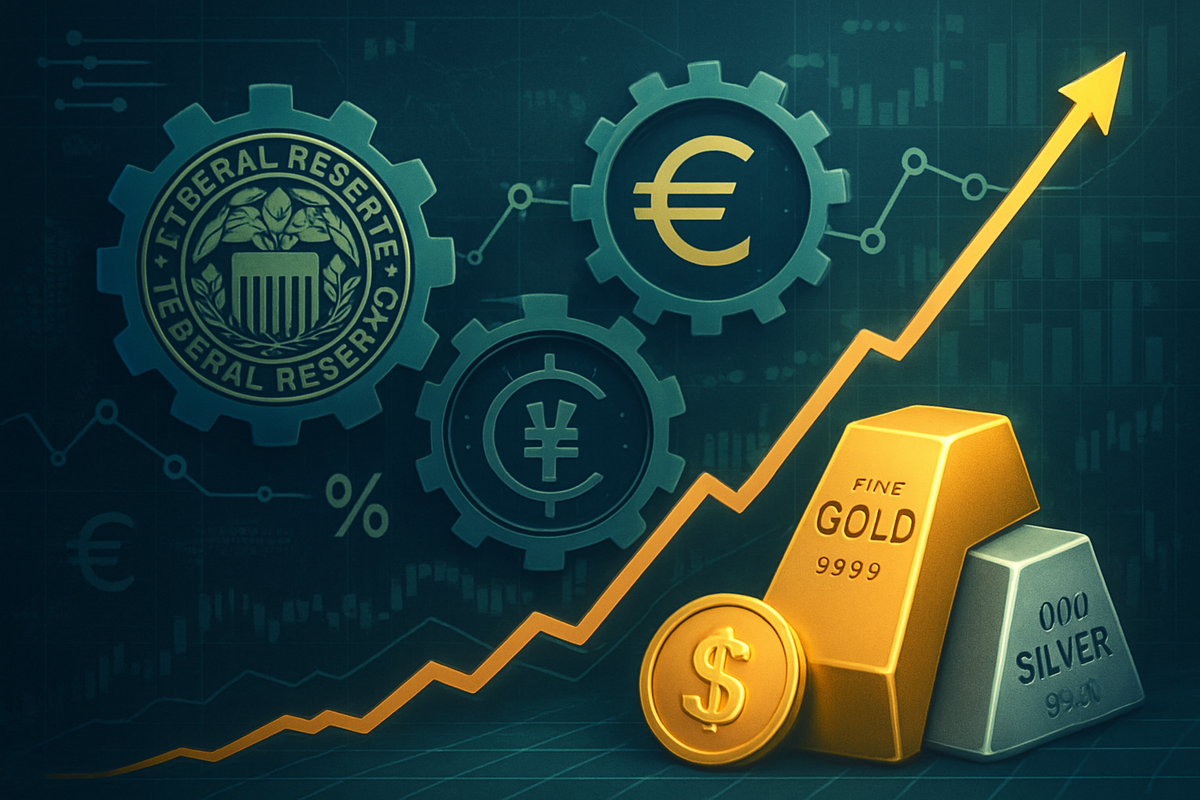
The global financial landscape is currently being reshaped by divergent central bank monetary policies, with the Federal Reserve's recent pivot towards easing acting as a significant catalyst for precious metals. As of October 17, 2025, the Fed has initiated a rate-cutting cycle and signaled the imminent conclusion of its quantitative tightening program, creating a highly favorable environment for gold and silver. This shift contrasts with the more cautious approaches of the European Central Bank (ECB) and the Bank of England (BoE), which are maintaining steady rates while continuing quantitative tightening, and the Bank of Japan (BoJ), which is contemplating a rate hike. This confluence of policies has immediate and profound implications for investors. The reduced opportunity cost of holding non-yielding assets like gold and silver, coupled with increased liquidity from the Fed's actions, has propelled both metals to multi-year highs. Gold has surpassed $4,200 per ounce, and silver is nearing $52 per ounce. While regional tightening efforts might temper enthusiasm in some markets, the overarching influence of the Fed's dovish stance and persistent global economic uncertainties are cementing precious metals' role as a vital safe haven and a beneficiary of expansive monetary conditions. Central Banks Chart Divergent Paths, Igniting Precious Metals MarketThe current surge in gold and silver prices is primarily a direct consequence of the Federal Reserve's decisive shift towards monetary accommodation. In September 2025, the Fed initiated a rate-cutting cycle, reducing the federal funds rate by 0.25% to a target range of 4%-4.25%. Market expectations are high for another 25 basis point reduction in October, with futures markets indicating a near-certainty of a total 0.50% cut by year-end. Furthermore, Federal Reserve Chair Jerome Powell has indicated that the quantitative tightening (QT) program, which has seen the Fed's balance sheet shrink from nearly $9 trillion to around $6.6 trillion, could conclude as early as December 2025. This cessation of QT signals a commitment to ample liquidity and a more dovish stance, which historically benefits non-yielding assets. This pivotal move by the Fed stands in contrast to the policies of other major central banks. The European Central Bank, after eight rate cuts since June 2024, maintained its main interest rates unchanged at its September 11, 2025 meeting, with the deposit rate at 2.0%. ECB policymakers have expressed a reduced likelihood of further cuts in the immediate future, while continuing to unwind their quantitative easing programs. Similarly, the Bank of England's Monetary Policy Committee left interest rates unchanged at 4.0% on September 18, 2025, following gradual reductions since August 2024. The BoE is also actively engaged in quantitative tightening, planning to reduce its asset holdings by an additional £70 billion over the year to September 2026. Meanwhile, the Bank of Japan, having maintained its short-term policy interest rate at 0.5% in July 2025, is now facing growing market speculation of a potential rate hike as early as its October 29-30 meeting, driven by steady inflation. The BoJ has also been gradually tapering its bond purchases and reducing its holdings of exchange-traded funds (ETFs). The immediate market reaction has been overwhelmingly bullish for gold and silver. The Fed's rate cuts decrease the opportunity cost of holding precious metals, making them more attractive compared to yielding assets like bonds. The impending end of QT further injects liquidity into the financial system, often leading to a weaker US dollar. A weaker dollar makes dollar-denominated gold and silver cheaper for international buyers, boosting demand. This sentiment has already propelled gold past the significant $4,200 per ounce mark, while silver is challenging the $52 per ounce level. While the ECB and BoE's continued QT and the BoJ's potential tightening could theoretically exert some downward pressure regionally by lifting real interest rates and strengthening their respective currencies, the dominant narrative remains the Fed's easing, which is providing strong momentum and support for precious metal valuations amidst persistent global economic and geopolitical uncertainties. Companies Navigating the Precious Metals BoomThe current monetary policy landscape, particularly the Federal Reserve's dovish pivot, is creating a clear delineation of potential winners and losers within the financial markets, with a pronounced impact on companies tied to gold and silver. Potential Winners:
Potential Losers (or those facing headwinds):
The overall sentiment for companies directly involved in the precious metals sector is overwhelmingly positive due to the current monetary policy trends. Investors are likely to favor these companies as a hedge against inflation and currency debasement, and as a direct play on the upward trajectory of gold and silver prices. Wider Significance: A Return to Gold's Role as Monetary BarometerThe current central bank monetary policy shifts, particularly the Federal Reserve's pivot towards easing, represent a significant moment in broader financial trends, underscoring gold and silver's enduring role as safe-haven assets and inflation hedges. This event fits squarely into a recurring pattern where expansive monetary policies, aimed at stimulating economic growth or combating deflationary pressures, invariably lead to increased interest in precious metals. The narrative of central banks prioritizing growth and stability over strict inflation targeting, or reacting to underlying economic fragilities, often culminates in a weaker fiat currency environment, making hard assets more attractive. The potential ripple effects extend beyond direct precious metals companies. Competitors in the broader investment landscape, such as traditional bond markets, face challenges as real yields decline. This makes non-yielding gold and silver comparatively more appealing. Partners in the mining sector, including equipment suppliers, engineering firms, and logistics providers, could see increased demand for their services as mining companies potentially expand operations or accelerate development projects in response to higher metal prices. Conversely, industries highly sensitive to interest rates, particularly in regions where central banks are maintaining tighter policies or considering hikes (like Japan), might face headwinds from higher borrowing costs, although the global impact of the Fed's easing tends to overshadow regional tightening for globally traded commodities. Regulatory or policy implications might emerge if the rally in precious metals becomes too pronounced, potentially signaling excessive inflation or financial instability. Central banks might face renewed scrutiny over their dual mandates of price stability and maximum employment. There could also be increased interest in regulating the derivatives markets for gold and silver to ensure market integrity amidst heightened volatility. Historically, periods of significant monetary easing, such as the post-2008 financial crisis quantitative easing programs or the early 2000s low-interest-rate environment, have consistently seen gold and silver perform strongly. The current environment echoes these precedents, with geopolitical uncertainties (which the initial research did not specifically detail, but are generally present) further bolstering their safe-haven appeal, similar to how gold performed during various crises throughout the 20th and 21st centuries. This current cycle reinforces the historical perception of precious metals as a barometer of monetary health and a hedge against systemic risks. The Road Ahead: Navigating a Shifting Monetary LandscapeLooking ahead, the trajectory of gold and silver prices will largely be dictated by the continued evolution of central bank policies and the broader economic environment. In the short-term, the market is poised for further gains in precious metals, especially if the Federal Reserve proceeds with another rate cut in October and formally concludes its quantitative tightening program by December 2025. This immediate easing bias from the world's most influential central bank is expected to keep the momentum strong for gold and silver, potentially pushing them towards new record highs. Investors will be closely watching Fed communications for any hints of deviation from this accommodative path. In the long-term, the picture becomes more nuanced. Should global inflation remain sticky despite rate cuts, or if economic growth falters significantly, the safe-haven demand for gold and silver could intensify further. However, a potential challenge could emerge if other major central banks, particularly the Bank of Japan, embark on a more aggressive tightening cycle than currently anticipated, or if the ECB and BoE reverse course and begin cutting rates more significantly, which could lead to currency volatility that indirectly impacts dollar-denominated precious metals. Market opportunities will likely present themselves in both physical metal and well-managed mining companies, particularly those with low production costs and strong balance sheets. Conversely, a rapid and unexpected global economic recovery, leading to a synchronized tightening by central banks, could pose a significant challenge to the current bullish outlook for precious metals. Potential scenarios range from a continued "goldilocks" environment for precious metals, where central banks maintain accommodative policies without sparking runaway inflation, to a more volatile scenario where geopolitical events or unexpected economic shocks drive even greater safe-haven flows. Strategic pivots for investors might involve rebalancing portfolios to increase exposure to precious metals or related equities, while also considering hedges against potential shifts in central bank rhetoric. Market participants should remain vigilant for changes in inflation data, employment figures, and central bank forward guidance, as these will be critical indicators for assessing the sustainability of the current precious metals rally. Wrap-Up: Gold and Silver's Resilient Ascent in a New Monetary EraThe current surge in gold and silver prices is a profound testament to the power of central bank monetary policy, particularly the Federal Reserve's strategic pivot towards easing. Key takeaways from this event include the immediate and significant impact of interest rate cuts and the cessation of quantitative tightening on non-yielding assets. The Fed's actions have lowered the opportunity cost of holding precious metals and increased market liquidity, while divergent policies from the ECB, BoE, and BoJ add layers of complexity, yet do not overshadow the dominant bullish impulse from the US. This scenario has clearly delineated potential winners, primarily gold and silver mining companies and related investment vehicles, who stand to benefit substantially from higher metal prices. Moving forward, the market is likely to remain highly sensitive to central bank pronouncements and economic data. The prevailing sentiment suggests continued support for gold and silver as investors seek hedges against potential inflation and currency devaluation, alongside their traditional role as safe havens amidst persistent global uncertainties. The current environment reinforces historical precedents, where expansive monetary conditions consistently fuel precious metals rallies, positioning them as a critical barometer of monetary health. Investors should watch for several key indicators in the coming months: further interest rate decisions from the Federal Reserve, the official conclusion of its quantitative tightening program, and any shifts in the inflation outlook globally. Additionally, monitoring the monetary policy stances of the ECB, BoE, and especially the Bank of Japan, will be crucial for understanding potential counter-currents. The sustained strength of gold and silver in this evolving monetary era underscores their lasting significance as integral components of a diversified investment portfolio. This content is intended for informational purposes only and is not financial advice More NewsView More
Micron Just Changed the AI Cycle—and the Market Knows It ↗
Today 12:47 EST

Waste Management’s Next Chapter Is Taking Shape for Investors ↗
Today 11:57 EST
Via MarketBeat
Tickers
WM

3 Emerging Market Stocks to Buy and Hold for 2026 ↗
Today 10:35 EST
Via MarketBeat

4 Memorable Ways to Play the HBM Market Boom ↗
Today 9:41 EST

Salesforce Just Triggered a Powerful Buy Signal for 2026 ↗
Today 8:24 EST
Via MarketBeat
Tickers
CRM
Recent QuotesView More
Stock Quote API & Stock News API supplied by www.cloudquote.io
Quotes delayed at least 20 minutes. By accessing this page, you agree to the Privacy Policy and Terms Of Service.
© 2025 FinancialContent. All rights reserved.
|