U.S.-China Trade Deal: A Cautious Optimism for Global Agricultural Markets Beyond Soybeans
By:
MarketMinute
October 30, 2025 at 13:50 PM EDT
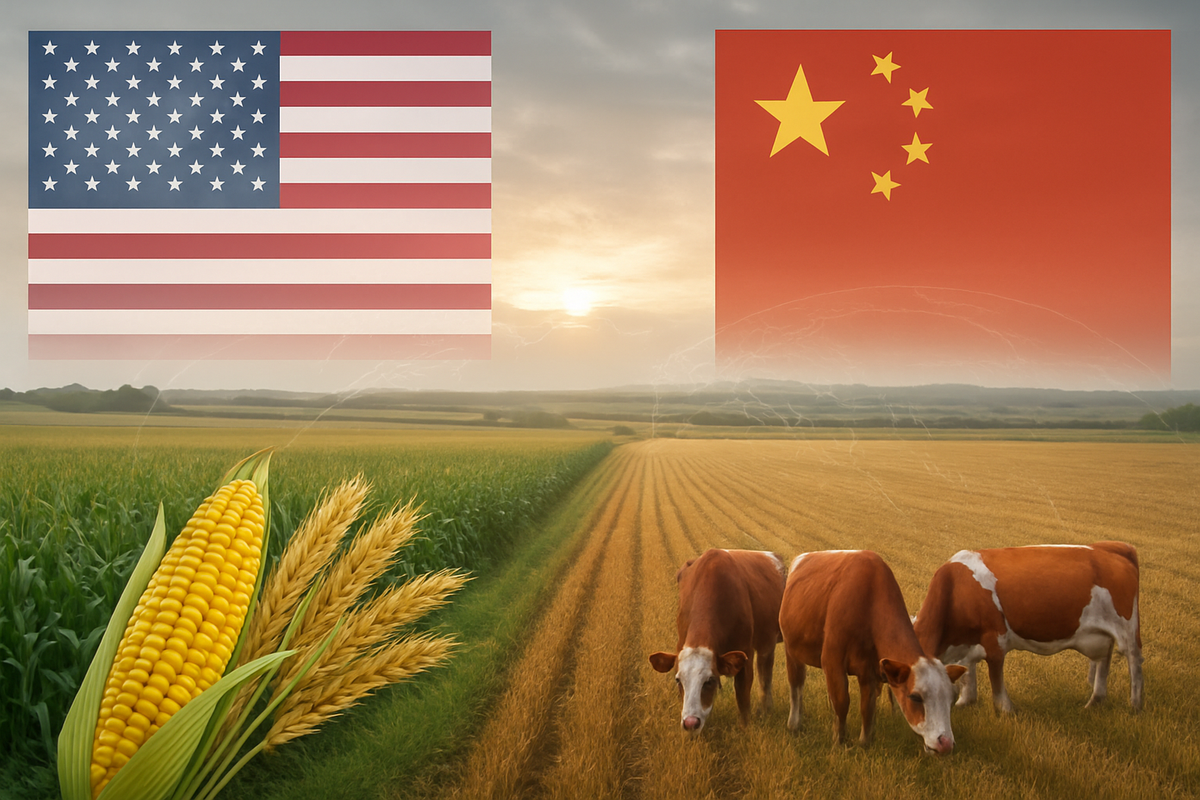
October 30, 2025 - A newly announced "substantial framework" between the United States and China has ignited a wave of cautious optimism across global agricultural markets. While the spotlight often shines on soybeans, this latest development signals broader implications for a range of U.S. agricultural commodities, potentially reshaping trade flows and market dynamics. The agreement, following a high-level meeting between President Donald Trump and President Xi Jinping in Busan, South Korea, aims to de-escalate ongoing trade tensions and includes commitments for China to resume "substantial purchases of US soybeans and other agricultural products." This tactical truce comes after years of turbulent trade relations, marked by tariffs and unfulfilled promises, particularly from the 2020 Phase One trade deal. The immediate sentiment is one of relief, as investors and producers hope for a more stable and predictable trading environment. However, the details beyond the explicit soybean commitments for 12 million metric tons immediately and 25 million metric tons annually for the next three years remain somewhat opaque for other commodities, leading to a measured response from sectors like pork, beef, and dairy, which have faced significant market access challenges in recent years. The Long Road to a Tactical Truce: A Detailed Look at the U.S.-China Agricultural Trade EvolutionThe path to this latest U.S.-China agricultural trade framework has been fraught with challenges and shifting dynamics. The initial Phase One Economic and Trade Agreement, signed in January 2020, was heralded as a breakthrough, committing China to an additional $80 billion in U.S. agricultural purchases over 2020 and 2021. This deal aimed to dismantle non-tariff barriers across a wide array of products, including pork, corn, wheat, sorghum, poultry, dairy, and beef. Initially, some sectors saw significant gains. U.S. pork exports surged, aided by China's African Swine Fever crisis. Corn, wheat, and sorghum purchases also saw an uplift. However, the overall agricultural purchase targets of the Phase One deal were ultimately missed, with China only buying $59.2 billion of the committed $80 billion. The COVID-19 pandemic and global supply chain disruptions were cited as contributing factors, but underlying trade tensions persisted. By early 2025, the trade relationship had deteriorated once more. Retaliatory tariffs on U.S. pork and beef, some reaching prohibitive levels, effectively rerouted global trade, with other countries stepping in to fill China's demand. U.S. beef exports faced a more than 90% decline, and dairy products, particularly whey and lactose, were hit with tariffs as high as 125%, virtually closing the Chinese market. Even ethanol, which saw a brief resurgence after Phase One, faced renewed challenges as China suspended its E10 mandate and maintained high tariffs. The key players in this ongoing saga remain the two economic superpowers: the United States and China. For the U.S., the Department of Agriculture (USDA), the Office of the U.S. Trade Representative (USTR), and major agricultural lobbying groups have been central. On the Chinese side, the Ministry of Commerce and state-owned enterprises play a crucial role in directing purchases. The recent agreement, described as a "substantial framework" or "tactical truce," signals a mutual desire to ease tensions, at least temporarily, and prevent further economic damage. Initial market reactions have been positive, with grain futures, including corn and wheat, seeing an uptick, reflecting optimism that the broader commitment to "other agricultural products" will translate into increased demand. However, the lack of specific details regarding the rollback of prohibitive tariffs for certain commodities like pork, beef, and dairy tempers this enthusiasm, suggesting that the full impact will depend on the implementation of this framework. Winners and Losers: Navigating the Shifting Sands of U.S.-China Agricultural TradeThe "substantial framework" in the U.S.-China trade relationship is poised to create distinct winners and losers within the agricultural sector, both in the U.S. and globally. While the explicit commitment to soybeans is a clear boon for U.S. soybean farmers and major agricultural trading houses like Archer-Daniels-Midland (NYSE: ADM) and Bunge Limited (NYSE: BG), the implications for other commodities are more nuanced. Potential Winners:
Potential Losers or Those Facing Continued Challenges:
The key takeaway is that while the new framework offers a glimmer of hope, the devil will be in the details of its implementation, particularly regarding the removal of existing tariffs and non-tariff barriers for commodities beyond soybeans. The ability of U.S. producers to reclaim market share from established alternative suppliers will be a critical factor in determining the ultimate winners and losers. Wider Significance: Reshaping Global Food Security and Supply ChainsThe newly minted U.S.-China agricultural trade framework, established on October 30, 2025, extends far beyond the immediate commercial transactions, resonating deeply within broader industry trends and carrying significant ripple effects across global food security and supply chains. This agreement emerges at a critical juncture, defined by growing global food demand, the escalating impacts of climate change, and rapid technological advancements in agriculture. China's insatiable demand for food, driven by its massive population and expanding middle class, makes a stable U.S.-China agricultural trade relationship paramount for global food security. The framework, by ensuring a more predictable supply of U.S. commodities, directly contributes to China's ability to feed its populace and stabilize domestic prices, especially as it grapples with challenges like declining arable land and water resources. For global markets, this predictability could temper volatility, fostering more stable commodity prices for both producers and consumers worldwide. The ripple effects on competitors and partners are substantial. Countries like Brazil and Argentina, which significantly increased their agricultural exports to China during previous periods of U.S.-China trade friction, may now face intensified competition. A substantial shift in Chinese demand back towards U.S. products could reduce their market share, potentially putting downward pressure on their domestic commodity prices. Similarly, other agricultural exporters from the European Union and Australia might experience increased competitive pressures depending on the specific commodities covered by the framework. Conversely, U.S. trading partners, such as Canada and Mexico, could see indirect benefits from a more stable global agricultural market. From a regulatory and policy standpoint, the framework is expected to usher in crucial adjustments. Beyond tariff reductions, a key focus will be on dismantling non-tariff barriers (NTBs), such as cumbersome sanitary and phytosanitary (SPS) measures, import licensing complexities, and inefficient customs procedures. Historically, these NTBs have been as significant, if not more, impediments to trade than tariffs. Addressing them could dramatically streamline trade and reduce costs. The agreement might also strengthen intellectual property rights (IPR) protections for agricultural biotechnology and seeds, a long-standing point of contention, benefiting U.S. agricultural innovators like Corteva Agriscience (NYSE: CTVA). Historically, the U.S.-China Phase One Agreement of 2020 serves as a direct precedent. While that deal aimed to increase Chinese agricultural purchases and address NTBs, China fell short of its overall purchasing commitments, partly due to market conditions and the COVID-19 pandemic. This 2025 framework appears to learn from those limitations, potentially incorporating more robust enforcement mechanisms or more realistic targets. China's WTO accession in 2001 also stands as a foundational event, transforming it into the world's largest importer of agricultural products and a top destination for U.S. exports. This new framework operates within that established global trading system, seeking to refine and stabilize the bilateral relationship within it. Ultimately, the framework's success will be measured by its ability to foster greater trust and cooperation, potentially acting as a stabilizing force in broader U.S.-China geopolitical relations. However, any failure to implement or adhere to the agreement could exacerbate tensions, introducing renewed uncertainty into global markets and forcing further realignment of agricultural supply chains, which have already demonstrated a capacity for diversification in the face of disruption. The integration of sustainability considerations, such as environmental standards or climate-resilient agriculture, could also emerge as a long-term benefit, influencing global agricultural practices. What Comes Next: Navigating a Future of Cautious Stability and Strategic AdaptationThe U.S.-China agricultural trade framework, established on October 30, 2025, sets the stage for a period of cautious stability, but also demands strategic adaptation from all stakeholders. While the immediate aftermath is likely to be characterized by market optimism and renewed Chinese purchases, the long-term outlook remains contingent on the durability of the agreement and the broader geopolitical landscape. In the short term, we can anticipate an immediate surge in market confidence. Agricultural commodity prices, particularly for soybeans, corn, and potentially pork, could see stabilization or modest increases as China begins to fulfill its purchase commitments. This offers a much-needed reprieve for U.S. farmers and exporters. Initial tariff reductions or suspensions on agricultural goods, if part of the framework, would further enhance the competitiveness of U.S. products. Businesses are already recalibrating their logistics and supply chains to accommodate these anticipated increases in trade volumes. Looking at the long term, the implications are more intricate. A successful framework could lead to a more predictable and balanced flow of agricultural trade, potentially allowing the U.S. to regain some market share lost to competitors during past trade disputes. For China, consistent access to U.S. agricultural products would significantly bolster its food security. However, China's aggressive diversification of its agricultural imports in recent years means that fully reclaiming previous market dominance will be an uphill battle for the U.S. The framework may also push for structural reforms in China, aiming for greater market access and intellectual property protection for agricultural innovations, which could foster a more level playing field over time. Strategic pivots and adaptations are crucial for agricultural businesses and governments alike. For businesses, market diversification remains a paramount strategy. While China is a vital market, the volatility of past trade relations underscores the need to explore and expand into other emerging markets in Southeast Asia, Latin America, and Africa. Investing in supply chain resilience, with multiple sourcing options and flexible logistics, will be key to mitigating future disruptions. Furthermore, leveraging data-driven decisions and agtech adoption can provide the agility needed to respond to market shifts. Governments, on their part, must focus on establishing robust enforcement mechanisms for the framework to ensure commitments are met, learning from the shortfalls of the Phase One deal. Continued strategic trade diplomacy that considers the holistic nature of U.S.-China relations, beyond just agriculture, will be essential. Support programs for farmers may need to adapt to help them navigate ongoing market volatility and diversification efforts. Market opportunities include increased export volumes for key U.S. commodities, leading to improved farmer income and reduced policy-induced uncertainty. There's also potential for new market access for specific horticultural products and collaboration on food security and sustainability initiatives. However, challenges persist. Fierce competition from other global suppliers, the durability and consistent enforcement of the framework, and broader geopolitical headwinds (e.g., over technology or human rights) could still disrupt agricultural trade. Economic slowdowns in China or currency fluctuations could also impact U.S. export competitiveness. Considering potential scenarios, the most likely outcome is a "Cautious Stability" scenario. This envisions the framework holding, leading to a period of stable, though not necessarily booming, U.S.-China agricultural trade. China largely meets its purchase commitments, and tariffs remain manageable. U.S. farmers benefit from predictable demand, while other exporting nations continue to compete fiercely. A less optimistic, but plausible, scenario is "Strained but Functional," where the framework faces intermittent challenges due to broader tensions, leading to fluctuating trade and periodic disputes. The most adverse "Renewed Decoupling" scenario, where the framework collapses, would see U.S. exports plummet, forcing China to accelerate diversification and causing significant global market disruption. For now, the prevailing sentiment leans towards a cautious optimism, with an understanding that vigilance and adaptability will be critical for navigating the road ahead. Wrap-Up: A Foundation for Future Trade, But Vigilance is KeyThe U.S.-China agricultural trade framework, announced on October 30, 2025, represents a significant, albeit potentially temporary, de-escalation of trade tensions. The key takeaways are China's commitment to substantial U.S. agricultural purchases, particularly 25 million metric tons of soybeans annually for three years, alongside some tariff adjustments, rare earth cooperation, and enhanced fentanyl enforcement. This "trade truce" aims to stabilize a relationship that has seen considerable friction over the past years. The market assessment reveals cautious optimism. While agricultural commodities initially saw gains, some experienced a "buy the rumor, sell the fact" reaction. Nevertheless, the deal is broadly positive for the U.S. agricultural sector in the short term, especially for soybean farmers. Broader markets, however, showed tempered sentiment, reflecting the understanding that fundamental structural issues between the two economic giants remain largely unaddressed. The lasting impact is likely to be a shift in tone towards more constructive dialogue, laying groundwork for future cooperation. However, many provisions, like the 12-month rare earth cooperation, suggest a temporary pause for further negotiations rather than a comprehensive resolution. While increased agricultural exports will benefit U.S. terminals and input suppliers, China's long-term strategy of diversifying its agricultural imports is expected to continue. A planned presidential visit to China in April 2026 looms as a critical inflection point that will likely determine the future trajectory of this relationship. What investors should watch for in the coming months is crucial. First and foremost, monitor the implementation and confirmed purchase data to see if China’s commitments materialize into concrete export volumes. The durability of this truce is also paramount; any signs of policy reversals or renewed hostilities will be critical indicators. Investors should also pay close attention to progress in future negotiations aimed at addressing long-standing market access barriers and establishing long-term predictability. The presidential visit in April 2026 will be a pivotal event. Furthermore, watch for China's official confirmation of agricultural commitments and any potential reduction in its 23% import tariff on U.S. soybeans. Developments in the technology sector, particularly regarding semiconductor restrictions, will also remain a key area of uncertainty. Investors may consider portfolio diversification and sector rotation, with agricultural ETFs potentially seeing recovery as Chinese buying interest resumes. This content is intended for informational purposes only and is not financial advice More NewsView More
Up Over 20% in 2025, These 3 Stocks Are Boosting Buyback Capacity ↗
December 01, 2025
Via MarketBeat

Congress Beat the Market Again—Here Are the 3 Stocks They Bought ↗
December 01, 2025
Via MarketBeat

Go on a Shopping Spree With 3 Top Retail ETFs ↗
December 01, 2025

3 Fresh Dividend Hikes That Might Be Telling You Something ↗
December 01, 2025

Recent QuotesView More
Stock Quote API & Stock News API supplied by www.cloudquote.io
Quotes delayed at least 20 minutes. By accessing this page, you agree to the Privacy Policy and Terms Of Service.
© 2025 FinancialContent. All rights reserved.
|