Soft Commodities Lose Their Sweetness: Cocoa, Coffee, and Sugar Prices Retreat Amid Improved Supply and Weak Demand
By:
MarketMinute
October 07, 2025 at 15:48 PM EDT
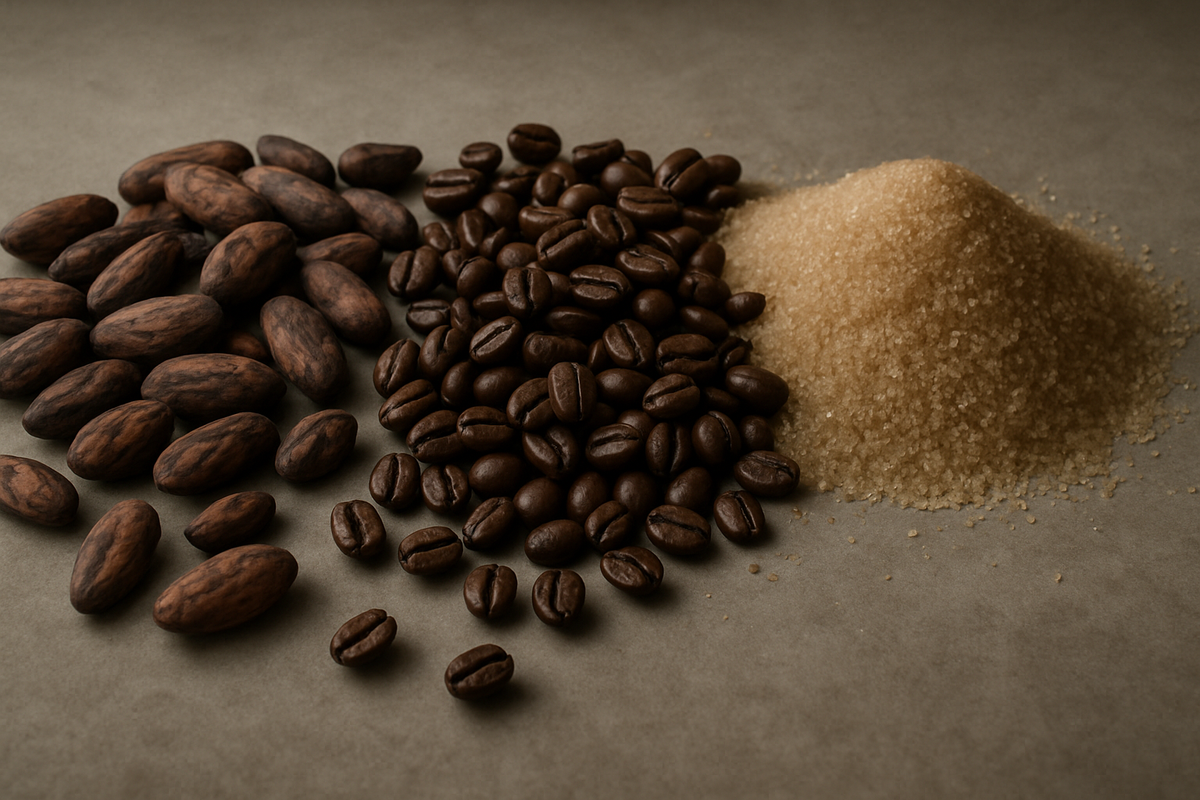
October 7, 2025 – After a tumultuous period characterized by unprecedented volatility and soaring prices, the global markets for cocoa, coffee, and sugar have witnessed a significant downturn in 2025. This retreat, a stark contrast to the record highs seen in late 2024 and early 2025, is primarily attributed to a confluence of improved supply prospects across key producing regions and a noticeable weakening in global demand. The shift marks a pivotal moment for producers, manufacturers, and consumers alike, signaling a potential recalibration of the soft commodity landscape. The immediate implications are multifaceted: while consumers might eventually see some relief at the retail level, manufacturers are navigating a complex environment of existing high-cost inventories and persistent inflationary pressures. Producers, particularly smallholder farmers, face the dual challenge of volatile prices and the ongoing impacts of climate change, which continue to inject an element of unpredictability into these essential agricultural markets. A Bitter Pill: Unpacking the Decline in Soft Commodity PricesThe recent price declines across cocoa, coffee, and sugar markets represent a significant unwinding of the extreme bullish sentiment that dominated late 2024. This shift has been driven by a series of events and market reactions throughout 2025. Cocoa: From Record Peaks to Plummeting FuturesCocoa prices, which had surged to historic peaks of over $12,900 per metric ton (or €10,800) in December 2024, experienced a dramatic correction throughout 2025. By August, prices had plunged by 43% to approximately €6,150 per metric ton. As of October 7, 2025, cocoa traded at $6,143.36 USD/T, reflecting a 13.85% monthly decrease and a 13.27% year-on-year decline, reaching a two-month low. This sharp fall was largely a consequence of severe "demand destruction" and an improving supply outlook. The timeline of events leading to this moment began in late 2024, with cocoa futures hitting unprecedented levels due to three consecutive global deficits, critically low exchange stocks, and structural issues in West Africa, including the swollen shoot virus and smuggling. However, by January 2025, early signs of demand destruction emerged, with major processors like Barry Callebaut AG reporting declining sales and processing volumes. This trend intensified into March 2025, as speculative "Managed Money" positions liquidated amidst improving West African weather, macroeconomic uncertainty, and rising financing costs. Throughout April and May, demand destruction became undeniable, with Q2 European grinding volumes plummeted 7.2% year-over-year. By August, prices had significantly fallen as the main crop harvest began in West Africa, bringing optimism for improved yields. By September, London cocoa futures saw speculators switch to a net short position, anticipating a substantial global surplus in the 2025/26 season due to weak demand. Key players impacted include the major producing regions of Ivory Coast and Ghana, which account for over 60% of global supply, along with exchanges like ICE London and NYMEX. Chocolate manufacturers such as Mondelez International (NASDAQ: MDLZ), The Hershey Company (NYSE: HSY), and Nestlé S.A. (OTC: NSRGY), along with cocoa processors like Barry Callebaut AG, are key stakeholders. Initial market reactions saw manufacturers implement aggressive cost-management strategies and warn of higher consumer prices, leading to a significant contraction in global processing volumes. Coffee: Volatile Swings and Stabilizing PricesCoffee prices also saw significant volatility, with Arabica futures exceeding $4 per pound in February 2025 and Robusta hitting record highs. However, by August 2025, Arabica had fallen from its February peak to US$2.80 per pound, and Robusta from US$2.75 to US$1.73 per pound. The International Coffee Organization (ICO) Composite Indicator Price (I-CIP) dropped 11.8% in June 2025, its first dip below 300 US cents/lb since December 2024. As of October 7, 2025, coffee prices were at 375.06 USd/Lbs, down 5.72% over the past month, though still considerably higher than a year ago. The surge in late 2024 was fueled by climate disruptions in Brazil, including drought and frost. However, by June 2025, prices began to stabilize and decline as growing conditions in Brazil improved, promising "high-quality and plentiful" harvests. Aggressive selling by suppliers also contributed. September saw further price slips due to upbeat harvest forecasts from Brazil, India, and Thailand, alongside favorable rains in Brazil. Ongoing US-Brazil trade talks, particularly concerning 50% tariffs on Brazilian coffee exports to the US, also influenced the market, causing a 46% plunge in August 2025 exports to the US. Major producing regions include Brazil (the largest producer) and Vietnam (chief Robusta producer). Key organizations like the ICO and exchanges like ICE Futures US New York are central. Initial market reactions included manufacturers absorbing some costs before passing the remainder to consumers, resulting in a 17% average increase in coffee prices since 2022. Sugar: Oversupply and Policy Shifts Drive DownturnThe global sugar market experienced substantial price declines, with raw sugar futures falling below 20 cents/lb in December 2024, a level not seen since September 2024. By June 2025, prices dipped below 16 cUSD/lb, and in September 2025, they hit a two-month low of 15.54 cents/lb. On October 7, 2025, sugar traded at 16.65 cents/lb, down 0.78% from the previous day. Late 2024 saw a seasonal demand slump and shifting trade policies, such as duty-free Ukrainian imports into the EU, exacerbating declines. Despite a brief rally, January 2025 saw futures return to lower levels due to weak demand and increased short positions by speculators. The outlook for sugar production improved significantly by June 2025, with a global surplus anticipated. This was driven by higher production in Brazil's Centre-South region, Thailand, and India, with Brazilian farmers pivoting from ethanol to sugar production due to higher profitability. Key players include Brazil, India, and Thailand as major producers, and exchanges like ICE Sugar No. 5. Initial market reactions involved buyers adopting a "wait-and-see" approach, while speculators became net sellers. EU producers projected a 5-10% reduction in beet plantings for 2025 to stabilize prices. Who Wins, Who Loses: The Corporate ImpactThe decline in soft commodity prices creates a clear divide between potential winners and losers in the corporate world, with downstream manufacturers generally benefiting from lower input costs and upstream producers facing revenue pressure. Potential WinnersCompanies that use cocoa, coffee, and sugar as primary raw materials stand to gain significantly from these price declines.
Potential LosersCompanies directly involved in the cultivation and primary processing of these commodities are likely to face headwinds.
Overall, the impact on corporate operations will see manufacturers benefiting from lower purchasing costs, potentially leading to increased production and improved inventory management. Producers, however, may face reduced planting and investment. For profitability, lower input costs directly translate to higher gross margins for consumer-facing companies, while producers will see revenues and margins erode. This divergence will likely be reflected in stock performance, with beneficiaries potentially seeing an uplift and producers facing downward pressure. The Broader Picture: Wider Significance and Lasting ImpactsThe retreat in soft commodity prices is more than just a momentary market fluctuation; it signals broader industry trends, creates ripple effects across the global economy, and carries significant regulatory and historical weight. Broader Industry TrendsThis event fits into several overarching trends:
Ripple Effects and Regulatory ImplicationsThe price declines will have differentiated impacts:
Historical PrecedentsDeclines in soft commodity prices are not new. History shows repeated cycles of commodity booms and slumps, often correlated with global economic conditions. The 2007-2008 World Food Price Crisis, though characterized by increases, demonstrated the rapid and significant impact of supply concerns and speculative activity. The current situation, while sharing similarities with past downturns driven by supply and demand, is uniquely influenced by the added layer of protectionist trade policies, potentially decoupling global commodity prices from retail prices in affected importing nations. What Comes Next: Navigating the Future of Soft CommoditiesAs of October 7, 2025, the future of cocoa, coffee, and sugar markets presents a complex picture of both opportunities and challenges, demanding strategic pivots and adaptations from all stakeholders. Cocoa Market OutlookShort-term (2025-2026): The cocoa market is expected to remain structurally elevated despite recent dips, with prices hovering around $6,000/tonne, as the market seeks balance. Supply improvements are anticipated from West Africa and Ecuador, potentially exerting downward pressure. However, persistent productivity challenges in Ivory Coast and Ghana will keep prices elevated, and volatility is expected. Long-term (2027-2035): The global cocoa market is projected to grow substantially, driven by increasing demand for chocolate and cocoa derivatives. However, climate change poses a significant long-term threat, leading to extreme weather, reduced yields, and price spikes. Underinvestment in farms is also a chronic issue. Coffee Market OutlookShort-term (2025-2026): Global coffee consumption is projected to reach a new all-time high, driven by strong demand in traditional and emerging markets. Price forecasts are mixed, with some predicting declines due to increased global production from Brazil and Vietnam, while others foresee continued volatility due to lingering supply concerns like drought in Brazil. Long-term (2027-2030): The global coffee market is expected to grow, driven by demand for premium, ready-to-drink, and sustainably sourced options. Specialty coffees are projected to be the fastest-growing segment. Climate change remains the most significant long-term threat, especially for Arabica. Sugar Market OutlookShort-term (2025-2026): The global sugar market is expected to transition to a modest surplus, with production growing significantly, particularly from Brazil, India, and Thailand. Despite this, prices remain "jumpy" due to factors like El Niño-driven crop stress and shifting export rules. Bearish sentiment is strong for 2025-2026, with prices potentially below 16 cents per pound due to anticipated oversupply. Long-term (2027-2034): Brazil is expected to consolidate its position as the leading producer and exporter. However, the rising popularity of alternative sweeteners and dietary preferences for low-sugar products will exert long-term downward pressure on conventional sugar demand. Strategic Pivots and Adaptations
Potential Scenarios and Outcomes
Wrap-up: Assessing the Market's New Sweet SpotThe recent price declines in cocoa, coffee, and sugar markets represent a significant recalibration, moving away from the scarcity-driven highs of late 2024 towards a more balanced, though still volatile, trading environment. This shift is a direct consequence of improved supply prospects and a notable easing of demand, partly due to "demand destruction" where persistently high prices forced consumers and manufacturers to reduce consumption or seek alternatives. Key Takeaways: The market has absorbed the shock of previous supply deficits, with renewed production optimism from major growing regions. However, underlying structural issues in cocoa production (disease, aging farms) and the omnipresent threat of climate change ensure that long-term stability remains elusive. The interplay of macroeconomic factors, such as easing inflation and central bank policies, alongside disruptive trade tariffs, adds layers of complexity. Market Moving Forward: The soft commodity markets are entering a period defined by both growth potential and pronounced risks. While demand remains robust in many areas, particularly for specialized and sustainably sourced products, the overriding challenge will be navigating the increasing impacts of climate change and adapting supply chains for resilience. Manufacturers will find some relief in lower input costs, but other inflationary pressures and market competition will dictate whether these savings translate into lower retail prices or improved margins. Producers face continued pressure to enhance efficiency and adopt sustainable practices to ensure long-term viability. Significance and Lasting Impact: This period highlights the critical need for diversified supply chains, investment in sustainable agriculture, and robust risk management strategies across the entire food industry. The lessons learned from the "demand destruction" in cocoa will likely influence product formulation and pricing strategies for years to come, with a greater emphasis on cost-efficiency and potentially alternative ingredients. For developing economies reliant on these exports, price volatility underscores the need for strong policy frameworks to support farmers and ensure food security. What Investors Should Watch For: In the coming months, investors should closely monitor:
By carefully observing these multifaceted factors, investors can better navigate the dynamic and evolving landscape of soft commodity markets. This content is intended for informational purposes only and is not financial advice. More NewsView More
Via MarketBeat
Tickers
BOX

Can Alibaba’s Big Bets Pay Off After a Breakout Year? ↗
Today 10:40 EST
Via MarketBeat



Via MarketBeat
Tickers
MDB
Recent QuotesView More
Stock Quote API & Stock News API supplied by www.cloudquote.io
Quotes delayed at least 20 minutes. By accessing this page, you agree to the Privacy Policy and Terms Of Service.
© 2025 FinancialContent. All rights reserved.
|