Gold and Silver Navigate a Turbulent November 2025: A Battle of Bullish and Bearish Forces
By:
MarketMinute
November 19, 2025 at 16:17 PM EST
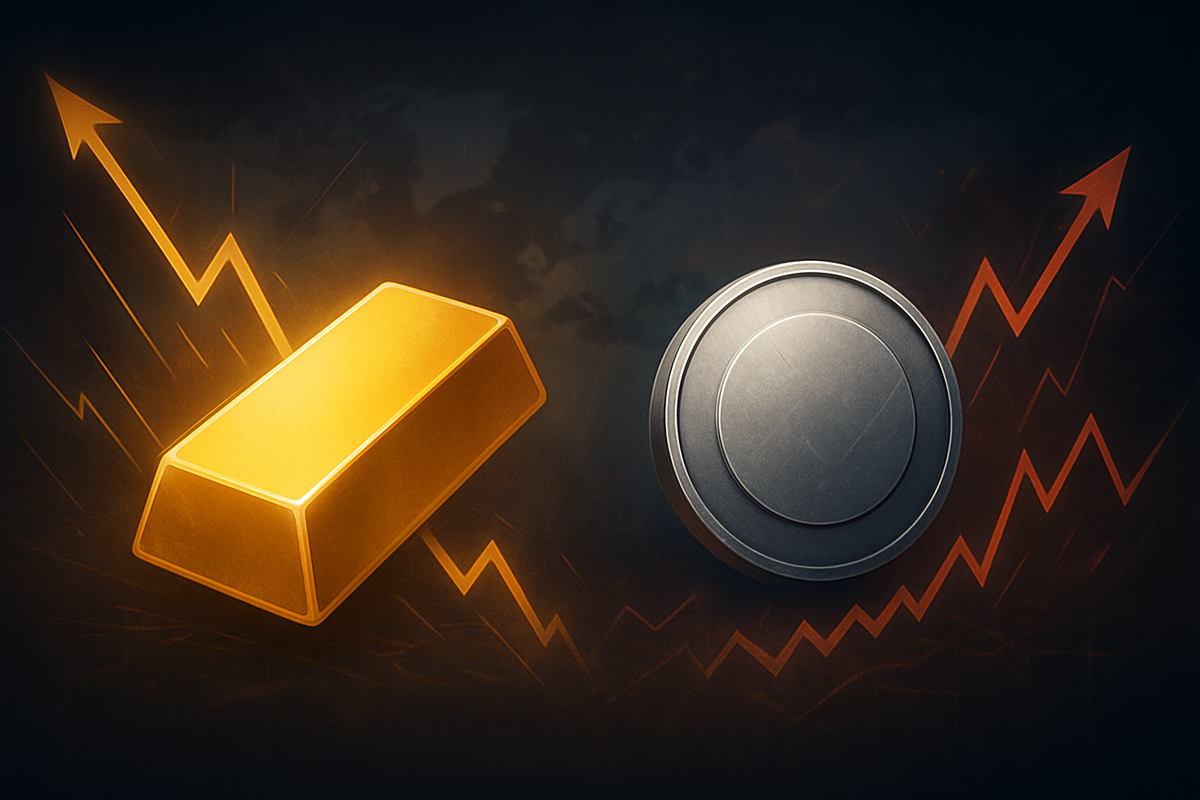
As November 2025 draws to a close, the precious metals market finds itself at a critical juncture, with gold and silver prices caught in a dynamic tug-of-war between powerful bullish and bearish drivers. Investors are grappling with a complex landscape shaped by persistent inflation concerns, evolving central bank policies, and an undercurrent of geopolitical uncertainty. While both metals have demonstrated resilience, their immediate future remains subject to the delicate balance of these opposing forces, leading to periods of significant volatility and a challenging environment for clear directional calls. The current environment suggests a market in flux, where traditional safe-haven appeal clashes with the allure of higher-yielding assets. The interplay of macroeconomic data, central bank rhetoric, and global events is creating a highly nuanced outlook for gold and silver, making informed analysis more crucial than ever for market participants. The Winds of Change: Unpacking Gold and Silver's Key DriversThe bullish case for gold and silver in November 2025 is multifaceted, rooted deeply in prevailing economic anxieties and structural market dynamics. Persistent inflationary pressures remain a cornerstone, with both metals traditionally viewed as robust hedges against the erosion of purchasing power. Reports indicate that inflation continues to be a significant factor, driving investors towards real assets. Concurrently, economic uncertainty and looming recession fears globally are channeling capital into safe-haven assets. When the broader economy shows signs of weakness or an impending downturn, gold and silver often become preferred destinations for capital seeking stability. This sentiment is further amplified by stock market volatility, which prompts a flight to safety whenever equities experience significant downturns or unpredictable swings. Adding to the bullish momentum is a weaker U.S. dollar, which makes dollar-denominated commodities like gold and silver more affordable and attractive to international buyers, thereby boosting demand. Geopolitically, escalating tensions and global uncertainty continue to provide a strong tailwind. Any flare-ups in international conflicts, trade disputes, or political instability traditionally send investors flocking to precious metals. From a monetary policy perspective, anticipation of Federal Reserve interest rate cuts is a significant driver. Lower interest rates reduce the opportunity cost of holding non-yielding assets like gold, making them comparatively more appealing than interest-bearing alternatives. Furthermore, increased central bank gold reserves globally, often seen as part of de-dollarization efforts, signal institutional confidence and underpin demand. On the supply/demand front, robust investment demand for physical gold and silver (bars, coins, ETFs) persists, while silver benefits from strong industrial demand, particularly from burgeoning green technologies like solar panels and electronics. The silver market has been in a physical deficit for several years, a trend projected to continue through 2025, further supporting prices amidst constrained mining supply due to underinvestment and declining ore grades. Conversely, significant bearish pressures are also at play, exerting downward force on precious metal prices. A scenario of strong economic growth and stability would diminish the appeal of safe-haven assets, drawing capital back into riskier, higher-return investments. Similarly, if inflation is brought under control and remains low and stable, the need for precious metals as an inflation hedge lessens considerably. Stable and rising stock markets would also divert investment away from precious metals, as equities offer more attractive returns. A stronger U.S. dollar makes gold and silver more expensive for holders of other currencies, potentially dampening international demand. The de-escalation of global conflicts and increased geopolitical stability would naturally reduce the demand for safe havens, thereby putting downward pressure on prices. Central bank policies are a critical bearish factor; hawkish remarks from Federal Reserve officials pushing back against rate cut expectations signal a commitment to higher interest rates, increasing the opportunity cost of holding non-yielding assets. Should central banks pursue restrictive monetary policies or if there's a reduction in central bank gold purchases, it could further signal a decrease in institutional confidence and overall demand. On the supply side, a significant increase in mining production or recycling could outpace demand, leading to lower prices, while a weakening in industrial demand for silver, perhaps due to a global economic slowdown impacting manufacturing and technology sectors, would remove a key support for silver prices. Corporate Crossroads: Who Wins and Who Loses?The fluctuating fortunes of gold and silver prices directly impact a range of public companies, primarily those involved in mining, refining, and industrial applications of these metals. Potential Winners (if prices rise):
Potential Losers (if prices fall or become too volatile):
The overall impact on these companies hinges on their operational efficiency, hedging strategies, and the proportion of their revenue derived from precious metals. Broader Implications: A Shifting Global LandscapeThe ongoing volatility in gold and silver prices is not an isolated event but rather a symptom of deeper, evolving global economic and geopolitical trends. The persistent discussion around de-dollarization efforts by various central banks, particularly through increased gold reserves, signifies a broader shift in global financial architecture. This trend, if it continues, could provide a long-term structural tailwind for gold, reducing reliance on the U.S. dollar as the sole global reserve currency. Furthermore, silver's dual role as a precious metal and an industrial commodity places it at the intersection of two powerful trends. Its significant demand from green technologies like solar panels, electric vehicles, and 5G infrastructure means that the global push towards sustainability and technological advancement will continue to underpin its industrial consumption. This trend provides a unique fundamental support for silver that gold does not possess to the same extent. Potential ripple effects on the broader financial market include increased interest in alternative assets and a re-evaluation of portfolio diversification strategies. If inflation remains sticky, institutional investors may allocate more capital to commodities, including precious metals, to protect real returns. Regulatory and policy implications are primarily driven by central bank actions. The Federal Reserve's stance on interest rates, in particular, sends powerful signals to the market. Any unexpected hawkish or dovish shifts can dramatically alter the investment landscape for precious metals. Historically, periods of high inflation and geopolitical instability have consistently seen gold and silver perform strongly as safe havens, providing a historical precedent for their current appeal. Comparisons to the 1970s, a decade marked by high inflation and geopolitical turmoil, are often drawn when analyzing the current environment. The Road Ahead: Navigating UncertaintyLooking ahead, the trajectory of gold and silver prices in the short to long term will largely depend on the resolution of several key macroeconomic and geopolitical uncertainties. In the short term, market participants will be keenly watching upcoming inflation reports, central bank meetings (especially from the Federal Reserve, European Central Bank, and Bank of Japan), and any new developments in major geopolitical hotspots. A clear signal from the Fed regarding the timing and pace of potential rate cuts could provide significant directional impetus. Long-term possibilities include continued appreciation if inflation proves more entrenched than anticipated, or if global geopolitical stability deteriorates further. Conversely, a sustained period of robust global economic growth coupled with controlled inflation and rising real interest rates could dampen enthusiasm for precious metals. Market opportunities may emerge for nimble investors who can accurately anticipate shifts in central bank policy or geopolitical events. For instance, a sudden escalation of a conflict could present a buying opportunity for safe-haven assets, while a stronger-than-expected economic recovery might signal a time to reduce exposure. Potential strategic pivots for mining companies might include focusing on cost efficiencies if prices decline, or expanding exploration efforts if a sustained bull market appears likely. For investors, diversification remains paramount, with precious metals serving as a key component of a balanced portfolio designed to weather various economic scenarios. Potential scenarios and outcomes range from a significant breakout to new all-time highs for both metals if bullish factors coalesce, to a prolonged consolidation or even a correction if bearish forces gain dominance, especially if central banks maintain a hawkish stance for longer than expected. Final Thoughts: A Market in TransitionNovember 2025 finds the gold and silver markets in a state of dynamic equilibrium, heavily influenced by a confluence of macroeconomic forces and geopolitical realities. The key takeaways are that both metals continue to serve as vital hedges against inflation and uncertainty, but their price movements are increasingly sensitive to central bank rhetoric and the strength of the U.S. dollar. Silver, in particular, benefits from its dual role, with robust industrial demand providing an additional layer of support often overlooked in broader precious metals analyses. Assessing the market moving forward, it appears set for continued volatility. The battle between inflation fears and hawkish central bank sentiments will likely dictate the immediate future. Investors should anticipate a period where sharp rallies could be met with equally sharp corrections as new data emerges. The lasting impact of the current environment could be a re-affirmation of precious metals' role as essential portfolio diversifiers in an increasingly unpredictable world. What investors should watch for in coming months includes:
This content is intended for informational purposes only and is not financial advice More NewsView More
Rubrik’s Massive Rebound: Why the Next Leg Higher Could Be Fast ↗
December 07, 2025

Five Below and Dollar Tree Earnings Signal a Shopper Shift ↗
December 07, 2025
Via MarketBeat

Ulta’s Stock May Be Set for a Glow-Up—20% Upside Ahead? ↗
December 06, 2025
Via MarketBeat
Tickers
ULTA
Gates Foundation Sells MSFT Stock—Should Investors Be Worried? ↗
December 06, 2025
Via MarketBeat
Tickers
MSFT
MarketBeat Week in Review – 12/1 - 12/5 ↗
December 06, 2025
Recent QuotesView More
Stock Quote API & Stock News API supplied by www.cloudquote.io
Quotes delayed at least 20 minutes. By accessing this page, you agree to the Privacy Policy and Terms Of Service.
© 2025 FinancialContent. All rights reserved.
|