Bitcoin's Steep Descent Rocks Markets: A Deeper Dive into Crypto's Impact on Equities
By:
MarketMinute
November 21, 2025 at 12:45 PM EST
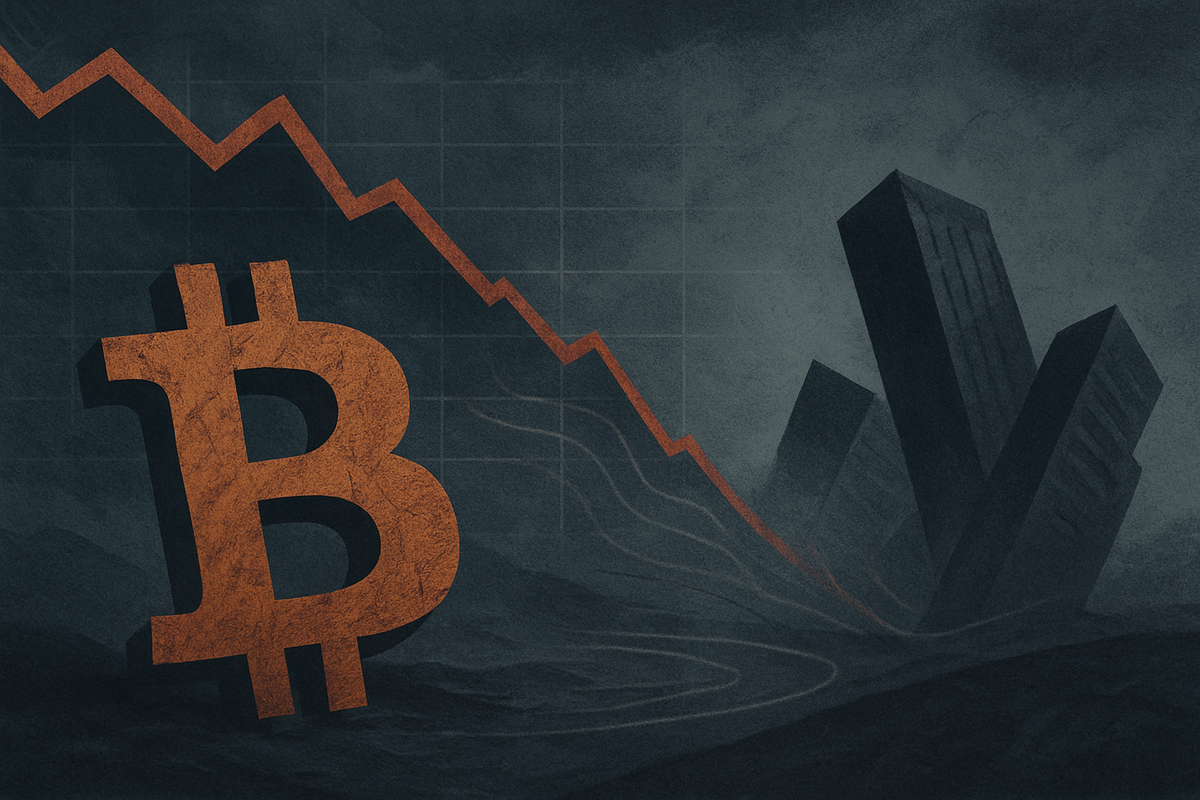
New York, NY – November 21, 2025 – The cryptocurrency market is in turmoil, with Bitcoin (BTC-USD) experiencing a dramatic and rapid plunge throughout November 2025. This significant downturn is sending ripples across the broader financial landscape, fueling concerns that the crypto slump is not only a symptom of a wider "risk-off" sentiment but also an active contributor to increasing selling pressure in traditional equities and a tightening of overall market liquidity. As Bitcoin struggles to find a floor, investors are bracing for potential further contagion in an already volatile economic environment. The immediate implications are palpable: an intensifying correlation between Bitcoin and high-growth tech stocks suggests that the crypto rout is amplifying the flight from risk assets. This dynamic indicates that capital is not merely shifting within the crypto ecosystem but is being withdrawn from speculative investments across the board, potentially signaling a more profound reassessment of market valuations and risk appetite among investors. The Unraveling: A Timeline of Bitcoin's November PlungeBitcoin's recent descent has been swift and brutal, marking one of its most challenging periods in years. After soaring to an early October all-time high of over $126,300, the flagship cryptocurrency began a precipitous decline. By November 13th, Bitcoin had breached the critical $100,000 psychological barrier, signaling a significant loss of momentum. The sell-off intensified, with the cryptocurrency plummeting to seven-month lows near $81,636 by November 21st, even briefly touching $80,553. This represents a staggering 33% decrease from its early October peak, positioning Bitcoin for its worst monthly performance since June 2022. The broader cryptocurrency market has mirrored this trend, shedding over $1 trillion in market capitalization in the past seven weeks alone. Several interwoven factors have fueled this dramatic downturn. Macroeconomic headwinds, spearheaded by a renewed hawkish stance from the Federal Reserve, have significantly dampened expectations for imminent interest rate cuts. This shift in monetary policy, coupled with concerns about a macroeconomic slowdown and weak US unemployment data, has fostered a pervasive "risk-off" environment, making non-yielding assets like Bitcoin less attractive. Furthermore, reports of panic selling were reportedly triggered by Japan's substantial stimulus package, unsettling global asset markets. Internally, the crypto market is undergoing a profound deleveraging phase. Massive liquidations of leveraged positions have cascaded through the system, with Bitcoin breaking below key technical support levels triggering further algorithmic and stop-loss driven selling. Large movements of Bitcoin from long-dormant wallets to exchanges have added to the selling pressure, while thinning liquidity and increased volatility, exacerbated by stress among market makers, have amplified price swings. Analysts at JPMorgan (JPM-NYSE) have specifically pointed to significant retail selling of spot Bitcoin and Ether (ETH-USD) Exchange Traded Funds (ETFs) as a major contributor to the correction. Investor sentiment, as reflected by the "Crypto Fear & Greed Index," has plummeted to historic lows, signaling extreme fear and a "lackluster sentiment" that some perceive as a "bubble" bursting. Corporate Crossroads: Winners and Losers in the Crypto DownturnThe sharp decline in Bitcoin's value creates a complex web of winners and losers across various sectors, particularly impacting companies with direct or indirect exposure to the cryptocurrency market. Potential Losers:
Potential Winners (or those less impacted):
The primary impact on public companies is through their direct exposure to Bitcoin or the broader crypto market, either through holdings, mining operations, or revenue derived from trading and services. The current plunge underscores the inherent volatility of the crypto market and its potential to significantly affect the financial health and market perception of associated companies. Broader Implications: A Shifting Sands of Risk and RegulationBitcoin's dramatic plunge is more than just a cryptocurrency event; it's a significant indicator of broader shifts in global financial markets and investor sentiment. This downturn fits squarely into a larger trend of de-risking, where investors are increasingly shying away from speculative assets in favor of more stable investments. The intensified correlation between Bitcoin and high-growth technology stocks underscores this, suggesting that market participants are now treating crypto as a barometer for overall risk appetite, rather than a distinct, uncorrelated asset class. This perception amplifies ripple effects, as a crypto sell-off can now directly contribute to a downturn in the tech-heavy Nasdaq (NDAQ-NASDAQ) and other growth-oriented indices. The impact extends to market liquidity. While the direct liquidity drain from the crypto market might not critically imperil traditional financial markets, the pervasive "risk-off" sentiment stemming from the crypto downturn contributes to a more cautious and defensive stance among investors across all asset classes. This can lead to reduced trading activity and potentially tighter liquidity in traditional equities as investors prioritize capital preservation over new exposure. The substantial liquidations within the crypto market, coupled with reported stress among major crypto market-making firms, could limit their ability to provide liquidity, leading to a more "dislocated" and "fractured" trading environment across crypto assets, with indirect psychological effects on traditional markets. Regulatory and policy implications are also significant. The increased volatility and the sheer scale of the market capitalization wiped out will undoubtedly draw renewed scrutiny from financial regulators worldwide. Governments and central banks, already grappling with how to effectively oversee the nascent crypto industry, may feel compelled to accelerate the implementation of stricter regulations concerning stablecoins, exchanges, and DeFi protocols. This could lead to a more formalized, but potentially more restrictive, operating environment for crypto businesses in the future. Historically, sharp market downturns in unregulated or lightly regulated sectors often precede periods of increased regulatory intervention, aiming to protect investors and maintain financial stability. Comparisons can be drawn to dot-com bubble burst of the early 2000s, which led to significant reforms in corporate governance and accounting practices, or even the 2008 financial crisis, which spurred extensive regulatory overhauls in traditional finance. What Comes Next: Navigating the UncertaintyThe path forward for Bitcoin and the broader financial markets remains uncertain, but several short-term and long-term possibilities are emerging. In the short term, continued volatility is almost a certainty. The prevailing "risk-off" sentiment, driven by macroeconomic concerns such as persistent inflation and the Federal Reserve's hawkish stance, is likely to keep pressure on speculative assets like Bitcoin. We could see further price discovery as the market attempts to establish a new support level. Strategic pivots for crypto companies will likely involve a renewed focus on profitability and sustainable business models, potentially leading to consolidation within the industry as smaller, less capitalized firms struggle to survive. Market opportunities might emerge for contrarian investors seeking to buy assets at depressed prices, but this comes with significant risk. Looking at the long term, the current downturn could serve as a crucial cleansing period for the cryptocurrency ecosystem. It may flush out overleveraged participants and unsustainable projects, paving the way for more robust and resilient blockchain technologies and applications. For public companies with crypto exposure, adaptations might include diversifying their revenue streams, reducing direct balance sheet exposure to volatile assets, or focusing on core technology development rather than speculative trading. Regulatory clarity, while potentially restrictive initially, could ultimately foster greater institutional adoption and stability by providing a more predictable operating environment. Potential scenarios range from a prolonged "crypto winter" where prices stagnate for an extended period, similar to past cycles, to a more gradual recovery once macroeconomic conditions improve and investor confidence returns. The emergence of new, more regulated financial products tied to crypto could also redefine its role in traditional portfolios. Market participants should watch for key indicators: any shifts in central bank monetary policy, particularly regarding interest rates; the overall trajectory of inflation and global economic growth; and significant regulatory announcements from major jurisdictions. The resilience of the underlying blockchain technology and the continued development of real-world use cases will also be critical in determining Bitcoin's long-term value proposition and its integration into the global financial system. Comprehensive Wrap-Up: A Market in TransitionBitcoin's significant plunge in November 2025 serves as a stark reminder of the inherent volatility and interconnectedness of modern financial markets. The key takeaway is the intensifying correlation between cryptocurrency and traditional risk assets, particularly high-growth tech stocks. This means that a downturn in one sector can now more readily amplify selling pressure in the other, creating a feedback loop that challenges broader market stability and liquidity. The event underscores that while cryptocurrencies offer innovative financial paradigms, they are not immune to macroeconomic forces or shifts in investor sentiment. Moving forward, the market is likely to remain in a state of transition. Investors should anticipate continued scrutiny of speculative assets, with a potential rotation towards more defensive and value-oriented investments. The deleveraging process within the crypto market, coupled with heightened regulatory interest, suggests a maturing but potentially more constrained environment for digital assets. The stress experienced by crypto market makers and the outflows from spot Bitcoin ETFs highlight the fragility of market infrastructure and investor confidence when faced with significant price depreciation. The lasting impact of this event will likely be a more integrated but also more scrutinized cryptocurrency market. It will force both individual and institutional investors to re-evaluate their risk exposure to digital assets and prompt companies with crypto ties to strengthen their financial resilience. What investors should watch for in the coming months are signs of macroeconomic stabilization, any easing of hawkish monetary policy, and the evolution of regulatory frameworks. These factors will be crucial in determining whether this period marks a temporary setback or a more fundamental re-pricing of risk in the digital asset space. This content is intended for informational purposes only and is not financial advice More NewsView More
Why Taiwan Semiconductor's 6.5% Dip Could Be a Smart Buy ↗
Today 18:39 EST
Via MarketBeat

RTX Surges to Record Highs as Defense Orders Explode ↗
Today 17:42 EST
Via MarketBeat
Tickers
RTX

Smart Money Is Buying Auto Suppliers, Not Car Brands ↗
Today 16:49 EST

Higher Beef Prices Are Here: Best Steakhouse Stocks for 2026 ↗
Today 15:07 EST
Via MarketBeat

AI Runs on Power—And Constellation Energy Controls the Switch ↗
Today 14:16 EST
Recent QuotesView More
Stock Quote API & Stock News API supplied by www.cloudquote.io
Quotes delayed at least 20 minutes. By accessing this page, you agree to the Privacy Policy and Terms Of Service.
© 2025 FinancialContent. All rights reserved.
|