Farmland's New Horizon: MetLife IM Predicts Moderation and Regional Divergence in US Agricultural Land Values
By:
MarketMinute
November 26, 2025 at 10:48 AM EST
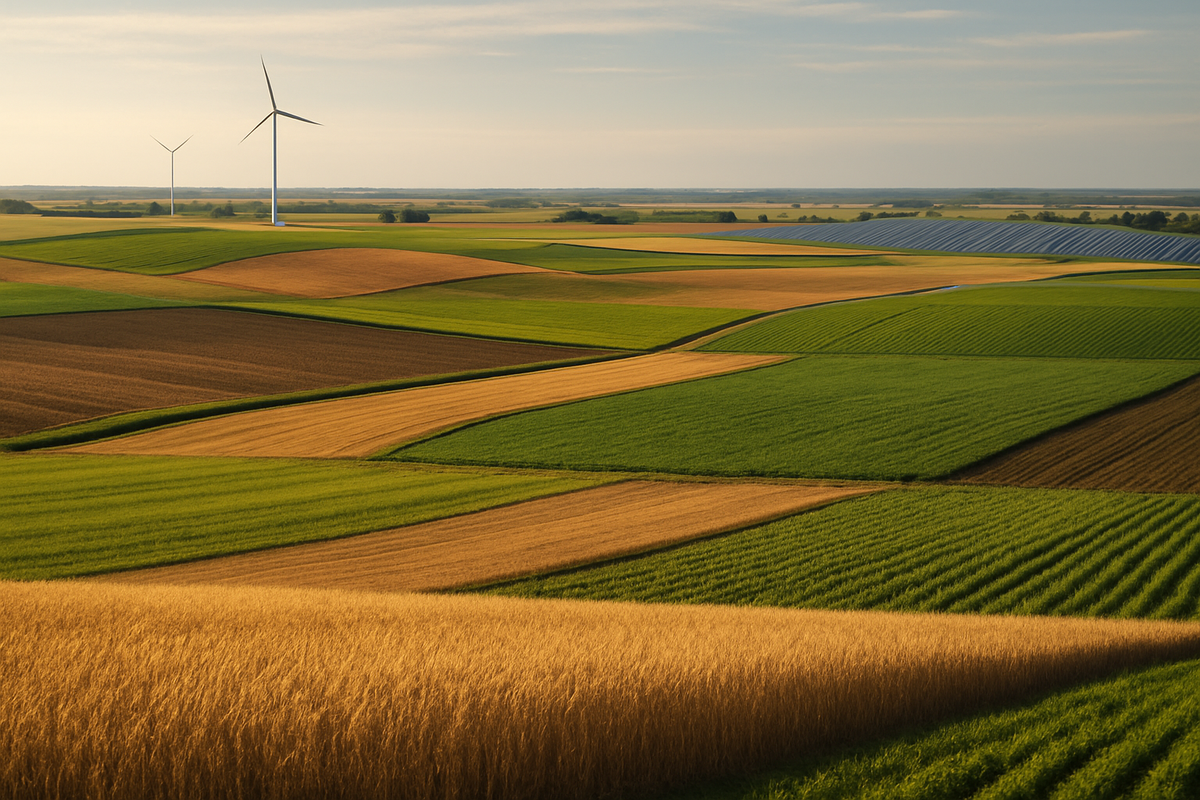
The once-soaring trajectory of U.S. farmland values is entering a new, more tempered phase, according to MetLife Investment Management's (MIM) Head of Agricultural Research & Strategy, David J. Williams, PhD. In a recent Q&A session discussing MIM's "The Road Ahead: U.S. Farmland Value Forecasts," Dr. Williams highlighted a significant shift from the rapid appreciation witnessed in 2021 and 2022 to a period of moderation through 2030. This recalibration is closely tied to evolving commodity price trends, higher input costs, and rising interest rates, signaling a more nuanced landscape for agricultural investors and operators. While national farmland values are still expected to see average growth of around 4.3% from 2024 to 2025, the days of explosive, widespread gains appear to be receding. The market is increasingly characterized by regional divergence and a stronger emphasis on underlying income performance rather than speculative appreciation. This outlook suggests that while farmland remains a robust asset class, stakeholders will need to adapt to a more selective and fundamentally driven investment environment. A Shifting Landscape: From Boom to BalanceThe detailed analysis from MetLife Investment Management paints a picture of a U.S. farmland market grappling with a confluence of economic factors. The exceptional appreciation rates of the early 2020s, largely fueled by robust commodity markets and low interest rates, have given way to a more complex environment. Dr. Williams emphasized that while a national contraction is not anticipated, the pace of growth will significantly slow. The timeline leading up to this moment saw unprecedented gains in agricultural land values. Following the economic stimulus and supply chain disruptions of the pandemic, commodity prices, particularly for row crops, surged. This translated directly into increased farm incomes, which historically correlates with rising land values. However, as global supply chains stabilized and agricultural production ramped up, commodity prices began to moderate from their peaks. Concurrently, inflationary pressures led central banks, including the Federal Reserve, to implement a series of interest rate hikes starting in 2022, increasing the cost of borrowing for farmers and investors alike. Elevated input costs, such as fertilizers, fuel, and labor, have further squeezed profit margins for producers, contributing to the expected cooling of the market. Key players in this evolving narrative include MetLife Investment Management, a significant institutional investor in agricultural assets, and its Head of Ag Research, Dr. David J. Williams, whose insights are shaping market expectations. Farmers, who constitute approximately 80% of cropland transaction participants, are also critical stakeholders, as their profitability directly impacts land demand. Institutional investors, viewing farmland as an inflation hedge and diversification tool, continue to play a role, albeit with a more discerning eye. Initial market reactions suggest a general acceptance of this moderation, with investors increasingly seeking assets with strong fundamental income potential rather than relying solely on capital appreciation. The discussions highlight a record-low cropland rent-to-value ratio of 2.8%, indicating that income generation has lagged behind capital appreciation in recent years, a trend that is likely to reverse or at least stabilize as the market matures. Public Companies Navigating the Farmland ShiftThe anticipated moderation in U.S. farmland values and the recalibration of commodity prices will inevitably create winners and losers among public companies deeply entrenched in the agricultural sector. Companies with significant exposure to commodity price fluctuations, input costs, and land ownership will feel the direct impact. Potential Winners:
Potential Losers:
The key for companies in this environment will be adaptability, diversification, and a strong focus on operational efficiency and value creation beyond simple asset appreciation. Wider Significance: A Return to FundamentalsThe shift in U.S. farmland values, as articulated by MetLife Investment Management, signifies a broader recalibration within the agricultural sector and financial markets. This event is not merely an isolated adjustment but rather a return to more fundamental drivers, moving away from the speculative fervor that characterized the post-pandemic boom. This trend fits squarely into broader industry patterns of increasing market maturity and differentiation. The agricultural sector, while historically stable, is not immune to economic cycles. The rapid appreciation of farmland values in recent years, outstripping income growth, was an anomaly. The current moderation suggests a market seeking equilibrium where land values are more closely tied to the productive capacity and income-generating potential of the land itself. This aligns with long-term investment principles that prioritize sustainable returns over short-term capital gains. The potential ripple effects extend to various competitors and partners within the agricultural ecosystem. Lenders, including major agricultural banks and financial institutions, will need to adjust their underwriting standards and risk assessments as collateral values stabilize or grow more slowly. Equipment manufacturers, as discussed, may see shifts in demand towards efficiency-enhancing technologies rather than expansion-driven purchases. Furthermore, the increased consideration of renewable energy leases highlights a growing competition for land use, potentially affecting traditional agricultural land rental markets and creating new partnerships between landowners and energy developers. Regulatory and policy implications could also emerge. If farm profitability continues to be squeezed, there might be renewed calls for government support programs or adjustments to agricultural subsidies to ensure food security and rural economic stability. Policies related to land use, particularly concerning the balance between agricultural production and renewable energy development, could also come under increased scrutiny. Historically, periods of rapid farmland appreciation have often been followed by corrections or significant slowdowns. The U.S. experienced a major farmland boom in the 1970s, followed by a severe bust in the 1980s, driven by high interest rates, overproduction, and an export embargo. While the current situation is distinct, the emphasis on interest rates and commodity prices as key drivers echoes historical precedents. The current moderation, however, is projected as a more controlled slowdown rather than a sharp decline, reflecting a more diversified agricultural economy and more sophisticated risk management tools in place. The long-term tailwinds of a growing global population and demand for protein continue to underpin the fundamental value of agricultural land, suggesting that while the ride may be bumpier, the destination remains positive. The Road Ahead: Strategic Shifts and Emerging OpportunitiesLooking forward, the U.S. farmland market is poised for a period defined by strategic adaptation and the emergence of new opportunities amidst evolving challenges. Both short-term adjustments and long-term strategic pivots will be essential for stakeholders. In the short term, farm operators will likely intensify their focus on cost management and efficiency gains to offset tighter margins from moderating commodity prices and elevated input costs. This could drive increased adoption of precision agriculture technologies, data analytics for better crop management, and more strategic input purchasing. For investors, the immediate future calls for a highly selective approach, prioritizing regions and specific land parcels with strong underlying income potential and robust local demand dynamics, rather than broad-brush national allocations. The increasing appeal of renewable energy leases presents an immediate opportunity for landowners to diversify income streams, potentially offering multiples over traditional cash rental rates and providing a buffer against agricultural market volatility. Long-term possibilities include a continued emphasis on sustainable farming practices, driven by both consumer demand and potential regulatory incentives. Farmland's role as an inflation hedge and a stable asset for portfolio diversification will likely endure, especially in an era of persistent geopolitical uncertainty and market volatility. However, the nature of investment will shift towards a greater emphasis on due diligence, local market expertise, and an understanding of specific farm-level economics. Potential strategic pivots for agricultural businesses and investors include deeper integration of technology, exploring vertical integration opportunities, and diversifying revenue streams beyond traditional crop production. Market opportunities may emerge in niche agricultural sectors, value-added processing, and land management services that cater to the evolving needs of landowners. Challenges will include navigating sustained periods of lower commodity prices, managing the impact of climate change on agricultural productivity, and adapting to potential shifts in global trade policies. Potential scenarios and outcomes range from a "soft landing" where farmland values stabilize with modest growth, allowing incomes to catch up, to a more challenging environment if commodity prices experience a significant downturn or interest rates remain persistently high. The most likely scenario, as suggested by MetLife IM, is a controlled moderation with significant regional disparities, requiring active management and a nuanced understanding of local market fundamentals. Comprehensive Wrap-up: A Maturing Market Demands PrudenceThe insights from MetLife Investment Management's Head of Ag Research, David J. Williams, provide a crucial roadmap for navigating the evolving U.S. farmland market. The overarching takeaway is a transition from a period of exceptional, broad-based appreciation to a more mature and fundamentally driven market characterized by moderation and regional divergence. While the asset class retains its appeal as a long-term investment and an inflation hedge, the days of easy gains are giving way to an environment where prudent analysis and strategic decision-making are paramount. Moving forward, the market will increasingly scrutinize the income-generating potential of farmland, rather than relying solely on capital appreciation. The interplay between commodity prices, input costs, and interest rates will continue to shape profitability for farmers and, consequently, the underlying value of agricultural land. The growing trend of renewable energy leases also signals a significant shift in land use economics, offering new avenues for landowners to enhance returns and diversify risk. Investors should closely watch for several key indicators in the coming months. These include the trajectory of global commodity prices, particularly for major crops, as well as movements in interest rates and inflation. Regional agricultural reports and local market dynamics will become even more critical than national averages. Furthermore, monitoring the adoption of agricultural technology and the development of renewable energy projects on agricultural land will provide insights into emerging opportunities and competitive pressures. Ultimately, the U.S. farmland market is not entering a period of decline but rather one of recalibration. It demands a more sophisticated and granular approach from all stakeholders. Those who adapt to this new reality, focusing on efficiency, diversification, and a deep understanding of market fundamentals, will be best positioned to thrive in the years ahead. This content is intended for informational purposes only and is not financial advice More NewsView More
Via MarketBeat

Via MarketBeat
Tickers
BOX

Can Alibaba’s Big Bets Pay Off After a Breakout Year? ↗
Today 10:40 EST
Via MarketBeat


Recent QuotesView More
Stock Quote API & Stock News API supplied by www.cloudquote.io
Quotes delayed at least 20 minutes. By accessing this page, you agree to the Privacy Policy and Terms Of Service.
© 2025 FinancialContent. All rights reserved.
|