The Multi-Asset Revolution: How Integrated Platforms are Reshaping Bitcoin Trading
By:
MarketMinute
November 08, 2025 at 11:47 AM EST
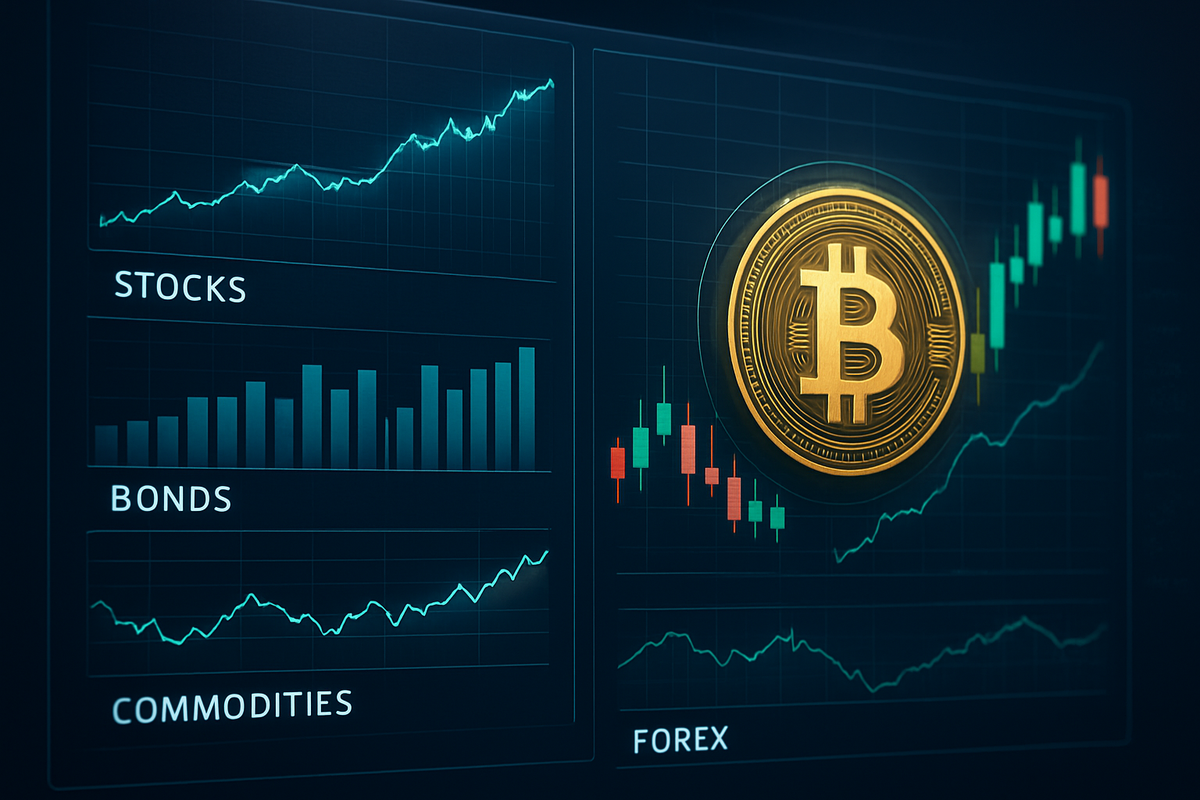
The financial landscape is currently undergoing a significant transformation, marked by the surging popularity of multi-asset brokers. These platforms, offering a unified gateway to diverse investment instruments—from traditional stocks and commodities to the burgeoning world of cryptocurrencies like Bitcoin—are rapidly becoming the new standard for traders seeking convenience, flexibility, and comprehensive diversification. This "one-stop-shop" approach is not merely a trend; it represents a fundamental shift in how investors manage their portfolios, with global assets under management in multi-asset strategies soaring from under $2 trillion in 2003 to over $16 trillion by 2023. For Bitcoin traders, this evolution carries immediate and profound implications. No longer confined to siloed crypto exchanges, they now have enhanced accessibility to a broader financial ecosystem. This integration allows for seamless portfolio management, enabling sophisticated hedging strategies and dynamic asset allocation to mitigate risk and capitalize on opportunities across various markets. While Bitcoin may see its "priority features" on specialized crypto platforms diminish, the ability to rapidly react to short-term market movements influenced by key economic indicators—such as GDP, CPI, and interest rate changes—within a single interface offers unprecedented strategic advantages for short-term market participants. The Rise of Integrated Trading: A Detailed LookThe integration of cryptocurrencies into multi-asset brokerage platforms has been a carefully orchestrated evolution, particularly since 2020. This period saw traditional financial institutions cautiously exploring the digital asset space, with a pivotal moment occurring when the U.S. Office of the Comptroller of the Currency (OCC) clarified that banks could custody crypto assets. This regulatory green light in 2020 paved the way for giants like PayPal (NASDAQ: PYPL) to introduce crypto buying and selling features for its U.S. users by Q4 of that year. The momentum accelerated in 2021, with institutions such as BNY Mellon announcing plans for digital asset custody services, and investment powerhouses like Fidelity and BlackRock (NYSE: BLK) establishing dedicated crypto units. Even payment titans Visa (NYSE: V) and Mastercard (NYSE: MA) began experimenting with stablecoin settlements, signaling broader institutional acceptance. While 2022 presented challenges with a bear market and significant events like the Terra and FTX collapses, institutions remained focused on building underlying infrastructure. BlackRock notably partnered with Coinbase (NASDAQ: COIN) to offer crypto trading for institutional clients, and JPMorgan’s (NYSE: JPM) Onyx division further utilized JPM Coin for wholesale payments. The year 2023 marked a robust rebound in institutional interest, highlighted by BlackRock, Fidelity, and Invesco (NYSE: IVZ) filing for spot Bitcoin ETFs. A significant development was the official launch of EDX Markets, a crypto exchange backed by prominent financial entities like Charles Schwab (NYSE: SCHW), Fidelity, and Citadel, providing a compliant trading platform for institutions. This trajectory culminated in early 2024 with the U.S. Securities and Exchange Commission (SEC) approving the first spot Bitcoin ETFs, a watershed moment that significantly broadened access to Bitcoin for a wider range of investors, including pensions and registered investment advisors. This approval led to nearly all major U.S. banks, brokerages, and asset management companies either launched crypto-related products or formed strategic alliances within the crypto ecosystem. As of late 2024 and early 2025, the trend towards integrated "one-stop-shop" multi-asset investment platforms continues unabated. Institutional investors are projected to hold approximately 15% of the Bitcoin supply by early 2025, with nearly half of hedge funds allocating digital assets. This convergence is further evidenced by M&A activities, such as Kraken's acquisition of NinjaTrader and Robinhood's integration of Bitstamp, as well as Ripple's deepening institutional footprint with the launch of digital asset spot prime brokerage services after completing its acquisition of Hidden Road in October 2025, rebranding it as Ripple Prime. Key players driving this integration include traditional multi-asset brokers like Exness, ThinkMarkets, Interactive Brokers (NASDAQ: IBKR), XTB, eToro, and OANDA, all of whom have expanded their offerings to include cryptocurrencies alongside traditional assets. Major financial institutions such as BlackRock, Fidelity, Charles Schwab, and Deutsche Bank (NYSE: DB) have either launched crypto-specific units or invested in digital asset custody solutions. Conversely, cryptocurrency exchanges like Coinbase and Kraken are increasingly looking to integrate traditional financial products. Technology and liquidity providers such as B2BROKER and Devexperts are crucial in providing the infrastructure for seamless crypto offerings. Regulators, particularly the SEC and CFTC, remain critical stakeholders, with their policies and approvals significantly influencing the pace and scope of crypto integration. The market's reaction to this integration has been substantial, particularly for Bitcoin. The approval of U.S. spot Bitcoin ETFs in January 2024 served as a major catalyst, leading to significant inflows and pushing Bitcoin's price to new all-time highs, including $109,000 in January 2025. This surge in institutional adoption has elevated Bitcoin from a niche technology to a more mainstream financial asset. Brokers that introduced new asset classes, including cryptocurrencies, in 2023-2024 saw trading activity jump by up to 40% quarter-over-quarter, with Robinhood reporting a more than 300% increase in crypto-related revenue in Q3 2025 compared to the previous year. This blurring of lines between TradFi and crypto is expected to continue, with tokenization playing a key role in integrating digital assets with traditional equities. However, despite the positive trends, the crypto market remains susceptible to volatility, as evidenced by a significant decline in Bitcoin in late 2024, accompanied by substantial outflows from Bitcoin ETFs, underscoring the ongoing sensitivity to regulatory uncertainty and political rhetoric. Companies Poised for Gains and Losses in the Multi-Asset EraThe multi-asset broker boom and the increasing integration of cryptocurrencies are creating a distinct landscape of winners and losers across the financial industry. Companies that have strategically positioned themselves to embrace this convergence are poised for significant gains, while those slow to adapt risk falling behind. Potential Winners:
Potential Losers:
The competitive landscape is rapidly evolving, demanding agility and a willingness to innovate. Companies that can effectively blend the strengths of traditional finance with the opportunities presented by digital assets are best positioned for long-term success. Wider Significance: Reshaping the Financial EcosystemThe boom in multi-asset brokers and the deepening integration of cryptocurrencies represent more than just a market trend; they signify a fundamental reshaping of the global financial ecosystem. This event fits into several broader industry trends, has potential ripple effects across competitors and partners, carries significant regulatory implications, and draws parallels with historical precedents of financial innovation. Broader Industry Trends:
Potential Ripple Effects on Competitors and Partners:
Regulatory or Policy Implications:
Historical Precedents and Comparisons:
The current environment is a testament to the financial industry's continuous evolution, driven by technological advancements and shifting investor demands. The multi-asset broker boom is not just about convenience; it's about fundamentally rethinking how capital is allocated and managed in an increasingly interconnected and digital world. What Comes Next: Navigating the Evolving Financial LandscapeThe trajectory of multi-asset brokers and their integration with digital assets points towards a future characterized by increased financial interconnectedness, sophisticated trading tools, and evolving regulatory oversight. Understanding these potential short-term and long-term possibilities is crucial for investors, market participants, and regulatory bodies alike. Short-Term Possibilities (Next 6-12 Months):
Long-Term Possibilities (1-5 Years and Beyond):
Market Opportunities or Challenges that May Emerge:
Potential Scenarios and Outcomes:
The coming years will undoubtedly be dynamic, requiring continuous adaptation and strategic foresight from all participants in the financial markets. Comprehensive Wrap-Up: The Enduring Impact of Multi-Asset PlatformsThe ascendancy of multi-asset brokers, particularly their seamless integration of cryptocurrencies like Bitcoin, marks a pivotal moment in financial history. This trend is far more than a fleeting market fad; it represents a fundamental recalibration of how investors interact with financial markets, demanding a holistic, diversified, and technologically advanced approach to wealth management. Summary of Key Takeaways:
Assessment of the Market Moving Forward: The market is moving towards greater integration and efficiency. The "one-stop-shop" model is likely to become the default expectation for sophisticated investors. This will lead to a more interconnected global financial system, where capital can flow more freely and efficiently across different asset classes and geographies. However, this increased connectivity also brings heightened complexity and new forms of risk, demanding robust cybersecurity, advanced risk management protocols, and comprehensive investor education. Final Thoughts on Significance and Lasting Impact: The lasting impact of the multi-asset broker boom will be profound. It is accelerating the digitalization of finance, fostering a more inclusive investment environment, and challenging existing business models across the industry. For Bitcoin, this integration means greater liquidity, broader adoption, and a more stable, albeit still volatile, position within the global financial fabric. The move towards multi-asset platforms signifies a maturation of the digital asset space and a fundamental shift in how value is perceived and exchanged in the 21st century. What Investors Should Watch For in Coming Months:
This content is intended for informational purposes only and is not financial advice More NewsView More
Via MarketBeat
Tickers
CSCO


Why Taiwan Semiconductor's 6.5% Dip Could Be a Smart Buy ↗
December 16, 2025
Via MarketBeat

RTX Surges to Record Highs as Defense Orders Explode ↗
December 16, 2025
Via MarketBeat
Tickers
RTX

Smart Money Is Buying Auto Suppliers, Not Car Brands ↗
December 16, 2025
Recent QuotesView More
Stock Quote API & Stock News API supplied by www.cloudquote.io
Quotes delayed at least 20 minutes. By accessing this page, you agree to the Privacy Policy and Terms Of Service.
© 2025 FinancialContent. All rights reserved.
|