Silver's Historic Ascent: A Confluence of Industrial Demand, Investor Inflows, and a Deepening Deficit Propels Prices Above $60
By:
MarketMinute
December 10, 2025 at 10:01 AM EST
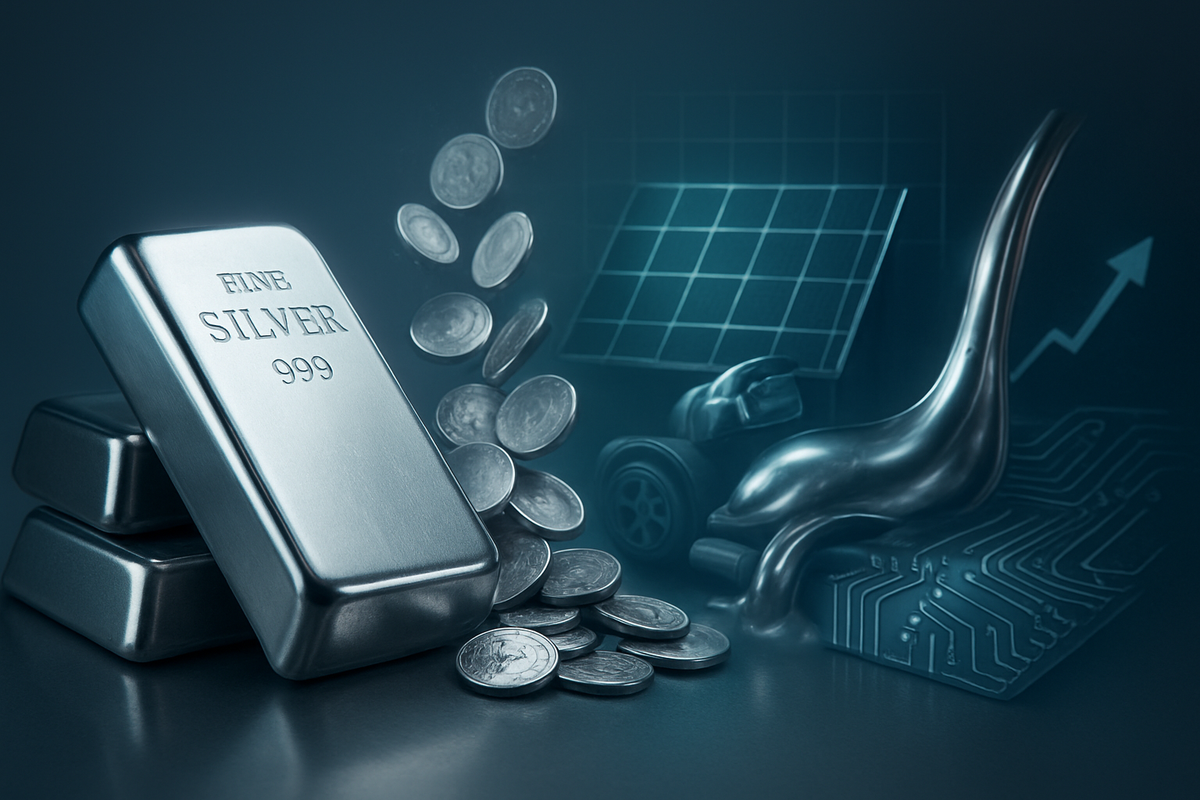
As of December 10, 2025, silver has shattered historical price records, surging above $60 per troy ounce and more than doubling in value since the start of the year. This unprecedented rally, significantly outpacing gold's impressive gains, signals a profound shift in the precious metal's market dynamics. The dramatic ascent is fueled by a powerful trifecta: burgeoning industrial demand, robust investor interest, and growing concerns over a persistent and widening market deficit. This historic valuation reset indicates that silver is no longer merely perceived as a traditional inflation hedge, but as a critical industrial commodity indispensable to the ongoing green energy transition and technological revolution. The breach of the $60 mark not only highlights its enhanced status but also sets the stage for potential market volatility and necessitates strategic re-evaluations across various industries. The Silver Tsunami: Unpacking the Drivers of a Record-Breaking RallySilver's journey to above $60 per ounce has been a meticulously building crescendo throughout 2025, culminating in its current historic highs around $61.47. This represents an astonishing year-to-date increase of over 100%, far outstripping gold's approximately 59% rise over the same period. The momentum has been particularly intense in recent weeks, with silver demonstrating remarkable resilience even amidst broader market fluctuations. The primary catalyst for this surge is the explosive growth in industrial demand, which now accounts for an estimated 50% to 65% of total consumption. Silver's unparalleled electrical and thermal conductivity makes it irreplaceable in several booming technology sectors. The solar energy sector is a monumental driver, with silver being a critical component in photovoltaic cells; global consumption for PV is projected to exceed 5,200 tons in 2025. Electric Vehicles (EVs) also represent a significant demand increase, consuming 2-3 times more silver per vehicle than internal combustion engines, with automotive demand projected to reach 90 million ounces by 2025. Furthermore, the rapid expansion of Artificial Intelligence (AI) computing, 5G networks, and data centers requires vast amounts of high-performance electronics, all heavily reliant on silver. Industrial demand reached a record 680.5 million ounces in 2024 and is forecast to surpass 700 million ounces for the first time in 2025. Complementing this industrial appetite are rising investor flows. As gold prices have soared, silver has emerged as a more accessible and attractive "safe-haven" asset for both institutional and retail investors. Expectations of Federal Reserve interest rate cuts, with an 87% probability priced in for a quarter-point cut in December 2025, have bolstered the appeal of non-yielding assets. A weakening U.S. dollar, which has dropped by 8.5% in 2025, further enhances silver's attractiveness to international buyers. Geopolitical tensions and persistent inflation concerns also drive investors towards hard assets. Silver-backed Exchange-Traded Products (ETPs) have seen substantial inflows, with total holdings increasing by approximately 130 million ounces this year, indicating a significant shift in investor sentiment. Crucially, these demand drivers are colliding with a persistent and deepening structural supply deficit. The silver market is facing its fifth consecutive year of a structural supply deficit in 2025, with some estimates suggesting a deficit of 149 million to 240 million ounces. The cumulative deficit since 2021 has approached 800-820 million ounces, equivalent to an entire year of global mine production. A significant challenge is the inelasticity of silver supply; roughly 70-80% of global silver output is a byproduct of mining other metals like copper, lead, and zinc. This means silver production cannot easily scale up independently of demand for these primary metals. Global mine output has plateaued or declined since its peak in 2016, hampered by falling ore grades, reserve depletion, and underinvestment in new exploration. Depleting warehouse stocks on exchanges like COMEX further underscore the tightening physical market. Corporate Fortunes: Winners and Losers in the Silver SurgeThe dramatic surge in silver prices above $60 per ounce has created a clear delineation of "winners" and "losers" within the corporate landscape, impacting operations, revenues, and stock performance across various sectors. Silver Miners and Streamers: The Clear Beneficiaries Primary silver mining companies and precious metal streamers are experiencing a significant boon. Higher silver prices directly translate to increased revenues and expanded profit margins, assuming production costs remain relatively stable. This scenario makes lower-grade ore bodies economically viable, extends mine life, and incentivizes further exploration and development. Their stocks, which typically exhibit a high beta to silver prices, are poised for substantial gains.
Industrial Users: Facing Cost Headwinds Companies heavily reliant on silver for industrial applications, which account for over half of annual silver demand, are facing significant challenges due to surging input costs.
Silver Investment Vehicles: Riding the Wave For companies and vehicles focused on silver investment, the price surge is largely positive.
In essence, the silver surge creates a dynamic where those extracting or holding the metal reap substantial rewards, while those consuming it industrially must innovate, adapt, or pass on increased costs. Wider Significance: Silver's Role in a Transforming WorldSilver's surge above $60/ounce as of December 10, 2025, transcends mere commodity price action; it signifies a pivotal moment reflecting broader industry trends, geopolitical shifts, and a fundamental re-evaluation of its strategic importance. This rally is intrinsically linked to the global green energy transition and electrification efforts. Silver is not just a component but a critical enabler of these transformations. The solar energy sector's insatiable demand for silver in photovoltaic cells continues to grow, with advanced PV technologies requiring even more silver. The rapid expansion of Electric Vehicles (EVs) and their charging infrastructure also represents a substantial and sustained tailwind for silver demand, as EVs consume significantly more silver than traditional vehicles. Furthermore, the booming Artificial Intelligence (AI) sector, with its massive data centers and 5G networks, relies heavily on silver in high-performance electronics. This sustained industrial demand is largely "price-inelastic," meaning manufacturers prioritize securing supply over cost optimization, intensifying upward price pressure. The ripple effects are profound. For industrial metals, manufacturers face substantially higher production costs, potentially leading to increased product prices for consumers or intensified efforts to "thrift" (reduce silver content) or find substitutes, though the latter remains challenging due to silver's unique properties. This structural supply deficit, now entering its fifth to seventh consecutive year, forces industries to prioritize supply chain security. Within the precious metals sector, silver's outperformance has significantly narrowed the gold-silver ratio, suggesting increasing institutional investor confidence in silver as an investment. It continues to attract robust investment demand as a hedge against inflation and economic uncertainty, with retail investors particularly active. However, the supply response from mining companies remains limited; approximately 70-80% of global silver production is a byproduct of other metal mining, making it difficult to rapidly increase output. New mine development faces long timelines, declining ore grades, and underinvestment. On the regulatory and policy front, silver's strategic importance has led to significant developments. The U.S. Department of the Interior added silver to its list of "critical minerals" in 2025. This designation underscores its essential role in economic and national security, particularly for electronics, renewable energy, and defense applications. This status is expected to unlock policy mechanisms aimed at securing domestic supply chains, including expedited permitting for mining projects, tax incentives, and potential federal stockpiling programs. This could influence future trade policies, potentially leading to tighter control over supply chains and incentivized domestic production. Environmental policies, while historically focused on pollution, are increasingly scrutinizing mining's environmental impact, leading to more stringent permitting and contributing to supply constraints. Historically, silver has seen dramatic rallies, notably the 1979-1980 surge driven by speculative buying, and the 2011 peak fueled by inflation fears. However, the 2025 rally is distinct. Unlike previous speculative or purely monetary-driven surges, this one is fundamentally underpinned by a structural imbalance where accelerating, price-inelastic industrial demand from green technologies, electrification, and AI is colliding with a constrained and inelastic supply. This "dual identity" as both a monetary and critical industrial metal provides a robust foundation for the current rally, making it perhaps the most significant and structurally supported in recent history. What Comes Next: Navigating Silver's Elevated FutureThe silver market, having breached the psychological and technical barrier of $60 per ounce, is entering a new paradigm, with both short-term volatility and compelling long-term prospects. As of December 2025, the market is experiencing a bullish consolidation phase, with the $60 mark expected to serve as a strong support level. While technical indicators suggest potential for near-term consolidation or minor pullbacks, any dips are likely to be met with fresh buying interest. In the short to medium term, analysts widely anticipate sustained elevation for silver prices, with projections for 2026 averaging around $55-$65 per ounce, and more aggressive forecasts suggesting tests of $80 per ounce. Looking further out, between 2027 and 2028, some scenarios even envision silver challenging $100 per ounce, driven by the intensifying supply-demand "brick wall." The core drivers—relentless industrial demand from solar, EVs, AI, and a persistent supply deficit—are structural and unlikely to abate quickly. Dovish monetary policies, geopolitical instability, and inflation concerns will continue to bolster silver's appeal as a safe-haven asset. Strategic Pivots and Adaptations:
Market Opportunities and Challenges:
Potential Scenarios and Outcomes:
Comprehensive Wrap-up: A New Era for the "White Metal"Silver's surge above $60 per ounce marks a definitive entry into a new era for the "white metal," characterized by its dual identity as both a critical industrial commodity and a favored investment asset. The key takeaways from this historic rally are clear: the green energy transition, electrification, and the AI boom are creating unprecedented, inelastic industrial demand for silver. This demand is relentlessly colliding with a structurally constrained supply, exacerbated by years of underinvestment in mining and the byproduct nature of most silver production. The resulting market deficit is not a temporary anomaly but a persistent imbalance that underpins silver's elevated price levels. Moving forward, the silver market is expected to remain in a bullish trend, albeit with its characteristic volatility. While short-term corrections are always possible, the fundamental drivers suggest that any dips will likely be buying opportunities. Investors should recognize that this rally is fundamentally different from previous speculative surges, being rooted in tangible, growing industrial consumption that cannot be easily matched by current supply. What investors should watch for in the coming months includes:
The significance of silver's current trajectory cannot be overstated. It is not merely experiencing a price spike; it is undergoing a fundamental revaluation driven by its indispensable role in the technologies shaping our future. This lasting impact will necessitate strategic shifts for both producers and consumers, and for investors, it presents a compelling case for silver as a vital component of a diversified portfolio in a rapidly transforming world. This content is intended for informational purposes only and is not financial advice More NewsView More
Pfizer Adds to Its Big Bet on Weight Loss Drugs ↗
Today 7:03 EST

ServiceNow’s $7 Billion Gamble: Panic or Opportunity? ↗
December 15, 2025
Via MarketBeat
Tickers
NOW
Dell and HP Are Raising Prices—And Investors Should Take Note ↗
December 15, 2025
Via MarketBeat

Why DLocal Is the Top Emerging Market Fintech Stock to Watch for 2026 ↗
December 15, 2025
Via MarketBeat
Tickers
DLO

Is Nutanix the Best Comeback Trade Left in 2025? The Setup Says Yes ↗
December 15, 2025
Via MarketBeat
Tickers
NTNX
Recent QuotesView More
Stock Quote API & Stock News API supplied by www.cloudquote.io
Quotes delayed at least 20 minutes. By accessing this page, you agree to the Privacy Policy and Terms Of Service.
© 2025 FinancialContent. All rights reserved.
|