The Ever-Present Shadow: How Geopolitical Tensions Could Reshape Markets in Late 2025
By:
MarketMinute
December 11, 2025 at 14:33 PM EST
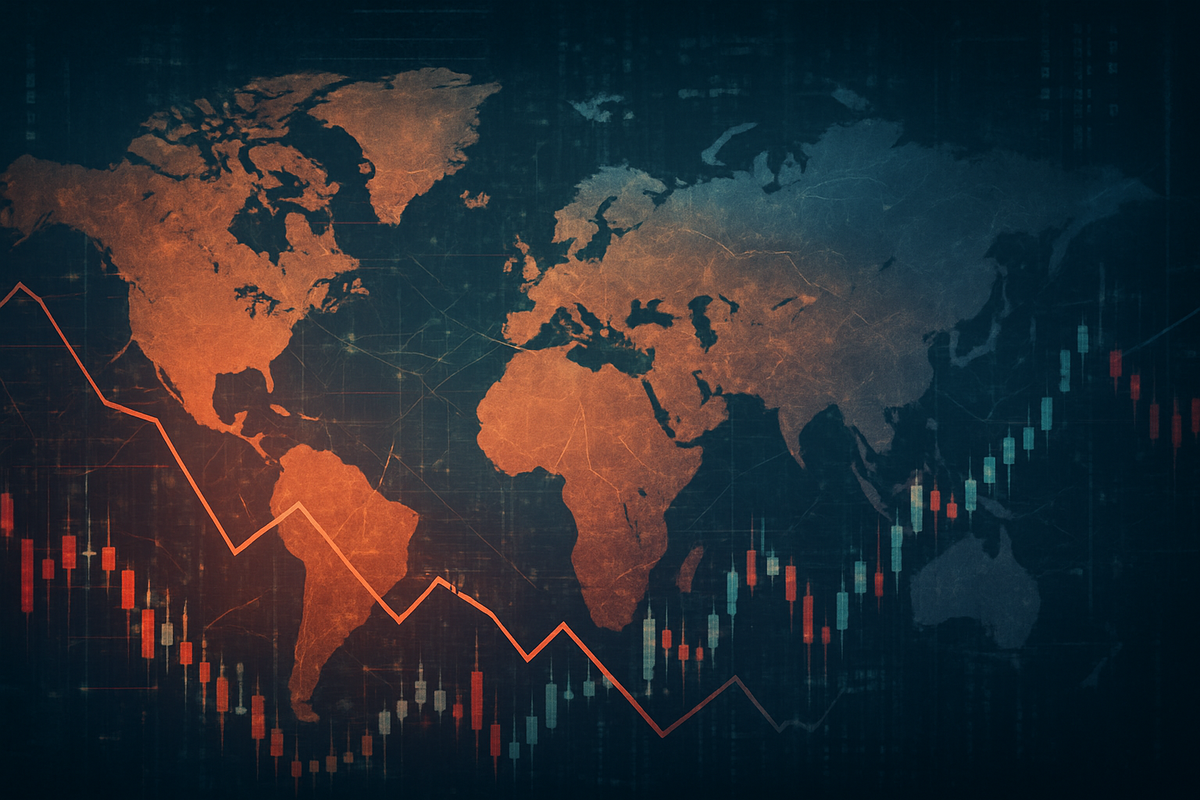
As global markets navigate the complex currents of economic policy and technological innovation, an often-underestimated force—geopolitical instability—remains a potent catalyst for market shifts. While the precise nature of future events is inherently unpredictable, the potential for geopolitical developments to trigger significant short-term volatility and influence long-term market trajectories is a constant consideration for investors as we approach late 2025. This article explores the mechanisms through which such events could impact global stock markets, identifying potential winners and losers, and offering a forward-looking perspective on navigating these turbulent waters. The global landscape is perpetually in flux, characterized by intricate alliances, competing national interests, and the ever-present potential for flashpoints to ignite. Whether stemming from escalating trade disputes, regional conflicts, energy supply disruptions, or the burgeoning threat of cyber warfare, these developments introduce layers of uncertainty that ripple through financial systems. Investors, ever sensitive to risk, often react swiftly to such news, leading to rapid reallocations of capital and heightened market volatility, underscoring the critical need for vigilance and strategic foresight. The Mechanics of Market Disruption: A Late 2025 PerspectiveShould a significant geopolitical event unfold in late 2025, market reactions would likely mirror historical patterns, characterized by an initial shock followed by a period of volatility and eventual recovery, assuming strong underlying economic fundamentals. The impact is primarily channeled through increased uncertainty, affecting investor sentiment, and tangible economic disruptions. Geopolitical events introduce ambiguity regarding future political stability, economic policies, and corporate earnings, leading to heightened investor fear and a decreased appetite for risk. This uncertainty often results in rapid market sell-offs and increased volatility. Economically, these events can disrupt international relations and trade through tariffs, trade barriers, and sanctions, directly impacting global supply chains and economic partnerships. Businesses with significant international exposure may face reduced demand, increased operational costs, and supply chain bottlenecks, negatively impacting profitability. Furthermore, events in key resource-producing regions can cause significant fluctuations in commodity prices, leading to higher inflation and increased production costs across various industries. Historically, the immediate aftermath of an unexpected, significant geopolitical event typically sees a sharp decline in major stock indexes, often within hours or days. This initial reaction is driven by fear and a "flight to safety," pushing up prices of assets like gold, the US dollar, and government bonds. The market decline can persist for a few days or weeks as investors digest the risks, with an average drawdown of around 4.7% to 5.0% from peak to trough. However, markets tend to recover relatively quickly, often regaining losses within a few months, demonstrating resilience, especially when fundamental economic conditions are robust. Over the long term, other factors like corporate earnings growth and interest rates typically exert a greater influence on market returns. Key stakeholders in this dynamic include individual and institutional investors whose collective sentiment drives market movements; multinational corporations whose operations and supply chains are directly affected; national governments whose policies and foreign relations are at the core of these events; central banks that respond with monetary policy adjustments; and international organizations that may mediate disputes or impose sanctions. Commodity producers and consumers are also directly impacted by supply disruptions and price volatility. For instance, an escalation of trade disputes, potentially between major economies, could involve new tariffs or restrictions on high-tech goods or critical raw materials. This would directly impact export-oriented sectors and companies with significant trade volumes with the involved countries, leading to initial dips in global indices and currency fluctuations. A new regional conflict, perhaps in the Middle East or Eastern Europe, could trigger immediate sharp declines in global stock markets, a surge in oil and gas prices, and appreciation for defense sector stocks, while travel and tourism industries would suffer. Energy supply disruptions, whether due to conflict or natural disaster affecting a major producing region, would lead to significant upward pressure on global energy prices, inflationary concerns, and adverse effects on energy-intensive sectors. Finally, a major cyber warfare event, targeting critical infrastructure or corporations, could result in direct financial losses, operational disruptions, and a sharp decline in stock prices for affected companies, with broader market instability if the attack has systemic implications. Companies on the Front Lines: Potential Winners and LosersGeopolitical developments, even those framed as potential scenarios in late 2025, create distinct advantages and disadvantages for various public companies across different sectors. Understanding these dynamics is crucial for investors. Potential Winners:
Potential Losers:
The specific impact on these companies would depend on the nature, scale, and duration of the geopolitical event. However, the general trend indicates a re-evaluation of risk across portfolios, favoring those perceived as resilient or benefiting from increased defense or security spending, while penalizing those with high exposure to international trade disruptions or consumer sentiment shifts. Broader Implications and Historical ParallelsThe wider significance of geopolitical developments extends far beyond the immediate gains or losses of individual companies, embedding itself into broader industry trends, regulatory frameworks, and global economic stability. In late 2025, any significant geopolitical event would likely accelerate existing trends or forge new ones, echoing historical precedents. One major ripple effect would be on global supply chains. Even minor disruptions can have cascading consequences, forcing companies to re-evaluate their reliance on single-source suppliers or specific geographic regions. This could accelerate a trend towards "reshoring" or "friend-shoring," where production is moved closer to home or to politically aligned nations, potentially boosting domestic manufacturing sectors but also increasing costs. Competitors and partners in affected industries would face similar pressures, potentially leading to a broader restructuring of global trade networks. For instance, a major trade dispute could push companies like Samsung Electronics (KRX: 005930) or Taiwan Semiconductor Manufacturing Company (NYSE: TSM) to diversify their production bases further, impacting their long-term investment strategies and potentially altering the global semiconductor landscape. Regulatory and policy implications are also profound. Geopolitical tensions often lead to new sanctions regimes, export controls, or import restrictions, forcing companies to navigate a more complex compliance environment. Governments might also increase subsidies for strategic industries, such as renewable energy or critical minerals, to enhance national security and reduce reliance on potentially hostile foreign sources. This could create new market opportunities for companies in these favored sectors but pose challenges for those operating under new restrictions. Historically, the market's reaction to geopolitical crises has often been characterized by an initial sharp downturn followed by a relatively swift recovery, provided the event does not trigger a fundamental economic crisis or a sustained, major conflict. For example, during the Gulf War in 1990-91, oil prices surged, and markets initially dipped, but the recovery was fairly quick once the conflict's outcome became clear. Similarly, while events like the 9/11 attacks caused immediate market closures and significant drops, the long-term economic impact was absorbed, and markets eventually rebounded. However, prolonged periods of tension, like aspects of the Cold War or ongoing trade disputes, can lead to sustained uncertainty, impacting long-term investment and growth prospects. The key differentiator is often whether the event is a shock with a clear resolution or an ongoing, evolving situation. Navigating the Future: What Comes NextLooking ahead from late 2025, the trajectory of geopolitical developments and their market impact presents a spectrum of possibilities, demanding strategic pivots and adaptive measures from businesses and investors alike. In the short-term, heightened volatility is almost a certainty following any significant geopolitical event. Investors should anticipate a "wait-and-see" approach from many market participants, leading to choppier trading and potentially exaggerated reactions to news headlines. Companies will likely focus on immediate risk mitigation, such as securing supply chains, reviewing international contracts, and bolstering cybersecurity defenses. Sectors like defense and cybersecurity could see immediate boosts, while travel and export-heavy industries may face continued headwinds. Long-term possibilities involve a potential reshaping of global economic alliances and trade flows. We could see a more fragmented global economy, characterized by regional trade blocs and reduced reliance on single-country supply chains. This might necessitate strategic pivots for multinational corporations, focusing on diversification of manufacturing bases and market access. For investors, this could mean a shift towards companies with strong domestic foundations or those positioned to benefit from new regional trade agreements. Market opportunities may emerge in sectors focused on national resilience, such as domestic energy production, advanced manufacturing, and strategic technology development. Challenges will include navigating increased regulatory complexity and potential trade barriers. Potential scenarios range from a rapid de-escalation of tensions, leading to a swift market recovery, to a prolonged period of low-intensity conflict or trade friction, which could suppress global growth and maintain elevated risk premiums. A severe scenario could involve a major conflict or widespread cyberattacks, causing significant economic disruption and a more sustained market downturn. Investors should consider building resilient portfolios with exposure to defensive sectors, safe-haven assets, and companies with strong balance sheets and diversified operations. Comprehensive Wrap-Up: A Resilient Market in Uncertain TimesIn summary, as we assess the market landscape from late 2025, the potential for geopolitical developments to influence financial markets remains a critical factor. While specific future events are unknowable, the mechanisms of their impact – through uncertainty, economic disruption, and shifts in investor sentiment – are well-established. History teaches us that markets are often resilient, tending to recover from geopolitical shocks relatively quickly, provided underlying economic fundamentals are sound and the events do not spiral into prolonged, widespread conflict. The market moving forward will likely be characterized by an ongoing need for adaptability. Companies will continue to prioritize supply chain resilience, cybersecurity, and diversification of operations to mitigate risks associated with global instability. Investors, in turn, should focus on building diversified portfolios that can withstand periods of volatility, potentially favoring sectors that offer defensive characteristics or benefit from increased national security spending. The lasting impact of geopolitical events will hinge on their severity, duration, and the extent to which they fundamentally alter global economic structures. What investors should watch for in coming months are not just the headlines themselves, but also the policy responses from governments and central banks, the strategic adjustments made by major corporations, and any emerging trends in international trade and investment flows. These indicators will provide crucial insights into the market's ability to absorb and adapt to the ever-present shadow of geopolitical uncertainty. This content is intended for informational purposes only and is not financial advice More NewsView More
Why Taiwan Semiconductor's 6.5% Dip Could Be a Smart Buy ↗
Today 18:39 EST
Via MarketBeat
RTX Surges to Record Highs as Defense Orders Explode ↗
Today 17:42 EST
Via MarketBeat
Tickers
RTX

Smart Money Is Buying Auto Suppliers, Not Car Brands ↗
Today 16:49 EST

Higher Beef Prices Are Here: Best Steakhouse Stocks for 2026 ↗
Today 15:07 EST
Via MarketBeat

AI Runs on Power—And Constellation Energy Controls the Switch ↗
Today 14:16 EST
Recent QuotesView More
Stock Quote API & Stock News API supplied by www.cloudquote.io
Quotes delayed at least 20 minutes. By accessing this page, you agree to the Privacy Policy and Terms Of Service.
© 2025 FinancialContent. All rights reserved.
|