Palladium Stages Surprising Comeback Amidst Shifting Auto Industry Tides
By:
MarketMinute
December 02, 2025 at 15:08 PM EST
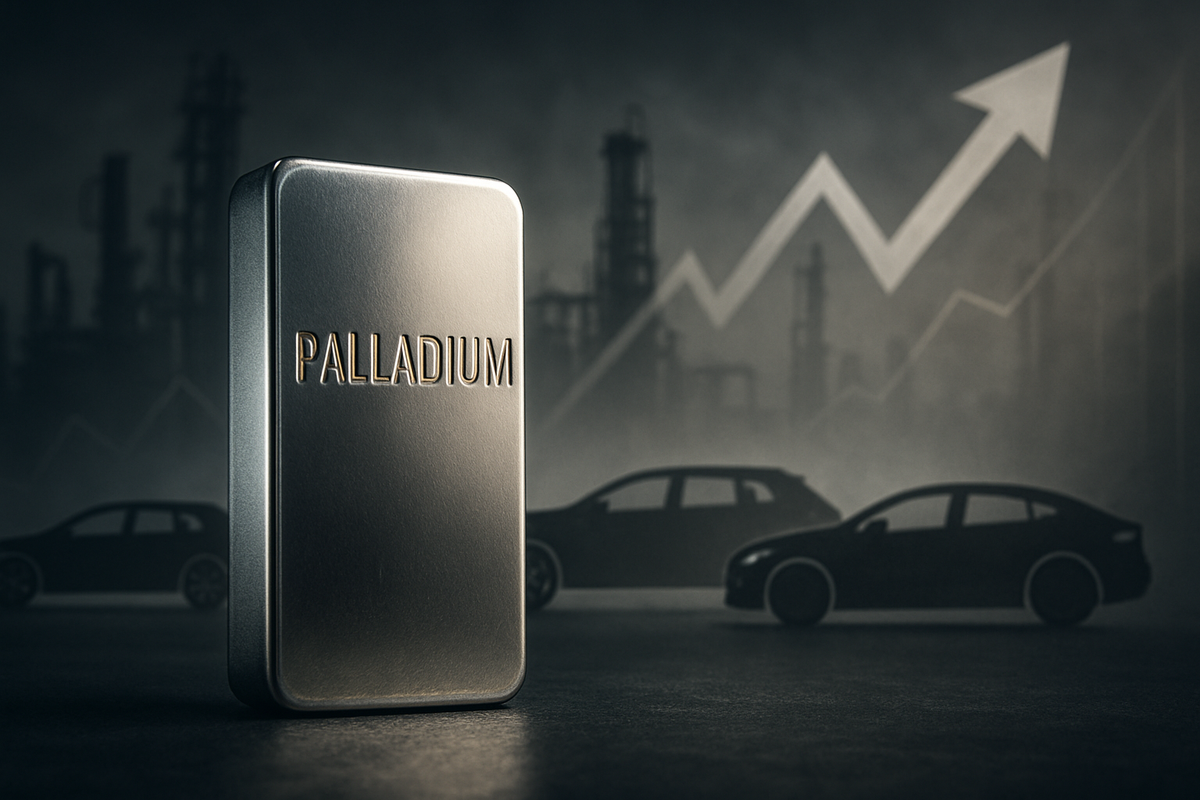
Palladium, the enigmatic precious metal, has staged a remarkable price rebound throughout 2025, defying earlier bearish predictions. As of December 2, 2025, its value has surged, reaching approximately $1,471 USD per troy ounce, marking a significant year-to-date gain of roughly 40%. This resurgence is largely attributed to an improved, albeit complex, outlook for the auto industry, particularly the unexpected resilience of hybrid vehicle demand and a deceleration in the pace of electric vehicle (EV) adoption. The immediate implications include renewed optimism for palladium miners, increased cost pressures for traditional automakers, and a re-evaluation of long-term market dynamics as the world grapples with the energy transition. Palladium's Resurgence: A Detailed Look at Market DynamicsPalladium’s journey to its current rebound has been a roller-coaster. After hitting an all-time high of $3,002 per ounce in February 2022, prices generally trended downwards, largely trading between $900 and $1,100 for most of 2024. However, a significant shift began in late 2024, with a moderate rebound attributed to seasonal automotive demand and temporary supply tightening. The real momentum built in 2025. Early in the year, prices fluctuated around the $1,000 mark. Q2 2025 saw a strong rally, with prices breaking above $1,000 again by late May and surging to a year-to-date high of $1,288 on July 11. NYMEX palladium futures (NYMEX:PAU2025) climbed over 21% in the first half of the year. This upward trajectory continued into Q3, with prices reportedly increasing by 19% from the previous quarter due to global supply concerns from Russia and South Africa, leading to significant risk-based premiums. By late July, prices had soared to $1,330, and on August 21, 2025, stood at $1,110 an ounce. The launch of palladium futures in China on November 27, 2025, further fueled market optimism. By December 2, 2025, palladium was trading around $1,471 per troy ounce, reflecting a 3.52% increase from the previous day and a 52.28% increase compared to the same time last year. The primary driver of this demand remains the automotive sector, which accounts for over 80% of palladium usage in catalytic converters. Stricter global emission regulations, especially in China and India, continue to necessitate the use of palladium. Crucially, the pace of EV adoption has slowed in some key markets due to factors like higher costs, reduced subsidies (such as the discontinuation of EV tax credits in the US effective July 4, 2025), and consumer concerns about charging infrastructure and range anxiety. This deceleration has unexpectedly boosted demand for hybrid vehicles, which still utilize palladium, often in higher loadings, to meet stringent emissions standards. Global car sales are projected to increase by 1.7% to 89.6 million units in 2025, further supporting demand for palladium-containing vehicles. Key players in the palladium market include major producing countries like Russia (Norilsk Nickel (MCX:GMKN)) and South Africa (Sibanye-Stillwater (NYSE: SBSW), Anglo American Platinum (OTCPK:ANGPY), Impala Platinum Holdings (JSE:IMP)), which collectively account for over 80% of global supply. On the demand side, major automotive manufacturers such as Ford (NYSE: F), General Motors (NYSE: GM), Toyota Motor Corporation (NYSE: TM), Volkswagen AG (ETR:VOW3), and Stellantis N.V. (NYSE: STLA) are critical consumers. Catalytic converter manufacturers like Johnson Matthey (LSE:JMAT), Heraeus Precious Metals, and BASF Catalysts (BASF SE (ETR:BAS)) also play pivotal roles. Initial reactions to the improved demand outlook are mixed. While the price rebound itself suggests positive sentiment among some investors, most market experts and analysts remain cautious about a sustained long-term improvement in palladium demand. Many still forecast a market surplus in the coming years due to the overarching trend of EV adoption and the ongoing substitution of palladium with platinum. Mining companies like Sibanye-Stillwater, which curtailed production in 2024 due to low prices, might see relief, but their strategic outlook remains focused on diversification and cost efficiency. Automotive manufacturers, facing increased input costs, are likely to continue exploring platinum substitution and accelerating their EV transition, albeit at a moderated pace. Corporate Fortunes: Winners and Losers in the Palladium ReboundThe recent surge in palladium prices, fueled by a robust auto industry outlook, presents a dual-edged sword for public companies. While miners stand to gain, automotive manufacturers and catalytic converter producers face increased cost pressures. Companies Likely to Win Palladium mining companies with significant exposure to the metal are direct beneficiaries.
Companies with Mixed/Potentially Negative Impact Automotive manufacturers and catalytic converter producers, as the largest consumers of palladium, will face increased input costs.
Broader Implications: Trends, Ripples, and Regulatory ShiftsThe palladium price rebound in late 2025, while significant, fits into broader industry trends with nuanced implications for both the automotive and precious metals sectors. It underscores a dynamic market grappling with technological shifts, geopolitical realities, and evolving economic policies. In the automotive sector, the rebound reflects a temporary pause in the aggressive shift towards full electric vehicles. The slower-than-anticipated adoption of BEVs, driven by consumer concerns and policy adjustments (like the US discontinuing EV tax credits), has given a renewed, albeit potentially short-lived, lease of life to hybrid and, to a lesser extent, conventional gasoline vehicles. This sustains the demand for palladium in catalytic converters, which remain essential for meeting increasingly stringent global emission standards (e.g., Euro 6d, China 6). However, the underlying trend of platinum-for-palladium substitution, a response to historical price differentials and technological adaptability, continues to be a significant headwind, with substitution expected to exceed 1 million ounces annually by 2025. This directly benefits platinum producers and shifts demand dynamics within the PGM complex. For the precious metals sector, the rebound highlights the persistent influence of supply-side factors. Russia and South Africa, contributing over 80% of global palladium supply, introduce significant geopolitical and operational risks. Threats of sanctions against Russia or labor disputes in South Africa can trigger price volatility, as seen historically. The launch of palladium futures in China also indicates growing market sophistication and potential for increased speculative activity. Despite the current rally, many analysts still forecast a transition towards a market surplus from 2025-2026, primarily due to declining automotive demand in the long run and increasing recycling rates from end-of-life vehicles. This shift differentiates the current situation from previous bullish cycles driven by fundamental demand growth within existing technologies. Ripple effects are evident across the supply chain. While palladium miners benefit, automotive manufacturers face ongoing cost pressures, accelerating their efforts to find alternative materials or fully transition to EVs. Catalytic converter recyclers, on the other hand, see increased profitability due to higher palladium prices, incentivizing investment in advanced recovery technologies. Regulatory policies, such as emission standards, continue to drive PGM demand, but government incentives for EVs can indirectly reduce long-term palladium demand. Trade policies, like potential tariffs on Russian palladium, can also cause significant market disruptions. Historically, palladium's price has been highly sensitive to supply shocks and technological shifts. The early 2000s saw a price surge and subsequent collapse due to Russian stockpile sales. The 2015 "Dieselgate" scandal shifted consumer preference from diesel (platinum-intensive) to gasoline (palladium-intensive) vehicles, pushing palladium's price above platinum's. More recently, the Russia-Ukraine conflict in 2022 sent prices to an all-time high, highlighting the impact of geopolitical events on concentrated supply chains. The current situation echoes these historical precedents in its geopolitical sensitivity and the ongoing substitution dynamics, but it is fundamentally different due to the long-term structural threat posed by EV adoption, a technological disruption far more profound than previous shifts. The Road Ahead: What Comes Next for PalladiumThe trajectory of palladium prices and auto industry demand in the short and long term will be shaped by a confluence of factors, requiring strategic pivots from key players. In the short-term (December 2025 - End of 2026), palladium prices are expected to remain volatile. While the slower pace of EV adoption and the surprising strength of hybrid vehicle sales (which often use more palladium per vehicle) provide a buffer, the embedded trend of platinum substitution remains a significant headwind. Geopolitical risks in Russia and South Africa will continue to fuel price spikes due to potential supply disruptions. Analysts offer varied forecasts, with some predicting prices around $1,100-$1,350 per ounce for 2026, while others foresee a potential climb towards $1,900-$2,050 by mid-to-end 2026 if demand holds stronger than anticipated and supply remains constrained. The auto industry will likely see modest overall sales growth, but with EV market share still increasing, albeit at a slower rate than once projected. Looking at the long-term (2027 onwards), the outlook for palladium faces structural challenges. The accelerating global transition to electric vehicles, which do not require catalytic converters, will progressively erode demand. While hybrid vehicles may persist longer than initially thought, they represent a diminishing share of the overall vehicle market. However, new opportunities could emerge. Palladium's role in the burgeoning hydrogen economy (fuel cells, electrolyzers) and its potential applications in advanced battery technologies could create new demand drivers, partially offsetting automotive declines. Forecasts for this period diverge sharply, with some predicting significant long-term growth driven by new applications, while others anticipate a sustained decline to around $600-$1,000 per ounce due to market surplus from declining automotive demand and increased recycling. Strategic Pivots and Adaptations:
Emerging Market Opportunities and Challenges:
Potential Scenarios:
Final Thoughts: Navigating a Complex FutureThe palladium market in 2025 has been a testament to its inherent volatility and the profound impact of the automotive industry's evolution. The recent price rebound, pushing palladium to around $1,471 per troy ounce as of December 2, 2025, is a key takeaway, largely fueled by a slower-than-anticipated EV transition, sustained demand for hybrid vehicles, and persistent geopolitical supply concerns from major producers like Russia and South Africa. This period has offered a temporary reprieve for a metal facing significant long-term structural headwinds. Moving forward, the palladium market is at a critical juncture. While short-term factors like hybrid vehicle demand and supply risks may offer intermittent support, the overarching assessment is that the market is likely transitioning towards a surplus in the coming years. This is primarily driven by the unstoppable, albeit sometimes moderated, trajectory of electric vehicle adoption, which fundamentally reduces the need for catalytic converters, and the ongoing, economically driven substitution of palladium with platinum. The lasting impact will be a market increasingly shaped by secondary supply from recycling and the search for new industrial applications beyond automotive emissions control. What Investors Should Watch For in Coming Months: Investors should maintain a vigilant eye on several key indicators to navigate the complex palladium market:
This content is intended for informational purposes only and is not financial advice More NewsView More
3 Stocks Poised to Benefit From Google’s AI Breakthough ↗
December 03, 2025

Beyond NVIDIA: 5 Semiconductor Stocks Set to Dominate 2026 ↗
December 03, 2025
3 Stocks You’ll Wish You Bought Before 2026 ↗
December 03, 2025
Via MarketBeat

Wall Street Punished CrowdStrike for Beating Earnings? Seriously? ↗
December 03, 2025
Via MarketBeat
Tickers
CRWD

Okta: Excuses to Sell Vs. Reasons to Buy ↗
December 03, 2025
Via MarketBeat
Recent QuotesView More
Stock Quote API & Stock News API supplied by www.cloudquote.io
Quotes delayed at least 20 minutes. By accessing this page, you agree to the Privacy Policy and Terms Of Service.
© 2025 FinancialContent. All rights reserved.
|