Indian Rupee Plunges Past 90 Against US Dollar Amidst Deepening Economic Concerns
By:
MarketMinute
December 03, 2025 at 15:01 PM EST
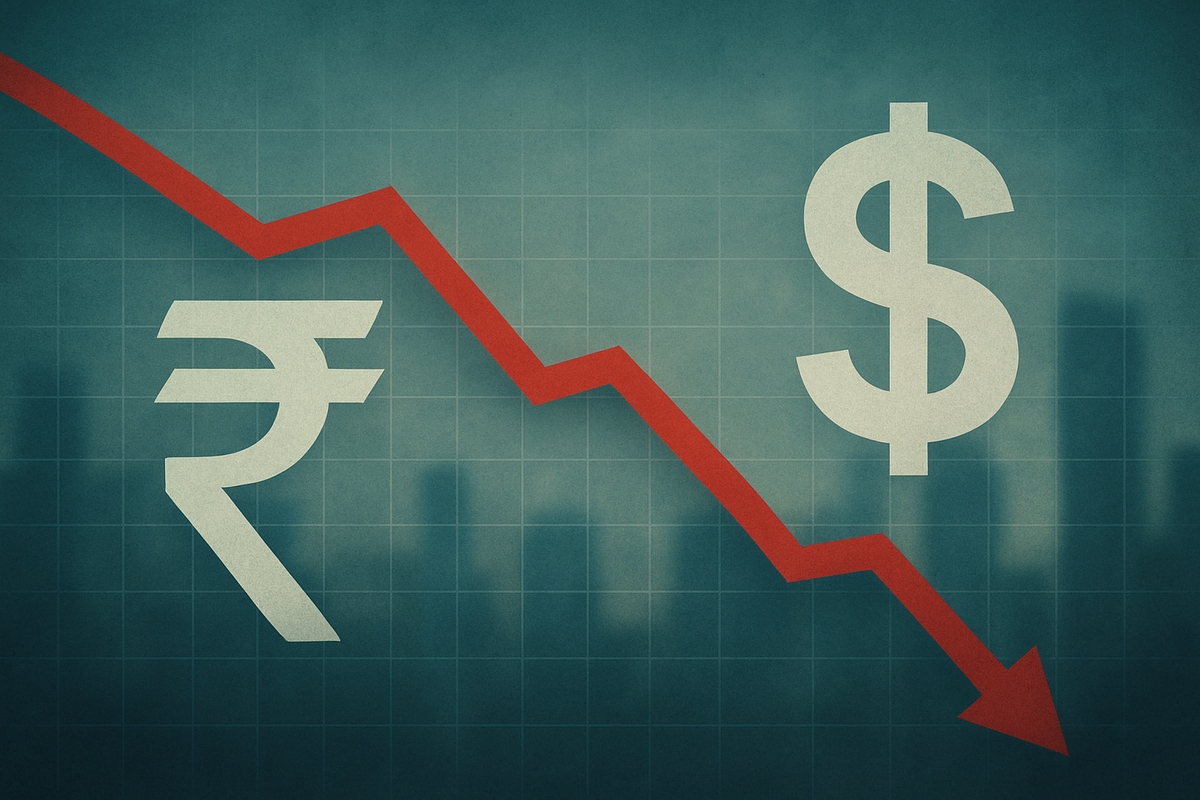
Mumbai, India – December 3, 2025 – The Indian Rupee (INR) today crossed a critical psychological threshold, breaching the 90 mark against the US Dollar (USD) for the first time in history. This unprecedented depreciation, with the currency hitting an intraday low of 90.30 before settling at 90.19, signals a period of heightened economic anxiety for India. The rupee's swift decline, marking it as Asia's worst-performing currency in 2025, is a stark indicator of persistent foreign capital outflows, a widening trade deficit exacerbated by surging gold imports, and a globally strong US Dollar. The immediate implications are far-reaching, threatening to fuel imported inflation, increase the burden of foreign debt for Indian companies, and dampen overall market sentiment. While a weaker rupee typically benefits exporters, the current environment of global economic slowdown and specific US tariffs complicates this advantage, leaving policymakers and businesses grappling with a complex economic landscape. Historic Slide: A Confluence of Global and Domestic PressuresThe Indian Rupee's journey to 90 against the US Dollar has been a culmination of several intertwined economic forces throughout 2025. On December 3, 2025, the currency fell sharply, extending a period of sustained depreciation that saw it dip below 89.95 on December 2 and a record low of 89.76 on December 1. This rapid descent from the 88+ level to 90 within a single week has sent jitters across financial markets. A significant catalyst for this sharp depreciation was the announcement of sweeping US tariff hikes on April 2, 2025. India's tariff burden, at 50%, is considerably higher than that of other major economies, directly impacting approximately $45 billion worth of Indian exports, particularly in labor-intensive sectors. This, coupled with a prolonged delay in finalizing a comprehensive trade deal with the United States, has cast a long shadow over India's export competitiveness and investor confidence. Adding to the pressure are persistent Foreign Portfolio Investor (FPI) withdrawals. Foreign investors have been consistent net sellers in the Indian markets, withdrawing nearly $17 billion from Indian equities in 2025 alone. This sustained selling has created unprecedented demand for the US dollar, widening the demand-supply gap in the foreign currency market. Factors driving these outflows include declining corporate profitability, concerns over stretched valuations, and the lingering uncertainty surrounding US-India trade negotiations. India's heavy reliance on imports, particularly crude oil, electronics, and bullion, further exacerbates the situation. Rising global commodity prices inflate India's import bill, necessitating a significant demand for US dollars and putting continuous downward pressure on the rupee. The Reserve Bank of India (RBI) has adopted a more "hands-off" and "calibrated" approach to currency intervention, primarily aiming to curb "excessive volatility" rather than defending a specific exchange rate level. While the RBI has intervened by selling dollars (reportedly $30 billion between June and October 2025), its strategy appears to allow market forces greater sway, contributing to the rupee's swift depreciation. Initial market reactions beyond just the stock market (where the Nifty slipped below 26,000 and the Sensex fell nearly 200 points) included heightened volatility in the foreign exchange market, rising bond yields due to inflation concerns, and increased hedging costs. The rupee's fall directly fuels imported inflation, particularly for crucial commodities, which can erode purchasing power and complicate the RBI's monetary policy decisions. Corporate Fortunes: Winners and Losers in a Weaker Rupee EnvironmentThe Indian Rupee's historic depreciation to 90 against the US Dollar on December 3, 2025, will create a clear divide in the fortunes of public companies, with export-oriented sectors largely benefiting and import-dependent industries facing significant headwinds. The Beneficiaries:
The Adversely Affected:
Broader Significance: A Test of Resilience and Policy AcumenThe Indian Rupee's breach of the 90 mark against the US Dollar on December 3, 2025, is not merely a numerical milestone but a critical indicator of India's economic resilience amidst a challenging global landscape. This event fits into broader industry trends marked by a global economic slowdown, particularly in emerging market economies (EMEs), which has dampened external demand and triggered a flight of capital to safer assets like the US Dollar. The hawkish stance of the US Federal Reserve, with rising interest rates making dollar-denominated assets more attractive, further exacerbates capital outflows from emerging markets. The ripple effects are substantial. While Indian exporters might gain a temporary competitive edge if their products become cheaper in dollar terms, this advantage is curtailed by global demand slowdowns and the specific US tariffs imposed on Indian goods. Conversely, countries exporting to India will find their products more expensive, potentially decreasing trade volumes. Foreign investors, already wary, may further deter fresh Foreign Direct Investment (FDI) and accelerate Foreign Portfolio Investment (FPI) outflows, seeking more stable markets. Regulatory and policy implications for the Indian government and the RBI are profound. The RBI faces a critical dilemma: balancing the need to control imported inflation, which a depreciating rupee exacerbates, with supporting economic growth. Higher inflation typically warrants tighter monetary policy (interest rate hikes), but aggressive tightening could stifle domestic recovery. The RBI's measured intervention strategy, aimed at curbing excessive volatility rather than defending a specific exchange rate, will be under intense scrutiny. The government, meanwhile, must address the widening trade deficit by promoting high-value exports, diversifying trade agreements, and reducing import dependence, particularly for crude oil and electronics. Historically, India has faced significant rupee depreciation events, notably during the 1966 and 1991 economic crises, characterized by large deficits, dwindling reserves, and high inflation. More recently, the 2013 "taper tantrum" and the 2020 (COVID-19) and 2022 (Russia-Ukraine war) shocks also led to sharp depreciations. The current pace of decline, with the rupee falling from 85 to 90 in less than a year, is faster than previous five-rupee falls, underscoring the intensity of the present pressures. The Road Ahead: Navigating Uncertainty and Seeking StabilityThe trajectory of the Indian Rupee and the broader economy in the wake of breaching the 90 mark will be determined by a complex interplay of domestic policy responses and global economic dynamics. In the short term, persistent inflationary pressures from expensive imports, a widening trade deficit, and increased debt burdens for companies with unhedged foreign loans are expected. Consumers will face higher costs for essential goods, fuel, and foreign travel. Market volatility is likely to persist, with some analysts suggesting the rupee could test 91 or even 92-95 if decisive action or positive news regarding trade deals do not materialize. Long-term possibilities, however, offer a glimmer of hope. Some experts believe the rupee's current depreciation could reverse in the next financial year, potentially strengthening back towards 88-89 levels if a US-India trade deal materializes and global financial conditions stabilize. India's robust GDP growth, strong domestic consumption, and public investment cycle are considered positive domestic factors that could prevent a faster, runaway depreciation. Strategic pivots are crucial for both businesses and the government. Export-oriented businesses, especially in IT services, pharmaceuticals, and agricultural products, should capitalize on enhanced competitiveness, explore new markets beyond traditional partners, and optimize pricing strategies. Importers, conversely, must implement robust currency hedging strategies, explore local sourcing alternatives, and manage inventory strategically. For the government and the RBI, a balanced approach is paramount. The RBI is expected to continue its measured intervention, focusing on curbing volatility while prioritizing inflation control and growth support. The government must expedite trade deal resolutions, particularly with the US, and implement policies to address the widening trade deficit, including promoting high-value exports and reducing import dependency. Attracting long-term Foreign Direct Investment (FDI) will be critical to provide structural support for the rupee. Emerging market challenges will continue, as India's experience highlights broader vulnerabilities to a strong US Dollar and capital outflows. However, opportunities exist within this context; a weaker rupee could redirect some global sourcing towards Indian software, back-office work, and generic drug manufacturing. Potential scenarios range from a controlled depreciation with gradual recovery, where the rupee finds a new equilibrium around 90-91 before a potential appreciation, to persistent weakness if external headwinds intensify and policy responses fall short. A short-term rebound, while less likely given current factors, could occur with a swift and favorable trade deal resolution and a significant shift in global investor sentiment. Wrap-Up: Navigating a New Economic RealityThe Indian Rupee's historic breach of the 90 mark against the US Dollar on December 3, 2025, marks a significant turning point, underscoring the intricate dance between global economic forces and domestic policy. Key takeaways include the relentless pressure from FPI outflows, a widening current account deficit fueled by imports, a globally strong dollar, and the nuanced, calibrated intervention strategy of the RBI. Moving forward, the market will grapple with increased inflationary pressures, higher import costs for businesses, and the complex challenge of boosting exports amidst global slowdowns and tariff barriers. The RBI faces a delicate balancing act to manage inflation without stifling growth, while the government must prioritize measures to enhance trade competitiveness and attract stable capital flows. The lasting impact of this event will depend on the agility and effectiveness of policy responses. While the government maintains a stance of not losing sleep over the depreciation, emphasizing that it's not severely affecting inflation or exports, the psychological barrier of 90 has been broken, potentially opening the door for further speculative moves. This necessitates a structural approach to strengthen India's economic fundamentals. What Investors Should Watch For in Coming Months:
This content is intended for informational purposes only and is not financial advice More NewsView More
The Trade Desk: After a 70% Plunge, This Could Be The Time to Buy ↗
December 04, 2025
Via MarketBeat
Tickers
TTD

Tap Into 2026 AI Infrastructure Gains With This High-Growth ETF ↗
December 04, 2025

Strong Quarter, Weak Reaction: Why GitLab Shares Dropped ↗
December 04, 2025
Via MarketBeat

3 Signs Tesla Is Starting December on the Front Foot ↗
December 04, 2025
Via MarketBeat
Tickers
TSLA

Via MarketBeat
Recent QuotesView More
Stock Quote API & Stock News API supplied by www.cloudquote.io
Quotes delayed at least 20 minutes. By accessing this page, you agree to the Privacy Policy and Terms Of Service.
© 2025 FinancialContent. All rights reserved.
|