Oil Market Navigates Oversupply as OPEC+ Unwinds Cuts Amidst Sluggish Demand
By:
MarketMinute
September 30, 2025 at 16:52 PM EDT
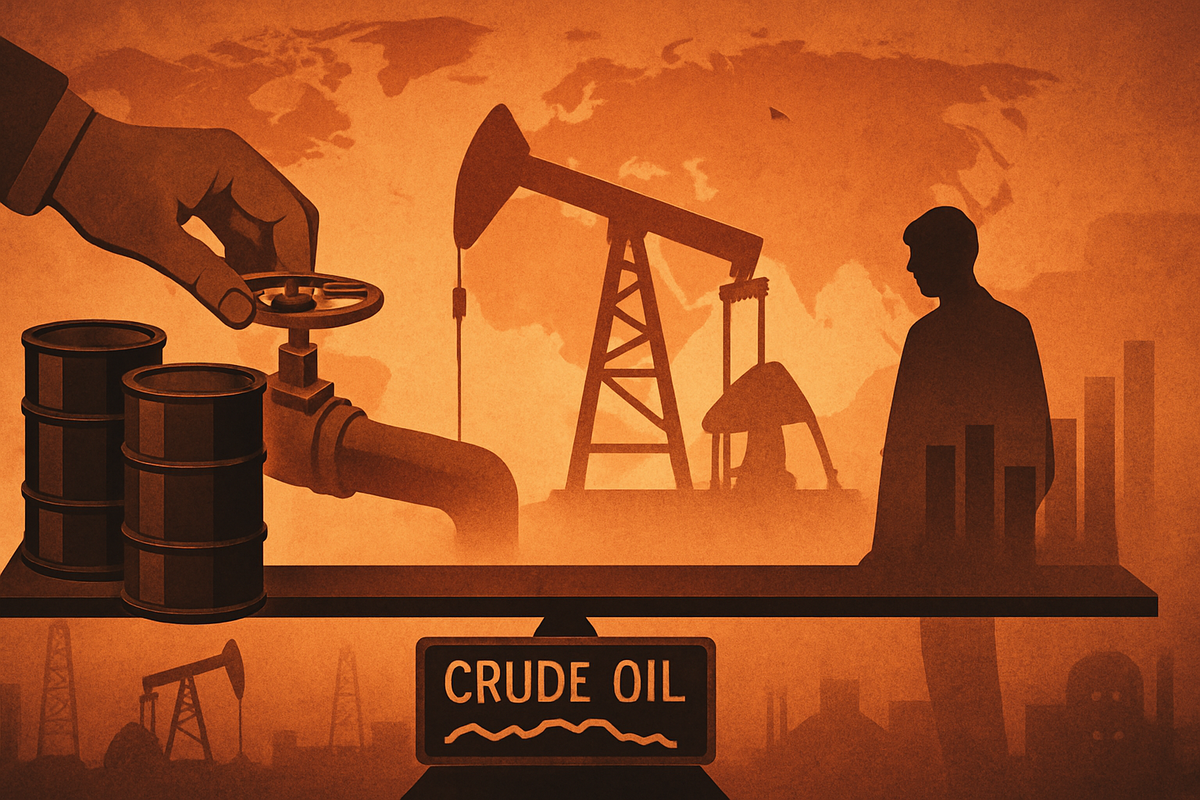
As of late September 2025, the global crude oil market finds itself in a precarious state, marked by declining prices and a palpable risk of oversupply. What was once a delicate balancing act by OPEC+ to support prices through production cuts is now facing significant headwinds, as the cartel embarks on a phased unwinding of these very cuts. Simultaneously, persistent worries about a sluggish global economy continue to dampen demand growth, creating a challenging environment for market stability. This scenario has immediate implications, pushing benchmark crude prices like West Texas Intermediate (WTI) and Brent crude downwards. The interplay between increasing supply, driven by both OPEC+ and non-OPEC+ producers, and a weaker-than-anticipated demand outlook, suggests a market grappling with a fundamental imbalance. The coming months are poised to test the resilience of the oil market and the strategic agility of its major players. OPEC+'s Balancing Act Under PressureThe current market dynamics are a direct consequence of OPEC+'s evolving strategy coupled with a recalibration of global demand expectations. OPEC+ had previously implemented significant voluntary production cuts in late 2023 and early 2024 to buttress prices amidst initial demand uncertainty. However, as of September 2025, the group has begun a phased unwinding of these cuts, contributing to an influx of crude into the market. Specifically, OPEC+ increased oil production by approximately 547,000 barrels per day (bpd) in September 2025, completing the return of 2.17 million bpd from eight core member countries. This was followed by an agreement for a further 137,000 bpd hike in October, with discussions hinting at an even larger increase of 411,000 bpd, potentially up to 500,000 bpd, in November. This move signals OPEC+'s intent to regain market share, but it comes at a time when demand growth is notably slowing. While some voluntary cuts are being unwound, the group has also extended collective output cuts totaling 3.65 million bpd through the end of 2026, with a phased unwinding of 2.2 million bpd from these deeper cuts expected to commence in April 2026, showcasing a complex, multi-layered supply strategy. Adding to the supply side, Iraq's Kurdistan region resumed crude oil exports of approximately 500,000 bpd through a pipeline to Turkey after a two-and-a-half-year halt, further exacerbating concerns about an oversupplied market. Meanwhile, global oil demand growth has been significantly revised downwards by the International Energy Agency (IEA), now projected to increase by only 700,000-740,000 bpd for 2025, a stark reduction from 1.8 million bpd in 2024. This marks one of the slowest growth rates in years, outside of the COVID-19 pandemic period. Initial market reactions have seen WTI (NYMEX: CL.1) futures dip to around $62-$63 per barrel, and Brent crude (ICE: BZ.1) settling near $66 per barrel, reflecting the bearish sentiment driven by the looming oversupply. Corporate Fortunes: Winners and Losers in a Softening MarketThe current trajectory of declining oil prices and potential oversupply will undoubtedly reshape the financial landscape for various players within and outside the energy sector. Potential Losers:
Potential Winners (or those less impacted):
Wider Significance: A Shift in the Energy ParadigmThe current market situation extends beyond mere price fluctuations, signaling broader shifts within the global energy landscape. The struggle to balance supply and demand amidst an unwinding of production cuts and decelerating consumption growth highlights the inherent volatility of a market in transition. This event fits into a larger trend where the long-term outlook for oil demand is increasingly questioned due to climate change initiatives and the accelerating adoption of renewable energy and electric vehicles. The phased unwinding by OPEC+ indicates a strategic pivot, potentially aiming to regain market share that might have been ceded to non-OPEC+ producers during periods of deeper cuts. This could intensify competition, particularly with the U.S. shale industry, which has consistently demonstrated resilience and increased output. Geopolitical factors, such as Ukrainian strikes on Russian energy infrastructure and ongoing tensions in the Middle East, continue to provide intermittent price support, but their long-term ability to counteract fundamental oversupply appears limited. Regulatory and policy implications could arise if sustained low prices impact the profitability of national oil companies, potentially influencing government revenues in oil-dependent states and their ability to fund social programs or diversification efforts. Historically, periods of significant oversupply, such as in 2014-2016, have led to prolonged price downturns, industry consolidation, and widespread financial distress for less efficient producers, offering a cautionary tale for the current environment. What Comes Next: Navigating Volatility and Strategic ShiftsLooking ahead, the oil market is poised for continued volatility, with both short-term and long-term uncertainties. In the short term, the market will closely monitor OPEC+'s next moves regarding production adjustments. Should demand continue to falter, the group may face pressure to pause or even reverse its planned production increases to prevent a deeper price collapse. Conversely, any unexpected geopolitical escalation could temporarily disrupt supply and send prices higher, creating sharp, unpredictable swings. Longer term, the trajectory of global economic growth will be paramount. A significant rebound in major economies, particularly China and India, could provide a much-needed boost to demand, potentially absorbing some of the excess supply. However, if the global slowdown persists, the risk of a prolonged period of oversupply and depressed prices becomes more acute. This scenario would necessitate strategic pivots from oil companies, focusing on cost efficiency, optimizing existing assets, and accelerating investments in lower-carbon energy solutions. Market opportunities might emerge for companies with strong balance sheets to acquire distressed assets, while challenges will include maintaining investor confidence and navigating a potentially prolonged period of lower returns. The ongoing tug-of-war between increasing supply and uncertain demand will define the market's stability, making it a critical period for all stakeholders. Comprehensive Wrap-Up: A Market in FluxIn summary, the global oil market is currently at a critical juncture, characterized by declining prices driven by OPEC+'s phased unwinding of production cuts and persistent concerns over slowing global demand. The delicate balance that OPEC+ has strived to maintain is under significant pressure, leading to a palpable risk of oversupply. Key takeaways include the increasing supply from both OPEC+ and non-OPEC+ sources, the downward revisions in global demand forecasts, and the resulting bearish sentiment in crude oil benchmarks. Moving forward, the market is likely to remain in flux, with potential for continued price volatility. Investors should closely watch OPEC+'s upcoming production decisions, global economic indicators (especially in major consuming nations), and any developments in geopolitical hotspots. The ability of OPEC+ to effectively manage supply in the face of uncertain demand will be crucial in determining price stability. Companies in the energy sector will need to adapt their strategies, focusing on resilience and efficiency, while consumers and oil-importing nations may find some relief from lower energy costs. The coming months will be a test of market fundamentals and strategic foresight, shaping the landscape for the foreseeable future. This content is intended for informational purposes only and is not financial advice More NewsView More
Via MarketBeat
Tickers
TTD


Strong Quarter, Weak Reaction: Why GitLab Shares Dropped ↗
Today 16:27 EST
Via MarketBeat

3 Signs Tesla Is Starting December on the Front Foot ↗
Today 15:16 EST
Via MarketBeat
Tickers
TSLA

Via MarketBeat
Recent QuotesView More
Stock Quote API & Stock News API supplied by www.cloudquote.io
Quotes delayed at least 20 minutes. By accessing this page, you agree to the Privacy Policy and Terms Of Service.
© 2025 FinancialContent. All rights reserved.
|