US Crop Producers Grapple with "Perfect Storm" of Low Commodity Prices and Soaring Costs
By:
MarketMinute
September 30, 2025 at 11:40 AM EDT
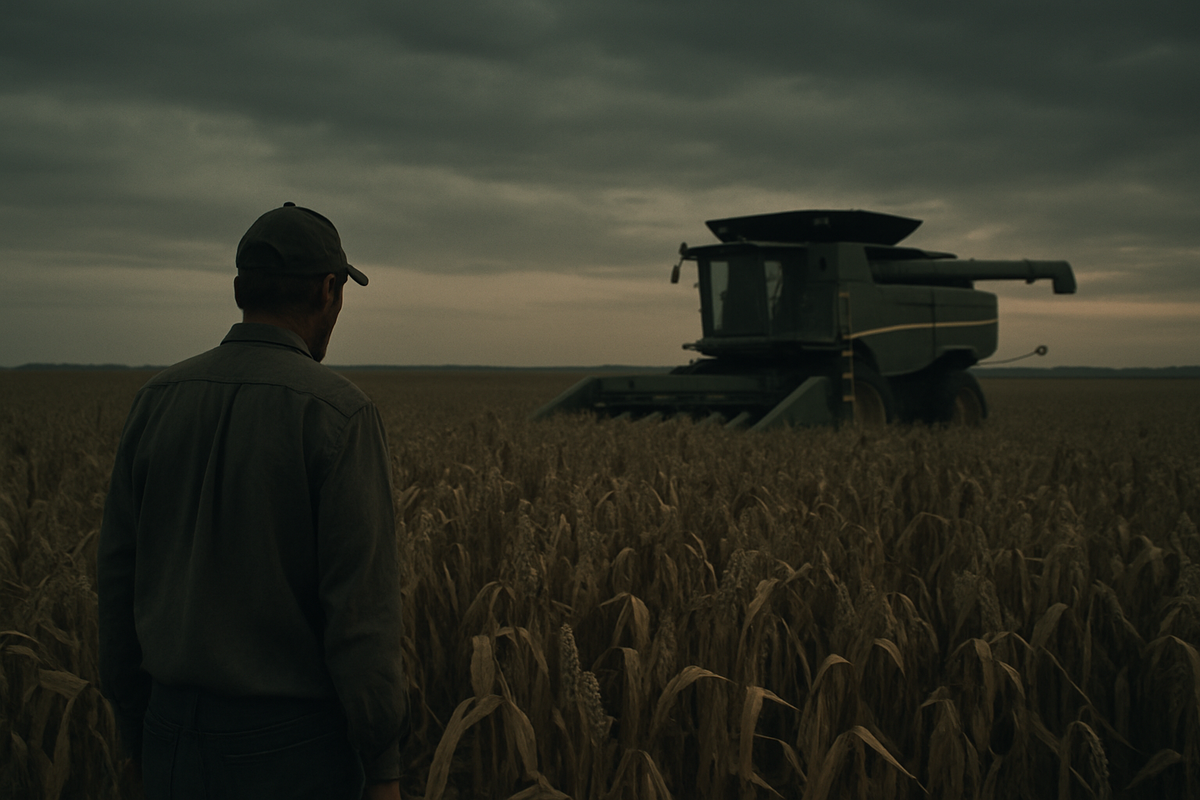
US crop producers are facing an escalating financial crisis as persistently low commodity prices, coupled with stubbornly high input costs, create a "perfect storm" of negative cash flow and unprecedented financial strain. Leading up to September 2025, prices for staple crops like corn, soybeans, and wheat have plummeted, pushing many farms into unprofitable territory and raising alarms across the agricultural sector. This dire situation threatens the solvency of countless family farms and has profound implications for the broader US economy. The confluence of abundant global supplies, weakened international demand, a robust US dollar, and lingering geopolitical trade tensions has driven commodity prices to multi-year lows. As farmers struggle to cover their production expenses, the very foundation of the nation's food supply chain is being tested, signaling a period of significant upheaval and potential restructuring within the agricultural industry. The Deepening Crisis: A Closer Look at the Numbers and Contributing FactorsThe agricultural landscape leading up to September 2025 has been characterized by a sharp decline in crop prices following the elevated levels seen in 2021-2023. As of September 30, 2025, corn prices have fallen to approximately $4.19 per bushel, a 2.24% decrease from the previous year, with projections suggesting a season average of $4.05 per bushel for 2025-26. Soybeans have fared similarly, trading around $10.07 per bushel, down 4.68% year-over-year, with forecasts hinting at single-digit prices by year-end. Wheat prices, at approximately $5.17 per bushel, represent a 13.63% decline from a year ago, continuing a multi-year downward trend. Other crops, including rice, sorghum, and barley, also reflect this pervasive weakness. This downturn is primarily fueled by several critical factors. Record-breaking harvests in the US (notably the 2023 corn crop and healthy 2024 corn and soybean yields) combined with robust production from South America (Brazil and Argentina) for the 2024-2025 season have created massive global surpluses and bloated ending stocks. Simultaneously, a slowdown in global economic growth and reduced demand, particularly from China, has weakened export markets for US agricultural products. China's preference for Brazilian soybeans and a strong US dollar, which has appreciated 8% since late September 2024, further diminish the competitiveness of American exports. The ongoing impacts of geopolitical conflicts, such as the Russia-Ukraine war, and persistent US-China trade disputes, marked by retaliatory tariffs, continue to inject volatility and restrict export opportunities. The immediate consequence for US crop producers is a severe squeeze on profit margins. Many farmers are experiencing "unprofitable production," with output prices often falling below the cost of production. For instance, some soybean farmers are projected to lose around $84 per acre in 2025, potentially leading to quarter-million-dollar losses for larger operations. In states like Minnesota, corn farmers face losses exceeding $200 per acre, and soybean farmers over $160 per acre. This has led to reduced cash receipts for crops, now at their lowest since 2007, and a projected continued decline in net farm income for 2024, following a 19% drop from its 2022 peak. Farmers are being forced to alter planting decisions, with some reducing soybean acreage due to marketing difficulties and tariffs, opting for corn despite potential storage challenges. The USDA Chief Economist, Seth Meyer, has highlighted a "cash flow crisis" threatening farm solvency, exacerbated by delayed payments from commodity programs that only arrive in October of the following year, forcing farmers to bridge significant financial gaps through increased borrowing. Companies Navigating the Agricultural HeadwindsThe current financial strain on crop producers inevitably creates winners and losers among public companies tied to the agricultural sector. Companies heavily reliant on farmer spending for inputs or equipment are likely to face significant challenges, while those involved in commodity trading, processing, or offering diversified services might find opportunities. Agricultural Equipment Manufacturers are likely to face significant headwinds. Companies like Deere & Company (NYSE: DE) and AGCO (NASDAQ: AGCO) depend heavily on farmers' willingness and ability to invest in new machinery. With squeezed profit margins and negative cash flow, producers are deferring major capital expenditures, leading to reduced demand for new tractors, combines, and other farm equipment. Deere, for instance, has already indicated anticipated profits below market expectations and has undertaken layoffs, reflecting the softening market. While demand for used equipment might see a slight uptick as farmers seek more affordable alternatives, the overall new equipment market is expected to remain sluggish. Seed and Chemical Companies, such as Corteva Agriscience (NYSE: CTVA) and Nutrien Ltd., face a mixed but generally challenging outlook. While these inputs are essential for crop production, farmers' financial constraints are forcing them to cut costs. This could translate into reduced application rates for fertilizers and pesticides, a shift towards cheaper generic alternatives, or even a pivot to less input-intensive crops. Although some fertilizer and chemical prices have moderated from their 2022 peaks, seed costs have shown a persistent upward trend. The highly consolidated nature of this segment means these companies still hold significant pricing power, but overall profitability can be pressured by reduced farmer spending and shifts in purchasing behavior. Conversely, Food Processors and consumer goods companies are generally positioned to benefit from lower raw material costs. Major players like General Mills (NYSE: GIS), Post Holdings (NASDAQ: POST), and The Coca-Cola Company (NYSE: KO) use corn, soybeans, wheat, and other agricultural commodities as primary inputs. Persistently low commodity prices directly reduce their cost of goods sold, which can lead to improved profit margins and increased profitability. However, the full benefit to consumers might be delayed as these companies also contend with other supply chain costs, such as labor, transportation, energy, and packaging, which may remain high. In the short to medium term, lower input costs offer a significant advantage, though sustained low prices could eventually discourage agricultural production, potentially impacting long-term supply stability. Commodity Traders can also find opportunities in volatile markets. While low prices might seem detrimental, the increased price fluctuations that often accompany such environments create avenues for astute traders to profit from price differences and trading volumes. Their success hinges on their ability to accurately interpret market information, forecast price movements, and effectively manage risks in a dynamic market. Wider Significance: Ripple Effects and Industry TrendsThe persistent financial strain on US crop producers due to low commodity prices and high input costs extends far beyond individual farm gates, creating significant ripple effects across the entire agricultural ecosystem and broader economy. This situation is not merely a cyclical downturn but rather a potential structural shift with long-term implications for food security, rural economies, and global trade dynamics. Broader Industry TrendsThe current situation is indicative of a broader "economic crisis" within the US crop sector, characterized by a return to an "era of abundance" in global agricultural markets. Robust harvests globally, particularly in the US and South America, have led to swelling ending stocks, driving prices down. This trend of squeezed profit margins is forcing farmers to delay significant capital investments, with agricultural economists widely anticipating that the crop sector will remain in a recession, with continued losses through 2026. This financial stress is also depleting working capital and is expected to accelerate industry consolidation, as less efficient or financially weaker producers are forced to exit the market. Input costs, especially for seeds, fertilizers, fuel, labor, and machinery, have remained stubbornly high, exacerbating the financial bind for producers. Seed costs, for instance, are still 21% above pre-war levels, creating a persistent cost-price squeeze. Ripple Effects on Competitors and PartnersThe distress among US crop producers sends ripples throughout the entire agricultural supply chain:
Regulatory or Policy ImplicationsThe current crisis is prompting calls for significant government intervention and policy adjustments:
Historical PrecedentsThe current situation echoes historical periods of agricultural downturns:
What Comes Next: Navigating the Future of US AgricultureThe road ahead for US crop producers is fraught with challenges, but also potential for strategic adaptation. The immediate future will likely see a continuation of the financial squeeze, necessitating difficult decisions and fostering an environment ripe for innovation and consolidation. Short-Term Possibilities and ChallengesIn the short term, US crop producers will continue to grapple with severely squeezed margins. Input costs for fertilizer, seed, chemicals, and fuel remain stubbornly high, creating a direct cut into profitability as commodity prices fall. USDA estimates project a continued decline in net farm income, following record highs in 2022. This financial stress is leading to rising farm loan volumes—the sharpest uptick since the 1980s—and a projected record total farm sector debt of $542.5 billion in 2024. Macroeconomic pressures, including persistent inflation, a strong US dollar, and rising interest rates, further exacerbate the financial bind, contributing to an increase in farm bankruptcies. Trade uncertainty, particularly with China, also continues to weigh on global demand and commodity prices. In response, farmers are actively seeking cost-cutting measures, often postponing major equipment purchases. Government assistance, including potential economic and disaster relief packages, along with existing crop insurance and commodity programs, will remain a crucial lifeline for many. Long-Term Possibilities and Strategic PivotsThe long-term outlook necessitates significant strategic pivots and adaptations for survival and profitability:
Market Opportunities and ChallengesMarket Opportunities: A growing consumer demand for organic, local, specialty, healthy, and sustainably produced food presents new avenues for premium pricing. Expanding and maintaining export markets, despite current challenges, remains crucial. Developing value-added products from raw commodities can significantly boost revenue. Challenges: Global supply surpluses will likely continue to depress commodity prices. Weakened demand from key markets like China and persistent logistical bottlenecks will hinder market access and increase costs. The financial stress is expected to accelerate consolidation within the agricultural sector, favoring larger, more efficient, and well-capitalized producers. Increasing investor activity in farmland ownership also creates greater competition for actual operators. Potential Scenarios and OutcomesThe most likely scenario is a "new normal" of lower commodity prices stabilizing at reduced plateaus for several years, driven by consistent large global harvests and sustained competition. This will force farmers to continually emphasize efficiency and robust risk management, leading to continued margin compression. Outcomes:
Comprehensive Wrap-Up: Navigating a New Agricultural RealityThe US agricultural sector is currently navigating an unprecedented period of financial distress, driven by persistently low commodity prices and stubbornly high input costs. This "perfect storm" has created negative cash flow and squeezed profit margins for crop producers across the nation, threatening the very fabric of rural economies and the future of many family farms. The immediate implications are severe, marked by reduced farm income, increased debt, and a rising tide of bankruptcies. Looking ahead, the market is likely to settle into a "new normal" of lower commodity prices, necessitating fundamental shifts in farming practices. While agricultural equipment, seed, and chemical companies face headwinds, food processors and commodity traders may find opportunities in reduced input costs and market volatility. The wider significance of this crisis extends to global trade dynamics, rural community stability, and calls for significant policy adjustments, including a robust Farm Bill and scrutiny of input costs. Investors should closely watch for continued consolidation in the agricultural sector, the pace of technology adoption (especially precision agriculture), and shifts towards diversification and sustainable farming practices. The effectiveness of government support programs and evolving trade policies will also be critical indicators. While the challenges are immense, the necessity for adaptation may spur innovation, ultimately leading to a more resilient, albeit structurally different, agricultural landscape. This content is intended for informational purposes only and is not financial advice. More NewsView More
These Are the Hottest Upgrades From the Q3 Reporting Cycle ↗
Today 9:06 EST


Why Bitcoin ETFs Like IBIT May Be Set to Surge in 2026 ↗
Today 7:38 EST

Up Over 20% in 2025, These 3 Stocks Are Boosting Buyback Capacity ↗
December 01, 2025
Via MarketBeat

Congress Beat the Market Again—Here Are the 3 Stocks They Bought ↗
December 01, 2025
Via MarketBeat
Recent QuotesView More
Stock Quote API & Stock News API supplied by www.cloudquote.io
Quotes delayed at least 20 minutes. By accessing this page, you agree to the Privacy Policy and Terms Of Service.
© 2025 FinancialContent. All rights reserved.
|