Tesla, Inc. (TSLA): A Deep Dive into the Future of Electric Vehicles and AI
By:
PredictStreet
October 01, 2025 at 11:43 AM EDT
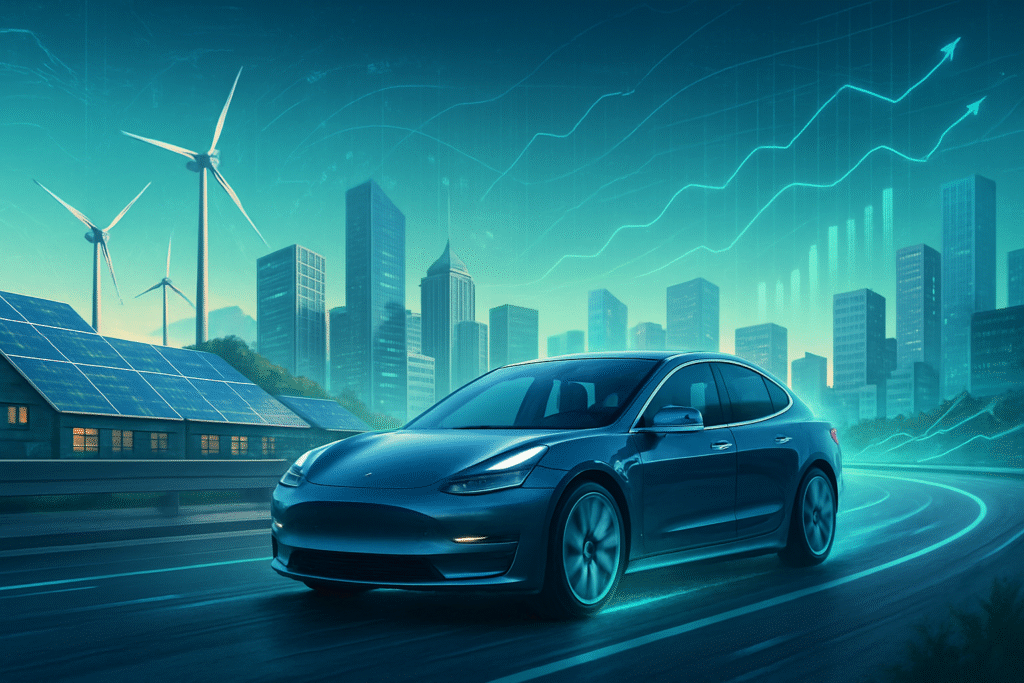
As of October 1, 2025, Tesla, Inc. (NASDAQ: TSLA) remains a dominant and highly scrutinized entity in the global electric vehicle (EV) and clean energy sectors. Founded in 2003, the company has transcended its origins as a niche EV manufacturer to become a diversified technology giant, deeply invested in artificial intelligence, robotics, and sustainable energy solutions. Tesla's continued relevance stems from its relentless pursuit of innovation, the visionary—and often controversial—leadership of CEO Elon Musk, and its profound impact on both the automotive industry and the broader energy transition. Tesla's business model is characterized by vertical integration, emphasizing a direct-to-consumer sales approach and a comprehensive ecosystem that includes EV manufacturing, a proprietary charging network (Supercharger), and advanced software development. Beyond vehicles like the Model S, 3, X, Y, and the anticipated Cybertruck, Tesla's portfolio encompasses energy generation and storage products such as solar panels, Solar Roof, Powerwall, and Megapack. The company's ambitious foray into autonomous driving (Autopilot and Full Self-Driving, or FSD) and its emerging humanoid robot project, Optimus, further solidify its position as a key player in "physical AI." The company is currently in focus due to several dynamic factors: its volatile yet potentially high-growth stock performance, significant advancements in AI and robotics, intense competition from both legacy automakers and new EV entrants (particularly from China), and the evolving landscape of regulatory incentives. Recent developments, such as Elon Musk's substantial stock purchase, the launch of the updated Model Y Performance "Juniper," and the expiration of the U.S. federal EV tax credit, are all contributing to a complex and highly watched narrative. As Tesla prepares to release its Q3 2025 delivery results, investors and analysts are keenly observing how these factors will shape its short-term performance and long-term trajectory. 2. Historical BackgroundTesla Motors, Inc., was founded in July 2003 by Martin Eberhard and Marc Tarpenning, with a vision to create high-performance electric vehicles. Their initial goal was to prove that electric cars could be better, quicker, and more fun to drive than gasoline cars. Elon Musk joined the company as a major investor in 2004, taking an active role in product design and eventually becoming CEO in 2008. His arrival marked a pivotal moment, injecting significant capital and a bold, long-term strategic direction. The company’s first product, the Tesla Roadster, launched in 2008, was a high-performance electric sports car based on the Lotus Elise chassis. It demonstrated that EVs could offer compelling performance and range, challenging the prevailing skepticism about electric vehicles. This early success established Tesla's reputation for innovation and engineering prowess. A key transformation occurred with the launch of the Model S in 2012. This luxury electric sedan was designed from the ground up by Tesla and quickly garnered critical acclaim, setting new benchmarks for range, performance, and technological integration, including its large touchscreen interface and over-the-air software updates. The Model S was instrumental in cementing Tesla's image as a legitimate and disruptive force in the automotive industry. Following the Model S, Tesla expanded its lineup with the Model X, an SUV featuring distinctive "falcon-wing" doors, launched in 2015. However, the most significant transformation came with the introduction of the Model 3 in 2017. Positioned as a more affordable, mass-market electric vehicle, the Model 3 was crucial for Tesla's ambition to accelerate the world's transition to sustainable energy. Its production ramp-up was fraught with challenges, famously dubbed "production hell" by Elon Musk, but ultimately, Tesla overcame these hurdles, demonstrating its ability to scale manufacturing. In 2017, the company officially changed its name from Tesla Motors, Inc. to Tesla, Inc., reflecting its expanding focus beyond just vehicles to include energy generation and storage solutions, a segment significantly bolstered by its 2016 acquisition of SolarCity. Over the years, Tesla has continued to push boundaries with its Supercharger network, a proprietary global fast-charging infrastructure, and its advanced driver-assistance systems, Autopilot and Full Self-Driving (FSD). The introduction of the Model Y crossover in 2020 and the highly anticipated Cybertruck further diversified its vehicle offerings. From its humble beginnings, Tesla has evolved into a global automotive and technology powerhouse, characterized by a direct-to-consumer sales model, vertical integration, and a relentless pursuit of technological leadership in EVs, battery technology, AI, and renewable energy. Its journey has been marked by audacious goals, significant challenges, and a profound impact on the trajectory of the automotive industry. 3. Business ModelTesla, Inc. (NASDAQ: TSLA) operates a vertically integrated business model that spans electric vehicle manufacturing, energy generation and storage, and advanced software and services. This multifaceted approach distinguishes it from traditional automakers and positions it as a leader in the broader sustainable technology landscape. Revenue Sources and Product Lines: Tesla's primary revenue streams are derived from two main segments:
Services and Software: Beyond physical products, Tesla generates revenue and builds customer loyalty through a robust suite of services and software offerings:
Segments and Customer Base: Tesla primarily serves a global customer base across various demographics, from early adopters of cutting-edge technology and environmental enthusiasts to mainstream consumers seeking sustainable and high-performance transportation.
Key Characteristics of the Business Model:
In essence, Tesla's business model is designed to disrupt multiple industries simultaneously—automotive, energy, and increasingly, artificial intelligence and robotics—by offering integrated, technologically advanced, and sustainable solutions. 4. Stock Performance OverviewAs of October 1, 2025, Tesla, Inc. (NASDAQ: TSLA) stock has been a quintessential example of high-growth, high-volatility equity. Its performance over various time horizons reflects both its transformative impact on the automotive industry and the speculative nature often associated with its ambitious technological ventures and the leadership of Elon Musk. 1-Year Stock Performance (October 2024 – October 2025): The past year has seen TSLA experience significant fluctuations. After a strong run in late 2024, the stock began Q1 2025 with a decline, reflecting broader market concerns about EV demand saturation, increased competition, and some of Tesla's own operational challenges, including narrowing margins. However, a notable recovery commenced in September 2025, driven by several factors: positive investor sentiment following Elon Musk's open-market stock purchase (his first since 2020), anticipation of the updated Model Y "Juniper" launch, and speculative interest in Tesla's "physical AI" ambitions (robotaxis, Optimus). As of September 29, 2025, the stock closed at $444.72, approaching a break-even point year-to-date. This period highlights the stock's sensitivity to news, product cycles, and CEO sentiment. 5-Year Stock Performance (October 2020 – October 2025): Over the past five years, TSLA has delivered exceptional, albeit volatile, returns for long-term investors. This period encompasses Tesla's meteoric rise during the COVID-19 pandemic, driven by accelerated EV adoption, strong demand for its Model 3 and Model Y, and growing excitement around its FSD technology. The stock underwent a 5-for-1 stock split in August 2020 and a 3-for-1 split in August 2022, making its shares more accessible to retail investors and further boosting liquidity. The five-year chart shows a dramatic upward trajectory, punctuated by significant pullbacks. Key milestones during this period include:
Despite recent competitive pressures and margin concerns, the stock has substantially outpaced the broader market over this horizon, rewarding investors who held through its intense volatility. 10-Year Stock Performance (October 2015 – October 2025): Looking back a decade, Tesla's stock performance is nothing short of phenomenal, representing one of the most successful growth stories in modern market history. In October 2015, the stock was trading significantly lower (pre-splits, adjusted for splits, it would be in the low double digits). The journey from a niche automaker to a trillion-dollar company (at its peak) is reflected in this long-term view. Key developments over the last ten years that fueled this growth include:
While the ride has been bumpy, characterized by extreme highs and lows driven by production targets, regulatory scrutiny, and Elon Musk's public statements, the long-term trend has been overwhelmingly positive. Investors who bought into Tesla a decade ago have seen multi-thousand-percent returns, underscoring its status as a disruptive force that has fundamentally reshaped the automotive and energy landscapes. Notable Moves and Market Perception: TSLA's stock is highly reactive to news flow, analyst ratings, and macroeconomic trends. Periods of rapid ascent are often followed by sharp corrections as investors grapple with valuation concerns, production bottlenecks, and competitive threats. Its "meme stock" status at times has also contributed to its outsized movements, with a significant retail investor base often acting as a strong buying force on dips. The market's perception of Tesla often oscillates between seeing it as a revolutionary technology company poised for exponential growth and a highly speculative bet facing increasing competition and execution risks. 5. Financial PerformanceAs of October 1, 2025, Tesla, Inc. (NASDAQ: TSLA) presents a complex financial picture, characterized by impressive long-term growth tempered by recent challenges in sales and profitability. The company is navigating a maturing EV market and intensifying competition, which has put pressure on its traditionally strong margins. Latest Earnings (Q2 2025 and Q3 2025 Expectations): Tesla's Q2 2025 financial results, released earlier in the year, revealed a significant year-over-year revenue decline of 12% to $22.5 billion, missing analyst expectations. This was accompanied by a 23% drop in Earnings Per Share (EPS), signaling a challenging period for the company. The decline was largely attributed to a slowdown in EV demand in certain markets, increased pricing pressure, and production adjustments. Investors are keenly awaiting the release of Tesla's Q3 2025 delivery results on October 2, 2025, which will provide crucial insights into recent sales trends. Analysts anticipate a surge in U.S. demand for Q3 due to buyers pulling forward purchases to take advantage of the expiring $7,500 federal EV tax credit. However, global registrations have been declining, and sales in the European Union were down 42.9% year-on-year for January-August 2025, suggesting continued headwinds in key international markets. Sales in China also reportedly declined in Q3 2025. Revenue Growth: While Q2 2025 saw a year-over-year decline, the broader outlook for 2025 projects continued, albeit moderated, revenue growth. Analysts forecast a 17.5% revenue increase for the full year 2025, reaching an estimated $117.2 billion. This growth is expected to be driven by:
Long-term revenue growth remains a key bullish thesis, predicated on Tesla's ability to scale production, introduce new products, and further monetize its AI and energy ventures. Margins: Tesla's gross and operating margins have been a point of concern in recent quarters. The company has engaged in price cuts across its vehicle lineup in response to increased competition and to stimulate demand, particularly in China and Europe. While these price adjustments have helped maintain sales volume, they have compressed automotive gross margins. In Q2 2025, the automotive gross margin (excluding regulatory credits) was notably lower than previous periods. The company is focused on cost reduction initiatives and production efficiencies to mitigate this pressure. The profitability of the energy segment and the high-margin nature of software (like FSD) are expected to help offset some of the automotive margin compression. The long-term trajectory of margins will depend on Tesla's ability to achieve economies of scale with new Gigafactories, reduce battery costs, and increase the attach rate of high-margin software services. Debt and Cash Flow: Tesla has significantly strengthened its balance sheet over the years. The company typically maintains a healthy cash position, funding its ambitious R&D and capital expenditure projects through internally generated cash flow and occasional equity raises. As of recent filings, Tesla's debt levels are manageable, with a strong emphasis on reinvesting cash flow back into the business for expansion, new product development, and AI initiatives. Free cash flow generation remains robust, albeit subject to quarterly fluctuations based on capital expenditures for new factories and product launches. Valuation Metrics: Tesla's valuation has historically been a subject of intense debate. Its price-to-earnings (P/E) ratio often appears elevated compared to traditional automakers, reflecting investor expectations of future hyper-growth, its technological leadership, and its status as an AI and energy company rather than just an automotive firm. Key valuation considerations include:
In summary, while Tesla's recent financial performance has shown some signs of deceleration and margin pressure, its underlying growth drivers, strong balance sheet, and ambitious diversification into AI and energy continue to underpin a bullish long-term narrative for many investors. The upcoming Q3 2025 results will be critical in shaping near-term financial perceptions. 6. Leadership and ManagementTesla, Inc. (NASDAQ: TSLA) is inextricably linked to its CEO, Elon Musk, whose visionary leadership, unconventional management style, and public persona profoundly influence the company's strategy, innovation, and market perception. CEO: Elon Musk Elon Musk serves as the Chief Executive Officer and is the "Technoking" of Tesla. He is the driving force behind the company's ambitious goals, from accelerating the world's transition to sustainable energy to pioneering autonomous driving and humanoid robotics. Musk's leadership is characterized by:
Leadership Team: While Musk is the public face, Tesla relies on a team of experienced executives and engineers to execute its ambitious plans. Key members typically include:
The leadership team often operates with a lean structure, emphasizing direct communication and rapid decision-making, consistent with Musk's philosophy of minimizing bureaucracy. Board of Directors: Tesla's Board of Directors is responsible for corporate governance, strategic oversight, and ensuring the company acts in the best interests of shareholders. The board has faced scrutiny in the past regarding its independence and oversight of Musk, particularly concerning executive compensation and related-party transactions. However, there have been efforts to enhance board independence and diversity. Key responsibilities include:
Strategy and Governance Reputation: Tesla's corporate strategy under Musk is characterized by:
The company's governance reputation has been mixed. While praised for its disruptive innovation, it has faced criticism regarding executive compensation, board independence, and Musk's sometimes controversial public statements and interactions with regulators. Shareholder activism has occasionally pushed for greater transparency and improved governance practices. In summary, Tesla's leadership is defined by Elon Musk's unparalleled vision and drive, supported by a dedicated executive team. While his leadership style brings both immense opportunity and unique risks, it is undeniably central to Tesla's identity and strategic direction. 7. Products, Services, and InnovationsTesla, Inc. (NASDAQ: TSLA) stands at the forefront of innovation, continuously expanding its product and service offerings beyond electric vehicles to encompass a broader ecosystem of sustainable energy and advanced AI technologies. Current Offerings:
Innovation Pipelines & R&D: Tesla's innovation engine is constantly running, with significant investments in Research & Development (R&D) across multiple domains:
Patents and Competitive Edge: Tesla holds numerous patents across its various technologies, particularly in battery management, electric powertrains, autonomous driving systems, and manufacturing processes. While Tesla has famously opened some of its patents to encourage EV adoption, it continues to innovate and protect its core intellectual property. Tesla's competitive edge stems from:
In essence, Tesla's product and service portfolio, coupled with its aggressive R&D and commitment to innovation, positions it as a disruptive force not only in the automotive industry but also in the broader energy and AI landscapes. 8. Competitive LandscapeThe competitive landscape for Tesla, Inc. (NASDAQ: TSLA) is rapidly intensifying across all its major segments – electric vehicles, energy storage, and autonomous driving. While Tesla initially enjoyed a significant first-mover advantage, established automakers and new entrants are now aggressively vying for market share. Industry Rivals and Market Share: 1. Electric Vehicles (EVs): This is Tesla's core battleground. 2. Energy Generation and Storage: 3. Autonomous Driving: Competitive Strengths and Weaknesses: Tesla's Strengths:
Tesla's Weaknesses:
The competitive landscape is dynamic, with innovation and pricing being key battlegrounds. Tesla's ability to maintain its technological edge, refresh its product lineup, and manage costs will be crucial for its continued market leadership against a growing array of formidable rivals. 9. Industry and Market TrendsThe electric vehicle (EV) and clean energy industries, where Tesla, Inc. (NASDAQ: TSLA) operates, are undergoing rapid and transformative shifts. As of October 1, 2025, several key sector-level trends, macro drivers, supply chain dynamics, and cyclical effects are shaping the market. Sector-Level Trends:
Macro Drivers:
Supply Chains:
Cyclical Effects:
In summary, Tesla operates within a dynamic environment shaped by rapid technological advancements, evolving consumer preferences, shifting regulatory landscapes, and complex global supply chain dynamics. Navigating these trends effectively will be crucial for its sustained growth and profitability. 10. Risks and ChallengesTesla, Inc. (NASDAQ: TSLA) faces a multitude of risks and challenges that could impact its future growth, profitability, and stock performance. These range from operational hurdles and intense competition to regulatory pressures and broader market dynamics. Operational Risks:
Regulatory Risks:
Controversies & Reputation Risks:
Market Risks:
Addressing these multifaceted risks and challenges will require adept management, continuous innovation, and strategic adaptation to a rapidly evolving global market. 11. Opportunities and CatalystsDespite the significant risks, Tesla, Inc. (NASDAQ: TSLA) possesses numerous opportunities and potential catalysts that could drive future growth and shareholder value. These range from expanding market reach and product diversification to technological breakthroughs and strategic initiatives. Growth Levers:
New Markets:
M&A Potential: While Tesla typically focuses on organic growth and vertical integration, strategic acquisitions in areas like battery technology, AI software, or specific manufacturing capabilities could accelerate its development or consolidate its market position. However, significant M&A has not been a primary strategy for Tesla. Near-Term Events (Earnings, Launches):
These opportunities, particularly in AI, robotics, and energy storage, present a compelling long-term growth narrative for Tesla, capable of offsetting some of the competitive pressures in the core EV automotive market. Realizing these opportunities, however, will depend on flawless execution and continued innovation. 12. Investor Sentiment and Analyst CoverageInvestor sentiment towards Tesla, Inc. (NASDAQ: TSLA) is consistently polarized, reflecting its status as both a highly innovative technology leader and a volatile, often speculative, growth stock. Analyst coverage, while extensive, also shows a wide divergence of opinions and price targets. Wall Street Ratings: Wall Street analysts typically have a mixed bag of ratings for TSLA. As of October 1, 2025:
The wide spread in price targets (e.g., from as low as $150 to over $1,000 in some past projections) underscores the fundamental disagreement on how to value Tesla's future potential, particularly its non-automotive segments. Hedge Fund Moves and Institutional Investors: Institutional ownership of TSLA is substantial, with many large asset managers and mutual funds holding significant positions. However, hedge fund activity tends to be more dynamic and reflects varying strategies:
Recent activity includes Elon Musk's own $1 billion open-market stock purchase in September 2025, which was widely seen as a strong vote of confidence and contributed to positive investor sentiment. This move often influences other institutional and retail investors. Retail Chatter: Retail investors play an exceptionally significant role in TSLA's market dynamics. Tesla has a highly engaged and passionate retail shareholder base, often referred to as "Teslarati."
In summary, investor sentiment for Tesla is a complex interplay of strong conviction in its future potential, skepticism about its valuation and execution, and the unique influence of its CEO and dedicated retail following. This dynamic environment contributes to TSLA's characteristic volatility and makes it one of the most closely watched stocks in the market. 13. Regulatory, Policy, and Geopolitical FactorsTesla, Inc. (NASDAQ: TSLA) operates within a highly regulated and politically sensitive global environment. Regulatory decisions, government policies, and geopolitical tensions significantly impact its operations, market access, and profitability. Laws and Compliance:
Government Incentives:
Geopolitical Risks and Opportunities:
In essence, Tesla's global ambitions are deeply intertwined with the political and regulatory landscape. Navigating these complexities, leveraging supportive policies, and mitigating geopolitical risks will be critical for its sustained international growth and operational stability. 14. Outlook and ScenariosTesla, Inc. (NASDAQ: TSLA) faces a future brimming with both immense potential and significant challenges. The outlook for the company, and consequently its stock, can be framed through distinct bull and bear scenarios, influenced by short-term and long-term projections and potential strategic pivots. Bull Case Scenario: The bull case for Tesla is predicated on its continued technological leadership, successful diversification beyond automotive, and flawless execution of its ambitious growth plans.
Bear Case Scenario: The bear case highlights the formidable competitive pressures, execution risks, regulatory hurdles, and valuation concerns that could hinder Tesla's growth and profitability.
Strategic Pivots: Tesla's strategic pivots could include:
The future of Tesla will likely involve elements of both scenarios, with the degree of success depending on execution, market acceptance of new technologies, and the evolving competitive landscape. Investors will need to weigh these possibilities carefully. 15. ConclusionAs of October 1, 2025, Tesla, Inc. (NASDAQ: TSLA) remains a company defined by audacious ambition, relentless innovation, and a highly polarized market perception. Its journey from a niche EV startup to a global powerhouse in electric vehicles, energy storage, and nascent AI/robotics has been nothing short of remarkable, yet its path forward is fraught with both exhilarating opportunities and formidable challenges. Summary of Key Findings: Tesla's historical narrative showcases a company that consistently defied skeptics, from the Roadster to the Model 3 production ramp. Its business model is deeply vertically integrated, leveraging direct sales, a proprietary charging network, and advanced software to create a comprehensive ecosystem. While its stock performance over the long term has been exceptional, recent quarters have seen volatility and margin compression, reflecting a maturing EV market and intensifying competition. Under the visionary, albeit sometimes controversial, leadership of Elon Musk, Tesla continues to push boundaries in battery technology, autonomous driving (FSD), and humanoid robotics (Optimus). These innovations are at the core of its competitive edge, alongside its powerful brand and integrated product offerings. However, this competitive landscape is rapidly filling with formidable rivals, particularly from established automakers and aggressive Chinese EV manufacturers, who are increasingly challenging Tesla's market share and pricing power. Regulatory, policy, and geopolitical factors play a crucial role, with evolving EV incentives, autonomous driving regulations, and U.S.-China relations all impacting Tesla's operations and market access. Investor sentiment remains deeply divided, with strong bullish conviction on its long-term AI and energy potential balanced by significant bearish concerns over valuation, competition, and execution risks. Balanced Perspective: The bull case for Tesla hinges on its ability to successfully commercialize its Full Self-Driving technology into a profitable robotaxi network and to launch Optimus into a new, massive market for general-purpose robots. Coupled with a successful ramp of next-generation, lower-cost vehicles and continued growth in its energy division, this scenario paints a picture of a company transforming into a dominant AI and sustainable technology conglomerate. Conversely, the bear case highlights the increasing competitive pressures in the core automotive business, leading to sustained margin erosion and market share loss. Delays or failures in achieving true autonomy, alongside significant execution risks in robotics and new vehicle platforms, could temper growth expectations and lead to a significant re-evaluation of its premium valuation. Geopolitical tensions and evolving regulatory scrutiny further add layers of uncertainty. What Investors Should Watch: Investors should closely monitor several key indicators in the coming quarters and years:
Tesla stands at a pivotal juncture. While its past achievements are undeniable, its future success hinges on its ability to navigate a fiercely competitive landscape, execute on ambitious technological visions, and adapt to a rapidly evolving global market. For investors, Tesla remains a high-stakes, high-reward proposition, demanding careful analysis and a balanced perspective on its extraordinary potential and inherent risks. This content is intended for informational purposes only and is not financial advice More NewsView More
Amazon Now Delivery Push Could Boost Its 2026 Outlook ↗
Today 9:17 EST
Via MarketBeat
Tickers
AMZN


Via MarketBeat
2 Stocks to Avoid as Crypto Momentum Wanes ↗
December 21, 2025
Via MarketBeat

3 Dividend Growth Stocks Analysts Are Upgrading for 2026 ↗
December 21, 2025
Via MarketBeat
Recent QuotesView More
Stock Quote API & Stock News API supplied by www.cloudquote.io
Quotes delayed at least 20 minutes. By accessing this page, you agree to the Privacy Policy and Terms Of Service.
© 2025 FinancialContent. All rights reserved.
|