Corteva: A Deep Dive into the Future of Agricultural Innovation
By:
PredictStreet
October 02, 2025 at 13:40 PM EDT
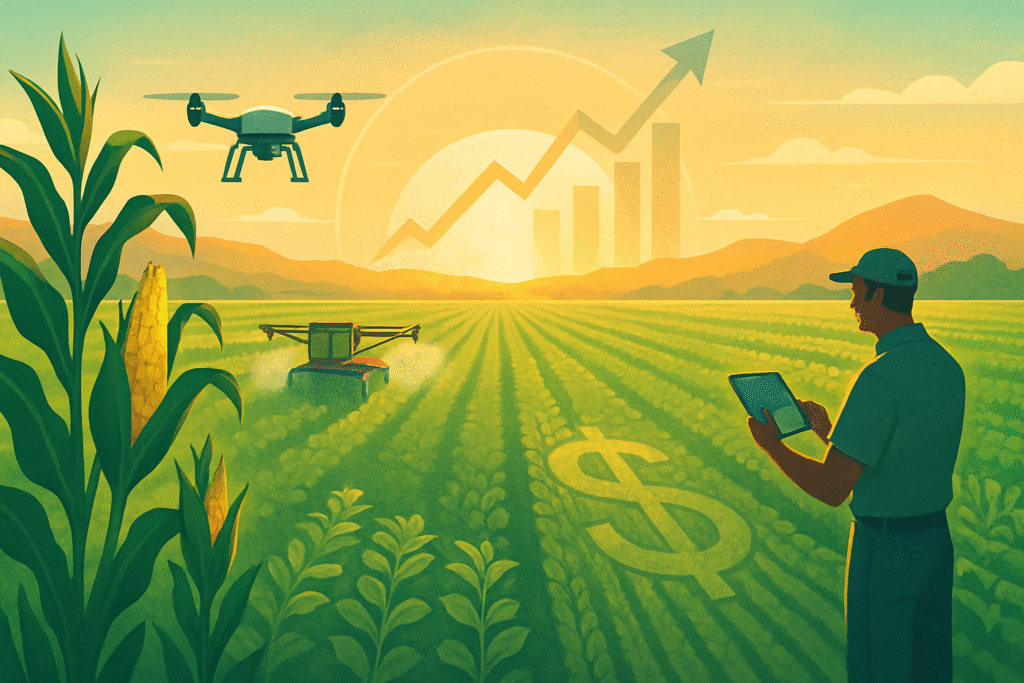
10/2/2025 – Corteva Agriscience (NYSE: CTVA) stands as a pivotal global agricultural technology company, dedicated to equipping farmers with an extensive array of seed, crop protection, and digital solutions. Emerging in 2019 as a strategic spin-off from DowDuPont, Corteva, headquartered in Indianapolis, Indiana, extends its operations across 110 countries. The company's core mission revolves around pioneering products for seeds and crop protection, encompassing herbicides, insecticides, fungicides, and biologicals, marketed under renowned brands such as Pioneer and Brevant. With approximately $17.23 billion in net sales in 2023 and a market valuation around $50 billion, Corteva is recognized as one of the top three global leaders in agricultural inputs. Corteva is currently at the center of investor attention due to its recently unveiled plan to bifurcate into two distinct, publicly traded entities. This significant corporate restructuring, unanimously approved by its board of directors, is slated for completion in the latter half of 2026. The separation will establish "New Corteva," focusing on the crop protection business with estimated 2025 net sales of $7.8 billion, and "SpinCo," which will house the seed business, anchored by the iconic Pioneer brand, projected to achieve $9.9 billion in net sales in 2025. This strategic move aims to sharpen the focus of each business, allowing for optimized strategies and capital allocation in response to the evolving agricultural landscape. Beyond this transformative split, Corteva's relevance is underscored by its continuous innovation in addressing global food security and sustainability challenges. The company allocates approximately 8% of its sales, roughly $4 million daily, to research and development, driving advancements in seed traits, crop protection, gene editing (e.g., CRISPR-Cas), precision agriculture, and biologicals. Corteva's commitment to "climate-positive farming" solutions, including naturally derived crop protection and lower-carbon feedstocks for biofuels, positions it as a key player in shaping the future of sustainable agriculture. 2. Historical BackgroundCorteva Agriscience's journey as an independent global agricultural leader commenced on June 1, 2019, following its strategic spin-off from DowDuPont. This establishment was the culmination of a multi-year vision to forge a specialized leader in agricultural science, integrating the extensive agricultural portfolios of Dow Chemical and DuPont. Founding Story: The genesis of Corteva traces back to the 2017 merger of Dow Chemical and DuPont, a union conceived with the explicit intent of subsequently segmenting into three distinct public companies: Dow (materials science), DuPont (specialty products), and Corteva Agriscience (agriculture). Corteva was formally constituted in March 2018 as a DowDuPont subsidiary, consolidating the agricultural divisions of both parent companies, including Dow AgroSciences and DuPont Pioneer. The name "Corteva," a blend of Latin "cor" (heart) and an ancient word "teva" (nature), encapsulates its mission in agricultural science and environmental stewardship. Upon its official launch, Corteva debuted with an estimated initial market capitalization of approximately $28 billion on the NYSE, bringing together a rich legacy of scientific innovation. Early Milestones: In its formative years, Corteva concentrated on integrating its vast product offerings, which included established seed brands like Pioneer and Brevant Sementes, alongside a broad spectrum of crop protection products. Significant early achievements included the introduction of the Enlist E3 soybean system, which swiftly became a leading trait system in the U.S. The company also expanded its global footprint by opening Seed Applied Technology Centers in France and Brazil in 2019. A notable strategic adjustment occurred in February 2020 when Corteva ceased chlorpyrifos production, a move influenced by declining sales and health concerns. By June 2024, Corteva marked five years of operations, having launched approximately 2,000 new products, achieved over $78 billion in cumulative net sales, and increased its annual operating EBITDA by 63%. Key Transformations Over Time: Corteva's history is characterized by its foundational transformation from a conglomerate's agricultural divisions into a specialized, independent entity, and its ongoing strategic evolution. The DowDuPont merger and subsequent spin-off (2017-2019) were the most defining, instantly positioning Corteva as a global leader. Post-spin-off, a major transformation involved integrating diverse legacy operations and intellectual property into a cohesive "pure-play" agriculture company. Corteva has also strategically expanded into the rapidly growing biologicals market through acquisitions like Stoller Group and Symborg. A sustained commitment to R&D, focusing on genomics, biotechnology, and new active ingredients, has been a constant. Looking ahead, the company's announced plan in October 2025 to split into two independent entities—"New Corteva" (crop protection) and "SpinCo" (seeds)—represents another profound transformation, aimed at further sharpening focus and maximizing long-term value. 3. Business ModelCorteva Agriscience operates a robust business model centered on delivering agricultural solutions to farmers worldwide, primarily through its Seeds and Crop Protection segments, supplemented by digital services and a broad customer base. Revenue Sources: Corteva's revenue is predominantly generated from the sale of essential agricultural products. In 2024, the company's net sales reached approximately $16.9 billion. The two main segments contribute significantly:
Product Lines: Corteva offers a comprehensive portfolio designed to enhance crop yields and protect against threats:
Services: Corteva integrates digital and advisory services to help farmers optimize operations:
Segments: Corteva operates through two primary segments:
Notably, Corteva announced in October 2025 a plan to separate these two businesses into independent, publicly traded companies by the second half of 2026. The crop protection business will retain the "New Corteva" name, while the seed-focused entity will be called "SpinCo." Customer Base: Corteva serves a diverse global customer base, including individual farmers, large-scale commercial operations, and agricultural cooperatives (approximately 3,200 worldwide). The company also partners with about 750 global agricultural businesses. With a presence in North America, Latin America, Europe (EMEA), Asia Pacific, and the Middle East, Corteva aims to build loyalty through high-performing, tailored solutions that enhance productivity and sustainability. 4. Stock Performance Overview10/2/2025 – Corteva Inc. (CTVA) initiated regular trading as an independent, publicly traded company on June 3, 2019, following its spin-off from DowDuPont. Its initial trading price was approximately $25.675. Therefore, any analysis of Corteva's 10-year performance inherently covers its entire history as a standalone entity. 1-Year Performance (Approximately October 2024 – October 2025): Over the past year, Corteva's stock has demonstrated growth, with reported increases of 4.72% to 6.00% by different sources. Including dividends and splits, the "1 Year Price Total Return" was approximately 41.4% as of Investing.com data. The stock reached a 52-week high of $77.41 and a low of $53.40. A significant event impacting the stock was the announcement on October 1, 2025, of its plan to separate into two independent companies. This news, initially reported on September 12, 2025, led to a 14.5% decline in the stock price from $74.29 to $63.14 by October 1, 2025, as investors weighed potential operational disruptions against long-term value creation. 5-Year Performance (Approximately October 2020 – October 2025): Corteva has exhibited strong growth over the last five years, with its stock price appreciating by 109.08%. An initial $1,000 investment at IPO in 2019 would have grown to approximately $1,535 by September 29, 2025, representing a compound annual growth rate of 16.77% over six years. The company has consistently increased its dividends for five consecutive years. During this period, Corteva reported robust financial results, though its crop protection segment faced competitive pricing and unfavorable currency impacts, while the seed business benefited from strong demand and increased corn acreage in North America. 10-Year Performance (Reflecting Spin-off in 2019): Since its inception in June 2019, Corteva's shares have surged over 133%. From its initial trading price in the mid-$20s, the stock has climbed into the $60-$70 range, hitting an all-time high of $76.93 in July 2025. This trajectory underscores significant value generation for shareholders since its spin-off. Overall, Corteva's performance has been bolstered by operational discipline, cost reduction, and continuous R&D investment, particularly in new products and biological solutions. The impending separation is the most recent and impactful event, poised to redefine its future strategic direction and financial performance. 5. Financial Performance10/2/2025 – Corteva (NYSE: CTVA) has demonstrated a dynamic financial performance, marked by strategic operational execution and resilience in a complex market. The company's financials reflect its position as a pure-play agriculture company. Latest Earnings and Revenue Growth (Q2 2024 & FY 2024):
Margins: Corteva shows varying margin performance:
Debt: Corteva manages its debt prudently:
Cash Flow: Corteva has increased its free cash flow:
Key Valuation Metrics:
Corteva's upcoming separation into two companies is expected to further drive margin expansion and sustainable growth. 6. Leadership and ManagementCorteva, Inc. is guided by a well-defined leadership structure, an evolving corporate strategy, and a robust governance framework. Corteva's CEO: Chuck Magro currently serves as Chief Executive Officer, appointed in November 2021. Under his leadership, Corteva has achieved substantial growth and margin expansion, particularly with its Pioneer brand dominating corn and soybean technology in the U.S. The company has returned nearly $4 billion in cash to shareholders between 2021 and 2024. Following the announced strategic separation, Magro is slated to become the CEO of "SpinCo," the independent seed genetics business, post-split in the second half of 2026. Leadership Team: Corteva's leadership team is instrumental in shaping the company's strategic direction, focusing on innovation, diversity, and sustainable practices. Key members include David Johnson (CFO), Sam Eathington (CTO & Digital Officer), Robert King (Crop Protection BU), Judd O'Connor (Seed BU), Audrey Grimm (Chief People Officer), Cornel B. Fuerer (Strategic Advisor & Corporate Secretary), and Jeff Rudolph (Chief Strategy Officer). The management team boasts an average tenure of approximately 3.4 years. Board of Directors: The Board provides critical strategic oversight and governance, ensuring the company's mission to enhance farmer productivity and develop sustainable global food systems is met. The average tenure of the board is 5.9 years. Gregory R. Page, the Non-Executive Chair, a former Chairman and CEO of Cargill, is expected to lead "New Corteva" (the crop protection business) as its chairman post-split. Other notable board members include Lamberto Andreotti, Klaus A. Engel, and Michael O. Johanns. Corporate Strategy: Corteva's most significant strategic move is the announced separation into two independent, publicly traded companies by mid-2026. This split aims to allow "New Corteva" (crop protection) and "SpinCo" (seeds) to pursue distinct market strategies with dedicated leadership and capital allocation. This aligns with Corteva's broader strategy of cost reductions, portfolio simplification, and technology investment. The company also focuses on expanding its product portfolio, market reach, and investing heavily in R&D, aiming to launch 20 new products with substantial revenue potential in 2024 and 2025. Disciplined capital allocation, including targeted M&A and share repurchases, and investment in its digital agriculture platform, Granular, are also key strategic pillars. Governance Reputation: Corteva maintains robust corporate governance arrangements, aligning with regulatory requirements and its enterprise risk management program. The Board of Directors oversees risks related to business strategy, reputation, and sustainability. Committees like the Sustainability and Innovation (S&I) Committee, Audit Committee, People and Compensation Committee, and Governance and Compliance Committee play crucial roles in overseeing ESG goals, financial risks, human capital management, ethics, and enterprise risk management. Corteva's ESG Risk Rating from Sustainalytics reflects its commitment to strong environmental, social, and governance performance. 7. Products, Services, and Innovations10/2/2025 – Corteva Agriscience maintains a comprehensive portfolio of products and services, driven by a robust innovation pipeline, significant R&D investments, a strong patent estate, and a competitive edge rooted in advanced agricultural technologies. Corteva's Current Product and Service OfferingsCorteva's offerings span two primary segments: Seeds and Crop Protection, complemented by a growing suite of digital solutions.
Innovation PipelinesCorteva's R&D pipeline addresses global agricultural challenges such as food security and climate change. Key areas of innovation include:
R&D InvestmentsCorteva invests approximately 8% of its sales into R&D, equating to roughly $4 million daily. Annual R&D expenses for 2024 were $1.402 billion, projected to increase to $1.423 billion for the twelve months ending June 30, 2025. The company recently broke ground on a $27.5 million Process Research & Development Lab in Midland, set for completion in early 2027. PatentsCorteva holds a substantial global intellectual property portfolio with 2,799 patents worldwide, 1,915 of which are active across 625 unique patent families. The U.S., Europe, and China are key regions for its patent filings. Corteva, alongside Bayer, controls nearly 80% of patents related to genetically engineered crops. Competitive Edge Through TechnologyCorteva maintains its leading position through:
8. Competitive Landscape10/2/2025 – Corteva Agriscience operates within a highly concentrated and intensely competitive global agricultural inputs industry. Its primary rivals include a handful of multinational corporations that dominate the market for seeds, crop protection products, and digital farming solutions. Key Competitors and Their Market ShareThe agricultural inputs market is largely controlled by four major players: Bayer, Corteva, Syngenta Group, and BASF. These companies hold significant sway in both the global seed and pesticide markets.
In the U.S. corn seed market (2018-2020), Corteva and Bayer together accounted for 71.6% of sales, and 65.9% of U.S. soybean seed sales. Corteva's Competitive Strengths
Corteva's Competitive Weaknesses
9. Industry and Market Trends10/2/2025 – The agricultural inputs industry is undergoing profound transformations, shaped by a complex interplay of sector-level trends, macro drivers, supply chain dynamics, and cyclical effects. These forces dictate the landscape for suppliers of seeds, fertilizers, crop protection, and agricultural machinery. Sector-Level Trends1. Fertilizers: The market is projected to reach $246.6 billion by 2033 (CAGR 3.07% from 2025). Key trends include a shift towards sustainable agriculture, boosting demand for organic and bio-based fertilizers and slow-release formulations. Precision agriculture can reduce fertilizer volumes by up to 5% by 2040. Geopolitical instability also influences the market. 2. Seeds: Expected to reach $53.53 billion by 2033 (CAGR 1.53% from 2025). Trends include surging demand for hybrid and high-yield seeds, increased adoption of genetically modified (GM) seeds, and rising demand for organic/non-GMO varieties. R&D in seed treatment and climate-resilient varieties is significant. 3. Crop Protection: Projected to grow from $87.6 billion in 2023 to $114.7 billion by 2028 (CAGR 5.5%). Strong growth is seen in biological crop protection products, driven by sustainable farming demands and reduced environmental impact. Precision agriculture and RNA-based solutions are also emerging. 4. Agricultural Machinery: Valued at $152.89 billion in 2025, projected to grow at a CAGR of 4.9% through 2033. Trends include AI-powered and autonomous machinery, electrification, and precision agriculture with smart sensors. Automation addresses labor shortages, while high input costs lead farmers to extend machine lifespans or invest in used equipment. Macro Drivers
Supply ChainsAgricultural input supply chains face disruptions from geopolitical uncertainties, high freight costs, raw material concentration (e.g., phosphates), and labor shortages. Efficient inventory management and improved communication among trading partners are crucial. Cyclical Effects
In essence, the agricultural inputs industry is navigating a period of significant transformation. While population growth and technological advancements offer opportunities, challenges like climate change, supply chain vulnerabilities, and commodity market cyclicity demand constant adaptation and innovation. The overarching shift towards sustainable and precision agriculture is a defining theme across all input sectors. 10. Risks and Challenges10/2/2025 – Corteva faces a diverse set of risks and challenges inherent to the agribusiness sector, spanning operational complexities, stringent regulatory landscapes, potential controversies, and dynamic market conditions. Operational RisksCorteva's global supply chain is vulnerable to disruptions, leading to increased costs and raw material shortages. Events such as energy supply issues or China's export allocations can severely impact manufacturing and distribution. The planned separation of its seed and crop protection businesses into two independent companies by mid-2026, while strategic, introduces operational risks like the potential loss of synergies between integrated segments. This could complicate the development of combined solutions and potentially weaken Corteva's competitive standing against fully integrated rivals. The company also faces general risks from industrial espionage and IT system disruptions. Regulatory RisksCorteva operates in a highly regulated industry globally:
Potential ControversiesCorteva has been involved in several controversies:
Market Risks
11. Opportunities and Catalysts10/2/2025 – Corteva Agriscience is actively pursuing a multi-faceted strategy to drive growth, expand into new markets, and enhance shareholder value, underpinned by a significant corporate restructuring. Growth LeversCorteva's growth strategy is built on expanding its product portfolio, increasing market reach, and substantial R&D investment. The company projects net sales growth of 6% to 8% and operating EBITDA growth of 9% to 11% through 2027.
New MarketsCorteva is focused on geographical and product portfolio expansion:
M&A PotentialCorteva's financial strategy includes disciplined capital allocation, with a focus on targeted mergers and acquisitions.
Near-term Events
Corteva's reaffirmation of its full-year 2025 guidance and its 2027 value framework, through these strategic initiatives and the upcoming separation, demonstrates confidence in its future growth trajectory. 12. Investor Sentiment and Analyst Coverage10/2/2025 – Investor sentiment surrounding Corteva (NYSE: CTVA) is generally optimistic, characterized by positive Wall Street ratings, dynamic hedge fund activity, substantial institutional ownership, and varied retail investor commentary. Wall Street RatingsCorteva consistently receives a favorable outlook from Wall Street analysts, with a consensus rating often cited as a "Moderate Buy" or "Strong Buy." The average price target typically ranges from $80.36 to $83.07, with a high forecast of $92.00 and a low of $67.00. Firms like Barclays, Oppenheimer, KeyCorp, Royal Bank of Canada, Morgan Stanley, Jefferies, Goldman Sachs, and Wolfe Research have reiterated or upgraded their ratings, often viewing recent stock pullbacks as buying opportunities, even amidst discussions of a potential seed spin-off. While generally positive, some analysts note "inconsistent optimism" regarding the timing or magnitude of stock movements. Hedge Fund MovesHedge funds have shown considerable interest, with both buying and selling activity. Nuveen LLC and Norges Bank recently initiated significant new positions in Q1 and Q2, respectively. WCM Investment Management LLC and PGGM Investments also substantially increased their holdings. Conversely, hedge funds collectively reduced their holdings by 5.0 million shares in the last quarter, with firms like Harris Associates and Anomaly Capital Management decreasing their positions. Millennium Management, however, increased its stake. Hassan Ahmed Elmasry, Charles Brandes, and Theofanis Kolokotrones are among the hedge fund managers holding significant shares. Institutional InvestorsInstitutional investors hold a substantial portion of Corteva's stock, ranging from approximately 53.93% to 87.33% of total shares outstanding, indicating strong professional interest. Key institutional shareholders include Vanguard Group Inc., BlackRock, Inc., State Street Corp, Capital World Investors, and Franklin Resources Inc. While overall fund sentiment suggests high institutional accumulation, recent "big-money" flows have been negative across all investor sizes, signaling a degree of caution ahead of earnings or macroeconomic developments. Retail ChatterRetail investors constitute a notable segment, holding approximately 21.69% to 24.24% of Corteva's stock. While retail (small) investor flows have shown positive signs, recent overall money flow trends, including from retail investors, have been negative. On platforms like Stocktwits, retail sentiment for Corteva was recently "bearish" following the announcement of the planned separation of its crop protection and seed businesses. Retail investors actively engage in discussions on various platforms to share opinions and insights on CTVA, indicating ongoing interest and debate. 13. Regulatory, Policy, and Geopolitical Factors10/2/2025 – The global agricultural market, and consequently major players like Corteva, are profoundly shaped by a complex web of laws, compliance demands, government incentives, and geopolitical dynamics, presenting both significant risks and strategic opportunities. Global Agricultural Market: Laws, Compliance, and Government IncentivesLaws and Compliance: International agricultural laws govern trade practices, food safety, environmental protection, and animal welfare. Organizations like the FAO and WTO provide guidance. Compliance is crucial to access global markets and avoid penalties. Examples include the EU's stringent pesticide regulations, U.S. GMO labeling laws, China's strengthened food safety rules, and Brazil's environmental regulations. International trade laws impose tariffs, quotas, and non-tariff barriers that influence competitiveness. Government Incentives: Governments worldwide provide substantial support to agriculture, shifting focus from developed to emerging economies like China and India. Incentives for sustainable practices, such as carbon markets, are growing. Grant programs target new farmers, sustainable agriculture, and R&D. Multilateral funds like GAFSP provide grants to low-income countries for food security investments. Global Agricultural Market: Geopolitical Risks and OpportunitiesGeopolitical Risks: Intensified since 2022, these include conflicts (e.g., Middle East, Russia-Ukraine war) disrupting trade and pressuring food and fertilizer prices. Protectionism, through tariffs and export bans, fragments markets. Climate change acts as a "threat multiplier," causing extreme weather events that decimate harvests and degrade soil. Weakening global economic growth, rising trade barriers, and volatile input costs also contribute to market fragility. Geopolitical Opportunities: Strategies focus on enhancing resilience and sustainability. Diversification of crops, production locations, and supplier networks are key. Investing in renewable energy, nutrient recycling, and sustainable agriculture techniques helps mitigate risks. Trade facilitation measures and increased international collaboration are crucial for a stable global trade environment. Corteva: Regulatory and Geopolitical FactorsLaws, Compliance, and Regulatory Factors Affecting Corteva:
Government Incentives Affecting Corteva:
Geopolitical Risks and Opportunities for Corteva:
14. Outlook and Scenarios10/2/2025 – Corteva, Inc. (NYSE: CTVA) is navigating a transformative period, with its planned separation into two independent, publicly traded companies by mid-2026 being the most significant strategic pivot. Bull Case Scenarios: The bull case for Corteva hinges on the successful execution of its operational specialization post-split. This separation into "New Corteva" (crop protection) and "SpinCo" (seeds) is expected to unlock long-term shareholder value by allowing each entity to optimize capital allocation and respond more nimbly to market dynamics. Continued innovation in its product pipeline, particularly in gene editing, hybrid wheat, and the rapidly growing biologicals segment (targeting $1 billion in annual revenues by 2030), will drive growth. Strong financial performance, supported by disciplined capital allocation and share repurchases, and its robust global market presence, especially in Asia and Latin America, further bolster the optimistic outlook. Bear Case Scenarios: The bear case emphasizes risks associated with the separation, including potential dis-synergies, transaction costs, and challenges in strategic execution that could weaken its competitive position against integrated rivals. A challenging agricultural macroeconomic environment, characterized by subdued farm income, weaker grain prices, and declining export demand, could negatively impact results through 2026. Supply chain disruptions, intense competitive pressures, and regulatory hurdles (such as the U.S. government antitrust investigation and environmental liabilities related to PFAS and pesticides) also pose significant risks. Furthermore, climate change presents a long-term threat to agricultural productivity, demanding continuous adaptation. Short-Term Versus Long-Term Projections:
Potential Strategic Pivots: The formal separation into two entities is the most significant pivot. Beyond this, Corteva may intensify its focus on biologicals and sustainable agriculture, increase investment in gene editing and hybrid wheat, and pursue more targeted strategic partnerships and acquisitions post-split. Optimizing external manufacturing partnerships for a capital-light model and potentially concentrating resources on high-growth geographic markets are also possible strategic adjustments. 15. Conclusion10/2/2025 – Corteva Agriscience (NYSE: CTVA) stands at a pivotal juncture, poised to redefine its corporate structure and strategic direction. As a leading global provider of seeds and crop protection, the company plays a crucial role in addressing global food security and sustainable agriculture. Summary of Key FindingsCorteva's business is robust, generating approximately $17 billion in annual net sales, primarily from its Seeds and Crop Protection segments. The most impactful development is the announced plan to separate into two independent, publicly traded companies—"New Corteva" (crop protection) and "SpinCo" (seeds)—by the second half of 2026. This move is designed to unlock shareholder value by allowing each entity to pursue specialized strategies. The company boasts a strong R&D pipeline, with significant investments in biologicals, gene editing, and hybrid wheat, aiming for substantial growth in these innovative areas. Financially, Corteva exhibits strength with solid margins, manageable debt, and consistent cash flow, supported by a history of dividend increases and share repurchases. Balanced PerspectiveCorteva presents a compelling, albeit complex, investment case. Its strengths lie in a strong market position, extensive R&D, and a commitment to sustainable solutions. The upcoming separation, while potentially value-accretive in the long term, introduces short-term uncertainties, including potential dis-synergies and execution risks. The company operates in a highly competitive and regulated industry, facing challenges from commodity price volatility, supply chain disruptions, and significant environmental liabilities, particularly for the crop protection segment. While analyst sentiment is largely positive, the stock's current valuation suggests it may be priced at a premium. What Investors Should Watch Going ForwardInvestors should closely monitor the following critical aspects:
Corteva's journey ahead is one of strategic transformation, aiming to unlock greater value through specialization and innovation. While the path involves inherent risks, the potential for focused growth in critical agricultural sectors remains a compelling narrative for long-term investors. This content is intended for informational purposes only and is not financial advice More NewsView More
MarketBeat’s Top 5 Rated Small-Cap Stocks ↗
Today 13:12 EST

RKLB, ASTS, TDG: Insiders are Selling These 3 Space Stocks ↗
Today 12:17 EST

Via MarketBeat

Via MarketBeat

Amazon Now Delivery Push Could Boost Its 2026 Outlook ↗
Today 9:17 EST
Via MarketBeat
Tickers
AMZN
Recent QuotesView More
Stock Quote API & Stock News API supplied by www.cloudquote.io
Quotes delayed at least 20 minutes. By accessing this page, you agree to the Privacy Policy and Terms Of Service.
© 2025 FinancialContent. All rights reserved.
|
 weed control system and Pioneer Protector® traits for disease resistance.