Intel Corporation (INTC): A High-Stakes Transformation in the Semiconductor Arena
By:
PredictStreet
December 10, 2025 at 11:37 AM EST
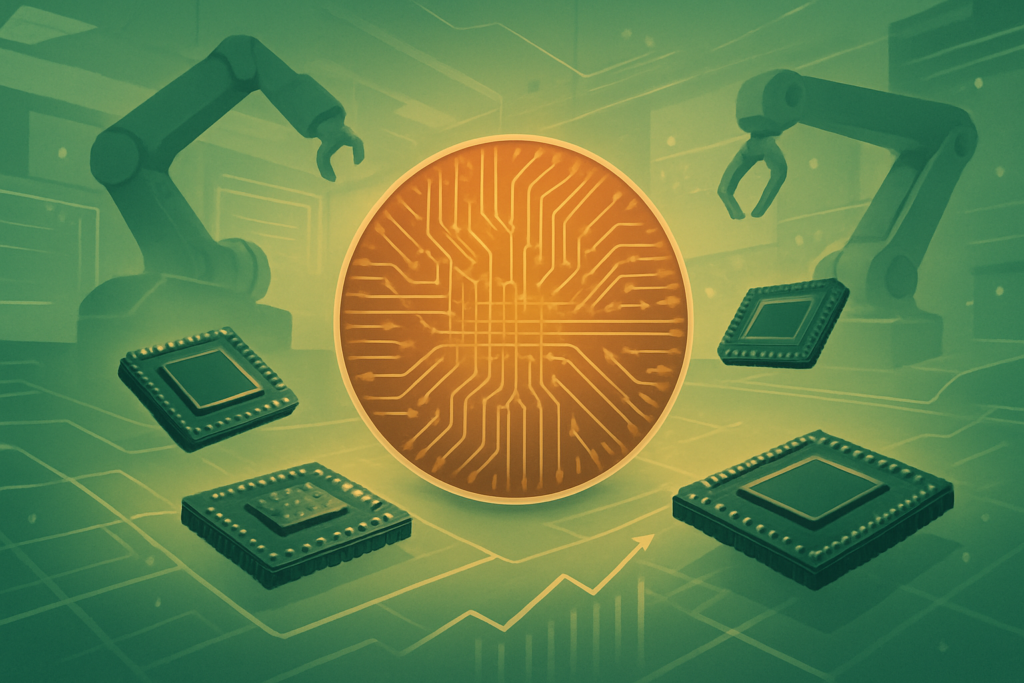
Date: 12/10/2025 1. IntroductionIntel Corporation (NASDAQ: INTC), a multinational technology giant headquartered in Santa Clara, California, stands at a critical juncture in its storied history. As of December 10, 2025, the company is deeply entrenched in a strategic transformation, battling fierce competition, and striving to reclaim its technological supremacy and market leadership. Once the undisputed titan of the semiconductor industry, Intel is now recalibrating its core business, making an aggressive push into AI, and embarking on an ambitious journey to become a leading contract chip manufacturer through its Intel Foundry Services (IFS) initiative. This comprehensive research feature will delve into Intel's past, analyze its present challenges and opportunities, and explore its future trajectory in the intensely competitive and rapidly evolving global technology landscape. 2. Historical BackgroundIntel Corporation’s journey began on July 18, 1968, founded by semiconductor pioneers Robert Noyce and Gordon Moore, joined by investor Arthur Rock and later, Andrew Grove. Initially, the company focused on memory chips, notably introducing the 1103, the world's first commercially available DRAM, in 1970. A pivotal moment arrived in 1971 with the Intel 4004, the world's first commercially available microprocessor. This 4-bit processor, initially designed for a Japanese calculator company, laid the groundwork for modern computing. Intel rapidly iterated, releasing the 8-bit 8008 in 1972 and the general-purpose 8080 in 1974, which powered early personal computers like the Altair 8800. In 1978, the 16-bit 8086 introduced the enduring x86 instruction set architecture. The 1980s solidified Intel's dominance with the IBM PC's adoption of the 8088 processor in 1981, forging the powerful "Wintel" alliance with Microsoft. Subsequent processors like the 80286 (1982) and 80386 (1985) further cemented Intel's position, bringing multitasking and 32-bit processing to the forefront. The 1990s saw the iconic "Intel Inside" campaign and the launch of the Pentium processor in 1993, which became synonymous with personal computing. However, as the PC market matured in the 2000s and 2010s, Intel faced challenges, struggling to gain traction in the mobile market against ARM-based architectures and experiencing manufacturing delays that allowed rivals like AMD and TSMC to gain ground. The 2020s ushered in a period of significant transformation. In 2021, CEO Pat Gelsinger launched the "IDM 2.0" strategy, focusing on internal manufacturing, expanded use of external foundries, and the establishment of Intel Foundry Services (IFS). This strategy included massive investments in new fabrication facilities and a renewed push for process technology leadership. In December 2024, Gelsinger retired, and Lip-Bu Tan was appointed CEO in March 2025, initiating a strategic reset with an emphasis on operational efficiency, an "AI-first strategy," and tying foundry investments to customer commitments. 3. Business ModelIntel's business model as of December 10, 2025, centers on the design, manufacture, and sale of essential computer components and technologies, underpinned by an ambitious strategic pivot towards becoming a leading foundry services provider and a dominant force in AI-enabled computing. Revenue SourcesIntel's revenue primarily stems from the sale of microprocessors, chipsets, and related silicon products. In Q3 2025, the company reported total revenue of $13.7 billion, a 3% year-over-year increase. Beyond direct product sales, Intel also generates net interest income and has secured substantial capital through strategic investments, including a 9.9% equity stake from the U.S. government and partnerships with Nvidia and SoftBank. Product LinesIntel's extensive product portfolio includes:
ServicesIntel is expanding its service offerings, particularly in contract manufacturing and cloud-based management:
SegmentsIntel's business is structured around key reporting segments:
Customer BaseIntel serves a broad range of customers:
4. Stock Performance OverviewIntel's stock performance over the past decade, and particularly in the last five years, has been a rollercoaster, reflecting periods of dominance, intense challenges, and a recent, dramatic turnaround effort as of December 10, 2025. 1-Year Stock Performance (December 2024 – December 2025)The past year has been a period of significant rebound for INTC. After a challenging 2024, the stock has seen a remarkable rally in 2025.
5-Year Stock Performance (December 2020 – December 2025)Over the past five years, Intel's stock has delivered a negative total return, reflecting significant competitive and execution struggles before the 2025 rebound.
10-Year Stock Performance (December 2015 – December 2025)Intel's long-term performance reflects its historical dominance, subsequent challenges, and the initial phases of its current strategic reorientation.
5. Financial PerformanceIntel's financial performance as of December 10, 2025, presents a picture of a company in transition, marked by efforts to stabilize revenue, manage costs, and invest heavily in future growth. Latest Earnings and Revenue Growth
MarginsIntel's margins reflect the costs associated with its transformation and competitive pressures:
Debt
Cash Flow
Valuation MetricsAs of early December 2025, with the stock around $40-$41:
6. Leadership and ManagementIntel's leadership has undergone significant changes, with a renewed focus on strategic execution and an "AI-first" approach as of December 10, 2025. CEO and Leadership TeamLip-Bu Tan was appointed Chief Executive Officer in March 2025, bringing extensive industry experience from his tenure as CEO of Cadence Design Systems. He replaced interim co-CEOs David Zinsner (CFO) and Michelle Johnston Holthaus (CEO, Intel Products). The leadership team also includes Sachin Katti (CTO and AI Officer), Ann Kelleher (EVP, Technology Development), and Naga Chandrasekaran (EVP, CTO & Operations Officer, with an expanded role in Foundry Services). Board of DirectorsFrank D. Yeary serves as the Independent Chair. The board was reduced from 14 to 11 members in March 2025, with new appointments like Eric Meurice (former CEO of ASML) and Steve Sanghi (interim CEO of Microchip Technology) bringing deep industry expertise. Lip-Bu Tan also rejoined the board upon his CEO appointment. StrategyUnder Tan, Intel has adopted an "AI-first strategy" with key elements:
Governance ReputationIntel maintains a strong commitment to ethical practices, being named one of the "World's Most Ethical Companies" for 15 consecutive years. However, it has faced scrutiny regarding:
7. Products, Services, and InnovationsIntel's product development and innovation pipeline as of December 10, 2025, are heavily geared towards regaining process leadership and dominating the AI computing landscape. Current Product Offerings
Innovation Pipelines and R&DIntel is aggressively pursuing its "five-nodes-in-four-years" process technology roadmap:
R&D and Patents
Competitive EdgeIntel is leveraging several strategies:
8. Competitive LandscapeIntel operates in a hyper-competitive semiconductor industry, facing formidable rivals across all its core segments as of December 10, 2025. Industry Rivals
Market Share (as of Q3 2025, unless noted)Intel has experienced market share erosion:
Competitive Strengths
Competitive Weaknesses
9. Industry and Market TrendsThe semiconductor industry, and Intel within it, is being shaped by powerful sector-level trends, macroeconomic forces, evolving supply chain dynamics, and inherent cyclical effects as of December 10, 2025. Sector-Level Trends (Semiconductor Industry)The semiconductor market is projected to reach approximately $697 billion in 2025 (11% YoY increase) and potentially $1 trillion by 2030 (7-9% CAGR beyond 2025).
Intel Corporation (INTC) Specific Trends
Macro Drivers
Supply ChainsFocus on resilience and diversification:
Cyclical EffectsThe industry is in a "growth acceleration phase" in late 2024/2025, favorable for semiconductor stocks, driven by smartphones, PCs, and edge AI. However, oversupply risks exist from new fabs, and the outlook beyond 2025 is less clear, underscoring cyclical unpredictability. 10. Risks and ChallengesIntel's ambitious transformation is fraught with significant operational, regulatory, and market risks, alongside past controversies, as of December 10, 2025. Operational Risks
Regulatory Risks
Controversies
Market Risks
11. Opportunities and CatalystsIntel's strategic transformation presents several significant opportunities and near-term catalysts that could drive future growth and investor confidence as of December 10, 2025. Growth Levers
New Markets
M&A Potential
Near-Term Events (as of 12/10/2025)
12. Investor Sentiment and Analyst CoverageInvestor sentiment towards Intel (INTC) as of December 10, 2025, is cautiously optimistic following a significant stock rally in 2025, yet Wall Street analysts remain largely on the fence, reflecting the company's ongoing high-stakes transformation. Wall Street Ratings
Hedge Fund Moves
Institutional Investors
Retail Chatter
13. Regulatory, Policy, and Geopolitical FactorsIntel's global operations are profoundly influenced by a complex interplay of regulatory, policy, and geopolitical factors as of December 10, 2025. Regulatory and Policy Landscape
Government Incentives
Geopolitical Risks and Opportunities
14. Outlook and ScenariosIntel's outlook as of December 10, 2025, is defined by a high-stakes strategic transformation, leading to widely divergent bull and bear scenarios across short-term and long-term horizons. Bull CaseThe optimistic scenario for Intel rests on:
Bear CaseThe pessimistic scenario highlights substantial risks:
Short-Term vs. Long-Term Projections (as of 12/10/2025)Short-Term (2025-2026):
Long-Term (2027-2030 and beyond):
Strategic Pivots as of 12/10/2025Intel's strategic pivots are integral to its IDM 2.0 strategy:
15. ConclusionAs of December 10, 2025, Intel Corporation (INTC) is a company in the throes of a profound, high-stakes transformation. The appointment of Lip-Bu Tan as CEO has injected a renewed sense of urgency and strategic clarity, particularly in cost management, organizational streamlining, and a pragmatic "AI-first" approach that avoids direct confrontation with Nvidia's stronghold while focusing on the broader AI ecosystem. The Q3 2025 earnings beat, coupled with substantial government funding and strategic partnerships, signals a positive shift in momentum and has fueled a significant rally in the stock price this year. The ambitious Intel Foundry Services (IFS) initiative, aiming to reclaim manufacturing leadership with the 18A process node, represents both Intel's greatest opportunity and its most significant challenge. Balanced Perspective: What Investors Should Watch:
In conclusion, Intel is engaged in a marathon, not a sprint. While the recent momentum offers a glimmer of hope, the path to regaining its former glory is long, capital-intensive, and fraught with challenges. A balanced, vigilant approach is warranted for investors considering INTC's future. This content is intended for informational purposes only and is not financial advice More NewsView More
Via MarketBeat
2 Stocks to Avoid as Crypto Momentum Wanes ↗
December 21, 2025
Via MarketBeat
3 Dividend Growth Stocks Analysts Are Upgrading for 2026 ↗
December 21, 2025
Via MarketBeat

These 3 Banks Are Rallying Into Year-End, But Will It Continue? ↗
December 20, 2025
Via MarketBeat
Recent QuotesView More
Stock Quote API & Stock News API supplied by www.cloudquote.io
Quotes delayed at least 20 minutes. By accessing this page, you agree to the Privacy Policy and Terms Of Service.
© 2025 FinancialContent. All rights reserved.
|