Tesla Inc. (TSLA): Navigating the Future of Electrification, AI, and Robotics
By:
PredictStreet
December 10, 2025 at 10:40 AM EST
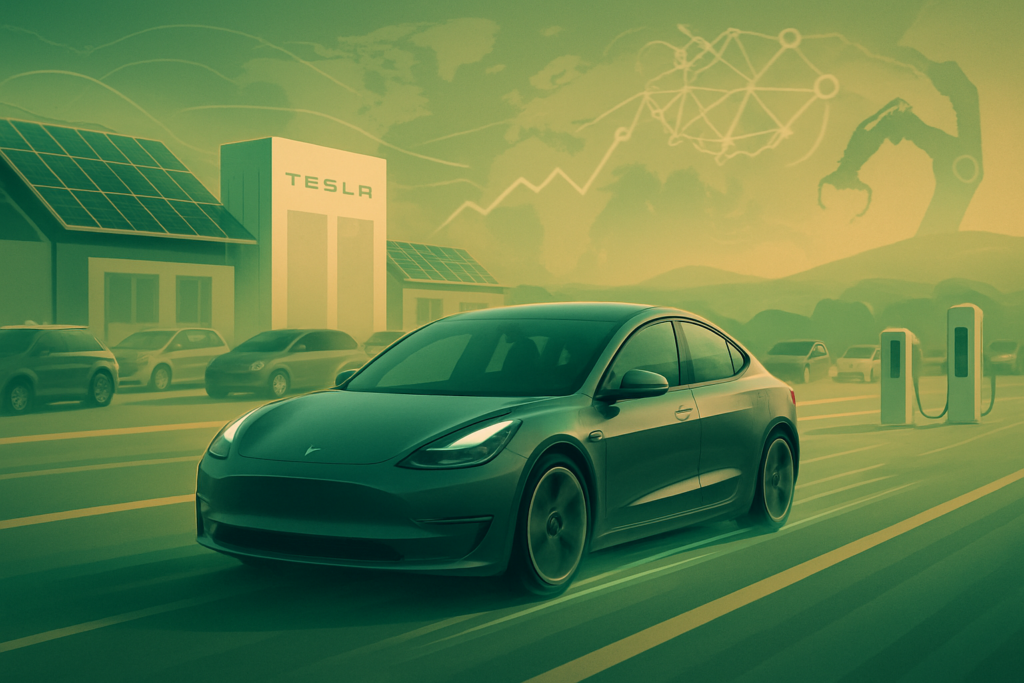
Date: 12/10/2025 1. IntroductionAs of December 10, 2025, Tesla Inc. (NASDAQ: TSLA) remains a company of intense focus and significant global relevance, transcending its origins as an electric vehicle (EV) manufacturer to become a pivotal player in artificial intelligence (AI), robotics, and sustainable energy solutions. Headquartered in Austin, Texas, Tesla’s multifaceted operations span the design, manufacture, and sale of battery electric vehicles, stationary battery energy storage, solar panels, and solar shingles. Under the leadership of CEO Elon Musk, Tesla’s direct-to-consumer sales model, bolstered by its extensive Supercharger network, has reshaped the automotive industry. The company is currently in the spotlight due to ambitious new product launches like the Cybertruck and the anticipated affordable EV (potentially "Model 2" or "Model Q"), alongside significant strides in autonomous driving with its Robotaxi service and the Optimus humanoid robot. While maintaining a strong position in the EV market, Tesla faces escalating competition, particularly from Chinese manufacturers, and navigates ongoing supply chain complexities and macroeconomic shifts. Its valuation increasingly hinges on the successful execution of its futuristic AI and robotics ventures, making it a compelling, albeit volatile, investment case. 2. Historical BackgroundTesla Motors, Inc. was founded on July 1, 2003, by engineers Martin Eberhard and Marc Tarpenning, with the vision of building a technology company focused on battery and electric motor expertise. Elon Musk joined in February 2004, leading the initial funding round and becoming chairman. He assumed the CEO role in October 2008. Early milestones included the unveiling of the all-electric Roadster prototype in 2006, followed by its production launch in 2008, establishing Tesla as a pioneer in high-performance EVs. Critical investments from Daimler AG and a $465 million loan from the U.S. Department of Energy bolstered its early growth. In June 2010, Tesla went public on NASDAQ, raising $226 million. The launch of the Model S in 2012, alongside the rollout of the Supercharger fast-charging network, solidified its market presence. By 2015, Tesla expanded into energy storage with Powerwall and Powerpack. Key transformations include the 2016 acquisition of SolarCity, rebranding to Tesla, Inc. in 2017 to reflect its broader clean energy focus. The introduction of mass-market vehicles like the Model 3 (2017) and Model Y (2020) propelled significant volume growth. Tesla embarked on a global manufacturing expansion with Gigafactories in Nevada, Shanghai (producing its four millionth vehicle by December 2025), Berlin, and Texas, where its corporate headquarters relocated in 2021. Further diversification saw the unveiling of the Tesla Semi (2017) and Cybertruck (2019). Financially, Tesla became the world's largest automaker by market capitalization in 2020 and joined the S&P 500, reaching a $1 trillion valuation by 2021. Recent developments include updates to existing models, the anticipated next-generation Roadster (unveiling April 2026), and ongoing executive changes, shaping its trajectory as a technology and manufacturing powerhouse. 3. Business ModelAs of December 10, 2025, Tesla Inc. (NASDAQ: TSLA) operates a vertically integrated, direct-to-consumer business model that extends beyond electric vehicles into comprehensive energy solutions and advanced AI-driven technologies. Revenue Sources:
Product Lines:
Services:
Segments:
Customer Base: 4. Stock Performance OverviewAs of December 10, 2025, Tesla Inc. (NASDAQ: TSLA) has demonstrated a highly dynamic stock performance over the past decade, characterized by periods of explosive growth, significant volatility, and a strong correlation with its technological advancements and market sentiment. The stock has undergone two splits: a 5-for-1 split on August 31, 2020, and a 3-for-1 split on August 25, 2022. All performance figures are split-adjusted. 1-Year Stock Performance (December 10, 2024 – December 10, 2025):
5-Year Stock Performance (December 10, 2020 – December 10, 2025):
10-Year Stock Performance (December 10, 2015 – December 10, 2025):
In summary, Tesla's stock performance reflects its journey from EV pioneer to a diversified technology giant, with recent movements increasingly influenced by its AI and robotics ambitions in a competitive and evolving market. 5. Financial PerformanceAs of December 10, 2025, Tesla Inc. (NASDAQ: TSLA) has demonstrated a mixed financial performance, with strong top-line growth often accompanied by margin pressures and a high valuation that anticipates future technological breakthroughs. The latest available full results are for Q3 2025, which concluded on September 30, 2025. Latest Earnings (Q3 2025):
Revenue Growth (Q3 2025):
Margins (Q3 2025):
Debt (as of Q3 2025):
Cash Flow (Q3 2025):
Valuation Metrics (as of 12/10/2025):
Despite strong revenue growth from record vehicle deliveries and energy storage deployments, Tesla faced profitability challenges in Q3 2025 due to ongoing price cuts, increased operating expenses, and reduced regulatory credit revenue. The company's valuation remains heavily influenced by its strategic focus on AI, autonomous driving (Robotaxi), and robotics (Optimus), which are perceived as key long-term growth drivers. 6. Leadership and ManagementAs of December 10, 2025, Tesla Inc. (NASDAQ: TSLA) continues to be steered by its charismatic and often controversial CEO, Elon Musk, whose vision heavily influences the company's strategic direction towards autonomous driving, artificial intelligence, and sustainable energy. CEO: Elon Musk Leadership Team
Board of Directors
Strategy
Governance Reputation 7. Products, Services, and InnovationsAs of December 10, 2025, Tesla Inc. (NASDAQ: TSLA) maintains its competitive edge through a relentless pursuit of innovation across its electric vehicle, energy, and artificial intelligence ecosystems. Current Product and Service Offerings:
Innovation Pipelines and R&D Efforts:
Patents:
Competitive Edge:
However, intensifying competition and pressure on margins necessitate continuous execution in cost reduction and delivering on ambitious technological innovations. 8. Competitive LandscapeAs of December 10, 2025, Tesla Inc. (NASDAQ: TSLA) operates within an intensely competitive and rapidly evolving global landscape, facing significant challenges from both established automotive giants and aggressive new entrants, particularly from China. Competitive Landscape Overview: Industry Rivals:
Market Share (as of late 2025):
Competitive Strengths:
Competitive Weaknesses:
Tesla's ability to navigate these competitive pressures, while successfully executing on its AI and robotics ambitions, will be crucial for its future market position. 9. Industry and Market TrendsAs of December 10, 2025, Tesla Inc. (NASDAQ: TSLA) operates within a dynamic and complex industry landscape, shaped by accelerating EV adoption, fierce competition, persistent supply chain challenges, and influential macroeconomic and geopolitical factors. 1. Sector-Level Trends (Electric Vehicle Industry):
2. Macro Drivers:
3. Supply Chains:
4. Cyclical Effects:
In conclusion, Tesla is navigating a complex environment where its core EV business faces margin pressure and intense competition. Its future growth is increasingly tied to advancements in autonomous driving, energy storage, and robotics. Supply chain resilience and adaptation to evolving policies and macroeconomic conditions are critical for its continued leadership. 10. Risks and ChallengesAs of December 10, 2025, Tesla Inc. (NASDAQ: TSLA) confronts a complex array of operational, regulatory, controversial, and market risks that could significantly impact its growth trajectory and profitability. Operational Risks:
Regulatory Risks:
Controversies:
Market Risks:
Tesla's ability to effectively address these multifaceted risks, while delivering on its ambitious technological promises, will be crucial for its sustained growth and investor confidence. 11. Opportunities and CatalystsAs of December 10, 2025, Tesla Inc. (NASDAQ: TSLA) is positioned for significant growth, with several key opportunities and catalytic events on the horizon across its diverse business segments. Growth Levers:
New Markets:
M&A Potential: Near-term Events (Earnings, Launches) as of 12/10/2025):
These opportunities and catalysts highlight Tesla's aggressive strategy to leverage its technological prowess and market position to drive future growth and solidify its standing as a leader in multiple transformative industries. 12. Investor Sentiment and Analyst CoverageAs of December 10, 2025, investor sentiment for Tesla Inc. (NASDAQ: TSLA) is a dynamic blend of fervent optimism regarding its AI and robotics ambitions, tempered by persistent concerns over its core automotive business and market competition. This duality is reflected in the diverse opinions of Wall Street analysts, fluctuating hedge fund activity, and robust institutional investor interest. Investor Sentiment: Wall Street Analyst Ratings: Recent analyst actions in late 2025 include:
Hedge Fund Moves: Institutional Investor Activity: In essence, while institutional confidence remains strong, the market is grappling with Tesla's evolving narrative, weighing current automotive challenges against its ambitious long-term AI and robotics potential, leading to a highly debated valuation. 13. Regulatory, Policy, and Geopolitical FactorsAs of December 10, 2025, Tesla Inc. (NASDAQ: TSLA) operates within a complex and dynamic global environment, where regulatory frameworks, government policies, and geopolitical tensions significantly influence its operations, market access, and competitive position. Regulatory Landscape: Laws and Compliance
Policy: Government Incentives
Geopolitical Risks and Opportunities
Tesla's ability to adapt to these evolving regulatory and geopolitical factors, alongside intensifying competition, will be critical to maintaining its market leadership and achieving its sustainability goals. 14. Outlook and ScenariosAs of December 10, 2025, Tesla Inc. (NASDAQ: TSLA) faces a highly divergent future outlook, driven by its ambitious technological bets in AI and robotics, juxtaposed with increasing headwinds in its core electric vehicle (EV) business. Analyst projections for TSLA's stock span a wide range, reflecting both significant upside potential and considerable risks. Current Landscape (December 2025): Short-Term Projections (2025-2026):
Long-Term Projections (2027-2030 and Beyond):
Bull Case Scenarios:
Bear Case Scenarios:
Strategic Pivots: In conclusion, Tesla's outlook as of December 2025 is characterized by extreme divergence in expert opinions. While its core EV business faces mounting competition and slowing growth, the company's valuation is increasingly tied to its long-term potential in AI, robotics, and energy solutions. The successful execution and scaling of its robotaxi (Cybercab) and humanoid robot (Optimus) initiatives are critical for realizing bullish projections. Conversely, failure to overcome competitive pressures, manage execution risks, navigate regulatory hurdles, or justify its premium valuation could lead to more bearish outcomes. Investors are advised to consider the high volatility and speculative nature of TSLA, weighing its ambitious technological bets against significant operational and market challenges. 15. ConclusionAs of December 10, 2025, Tesla Inc. (NASDAQ: TSLA) stands at a critical inflection point, striving to maintain its pioneering spirit in the electric vehicle (EV) industry while aggressively expanding into the transformative realms of artificial intelligence (AI) and robotics. The company's journey, from an audacious startup to a global technology behemoth, has been marked by unparalleled innovation and market disruption. However, its path forward is characterized by a delicate balance of immense opportunity and significant headwinds. Summary of Key FindingsTesla’s financial performance presents a mixed bag, with strong revenue growth in Q3 2025 driven by record deliveries and a burgeoning energy segment, yet tempered by declining automotive gross margins and an earnings per share miss. The automotive division faces an increasingly competitive landscape, particularly from Chinese EV manufacturers, leading to market share erosion in key regions like the U.S. and Europe. To counter this, Tesla is strategically launching more affordable EV models in early 2025 and ramping up Cybertruck production. Beyond vehicles, Tesla’s future narrative is increasingly tied to its AI and robotics ventures. Significant advancements in Full Self-Driving (FSD) software, the imminent launch of unsupervised Robotaxi services in Austin, and the planned external deliveries of the Optimus humanoid robot in late 2025 are central to its long-term vision. The energy generation and storage business continues its rapid growth, providing a diversifying and stable revenue stream. However, these ambitious projects are not without risk, facing intense regulatory scrutiny, particularly for FSD, and the inherent challenges of commercializing nascent technologies. Balanced PerspectiveTesla's Strengths lie in its unparalleled technological innovation, particularly in battery technology, AI-driven autonomous systems, and its vertically integrated manufacturing approach. The strong brand recognition, extensive Supercharger network (now an industry standard), and a growing ecosystem of products and services provide a formidable competitive moat. The diversification into energy storage and robotics offers substantial long-term growth potential, potentially decoupling its valuation from traditional automotive cycles. However, Tesla's Weaknesses and Challenges are equally significant. The intensifying global EV competition, coupled with softening demand in some markets, is exerting considerable pressure on automotive sales and profit margins. The high valuation of TSLA stock already prices in substantial future growth and the success of its AI and robotics ambitions, leaving little room for error. Regulatory hurdles for FSD, persistent quality control concerns (e.g., Cybertruck recalls), and the potential for oversupply in key markets pose operational risks. Furthermore, the strong influence and sometimes controversial public commentary of CEO Elon Musk introduce an element of volatility and potential brand damage. What Investors Should WatchInvestors considering Tesla (NASDAQ: TSLA) should closely monitor several critical factors:
In conclusion, Tesla Inc. is a company defined by its audacious vision and relentless pursuit of innovation. While its core EV business faces a maturing and competitive landscape, its future hinges on the successful execution of its ambitious AI and robotics projects. Investors must carefully weigh the company's significant growth potential against the inherent risks and high valuation, recognizing that the narrative around Tesla is increasingly about its role as a multi-faceted technology powerhouse rather than solely an automaker. The coming years will be pivotal in determining whether Tesla can fully realize its transformative aspirations. This content is intended for informational purposes only and is not financial advice More NewsView More
Via MarketBeat

2 Stocks to Avoid as Crypto Momentum Wanes ↗
December 21, 2025
Via MarketBeat

3 Dividend Growth Stocks Analysts Are Upgrading for 2026 ↗
December 21, 2025
Via MarketBeat

These 3 Banks Are Rallying Into Year-End, But Will It Continue? ↗
December 20, 2025
Via MarketBeat

Recent QuotesView More
Stock Quote API & Stock News API supplied by www.cloudquote.io
Quotes delayed at least 20 minutes. By accessing this page, you agree to the Privacy Policy and Terms Of Service.
© 2025 FinancialContent. All rights reserved.
|