Amazon (AMZN): A Deep Dive into the E-commerce and Cloud Behemoth’s Future
By:
PredictStreet
December 11, 2025 at 10:56 AM EST
ⓘ This article is third-party content and does not represent the views of this site. We make no guarantees regarding its accuracy or completeness.
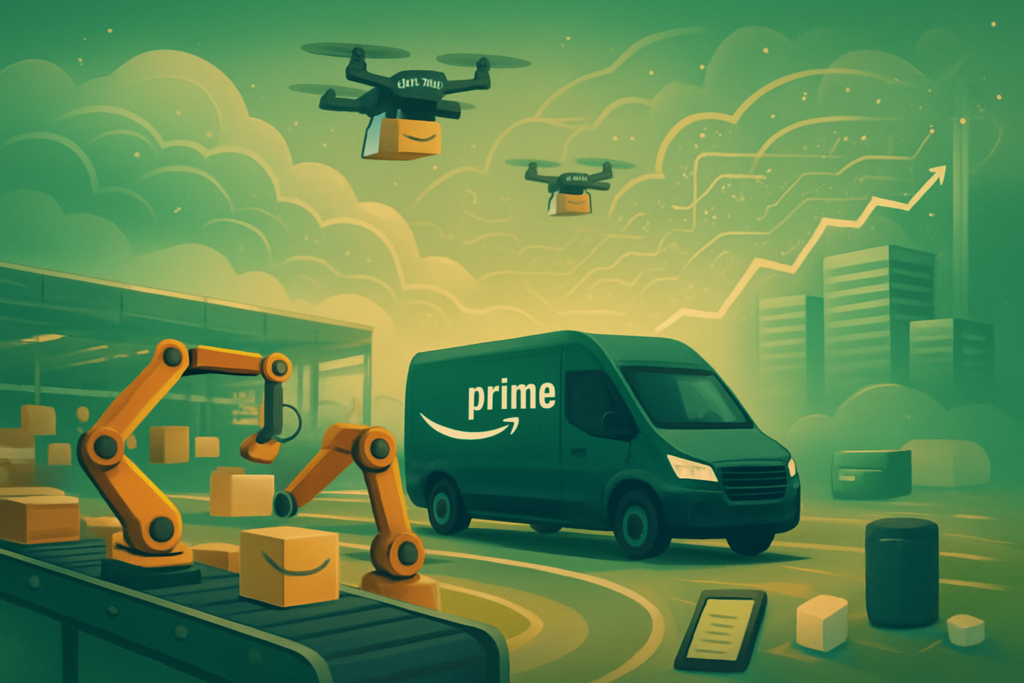
1. IntroductionAmazon (AMZN/NASDAQ) remains a formidable entity in the global economic landscape, constantly evolving beyond its foundational e-commerce roots into a diversified technology behemoth. As of December 11, 2025, the company continues to command significant attention from financial journalists and equity analysts due to its strategic positioning across multiple high-growth sectors, innovative investments, and ongoing efforts to enhance profitability. At its core, Amazon.com, Inc. is recognized as the world's largest online retailer, a position it has maintained and expanded since its inception. The company's operations are broadly categorized into three primary segments: North America retail, International retail, and Amazon Web Services (AWS). Its revenue streams are impressively diverse, with online stores still forming the largest component, complemented by substantial contributions from third-party seller services, subscription offerings like Amazon Prime, physical retail outlets, and a rapidly growing digital advertising business. Beyond retail, Amazon's ecosystem encompasses a range of consumer electronics such as Alexa, Kindle, and Fire TV, alongside extensive digital media content through Prime Video. Notably, Amazon Web Services (AWS) stands out as the company's most profitable division, consistently generating the majority of Amazon's operating income despite representing a smaller percentage of overall sales. Amazon's enduring market leadership in both e-commerce and cloud services is underpinned by its relentless focus on technological innovation and operational efficiencies, particularly in its sophisticated logistics and fulfillment networks. Amazon is currently a focal point for several compelling reasons:
For financial journalists and equity analysts, Amazon presents a complex yet highly compelling research subject, especially in the current market climate of December 2025. Amazon's trajectory in late 2025 is not just about its scale, but about its strategic agility in leveraging its diverse portfolio and aggressive innovation, particularly in AI, to sustain long-term growth and enhance shareholder value in an increasingly complex global economy. These dynamics make AMZN an indispensable subject for in-depth financial scrutiny. 2. Historical BackgroundAmazon (AMZN) has transformed from a modest online bookstore into a global technology and retail powerhouse, a journey marked by relentless innovation, strategic diversification, and a deep-seated customer-centric philosophy. For a financial journalist and equity analyst, understanding these foundational elements and pivotal transformations is crucial to grasping Amazon's enduring market position and future trajectory. Amazon's Founding StoryAmazon was founded by Jeff Bezos on July 5, 1994, from his garage in Bellevue, Washington. Initially named "Cadabra," a play on "abracadabra," the name was quickly changed to Amazon in November 1994 after a lawyer misheard it as "cadaver." Bezos chose "Amazon" to evoke the vastness of the Amazon River, symbolizing his ambition to build the world's largest bookstore. Bezos's entrepreneurial drive stemmed from a "regret minimization framework," aiming to avoid regretting not participating in the burgeoning internet economy, which he observed was growing at an astonishing rate of 2,300% per year in early 1994. He identified books as the ideal initial product due to their low cost, universal demand, and the absence of a comprehensive online catalog at the time. The company also benefited from its strategic proximity to a major book distribution warehouse. The initial capital for Amazon largely came from Bezos's parents. The Amazon.com website officially launched for public sales on July 16, 1995. Within just two months of its launch, Amazon was selling books to customers in all 50 U.S. states and over 45 countries, generating weekly sales of up to $20,000. Early MilestonesAmazon's early years were characterized by rapid growth and strategic expansion that laid the groundwork for its future dominance:
Key Transformations Over TimeAmazon's trajectory since its early days has been characterized by bold strategic shifts and the creation of entirely new business lines, fundamentally transforming not only its own operations but also entire industries.
Amazon's history is a testament to its ability to continuously innovate, adapt, and expand into new markets, leveraging its core strengths in technology, logistics, and customer focus to maintain its position as a global leader. 3. Business ModelAmazon (AMZN) continues to evolve its expansive business model, demonstrating diversified revenue streams, a vast array of product lines and services, distinct operational segments, and a broad, deeply engaged customer base as of late 2024 and projected through 2025. The company's strategic investments in cloud computing, artificial intelligence (AI), and logistics continue to solidify its market leadership across multiple sectors. Revenue SourcesAmazon's revenue streams are highly diversified, reflecting its multi-faceted business model. In fiscal year 2024, the company generated $638 billion in revenue, growing 11% year-over-year. For the twelve months ending September 30, 2025, Amazon's revenue reached $691.33 billion, an 11.48% increase year-over-year. Key revenue sources and their respective contributions in 2024 include:
Amazon's total revenue grew 11% in 2024 to $638 billion, with operating income improving 86% year-over-year to $68.6 billion. Projections for 2025 indicate a full-year revenue of approximately $700 billion. Product LinesAmazon offers an extensive and continually expanding array of product lines, catering to diverse consumer needs:
ServicesBeyond physical products, Amazon provides a robust ecosystem of services:
SegmentsAmazon organizes its operations into three primary reportable segments:
Customer BaseAmazon serves a vast and diverse global customer base:
4. Stock Performance OverviewAmazon (AMZN) Stock: A Decade of Transformation and Volatility (2015-2025)For Immediate Release – December 11, 2025 SEATTLE, WA – Amazon.com, Inc. (NASDAQ: AMZN) has demonstrated a remarkable journey of growth, innovation, and strategic diversification over the past decade, solidifying its position as a global technology and e-commerce behemoth. A detailed analysis of its stock performance from December 2015 to December 2025 reveals periods of explosive growth driven by its cloud computing arm, e-commerce dominance, and burgeoning advertising business, interspersed with significant volatility influenced by macroeconomic shifts, competitive pressures, and substantial strategic investments. As of December 10, 2025, AMZN's closing price stood at approximately $231.78. 10-Year Performance (December 2015 – December 2025): A Diversified Conglomerate's AscentOver the long term, Amazon's stock has delivered an impressive narrative of wealth creation, generating a staggering return of 579.1% with an average annual return (CAGR) of 21.07% between December 5, 2015, and December 5, 2025. This decade marks Amazon's profound transformation from primarily an online retailer into a diversified technology conglomerate. Key Growth Drivers:
Notable Moves: 5-Year Performance (December 2020 – December 2025): Pandemic Surge and Post-Peak RealignmentOver the past five years, from December 10, 2020, to December 10, 2025, Amazon's stock returned 50.1%, experiencing a more volatile trajectory despite solid overall gains. Another estimate shows an 81% gain, averaging 16.2% annually, with a 5-year compound annual growth rate (CAGR) of 7.75% between December 5, 2020, and December 5, 2025. Notable Moves:
Factors Influencing Performance:
1-Year Performance (December 2024 – December 2025): AI Momentum and Market HeadwindsAmazon's stock performance in 2025, as of December 11, shows a more nuanced picture. While 2024 saw AMZN up 44%, 2025 has seen more modest gains of about 6.8% as of December 2, lagging the S&P 500's 16.1% and Nasdaq-100's 21.6% gains in the same period. The closing price for AMZN on December 5, 2025, was around $229.53. Notable Moves:
Factors Influencing Performance:
ConclusionAmazon's stock performance over the past decade has been characterized by phenomenal growth, primarily fueled by the sustained expansion and increasing profitability of Amazon Web Services, coupled with its enduring dominance and strategic evolution in e-commerce. While the COVID-19 pandemic provided an initial unprecedented boost, the subsequent years have seen the company navigate macroeconomic headwinds, intense competition, and the significant costs associated with its aggressive investments in AI and new growth areas. For financial journalists and equity analysts, understanding Amazon's trajectory requires a nuanced view that balances its diversified revenue streams, particularly the high-margin contributions from AWS and advertising, against ongoing heavy capital expenditures, regulatory risks, and the ever-present influence of global economic conditions. The company's future stock performance is highly contingent on its ability to effectively monetize its AI investments, maintain its competitive edge in cloud computing, and continue innovating within its vast e-commerce ecosystem. Despite periods of volatility, Amazon's long-term growth story, driven by strategic diversification and technological leadership, remains compelling. 5. Financial PerformanceAmazon (AMZN) has demonstrated robust financial performance in its latest reported quarter, Q3 2025, exceeding analyst expectations across key metrics. The company's strategic investments in its high-margin segments, particularly Amazon Web Services (AWS) and advertising, are driving growth, while it navigates significant capital expenditures and maintains a manageable debt profile. Here's a detailed breakdown for financial journalists and equity analysts: Latest Earnings (Q3 2025, Reported October 30, 2025)Amazon reported strong third-quarter 2025 results, with net sales and net income surpassing estimates.
Revenue GrowthAmazon's revenue growth in Q3 2025 was broad-based, with significant contributions from its key segments.
For the trailing twelve months (TTM) ending Q3 2025, Amazon's net sales climbed 11.5% to $691.3 billion. MarginsWhile revenue growth was robust, operating margins experienced some pressure due to special charges.
DebtAmazon maintains a manageable debt profile and strong liquidity.
Cash FlowAmazon's operating cash flow remains strong, though free cash flow has been impacted by substantial capital expenditures.
Valuation Metrics (as of December 2025)Amazon's valuation metrics reflect its status as a growth stock with strong future expectations, particularly in its cloud and advertising segments.
Analysts currently have an average 12-month price target of $295.11 for AMZN, suggesting a potential upside of 27.33% from the current price of around $231.78. The consensus recommendation from 72 brokerage firms is "Outperform". 6. Leadership and ManagementAmazon (AMZN) continues to evolve its leadership, refine its strategic focus, and navigate a complex landscape of governance and reputation in 2025, under the direction of CEO Andy Jassy. The company's multifaceted approach emphasizes aggressive innovation, particularly in artificial intelligence and cloud computing, alongside a drive for operational efficiency and a commitment to customer-centricity. CEO: Andy Jassy's Vision and LeadershipAndy Jassy, who succeeded founder Jeff Bezos as President and Chief Executive Officer in July 2021, is leading Amazon through its next phase of growth and efficiency. Bezos remains involved as Executive Chairman, focusing on long-term vision and innovation. Jassy, a Harvard MBA graduate, has a deep history with Amazon, having joined in 1997. He is credited with founding Amazon Web Services (AWS) in 2003 and leading it to become Amazon's most profitable division and the world's largest cloud platform. Under his tenure as CEO of Amazon, Jassy has emphasized a strategic focus on artificial intelligence (AI), profitability, efficiency, and innovation across logistics and advertising. In his 2025 annual letter to shareholders, Jassy reiterated Amazon's core mission to be "Earth's most customer-centric company," constantly questioning existing norms to make customers' lives "better and easier." His leadership style has also brought significant organizational changes aimed at streamlining operations and fostering a more connected culture. Starting January 2025, Amazon mandated a full return to the office five days a week for most employees, departing from its previous hybrid model. Furthermore, Jassy initiated efforts to reduce bureaucracy and management layers, aiming to increase the ratio of individual contributors to managers by 15% by the end of Q1 2025—a goal reportedly achieved by March 2025. This restructuring seeks to enhance collaboration, speed up decision-making, and promote a culture where leaders "get the most done with the least amount of resources." In 2024, Jassy's total compensation was reported at $40.1 million. Leadership Team: The S-Team and Key ExecutivesAmazon's senior leadership team, often referred to as the "S-team," comprises 29 executives who drive the company's diverse global operations. Key members, working alongside Jassy, include:
The management team demonstrates an experienced profile with an average tenure of 10.4 to 10.5 years. Board of Directors: Composition and OversightAmazon's Board of Directors consists of 12 elected directors, operating with a declassified structure where all directors are elected annually. The board maintains a single class of common stock with equal voting rights. Key governance features include:
At the May 2025 annual meeting, shareholders re-elected all 12 board nominees. However, independent shareholder proposals seeking increased oversight on climate risks, AI practices, and warehouse working conditions were rejected, with the board opposing proposals that mandated a separation of the CEO and Board Chair roles. The board's stance is that its governance guidelines allow it to determine the optimal leadership structure. Directors identified include Keith Alexander, Edith Cooper, Daniel Huttenlocher, Andrew Ng, Indra Nooyi, Jonathan Rubinstein, Brad Smith, and Patricia Stonesifer. Strategy: Innovation, Efficiency, and DiversificationAmazon's strategy in 2025 is characterized by significant investments in future growth areas, particularly AI, while simultaneously enhancing efficiency across its established businesses.
Governance: Transparency, Shareholder Rights, and Executive CompensationAmazon's corporate governance framework includes several mechanisms aimed at transparency and accountability:
Reputation: Navigating Scrutiny and Enhancing TrustAmazon's immense market presence and aggressive growth strategies continue to draw significant scrutiny, impacting its reputation across several fronts in 2025.
Despite these challenges, Amazon's reputation is also shaped by its ongoing innovation, customer obsession, and powerful brand image, particularly through AWS, which powers much of the internet's backend operations. The company's ability to navigate these complex issues will be crucial for its sustained long-term success and market perception. 7. Products, Services, and InnovationsAmazon (AMZN) continues to solidify its position as a global technology and retail leader through aggressive innovation, strategic R&D, and a diverse portfolio of products and services. As of late 2025, the company's competitive edge is deeply rooted in its comprehensive ecosystem, particularly its dominance in cloud computing, extensive e-commerce infrastructure, and rapidly expanding AI and robotics capabilities. Current OfferingsAmazon's current offerings span several key sectors:
Innovation Pipelines & R&DAmazon's innovation pipeline is heavily concentrated on Artificial Intelligence (AI), Machine Learning (ML), robotics, and advanced logistics, underpinned by substantial R&D investments.
R&D Spending and PatentsAmazon's R&D expenditure is substantial, though not explicitly itemized in its financial reports. It falls under a broader "Technology and Content" category. Estimates suggest Amazon invested around $61 billion in R&D in 2024, with a projected capital expenditure potentially exceeding $100 billion in 2025, a "vast majority" of which is dedicated to AI for AWS. This spending is allocated across AWS and cloud infrastructure (estimated 35% of R&D funds), robotics and automation (16%), e-commerce platform enhancements (12%), hardware for devices like Alexa and Fire TV (8%), and emerging technologies such as healthcare and Project Kuiper (4%). Amazon holds a vast patent portfolio, with a total of 34,908 patents globally and a high grant rate of 97.12% in the U.S. Recent patent filings and grants in late 2024 and 2025 indicate a strong focus on:
Competitive EdgeAmazon's competitive edge is multifaceted and constantly reinforced by its innovation and R&D:
8. Competitive LandscapeAmazon (AMZN) continues to be a dominant force across multiple industries, but faces an increasingly competitive landscape in 2025. The company's main business segments—e-commerce, cloud computing (AWS), advertising, and devices—each contend with a diverse array of rivals, dynamic market shares, and distinct competitive strengths and weaknesses. Overall Competitive LandscapeAmazon operates a vast ecosystem, positioning it as a major player in e-commerce, cloud services, advertising, streaming, and consumer electronics. Its primary competitors range from traditional retail giants to specialized tech companies. Key cross-segment rivals include Walmart, eBay, Alibaba, Microsoft, and Google. The company's total net sales reached $167.7 billion in Q2 2025, marking a 13% year-over-year growth. E-commerce SegmentIndustry Rivals: Amazon's e-commerce segment faces significant competition from traditional retailers with strong online presences, such as Walmart and Target, as well as global e-commerce powerhouses like Alibaba (with AliExpress, Taobao, and Tmall) and JD.com. Emerging ultra-low-price platforms like Temu and Shein have also captured substantial market share, particularly among budget-conscious consumers. Other notable competitors include eBay (for auctions and unique items), Flipkart (dominant in India), Rakuten, Otto, and specialized marketplaces like Etsy. Direct-to-consumer (DTC) brands and other online stores also pose a challenge by offering unique products and tailored experiences. Market Share: Amazon remains the leading e-commerce retailer in the U.S., holding a 37.6% market share as of Q2 2024. This share is projected to grow to 40.9% of the total U.S. retail e-commerce market by 2025. Globally, Amazon holds about a 12% share of the e-commerce market by gross merchandise volume (GMV), ranking second behind Alibaba (23%). Competitive Strengths:
Competitive Weaknesses:
Cloud Computing (AWS) SegmentIndustry Rivals: Amazon Web Services (AWS) primarily competes with Microsoft Azure and Google Cloud Platform (GCP). Other competitors include Oracle Cloud, Salesforce Cloud, IBM, and Alibaba Cloud. Market Share: AWS maintains its position as the global market leader in cloud infrastructure services, holding approximately 30% of the market share as of Q2 2025. Some reports indicate a 31% share. Microsoft Azure follows with 20-26%, and Google Cloud with 11-13%. The "Big Three" (AWS, Azure, and Google Cloud) collectively control over 60% of the global cloud infrastructure market. Competitive Strengths:
Competitive Weaknesses:
Advertising SegmentIndustry Rivals: Amazon's advertising business primarily competes with digital advertising giants such as Alphabet (Google Search, YouTube), Meta Platforms (Facebook/Instagram), and TikTok. Market Share: Amazon's advertising business hit a milestone in Q2 2025, capturing 9.36% of the company's total revenue, reaching $15.69 billion quarterly. It is Amazon's fastest-growing segment. Annualized ad revenue exceeded $60 billion in 2025, outpacing retail and AWS growth. Amazon is projected to capture 39.8% of all retail media ad spend in 2025. Combined with Alphabet and Meta, these three companies accounted for over half (53.6%) of global ad spend outside China in 2024. Competitive Strengths:
Competitive Weaknesses:
Devices SegmentIndustry Rivals: In the devices segment, Amazon faces competition from major tech companies such as Apple (for smart home and streaming devices), Google (with Google Assistant and Nest devices), Samsung, LG (for connected TV devices), and Roku (for streaming devices). Market Share: Amazon leads the smart speaker market with approximately 30% market share in 2024, primarily due to the widespread adoption of Alexa-enabled Echo devices. Google follows closely with a 25% market share. In connected TV devices, Amazon holds about 15% market share in the U.S. in 2024, behind Roku (37%) and Samsung (17%). Competitive Strengths:
Competitive Weaknesses:
9. Industry and Market TrendsAmazon (AMZN) continues to navigate a dynamic global landscape in 2025, characterized by significant shifts in consumer behavior, technological advancements, and persistent macroeconomic pressures. For financial journalists and equity analysts, understanding these multifaceted trends—from sector-level transformations and macro drivers to supply chain resilience and cyclical effects—is crucial for a comprehensive valuation and outlook of the e-commerce and cloud giant. Sector-Level TrendsAmazon's diverse business segments, primarily e-commerce, cloud computing (Amazon Web Services – AWS), and digital advertising, are each experiencing distinct, yet often interconnected, trends. E-commerce Evolution: Amazon itself is prioritizing profitability and data-driven decision-making within its vendor management. Competition from aggressive low-cost players like Temu and Shein, along with Amazon's own generic brands, has raised the stakes for vendors. Omnichannel integration and direct-to-consumer (DTC) expansion are also key trends, as more vendors move beyond Amazon's platform. Amazon's online stores accounted for 38.7% of its total revenue in fiscal year 2024, maintaining its position as a leading online retailer. Cloud Computing (AWS) Dominance and AI-Driven Growth: Digital Advertising Boom: Macro DriversAmazon's performance is significantly influenced by broader macroeconomic factors, including inflation, interest rates, and overall economic growth. Inflationary Pressures: Interest Rate Environment: Economic Growth and Recessionary Concerns: Supply ChainsAmazon's global supply chain is a critical component of its operations, facing both ongoing challenges and significant advancements, particularly through AI and automation. Key Trends and Optimization: Persistent Challenges: Cyclical EffectsAmazon's performance across its various segments exhibits different sensitivities to economic cycles. E-commerce Sensitivity: AWS and Advertising Resilience (with caveats): Overall, Amazon is strategically focused on enhancing profitability and leveraging technological advancements, especially in AI, to sustain its growth trajectory across its diversified business model. The company's heavy capital expenditures in 2025, surging to $92 billion in the first nine months, indicate significant investments in AI and infrastructure, with the expectation of accelerating financial returns in 2026. While economic uncertainty persists, Amazon's ability to adapt its cost structure, optimize its supply chain with AI, and continue innovating in cloud and advertising positions it as a company with considerable recession-resistant potential. 10. Risks and ChallengesAmazon (AMZN), a global behemoth in e-commerce, cloud computing, and artificial intelligence, faces a multifaceted landscape of risks and challenges as of December 2025. For financial journalists and equity analysts, understanding these potential headwinds across operational, regulatory, controversial, and market domains is crucial for a comprehensive valuation and outlook. Operational RisksAmazon's vast and complex operations expose it to several inherent vulnerabilities:
Regulatory RisksAmazon's scale and market dominance have placed it under intense regulatory scrutiny globally:
ControversiesBeyond direct regulatory and operational risks, Amazon frequently finds itself at the center of public and media controversies:
Market RisksAmazon's market position, while strong, is subject to significant competitive and economic pressures:
In conclusion, Amazon's continued dominance hinges on its ability to effectively navigate this complex web of operational inefficiencies, escalating regulatory pressures, persistent public controversies, and intense market competition. For a financial journalist and equity analyst, monitoring these risks, particularly the outcomes of major antitrust litigation and the impact of labor relations and substantial AI investments on profitability, will be paramount in assessing Amazon's long-term financial trajectory and shareholder value. 11. Opportunities and CatalystsAmazon (AMZN) is poised for continued robust growth in the near and medium term, driven by its diversified business segments and strategic investments in high-growth areas. For financial journalists and equity analysts, key catalysts and opportunities lie in the accelerating performance of Amazon Web Services (AWS), the booming advertising business, targeted international expansion, advancements in healthcare, and the rollout of ambitious new technologies like Project Kuiper. Growth LeversAmazon's growth strategy for 2025 and 2026 is anchored in several powerful levers:
New MarketsAmazon is actively cultivating new market opportunities, particularly through technological innovation and geographical expansion:
M&A PotentialWhile specific M&A targets are not explicitly detailed in recent reports, Amazon's strategic focus areas provide clear indications of potential acquisition interests:
Near-term Events (Earnings, Launches)For financial journalists and equity analysts, several near-term events will be critical to monitor:
Amazon enters 2026 in a strong and diversified position. While retail may not drive headline growth numbers as it once did, its enhanced efficiency, combined with the accelerating performance of AWS and the booming advertising business, all underpinned by significant AI integration, positions Amazon for a potentially more profitable chapter. The company's heavy capital expenditures in 2025 (approximately $125 billion) and planned increases for 2026, primarily aimed at supporting AI and core AWS services, are foundational to sustaining this long-term growth trajectory. 12. Investor Sentiment and Analyst CoverageAs of December 11, 2025, Amazon (AMZN) exhibits a largely bullish sentiment among Wall Street analysts, a mixed but active landscape of hedge fund positioning, significant institutional ownership, and varied retail investor chatter, all against a backdrop of the company's strong performance in cloud services and advertising. Wall Street Ratings and Price TargetsAmazon currently holds a consensus "Strong Buy" or "Moderate Buy" rating from Wall Street analysts. Out of 44 analysts covering AMZN, 43 have assigned a "Buy" rating, one a "Hold" rating, and none a "Sell" rating, indicating overwhelming positive sentiment. MarketBeat reports a consensus rating of "Moderate Buy" from 61 analysts, with two "Strong Buy," 56 "Buy," and three "Hold" ratings. The median one-year price target for Amazon stands at approximately $295.63, representing a potential upside of around 29% from current prices. Other sources cite a median target of $284.19 from 47 analysts, projecting a 22.61% increase. The average price target from 71 analysts is $290.36, with a high estimate of $360.00 and a low of $227.10, implying an upside of 25.27% from the current price of $231.78. Recent analyst activity in December 2025 further reinforces this positive outlook:
Analysts are particularly bullish on the growth potential of Amazon Web Services (AWS), driven by the broader AI boom and recent announcements at the AWS re:Invent conference (December 1-5, 2025), including new Nova GenAI models and Trainium 3 UltraServers. Concerns remain regarding the company's substantial AI Capital Expenditure (CapEx). Hedge Fund MovesHedge fund activity in Amazon (AMZN) during Q3 2025 showed a mixed, albeit active, picture. While some major hedge funds trimmed their positions, others made significant additions.
Institutional InvestorsInstitutional investors hold a significant portion of Amazon's outstanding shares, with approximately 64.99% to 72.20% held by these entities. This high level of ownership underscores its popularity among large asset management firms.
Retail ChatterRetail investor sentiment for Amazon in December 2025 is described as mixed to slightly constructive or neutral-to-slightly-negative across social media platforms like X (Twitter) and Reddit.
Overall, while there are some headwinds and cautious notes, the general investor sentiment around Amazon remains strong, particularly driven by its performance in AWS and promising AI initiatives, reflected in consistently high analyst ratings and significant institutional backing. 13. Regulatory, Policy, and Geopolitical FactorsAs of December 11, 2025, Amazon (AMZN) navigates a complex global landscape of regulatory scrutiny, evolving laws, varying government incentives, and significant geopolitical risks and opportunities. These factors are crucial for financial journalists and equity analysts to consider for a comprehensive long-form article on the company's financial outlook and operational resilience. Regulatory Landscape & LawsAmazon faces extensive regulatory scrutiny across several key areas:
ComplianceAmazon's compliance efforts are increasingly critical given the breadth of global regulations. The company faces ongoing challenges in ensuring adherence to diverse laws, resulting in significant penalties and necessitating robust internal controls.
Government IncentivesAmazon benefits from various government incentives, particularly for its infrastructure development.
Geopolitical Risks & OpportunitiesGeopolitical factors are significantly reshaping Amazon's operations, particularly its supply chain and global market strategy.
In conclusion, Amazon faces a dynamic and often challenging interplay of regulatory, policy, and geopolitical factors. While significant compliance costs and potential penalties are ongoing concerns, particularly in antitrust, consumer protection, and labor, the company is also strategically adapting its operations and leveraging its scale and integrated logistics to navigate global trade tensions and potentially capitalize on shifts in consumer behavior and supply chain dynamics. Investors and analysts must closely monitor these evolving landscapes to assess Amazon's long-term growth and profitability. 14. Outlook and ScenariosAmazon (AMZN) is navigating a complex yet opportunity-rich landscape as of late 2025, characterized by aggressive strategic pivots, particularly in artificial intelligence (AI) and cloud computing, amidst persistent competitive pressures and evolving macroeconomic conditions. Analysts generally maintain a "Strong Buy" consensus, projecting significant upside, though some caution remains regarding valuation and capital expenditure. Amazon (AMZN) Outlook and ScenariosBull CaseThe bullish outlook for Amazon hinges on several core strengths and strategic initiatives:
Bear CaseDespite the bullish sentiment, several challenges and risks constitute the bear case for Amazon:
Short-Term Projections (2025-2026)For the immediate future, market sentiment is largely positive:
Long-Term Projections (2027 and Beyond)Amazon's long-term outlook is characterized by sustained growth driven by its key segments and strategic investments:
Strategic PivotsAmazon is actively implementing several strategic pivots to secure its future growth and profitability:
In conclusion, Amazon's outlook is largely bullish, underpinned by the accelerating growth of AWS, a burgeoning advertising business, and improving profitability in its mature e-commerce segment. Strategic pivots toward aggressive AI integration, continued cloud infrastructure expansion, and international market penetration are expected to drive long-term value. While high CapEx and macroeconomic uncertainties present short-term challenges, the consensus among analysts points to a robust growth trajectory for AMZN in the coming years. 15. ConclusionAs of December 11, 2025, Amazon (AMZN) presents a complex yet compelling investment profile, characterized by robust growth in its high-margin segments and aggressive strategic investments, balanced against escalating regulatory scrutiny and significant capital outlays. While the stock's performance in 2025 has been described as "sluggish" compared to broader market indices, analysts largely view the year as foundational, setting the stage for potential acceleration in 2026. Summary of Key FindingsAmazon's Q3 2025 earnings demonstrated stronger-than-expected performance, with revenue reaching $180.2 billion, a 12% year-over-year increase (13% excluding foreign exchange impacts), and diluted EPS of $1.95, significantly surpassing forecasts. Operating income for the quarter stood at $17.4 billion, though it would have been $21.7 billion excluding one-time charges of a $2.5 billion FTC settlement and $1.8 billion in severance costs. Net income was further bolstered by a $9.5 billion pre-tax gain from Amazon's investment in Anthropic. Key Growth Drivers:
Strategic AI Investments: Capital Expenditures and Free Cash Flow: Balanced PerspectiveBull Case:
Bear Case:
What Investors Should Watch ForFor financial journalists and equity analysts, several key areas warrant close attention when assessing Amazon's future performance:
In conclusion, Amazon is navigating a period of intense investment, particularly in AI and cloud computing, which analysts believe will yield significant returns in 2026 and beyond. While the high capital expenditures are currently suppressing free cash flow and regulatory challenges persist, the strength and diversification of its core businesses, especially AWS and advertising, position it favorably for long-term growth. Investors should closely scrutinize the execution of its AI strategy, the efficiency of its e-commerce operations, and the evolving regulatory landscape. This content is intended for informational purposes only and is not financial advice 
Report this content
If you believe this article contains misleading, harmful, or spam content, please let us know. Report this articleMore NewsView More
Volkswagen’s 16-Year Low Masks a Massive Margin Engine ↗
Today 10:25 EDT



Overclocking Qualcomm: Rewiring the AI Compute Market ↗
Today 9:05 EDT

Recent QuotesView More
Stock Quote API & Stock News API supplied by www.cloudquote.io
Quotes delayed at least 20 minutes. By accessing this page, you agree to the Privacy Policy and Terms Of Service.
© 2025 FinancialContent. All rights reserved.
|