STMicroelectronics (STM): Navigating the Semiconductor Giga-Cycle with Strategic Precision
By:
PredictStreet
December 11, 2025 at 12:35 PM EST
ⓘ This article is third-party content and does not represent the views of this site. We make no guarantees regarding its accuracy or completeness.
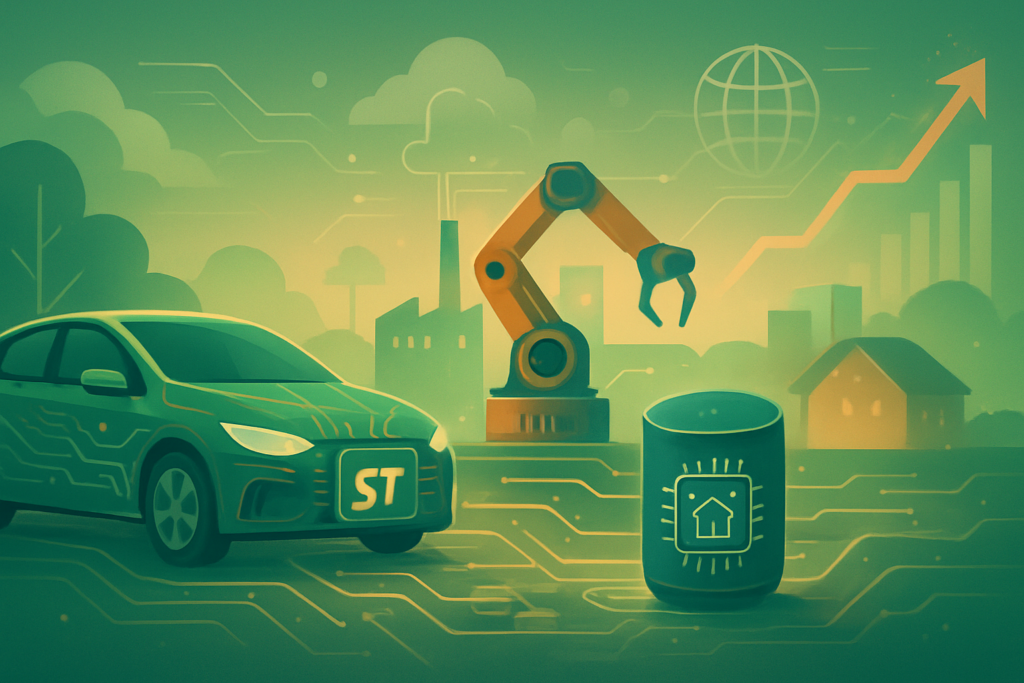
December 11, 2025 – The global semiconductor industry is in the midst of a transformative "giga-cycle," driven by an insatiable demand for artificial intelligence, advanced connectivity, and the electrification of everything from vehicles to industrial systems. At the heart of this revolution stands STMicroelectronics N.V. (NYSE: STM), a European semiconductor powerhouse diligently carving out its niche. This in-depth research feature delves into STM's intricate business, financial health, strategic maneuvers, and the broader market dynamics shaping its future. 1. IntroductionSTMicroelectronics N.V. (NYSE: STM) is a global semiconductor powerhouse, consistently at the forefront of designing, developing, manufacturing, and marketing a diverse array of semiconductor devices and solutions. As of December 11, 2025, the company commands significant attention within the technology and investment communities, primarily due to its strategic positioning in high-growth sectors, its robust innovation pipeline, and its crucial role in advancing Europe's technological independence. Headquartered in Plan-les-Ouates, Switzerland, and incorporated in the Netherlands, STMicroelectronics was forged in 1987 through the merger of Italy's SGS Microelettronica and France's Thomson Semiconducteurs. This rich European heritage underpins its commitment to fostering regional technological autonomy, a commitment recently underscored by a substantial €1 billion financing agreement with the European Investment Bank (EIB) on December 11, 2025. This funding is earmarked to bolster high-volume manufacturing capabilities in Italy and France, alongside significant investments in R&D, reinforcing ST's long-standing dedication to innovation, sustainability, and energy efficiency within the EU. STMicroelectronics operates as a comprehensive Integrated Device Manufacturer (IDM), giving it unique control over its supply chain, from wafer fabrication to back-end assembly and testing. This model is a strategic advantage in a dynamic and often volatile industry. The company's extensive product portfolio spans discrete components, application-specific integrated circuits (ASICs), and application-specific standard products (ASSPs), serving critical applications in automotive, industrial, personal electronics, and communications. The current focus on STMicroelectronics stems from several key factors: its leadership in "Smart Driving" (automotive), "Power & Energy" (energy efficiency, renewables), and "Cloud-connected Autonomous Things" (IoT, Edge AI) markets. These are not just growth areas but foundational pillars of global digital transformation. The company's continuous investment in cutting-edge technologies like advanced driver-assistance systems (ADAS), silicon carbide (SiC) and gallium nitride (GaN) devices for electric vehicles, and innovative microcontroller solutions for edge AI, such as its STM32 MCU model zoo, further solidifies its market relevance. Recent product introductions, including an industry-first Matter NFC chip for smart homes and a robotics evaluation kit, demonstrate its relentless pursuit of innovation. Despite navigating some market challenges and geopolitical uncertainties, STMicroelectronics maintains a confident outlook, anticipating sequential growth after a Q1 2025 dip in sales. The company's strategic reshaping of its manufacturing footprint, with significant CapEx plans for advanced 12-inch silicon-based and 8-inch silicon carbide facilities, aims to create a complementary manufacturing ecosystem across its European and Asian sites. This proactive approach, coupled with a strong commitment to carbon neutrality by 2027, positions STMicroelectronics as a pivotal and forward-looking player in the global semiconductor landscape. 2. Historical BackgroundSTMicroelectronics N.V. (NYSE: STM) traces its origins to a pivotal moment in European industrial strategy: the 1987 merger of two state-owned semiconductor entities, Italy’s SGS Microelettronica and France’s Thomson Semiconducteurs. This strategic consolidation aimed to forge a formidable European competitor capable of challenging the dominance of American and Japanese giants in the burgeoning global semiconductor market. Initially christened SGS-THOMSON Microelectronics, the company would later adopt its current name, STMicroelectronics, in May 1998, following Thomson's divestment of its shares. The Italian progenitor, SGS Microelettronica, itself a product of a 1972 merger between Società Generale Semiconduttori (SGS) and ATES, had roots stretching back to 1957 when Adriano Olivetti established SGS as Olivetti's semiconductor division. SGS's early growth was significantly aided by strategic licensing agreements with Fairchild Semiconductor in the 1960s and 1970s. On the French side, Thomson Semiconducteurs was formed in 1982 by the French government, consolidating various domestic semiconductor operations and notably acquiring the U.S. firm Mostek in 1985. Pasquale Pistorio, a visionary former Motorola executive, was instrumental in shaping the strategic direction of the newly formed SGS-THOMSON, serving as its chief executive officer until 2005. Under his leadership, the company rapidly ascended the ranks, starting as the 14th largest semiconductor supplier globally with approximately $850 million in sales at its inception. The company's early years were characterized by aggressive expansion and technological foresight. Key milestones included the 1989 acquisition of the British firm Inmos, known for its transputer microprocessors, which expanded its memory market presence. This was followed by the acquisition of Nortel's semiconductor activities in 1994. Technologically, SGS-THOMSON quickly established a lead in the nascent MPEG market, releasing its first Motion Estimation Processor in 1990 and a "multimedia" chip capable of decompressing digital video files by 1993, positioning it strongly for the emerging set-top box market. The company also became a leader in EPROMs and EEPROMs, shipping over a billion EEPROM-based smart card devices by 1996. A crucial step in its global expansion was its initial public offering (IPO) on December 8, 1994, listing on both the Paris and New York stock exchanges, followed by a listing on the Borsa Italiana in Milan in 1998. Over the decades, STMicroelectronics has undergone several significant transformations to adapt to market dynamics and sustain its competitive edge. The early 2000s saw further expansion with the acquisition of Alcatel's microelectronics division in 2002, enhancing its communication technologies and leadership in the DSL market. That same year, ST joined Motorola, TSMC, and Philips in the "Crolles 2 Alliance" for advanced R&D and a new 12-inch wafer manufacturing facility, solidifying its position as a top-tier semiconductor company. A pivotal strategic shift occurred after the dissolution of the ST-Ericsson joint venture in 2013, a venture that aimed to capture the mobile platform market. This led STMicroelectronics to strategically refocus on its core strengths: microcontrollers, power discretes, and sensors, particularly for the automotive and industrial markets. This pivot proved highly successful, establishing the company as a top supplier in these critical areas. Today, STMicroelectronics is deeply concentrated on high-growth sectors such as automotive and industrial applications, energy management, IoT, and 5G. It stands as a leader in automotive semiconductors and holds a dominant position in the high-growth Silicon Carbide (SiC) market, essential for electric vehicle (EV) power systems, with an ambitious goal of maintaining a 30% market share. The company continues its Integrated Device Manufacturer (IDM) model, investing heavily in manufacturing capabilities, including a new 200mm (8-inch) fab in Catania, Italy, and plans for a 150mm SiC substrate manufacturing facility. Recent strategic moves include the July 2025 acquisition of NXP Semiconductors’ MEMS sensors business, a 2023 partnership with Synopsys for AI-driven chip design on the cloud, and becoming a shareholder in Quintauris for RISC-V ecosystem standardization in 2024. Furthermore, its commitment to achieving carbon neutrality by 2027 underscores its dedication to sustainability. As of December 2025, STMicroelectronics continues to navigate the cyclical semiconductor industry, driven by innovation, strategic market focus, and robust manufacturing capabilities. 3. Business ModelSTMicroelectronics N.V. (NYSE: STM) operates as a global, independent semiconductor company, distinguished by its Integrated Device Manufacturer (IDM) business model. This approach grants the company comprehensive control over its entire supply chain, from initial design and development to wafer fabrication, assembly, and testing. This vertical integration is a key strategic advantage, enabling greater efficiency, quality control, and responsiveness in a complex and often volatile industry. As of December 11, 2025, STMicroelectronics' strategic direction is firmly anchored around three transformative long-term enablers: Smart Mobility, Power & Energy, and Cloud-connected Autonomous Things. These pillars guide the company's significant investments in research and development, product innovation, and manufacturing capabilities. Furthermore, ST is actively engaged in a company-wide initiative to reshape its manufacturing footprint and optimize its global cost base, targeting substantial annual cost savings by the end of 2027. Revenue Sources: Product Lines and Segments:
Beyond these established product areas, STMicroelectronics is also investing in advanced packaging technologies, such as Panel-Level Packaging (PLP), with a new pilot line expected to be operational in Tours, France, by Q3 2026. These innovations are crucial for developing smaller, more powerful, and cost-efficient electronic devices. Services: Customer Base and End Markets:
As of December 2025, STMicroelectronics continues to navigate a dynamic semiconductor market by focusing on innovation, disciplined cost management, and strategically reinforcing its position in these high-growth segments, thereby ensuring its long-term relevance and profitability. 4. Stock Performance OverviewAs of December 11, 2025, STMicroelectronics N.V. (NYSE: STM) has navigated a period of significant volatility in its stock performance over the past decade, reflecting the inherent cyclicality and dynamic shifts within the global semiconductor industry. The stock's trajectory has been marked by both periods of robust growth and notable corrections, shaped by broader macroeconomic conditions, industry-specific trends, and the company's strategic initiatives. 1-Year Performance: 5-Year Performance: 10-Year Performance: Notable Stock Price Movements: Key Drivers as of 12/11/2025:
5. Financial PerformanceAs of December 11, 2025, STMicroelectronics N.V. (NYSE: STM) has navigated a challenging financial landscape through 2024 and 2025, marked by a downturn in the semiconductor industry. Despite these headwinds, the company is actively implementing strategic restructuring and cost optimization programs, aiming for long-term resilience and growth. The latest reported financial results are for the third quarter of 2025. Latest Earnings (Q3 2025 – Reported October 23, 2025): Quarterly Performance in 2025:
Full Year 2024 Performance (Ended December 31, 2024): Full Year 2025 Projections: Debt and Cash Flow: Valuation Metrics (as of 12/11/2025): Overall Outlook: 6. Leadership and ManagementSTMicroelectronics N.V. (NYSE: STM) operates under a well-defined leadership structure and corporate governance framework, crucial for navigating the complexities of the global semiconductor industry. As of December 11, 2025, the company's management team and Board are focused on executing a long-term strategy centered on high-growth enablers and sustainability, even amidst short-term market challenges. Chief Executive Officer (CEO): Executive Committee:
Board of Directors (Supervisory Board): Strategy: Key strategic initiatives include:
Governance: Reputation: 7. Products, Services, and InnovationsSTMicroelectronics N.V. (NYSE: STM) maintains its position as a global semiconductor leader through a diversified product portfolio, substantial investments in research and development, and a robust innovation pipeline. As of December 11, 2025, the company's strategic focus is squarely on enabling smart mobility, efficient power and energy management, and the widespread deployment of cloud-connected autonomous things. Current Product Offerings:
Services: Innovation Pipelines:
R&D Investments: Patents: Competitive Edge:
While facing competition from industry giants like Analog Devices, Microchip Technology, NVIDIA, NXP Semiconductors, ON Semiconductor, and Texas Instruments, STMicroelectronics' strategic focus and commitment to innovation position it as a resilient and significant player in the evolving semiconductor market. 8. Competitive LandscapeSTMicroelectronics N.V. (NYSE: STM) operates within an intensely competitive and rapidly evolving global semiconductor industry. As of December 11, 2025, the company faces a complex competitive landscape characterized by continuous innovation, aggressive pricing, and strategic market positioning from a diverse array of rivals. Industry Rivals:
Beyond these direct rivals, other significant players and broader competitors influencing the market include Lattice Semiconductor, Teradyne, Delta Electronics Thailand, Silicon Labs, Taiwan Semiconductor Manufacturing Company (TSMC), Semtech, United Microelectronics (UMC), Intel (INTC), Broadcom (AVGO), and Marvell Technology (MRVL). Competition is fierce across all aspects, including product innovation, pricing strategies, brand recognition, distribution networks, and technological superiority. Market Share: Competitive Strengths:
Competitive Weaknesses:
In summary, while STMicroelectronics possesses a strong foundation in high-growth automotive and industrial segments, a diverse product portfolio, and robust R&D capabilities, it is currently navigating a challenging period marked by market slowdowns and inventory adjustments. The company's ability to address these immediate issues and capitalize on the broader semiconductor industry's projected growth in 2025 (driven by AI and data centers) will be crucial for regaining stronger momentum and enhancing its competitive standing. 9. Industry and Market TrendsThe semiconductor industry, in which STMicroelectronics N.V. (NYSE: STM) is a pivotal player, is currently navigating a period of profound transformation and dynamic shifts as of December 11, 2025. This landscape is characterized by an unprecedented "giga cycle" of growth propelled by artificial intelligence (AI), alongside persistent cyclical challenges, strategic shifts in supply chain management, and significant macroeconomic and geopolitical influences. Sector-Level Trends Affecting STMicroelectronics:
Macro Drivers:
Supply Chains:
Cyclical Effects:
Overall, STMicroelectronics is well-positioned to benefit from the long-term structural growth drivers of AI, electrification, and IoT, leveraging its IDM model and strategic investments. However, it must continue to skillfully navigate the short-term cyclical downturns and geopolitical complexities impacting the broader semiconductor market. 10. Risks and ChallengesSTMicroelectronics N.V. (NYSE: STM) navigates a complex environment fraught with a multitude of risks and challenges spanning operational, regulatory, reputational, and market-driven factors as of December 11, 2025. These hurdles demand robust risk management and strategic agility to ensure sustained performance and growth. Operational Risks:
Regulatory Risks:
Controversies:
Market Risks:
These interconnected risks and challenges necessitate a proactive and adaptive management approach for STMicroelectronics to navigate the current environment and capitalize on future opportunities. 11. Opportunities and CatalystsSTMicroelectronics N.V. (NYSE: STM) is poised to capitalize on several significant growth opportunities and strategic catalysts that are expected to drive its performance in the coming years, despite navigating a challenging market environment as of December 11, 2025. The company's strategic focus on high-growth sectors, continuous innovation, and disciplined investments are key to unlocking future value. Growth Levers:
New Markets:
M&A Potential: Near-term Events (Earnings, Launches) as of 12/11/2025:
Despite current challenges, STMicroelectronics' strategic investments in high-growth technologies and markets, coupled with anticipated recovery in key sectors and ongoing operational efficiencies, position it favorably for long-term value creation. Investors will be closely watching upcoming earnings reports and product developments for further confirmation of these positive trends. 12. Investor Sentiment and Analyst CoverageAs of December 11, 2025, investor sentiment and analyst coverage for STMicroelectronics N.V. (NYSE: STM) present a nuanced picture, reflecting a blend of cautious optimism and strategic confidence amidst the cyclical nature of the semiconductor industry. Wall Street Ratings:
Hedge Fund Moves: Institutional Investors:
Retail Chatter:
In summary, while STMicroelectronics has faced short-term headwinds, Wall Street analysts largely maintain a "Buy" or "Moderate Buy" rating with notable upside potential. Institutional investors hold a substantial stake, and key strategic financing deals reinforce their long-term conviction. Retail investors, while sometimes cautious, also exhibit optimism, particularly when the stock is perceived as undervalued or when strategic developments signal future growth. 13. Regulatory, Policy, and Geopolitical FactorsSTMicroelectronics N.V. (NYSE: STM) operates within a highly intricate global environment where regulatory frameworks, government policies, and geopolitical dynamics profoundly influence its strategic direction and operational realities as of December 11, 2025. The company's emphasis on innovation, sustainability, and supply chain resilience is continuously shaped by these external forces. Regulatory Landscape and Policy Impacts:
Government Incentives:
Geopolitical Risks and Opportunities:
In conclusion, STMicroelectronics is skillfully navigating a complex interplay of regulatory demands, government support, and geopolitical shifts. Its strategic investments and localized manufacturing efforts aim to mitigate risks while leveraging opportunities arising from the global push for semiconductor independence and technological advancement. 14. Outlook and ScenariosAs of December 11, 2025, STMicroelectronics N.V. (NYSE: STM) presents a nuanced outlook, balancing the immediate challenges of a cyclical semiconductor market with robust long-term growth opportunities driven by strategic pivots and technological leadership. The company's trajectory will likely be shaped by a range of bull and bear scenarios, influencing its short-term performance and long-term potential. Bull vs. Bear Case: Bull Case:
Bear Case:
Short-term vs. Long-term Projections: Short-term Projections (Q4 2025 – Q1 2026):
Long-term Projections (2026 and Beyond):
Strategic Pivots as of 12/11/2025:
In conclusion, STMicroelectronics is positioned for a gradual recovery in the short term, with a clear strategic roadmap for long-term growth driven by its focus on high-growth markets, advanced technologies, and operational efficiencies. While immediate challenges and market volatility persist, the company's strategic pivots and strong foundational assets underpin a compelling long-term investment case, albeit with a revised timeline for its ambitious financial targets. 15. ConclusionAs of December 11, 2025, STMicroelectronics N.V. (NYSE: STM) stands at a pivotal juncture, emerging from a challenging period in the semiconductor cycle with a clear strategic vision and substantial opportunities for future growth. The company's recent financial performance, while reflecting industry-wide headwinds, also shows promising signs of recovery, underpinned by strategic investments and a focused approach to high-growth markets. Summary of Key Findings: Strategically, STM is deeply entrenched in key growth areas: edge AI microcontrollers (e.g., STM32N6), LEO satellite components, silicon photonics for AI data centers, and advanced 3D sensor solutions. Significant investments, including a €500 million EIB financing for R&D and manufacturing expansion in Europe, are bolstering its capabilities in these areas. The company maintains a strong financial position, evidenced by a net financial position of $2.61 billion, robust liquidity ratios, and a low debt-to-equity ratio. Inventory levels are also showing positive trends, with a reduction of $100 million in Q3 2025. Balanced Perspective on Investment: Positives:
Negatives/Challenges:
What Investors Should Watch For:
In conclusion, STMicroelectronics offers a compelling long-term investment case driven by its leadership in critical growth markets and advanced technologies, supported by a strong financial position and strategic government backing. While the immediate future holds some cyclical challenges and margin pressures, the company's clear roadmap for recovery and long-term expansion makes it a stock to watch closely for those seeking exposure to the foundational technologies of the digital age. This content is intended for informational purposes only and is not financial advice
Report this content
If you believe this article contains misleading, harmful, or spam content, please let us know. Report this article
Stock Quote API & Stock News API supplied by www.cloudquote.io
Quotes delayed at least 20 minutes. By accessing this page, you agree to the Privacy Policy and Terms Of Service.
© 2025 FinancialContent. All rights reserved.
|