Tesla (TSLA): Navigating the Crossroads of Innovation and Competition
By:
PredictStreet
December 12, 2025 at 10:15 AM EST
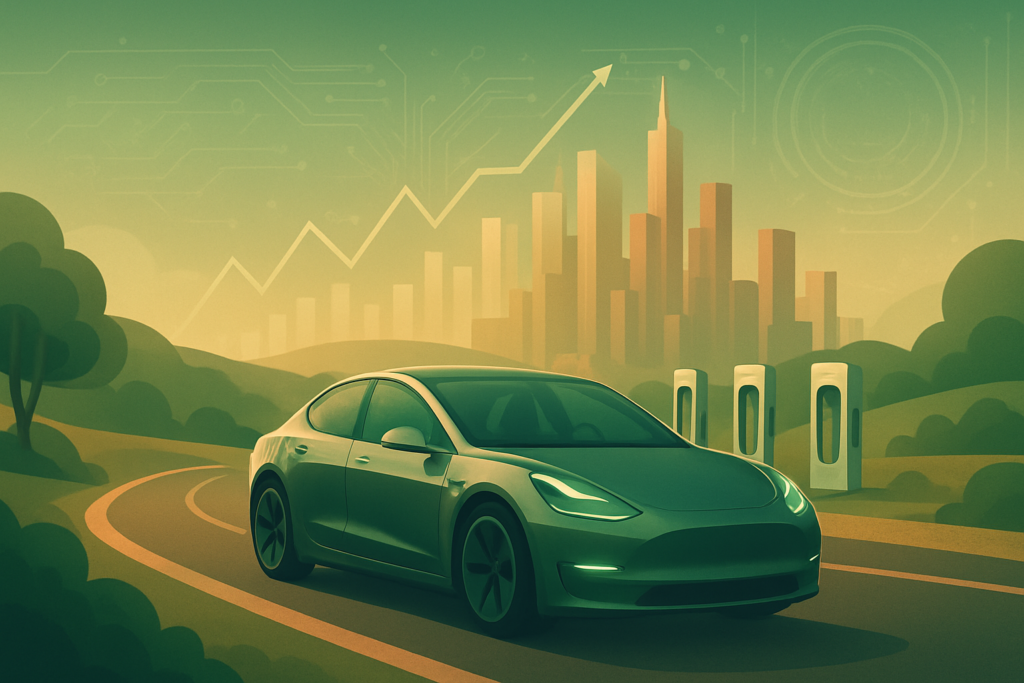
Date: 12/12/2025 As of December 12, 2025, Tesla, Inc. (TSLA) on the NASDAQ exchange, remains a pivotal and often polarizing force in the global economy, captivating investors, consumers, and industry observers alike. Founded in 2003, the Austin, Texas-based multinational is renowned for its pioneering role in electric vehicles (EVs), but its ambitions stretch far beyond automotive manufacturing, encompassing stationary battery energy storage, solar panels, and a significant push into artificial intelligence (AI) and robotics. Tesla’s mission to "accelerate the world's transition to sustainable energy" underpins its diverse ventures, from the iconic Model S, 3, X, and Y, to the revolutionary Cybertruck and Tesla Semi, alongside its Powerwall, Powerpack, and Megapack energy solutions. Tesla's enduring relevance stems from several key factors. It continues to be a hotbed of innovation, pushing the boundaries of battery technology, advanced driver-assistance systems like Autopilot, and its ambitious Full Self-Driving (FSD) software. The company's strategic diversification into AI and robotics, particularly with its Optimus humanoid robot and plans for a Robotaxi network, positions it as a speculative bet on future technological paradigms. While historically a dominant leader in the EV market, Tesla now faces intensified competition from both legacy automakers and aggressive new entrants, especially from China, leading to a dynamic shift in its market share. The outsized influence of CEO Elon Musk, with his visionary pronouncements and sometimes controversial public persona, ensures Tesla consistently occupies the public and investor spotlight. This combination of groundbreaking technology, ambitious future projects, and Musk's charismatic leadership contributes to TSLA's characteristic high market valuation and significant stock volatility, often driven by long-term growth narratives rather than immediate financial metrics. As of late 2025, Tesla is navigating a complex period of strategic evolution. The company's "Master Plan 4.0" heavily emphasizes AI and robotics as core to its future. New, more affordable vehicle models, such as the anticipated "Model Q" priced under $30,000, are slated for launch in the first half of 2025, alongside the global expansion of the Cybertruck. Tesla aims for a significant milestone in autonomous driving, targeting an unsupervised, fully autonomous driving service by June 2025, with expanded robotaxi pilot programs. The energy division is experiencing robust growth, with plans for increased production capacities and a third Gigafactory dedicated to energy storage. Furthermore, the Supercharger network continues to expand its accessibility to other automakers, solidifying Tesla's infrastructure leadership. Despite record revenues in Q3 2025, the company reported a notable drop in GAAP net income and operating margins, reflecting increased costs and pricing adjustments in a competitive market. With its U.S. EV market share dipping and sales volumes facing headwinds, analysts are closely scrutinizing Tesla's ability to execute its ambitious AI and robotics projects while defending its core automotive business. The stock, while up approximately 20% year-to-date, remains subject to significant volatility and ongoing debates regarding its valuation. 2. Historical BackgroundTesla, Inc.'s journey, spanning over two decades, is a testament to ambitious vision, technological innovation, and a relentless drive to disrupt established industries. From its humble beginnings as an EV startup, it has transformed into a diversified clean energy and technology conglomerate. Founding StoryTesla Motors, Inc. was formally incorporated on July 1, 2003, in San Carlos, California, by engineers Martin Eberhard and Marc Tarpenning. Their core idea was to establish "a car manufacturer that is also a technology company," focusing on developing proprietary battery, software, and motor technologies. Inspired by the recall of GM's EV1 electric cars and the impressive performance of the AC Propulsion tzero prototype, Eberhard and Tarpenning saw a clear opportunity to demonstrate that electric vehicles could be both high-performance and efficient. Ian Wright joined them shortly after incorporation. In February 2004, Elon Musk played a pivotal role by leading the Series A funding round, investing $6.5 million out of the $7.5 million raised. He subsequently became the company's chairman and largest shareholder, actively engaging in the company's product development and long-term strategic direction. J.B. Straubel joined in May 2004 as the fifth employee. A 2009 legal settlement solidified the recognition of Eberhard, Tarpenning, Wright, Musk, and Straubel as co-founders of Tesla. Early MilestonesTesla's formative years were characterized by the development of its inaugural product and critical financial bootstrapping:
Key Transformations Over Time (up to 12/12/2025)Tesla's evolution has been defined by strategic expansions and product innovations that have fundamentally reshaped its identity:
As of December 12, 2025, Tesla's history is a compelling narrative of innovation, strategic expansion into diverse markets, and an unwavering commitment to accelerating the global transition to sustainable energy. 3. Business ModelAs of December 12, 2025, Tesla's business model is a dynamic and increasingly diversified ecosystem built around electric vehicles, energy solutions, and advanced artificial intelligence (AI) services. The company's strategy emphasizes vertical integration, continuous technological innovation, and aggressive global expansion. Revenue SourcesTesla's revenue is primarily generated from three core segments: Automotive, Energy Generation and Storage, and Services & Other.
Product LinesTesla's product portfolio is strategically expanding to cater to a broader market, encompassing luxury and mass-market EVs, heavy-duty transport, comprehensive energy solutions, and cutting-edge robotics.
ServicesTesla's services are crucial for enhancing the value proposition of its products and generating recurring revenue.
SegmentsTesla reports its financial performance across three primary business segments:
Customer BaseTesla's customer base is evolving as its product offerings expand and market dynamics shift.
In summary, as of late 2025, Tesla's business model is anchored by a strong automotive core, aggressive expansion into energy solutions, and a strategic pivot towards AI-driven services like FSD and Robotaxis. Its focus on manufacturing efficiency, global market growth, and the introduction of more affordable vehicles aims to broaden its customer base, while its technology and energy divisions are crucial to its long-term vision of sustainable abundance. 4. Stock Performance OverviewTesla (TSLA) has consistently been one of the most talked-about and volatile stocks on the market, delivering remarkable, albeit sometimes turbulent, returns across various time horizons as of December 12, 2025. Its performance is deeply intertwined with its pioneering role in electric vehicles (EVs), its ambitious ventures into autonomous technology and AI, and its strategic diversification into energy solutions. 1-Year Stock Performance (December 2024 – December 2025)Over the past year, TSLA has demonstrated positive growth, though with notable fluctuations. As of December 10, 2025, the stock delivered a total return of approximately 12.77%. The closing price in December 2024 was around $403.84, while on December 11, 2025, it stood at approximately $446.89. The 52-week high was $488.54 (reached in December 2024), and its 1-year low was $214.25, indicating significant intra-year volatility. The stock underperformed the Nasdaq composite over this period. Notable Moves and Key Drivers (1-Year):
5-Year Stock Performance (December 2020 – December 2025)Over the past five years, Tesla's stock has delivered substantial returns. As of December 10, 2025, the 5-year total return stands at an impressive 115.98%. This period notably includes an "exponential growth" phase between 2020 and 2021. Notable Moves and Key Drivers (5-Year):
10-Year Stock Performance (December 2015 – December 2025)Tesla's stock performance over the last decade has been nothing short of extraordinary, transforming it into a global market behemoth. As of December 10, 2025, TSLA has delivered an exceptional total return of 2,808.31%. To put this in perspective, the closing price on December 31, 2015, was $16.00, while on December 11, 2025, it traded around $446.79. An initial investment of $1,000 at its IPO in 2010 would now be worth approximately $279,524, representing a compound annual growth rate of 45.61% over 15 years. Notable Moves and Key Drivers (10-Year):
In summary, Tesla's stock performance across all three timeframes reflects a company that has successfully navigated intense competition and macroeconomic shifts through continuous innovation, aggressive global expansion, and a diversified business model extending well beyond just automotive sales into energy, AI, and robotics. While short-term volatility remains a characteristic, the overwhelming long-term trend has been upward, driven by its leadership in critical technological and clean energy sectors. 5. Financial PerformanceTesla (TSLA) presented a mixed financial picture in its third quarter of 2025, demonstrating record revenue and robust cash flow generation, yet experiencing a notable contraction in profitability margins. As of December 12, 2025, the company's valuation metrics continue to reflect a premium market position, though analyst sentiment suggests a degree of caution regarding its near-term outlook. Q3 2025 Earnings: Revenue Growth:
Margins:
Debt:
Cash Flow:
Key Valuation Metrics (as of 12/12/2025):
Analyst sentiment is cautiously optimistic, with a consensus rating of "Hold" from 26 analysts. The average analyst price target is around $379.08 to $399.33, suggesting limited near-term upside from current levels. Some analysts have downgraded the stock due to valuation concerns, believing that much of the anticipated gains from AI initiatives are already reflected in the stock price. However, others maintain "Buy" or "Outperform" ratings with higher price targets, citing significant long-term growth potential in areas like robotaxis and AI. 6. Leadership and ManagementAs of December 12, 2025, Tesla's leadership and management landscape is defined by the indelible, yet increasingly scrutinized, presence of CEO Elon Musk, a dynamic executive team undergoing significant turnover, a board facing questions regarding its independence, and a strategic direction pivoting sharply towards artificial intelligence and robotics. The company's governance reputation remains a notable area of concern, drawing criticism from various stakeholders. Elon Musk: CEO and VisionaryElon Musk continues to serve as Tesla's Chief Executive Officer and a director, having recently reaffirmed his commitment to lead the company for at least another five years. His influence is undeniably paramount, shaping the company's overarching vision, product innovation, and technological trajectory. However, his divided attention across multiple ventures—SpaceX, xAI, and X (formerly Twitter)—coupled with his highly publicized political engagements, has become a significant point of contention for investors. These external commitments have reportedly impacted Tesla's brand perception and sales, particularly in key international markets like Europe. Musk's brief, controversial role as Senior Advisor to the President and head of the "Department of Government Efficiency" (DOGE) under the Trump administration also sparked debate, though he indicated a scaling back of this involvement to prioritize Tesla. Shareholders recently approved a substantial 2025 CEO Performance Award for Musk, potentially worth up to $1 trillion if ambitious targets, including an $8.5 trillion market capitalization and the deployment of one million robotaxis, are met over a 10-year period. While this package signals considerable investor confidence in Musk's long-term vision, it has also drawn criticism for its sheer magnitude and for further concentrating power within a single shareholder, with large pension funds like Calpers notably opposing it. Executive TeamTesla's executive team has experienced considerable flux throughout 2024 and 2025, resulting in a leaner leadership structure with Musk reportedly reducing his direct reports from 35 to 19. Key current executives include Vaibhav Taneja, serving as Chief Financial Officer and Chief Accounting Officer, overseeing global financial operations. Tom Zhu holds the position of Senior Vice President of Automotive, leading global automotive operations, manufacturing, sales, and service. Lars Moravy is the Vice President of Vehicle Engineering, while Franz von Holzhausen remains the Chief Designer. Ashok Elluswamy, Director of Autopilot Software, is anticipated to assume the role of VP of Engineering for the Optimus robotics program following a recent departure. However, the period has been marked by a significant wave of executive departures. Since mid-2024, at least 14 senior leaders have exited the company, including key figures in sales, engineering, and human resources. Notable exits include Piero Landolfi (North American Market Service Director), Troy Jones (former VP of Sales, Service, and Delivery for North America), Omead Afshar (former VP of North America & Europe Operations), Milan Kovac (head of the Optimus humanoid robot team), Vineet Mehta (battery chief), David Lau (software director), Drew Baglino (Senior VP of Powertrain & Energy Engineering), and Rohan Patel (Global Public Policy Director). These departures, often attributed to internal tensions, Musk's micromanagement, or a strategic shift towards AI-powered businesses, raise concerns about leadership continuity and the momentum of crucial initiatives such as Optimus and FSD software development. Board of DirectorsTesla's Board of Directors comprises Robyn Denholm (Chairperson), Elon Musk, Kimbal Musk (Elon's brother), James Murdoch, Ira Ehrenpreis, Kathleen Wilson-Thompson, Joe Gebbia, and JB Straubel. While the board is tasked with overseeing management and setting strategic direction, it has faced strong criticism regarding its independence and overall effectiveness. Critics, including prominent investors like Ross Gerber, contend that the board is "weak" and has failed to adequately hold Musk accountable for his external distractions and their impact on the company's performance. Concerns have been raised about the extensive business and personal relationships between several board members and Elon Musk, which critics argue potentially compromises the board's independence according to institutional investor guidelines. The board's perceived inaction in addressing issues stemming from Musk's political engagements and divided focus has contributed to what some describe as a "governance crisis" and a decline in stakeholder confidence. At the 2025 Annual Meeting, shareholders approved the election of Class III directors for a three-year term, and a proposal to elect each director annually was also approved, indicating some responsiveness to governance concerns. Strategic DirectionTesla's strategic direction as of late 2025 represents a significant evolution, as articulated in "Master Plan Part IV" unveiled late in the year. The company is actively transitioning beyond its identity as solely an electric vehicle manufacturer to become a leader in AI-driven robotics and vertical integration, with an ambitious aim to fundamentally redefine global labor, energy, and mobility systems. Key strategic pillars include:
Despite these ambitious plans, Tesla faces ongoing financial and operational challenges, including a notable drop in net income and automotive gross margins in Q1 2025, driven by price cuts, softer demand, and retooling efforts. The company's vertical integration strategy necessitates massive capital investment and exceptional operational expertise. Governance ReputationTesla's corporate governance reputation is currently under considerable strain, with the company often described as facing a "governance crisis." Criticisms largely stem from the perceived lack of independence of its Board of Directors, which many view as being overly deferential to Elon Musk. Musk's multiple external commitments and often polarizing political engagements are widely believed to distract from Tesla's core operations and have negatively impacted its brand perception and sales, leading to persistent calls for stronger board oversight. Shareholder activism is on the rise, with concerns focused on executive compensation, board oversight, and the broader impact of Musk's external activities on the company's performance. The delay in convening the 2025 annual shareholder meeting, partly attributed to the corporate domicile move from Delaware to Texas, further fueled shareholder anxieties. While shareholders recently approved Musk's performance award and an equity incentive plan, other proposals related to sustainability metrics and a child labor audit were not approved, indicating ongoing tensions and diverse shareholder opinions on governance matters. The departure of numerous senior executives, with some citing internal tensions and Musk's micromanagement, also reflects negatively on the company's internal governance and leadership stability. Some analysts view Tesla as acting more like a "meme stock" than a traditional automotive manufacturer, suggesting that corporate governance concerns are sometimes overlooked by the market due to its unique CEO and brand. 7. Products, Services, and InnovationsAs of December 12, 2025, Tesla, Inc. (TSLA) continues to drive innovation across its product lines, services, and ambitious R&D efforts, maintaining its position as a dominant force in the electric vehicle (EV) and clean energy sectors. The company's strategic focus remains on expanding its automotive offerings, advancing autonomous driving capabilities, scaling energy solutions, and making significant inroads into robotics. Current Product Offerings Tesla's automotive lineup encompasses a range of electric sedans, SUVs, and a distinctive pickup truck:
In its rapidly expanding energy division, Tesla offers:
Services Tesla's comprehensive service ecosystem significantly enhances its product offerings and customer experience:
Innovation Pipelines & R&D Efforts Tesla's R&D investments saw a significant increase, reaching 7% of revenue in Q2 and six-month periods of 2025, up from 4-5% in 2024. These substantial investments primarily target AI, autonomous driving, product roadmap expansion, and next-generation platform development. Key innovation areas include:
Patents Tesla holds a substantial and growing patent portfolio, with a global total of 4060 patents belonging to 1205 unique patent families, 3028 of which are active. In the US, Tesla has filed 1237 patent applications, with 929 granted, resulting in an 89.33% grant rate, indicating a strong focus on protecting its intellectual property. Key areas of Tesla's patent activity include:
Competitive Edge Tesla maintains several significant competitive advantages that differentiate it in a rapidly evolving market:
Despite these formidable strengths, Tesla faces intensifying competition from legacy automakers and rapidly growing Chinese manufacturers like BYD, leading to some market share erosion. Challenges also include maintaining mass production stability for new technologies like 4680 batteries, navigating complex regulatory hurdles for autonomous driving, and addressing profitability concerns amidst aggressive pricing strategies and high R&D expenditures. Nonetheless, Tesla's unwavering commitment to innovation and its diversified strategy across automotive, energy, and AI/robotics position it to continue shaping the future of these industries. 8. Competitive LandscapeAs of December 12, 2025, Tesla (TSLA) is navigating an increasingly complex and intensely competitive landscape within the electric vehicle (EV) industry. The company faces formidable rivalry from both established automotive giants and aggressive new entrants, particularly from Chinese EV manufacturers. While Tesla remains a significant player, its once-dominant market share has noticeably eroded amidst a maturing and rapidly evolving global EV market. Industry RivalsTesla's competitive field has become more crowded and diverse than ever before, with a wide array of companies vying for market share across various segments:
Market ShareTesla's market share has experienced a notable decline in 2025, both globally and in the crucial U.S. market, as the competitive intensity has ratcheted up.
Competitive Strengths and WeaknessesStrengths:
Weaknesses:
9. Industry and Market TrendsThe electric vehicle (EV) industry, with Tesla (TSLA) at its forefront, is undergoing a period of dynamic transformation as of December 12, 2025. This era is characterized by continued growth, yet it is tempered by evolving macroeconomic conditions, strategic realignments in supply chains, and fluctuating consumer sentiment. Industry-Level TrendsThe global EV market continues its expansion, with sales reaching a record 17 million units in 2024 and an impressive 29% increase in Q1 2025 alone. This trajectory is expected to lead to 22.1 million sales and a 24% market share by the end of 2025. Projections suggest the global EV fleet could swell to 116 million units in 2026, a 30% year-on-year increase. However, this growth is not uniform. A notable trend is the accelerated adoption of Plug-in Hybrid Electric Vehicles (PHEVs), with ownership forecast to grow by 32% in 2026, reflecting a consumer preference for greater flexibility. Conversely, the dominance of Battery Electric Vehicles (BEVs) in sales forecasts has been revised downwards for 2026, from 77% to 63%, indicating a slower-than-anticipated adoption for fully electric models in some segments. Competition is intensifying, particularly from Chinese manufacturers who frequently offer more affordable EVs. Western automakers are preparing to introduce a new wave of "Gen 3" EVs in 2026, designed to rival China's best in terms of charging performance, efficiency, software capability, and long-term upgradability, often featuring advanced 800-volt architectures. Battery technology remains a critical innovation driver, with advancements leading to faster charging, longer ranges, and improved energy density. Solid-state batteries, promising higher energy density, faster charging, and enhanced safety, are expected to see initial commercial deployment between 2025 and 2027, with companies like Toyota targeting a 2026 or 2027 market launch for batteries offering significant range improvements. The expansion of charging infrastructure, including ultra-fast chargers and bidirectional charging stations (Vehicle-to-Grid, V2G), is also a significant trend addressing a major barrier to widespread EV adoption. For Tesla specifically, while facing increasing competition and some plateauing in vehicle sales, the company is strategically shifting its focus. Tesla is expected to experience significant growth waves in 2025 and 2026 through the introduction of lower-cost models and the deployment of its Cybercab robotaxi service. The company is increasingly being viewed by investors not just as an automaker, but as an AI and robotics firm, with considerable attention directed towards its robotaxi expansion and humanoid robot development. Macro DriversSeveral macroeconomic factors are significantly influencing the EV market:
Supply ChainsThe EV supply chain is undergoing a significant transformation, shifting from global dependency, particularly on China, towards more localized, regional manufacturing hubs by 2026. This strategic shift is driven by government policies, rising transportation costs, geopolitical tensions, and the imperative for more resilient supply chains.
Cyclical EffectsThe EV market is experiencing cyclical influences, often tied to broader economic conditions and policy changes:
10. Risks and ChallengesTesla (TSLA) faces a multifaceted array of operational, regulatory, controversial, and market risks as of December 12, 2025. These challenges are inherent in its ambitious technological pursuits, the outspoken nature of its CEO, Elon Musk, and a rapidly evolving global automotive and geopolitical environment. Operational RisksTesla's operational challenges primarily revolve around manufacturing quality, supply chain vulnerabilities, and the development and scaling of new technologies.
Regulatory RisksTesla faces intense scrutiny from regulatory bodies concerning its autonomous driving technology and environmental compliance.
ControversiesSeveral ongoing controversies, largely centered around CEO Elon Musk and the company's autonomous driving technology, continue to impact Tesla's brand and sales.
Market RisksTesla faces escalating competition, fluctuating demand, economic pressures, and geopolitical uncertainties that impact its market position and profitability.
11. Opportunities and CatalystsTesla (TSLA) is strategically positioning itself for significant growth and market expansion as of December 12, 2025, driven by ambitious new product categories, aggressive geographical ventures, and continuous advancements in its core technologies. The company's strategic focus extends well beyond electric vehicles (EVs) into artificial intelligence (AI), robotics, and comprehensive energy solutions. Growth LeversTesla's primary growth levers for the near to medium term are multifaceted, aiming to expand its addressable market and diversify its revenue streams:
New MarketsTesla is actively pursuing aggressive geographical expansion to sustain its growth trajectory:
M&A PotentialWhile specific near-term external acquisition targets are not explicitly detailed, Tesla's M&A strategy has historically focused on vertical integration and acquiring companies that enhance its technological innovation and production efficiency. Past acquisitions, such as SolarCity, Grohmann Engineering, Perbix, Maxwell Technologies, and DeepScale, exemplify this approach. Currently, there is significant speculation around potential internal mergers involving Elon Musk's other ventures:
Elon Musk has indicated that Tesla is open to discussions about merging with other automakers, provided it's a mutually beneficial idea, explicitly ruling out hostile takeovers. Historically, in 2020, Daimler was suggested as a suitable acquisition target to boost Tesla's global output, given its luxury brand appeal and previous investment in Tesla. However, these discussions are historical, and no concrete external M&A targets are identified for late 2025. Near-Term Events (as of 12/12/2025)
12. Investor Sentiment and Analyst CoverageAs of December 12, 2025, investor sentiment surrounding Tesla (TSLA) is a complex tapestry, weaving together fervent enthusiasm for its long-term technological ambitions with a growing sense of caution regarding its core electric vehicle (EV) business and its premium valuation. Wall Street analysts generally hold a "Hold" consensus, while institutional investors exhibit a mixed but overall increasing interest, and retail chatter highlights both unwavering optimism and underlying concerns. Investor SentimentInvestor sentiment for Tesla (TSLA) is broadly characterized as "cautiously optimistic" and "divided." Bulls are primarily driven by Tesla's "moonshot" initiatives, including the aggressive expansion of its robotaxi services, continuous advancements in Full Self-Driving (FSD) technology, the transformative potential of humanoid robots (Optimus), and robust growth in its energy generation and storage business. CEO Elon Musk's confidence in unsupervised FSD, with some data suggesting a 77% chance of launch before 2026, significantly fuels this optimism. Some analysts believe Tesla is entering a "boom mode" with accelerating sales and emerging "moonshot" initiatives poised to redefine its future. Conversely, bears express significant concerns over the struggles of Tesla's traditional EV business, intensified competition from both established automakers and aggressive Chinese rivals, and declining sales in key markets like the U.S. and Europe. U.S. sales reportedly dropped by 23% in November, reaching a four-year low, and European sales plunged by nearly 50%, with UK sales down 19%. The stock's exceptionally high valuation metrics, such as a P/E ratio near 300x, also raise alarms about it being "significantly overvalued" and offering little margin for error. There is also a perception that Elon Musk's increased political focus and controversial public statements might be impacting the company's prospects and brand image. Overall, Tesla is widely viewed as a "sentiment-driven asset," subject to "manic cycles of booms and busts." Wall Street RatingsWall Street analysts currently maintain a "Hold" consensus rating for Tesla. Out of 26 analysts, the breakdown of recommendations is as follows: 23% recommend a "Strong Buy," 23% a "Buy," 31% a "Hold," 12% a "Sell," and 12% a "Strong Sell." Another breakdown from Visible Alpha, tracking 13 analysts, shows six "buy," four "hold," and three "sell" ratings, indicating a similar distribution of sentiment. Recent analyst actions include:
The average one-year price target from analysts ranges from approximately $375.71 to $393.29, which generally implies a downside of 12% to 17% from the current trading price of around $446-$455 as of December 10-12, 2025. This suggests that while there is long-term optimism, many analysts believe the stock is fully valued in the near term. Hedge Fund MovesHedge funds have shown a mixed but overall increasing trend in their Tesla holdings. In the last reported quarter, hedge funds collectively increased their holdings in Tesla by 480.9K shares. During Q3 2025, 2,090 institutional investors added TSLA shares to their portfolios, while 1,652 decreased their positions, indicating a dynamic rebalancing of portfolios. Notable moves include:
Approximately 66.20% of Tesla's stock is owned by hedge funds and other institutional investors, underscoring its significant presence in professional portfolios. Institutional InvestorsAs of December 12, 2025, Tesla has 5,393 institutional owners holding a total of 1,783,788,534 shares. Institutional ownership stands at 48.16% as of December 5, 2025. Some sources note this institutional ownership as "light" at 48.11%, with 117 institutions having fully liquidated their positions over the past year. This indicates a degree of flux and varied strategies among large investors, with some rotating out while others increase exposure. Major institutional shareholders include Vanguard Group Inc., BlackRock, Inc., State Street Corp, Geode Capital Management, LLC, Susquehanna International Group, LLP, Jane Street Group, LLC, and JPMorgan Chase & Co. Vanguard Group Inc. increased its stake by 1.8% in Q2 2025, holding over 251 million shares. Amundi also raised its holdings by 29.4% in Q1 2025, indicating continued institutional accumulation. Retail ChatterRetail investor sentiment has been described as "tepid" and "uncertain" in early 2025, with a "neutral" sentiment reading on platforms like Stocktwits. Some individual investors have openly voiced concerns that Elon Musk's heightened political involvement and controversial public persona could be detrimental to the company's brand and financial prospects. However, retail traders are also noted for "betting on Musk's moonshot" projects, such as robotaxis and FSD. Options trading activity shows a split among big-money traders, with 37% bullish and 45% bearish sentiment, though some recent options signals point to bullish momentum, particularly with calls dominating open interest at higher strike prices. There's a general understanding that Tesla's stock is highly influenced by sentiment, and individual investors often consider "human research" to pick up on nuances that AI models might miss, leading to a vibrant and often speculative retail trading environment. 13. Regulatory, Policy, and Geopolitical FactorsAs of December 12, 2025, Tesla (TSLA) operates within a complex and rapidly evolving global landscape of regulatory, policy, and geopolitical factors that significantly impact its operations, market position, and future growth. These influences span from stringent autonomous driving and safety standards to shifting government incentives and heightened international trade tensions. Regulatory Factors: Laws and ComplianceTesla faces an intricate and often fragmented global regulatory landscape, particularly concerning autonomous driving and vehicle safety.
Policy Factors: Government IncentivesGovernment policies and incentives play a crucial role in shaping the demand and competitive landscape for electric vehicles, directly impacting Tesla's sales and profitability.
Geopolitical Factors: Risks and OpportunitiesGeopolitical dynamics, particularly U.S.-China relations, present significant risks and compel strategic adjustments for Tesla, while also creating opportunities in diversifying markets.
14. Outlook and ScenariosAs of December 12, 2025, Tesla (TSLA) stands at a pivotal juncture, navigating intense competition in its core electric vehicle (EV) business while aggressively pushing into artificial intelligence (AI), robotics, and energy solutions. The company's outlook is characterized by divergent bull and bear case scenarios, with short-term projections reflecting current market headwinds and long-term forecasts heavily reliant on the success of its ambitious strategic pivots. Bull Case ScenariosOptimistic projections for Tesla hinge on its ability to transcend its identity as primarily an automotive manufacturer and successfully evolve into a dominant, diversified technology platform.
Bear Case ScenariosConversely, the bear case highlights significant challenges and risks that could hinder Tesla's ambitious growth trajectory and temper its valuation.
Short-Term vs. Long-Term Projections (as of 12/12/2025)Short-Term (Late 2025 – 2027):
Long-Term (2028+):
15. ConclusionAs of December 12, 2025, Tesla (TSLA) stands at a pivotal juncture, navigating a complex landscape of intensifying competition, evolving market dynamics, and ambitious technological ventures. The company's performance throughout 2025 has presented a mixed bag of record-breaking achievements alongside notable challenges in its core automotive business. Summary of Key Findings: Tesla's financial and operational performance in 2025 has been characterized by both resilience and growing pressures. While the first quarter of 2025 saw a notable slump in deliveries, with a 13% year-over-year (YoY) drop to 336,000 vehicles and a 9% decline in revenue to $19.3 billion, Q2 and Q3 showed signs of recovery and strength. Q2 deliveries met expectations at 384,000 units, and Q3 set new records with over 497,000 deliveries and a record $28.095 billion in revenue, representing a 12% YoY increase. Despite record revenue, operating income in Q3 decreased by 40% YoY, and the operating margin fell to 5.8%, down from 19.8% in Q3 2024, partly due to price cuts and a reduction in regulatory credits. The full-year 2025 deliveries are projected to exceed 2 million units, aligning with Elon Musk's long-term growth target of 20-30% year-over-year production, though some analyst forecasts are slightly lower. The Cybertruck, which entered limited production in November 2023, is expected to see a ramp-up in full-scale manufacturing in late 2025, with a goal of achieving profitability by the end of the year and mass production by 2026. Tesla's energy generation and storage segment has been a significant bright spot, demonstrating extraordinary growth with deployments compounding at 180% over the past three years and over 80% YoY recently, making it the company's highest-margin division. In the realm of Artificial Intelligence (AI) and robotics, Tesla continues to push forward aggressively. Its Full Self-Driving (FSD) software has shown rapid improvements, with version 14.1.x in October demonstrating impressive advancements. The company plans to expand its Robotaxi fleet in Austin, Texas, doubling it in December, with ambitions for a broader rollout in major US metropolitan areas by the end of 2025 to establish a nationwide autonomous ride-hailing network. Production of the dedicated Cybercab robotaxi is slated for April 2026, and the Optimus humanoid robot project continues to advance with a vision of producing over 500,000 units per year. However, Tesla faces mounting competition in the global electric vehicle (EV) market, particularly from established automakers and rapidly growing Chinese manufacturers like BYD and NIO. This increased competition has contributed to declining market share and significant sales drops in some key regions, such as a 23% decrease in US sales as of November 2025 and a 49% plummet in European sales in April 2025. Tesla has responded with aggressive price cuts, which have impacted profit margins. A notable concern among investors is the perceived negative impact of Elon Musk's political activities on Tesla's business fundamentals, with a March 2025 Morgan Stanley survey indicating 85% of respondents held this view. Balanced Perspective: Bullish Arguments: Bearish Arguments: What Investors Should Watch For: Investors in Tesla (TSLA) should closely monitor several critical factors in the coming months and years:
This content is intended for informational purposes only and is not financial advice More NewsView More
Via MarketBeat
2 Stocks to Avoid as Crypto Momentum Wanes ↗
December 21, 2025
Via MarketBeat

3 Dividend Growth Stocks Analysts Are Upgrading for 2026 ↗
December 21, 2025
Via MarketBeat
These 3 Banks Are Rallying Into Year-End, But Will It Continue? ↗
December 20, 2025
Via MarketBeat

Recent QuotesView More
Stock Quote API & Stock News API supplied by www.cloudquote.io
Quotes delayed at least 20 minutes. By accessing this page, you agree to the Privacy Policy and Terms Of Service.
© 2025 FinancialContent. All rights reserved.
|