Tilray Brands, Inc. (TLRY): A Deep Dive into a Diversified Global Lifestyle CPG Company
By:
PredictStreet
December 15, 2025 at 11:57 AM EST
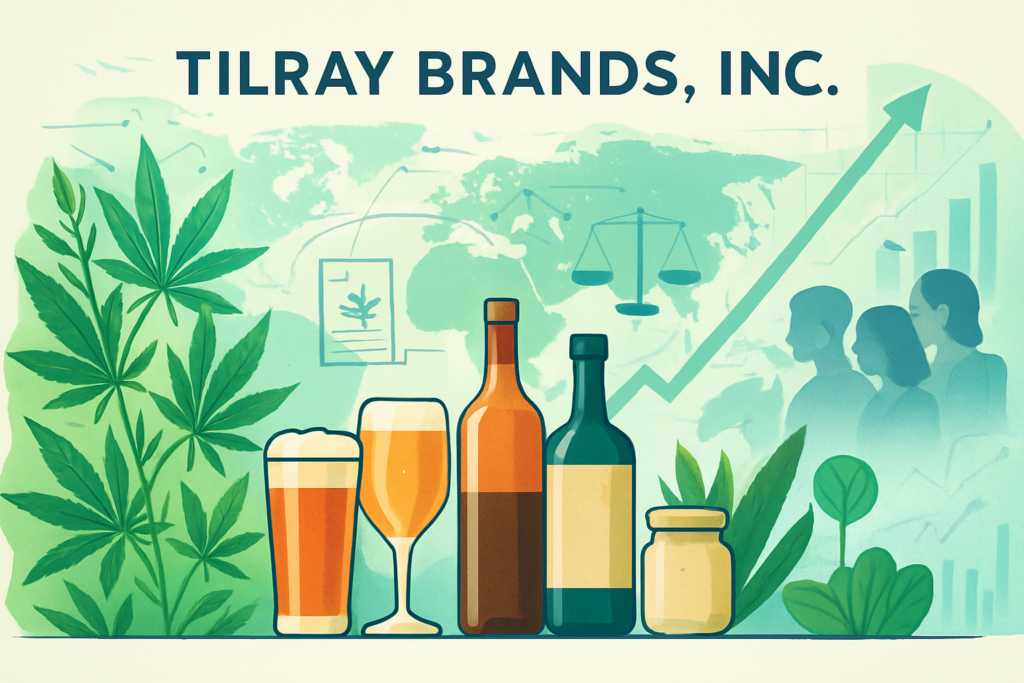
Date: 12/15/2025 1. IntroductionTilray Brands, Inc. (NASDAQ: TLRY) is a diversified global lifestyle consumer packaged goods (CPG) company operating at the dynamic intersection of the cannabis, alcoholic beverage, and wellness industries. Headquartered in New York City, Tilray boasts a significant operational footprint across Canada, the United States, Europe, Australia, New Zealand, and Latin America, complemented by cultivation facilities in Germany and Portugal. Its strategic evolution into a global CPG entity, significantly driven by the 2021 merger with Aphria, has diversified its revenue streams beyond its core cannabis operations to include a substantial and expanding portfolio of craft beverages and a robust pharmaceutical distribution business. As of December 15, 2025, Tilray is a prominent focus for investors due to several critical developments. The most impactful is the widespread speculation, fueled by reports on December 12, 2025, that President Donald Trump is expected to sign an executive order to reclassify marijuana under federal law. Such a reclassification could alleviate long-standing federal restrictions on banking, reduce tax burdens (specifically the 280E rule), and open avenues for greater institutional investment in the U.S. cannabis market, presenting a significant opportunity for international players like Tilray. The company has also pursued aggressive global expansion and diversification, as highlighted in a November 2025 investor presentation outlining its roadmap to becoming a diversified CPG powerhouse. Recent Q1 FY2026 earnings (ended August 31, 2025) showed a return to net income profitability, marking a positive shift in its financial performance. Tilray's current relevance is multifaceted. In the cannabis industry, it maintains its position as the largest legal cannabis company by revenue in Canada, holding leading sales positions across various adult-use categories. Its international cannabis segment is a significant growth driver, with strong European presence and new inroads into Latin American medical cannabis. Crucially, Tilray is strategically positioned for potential U.S. federal cannabis legalization, leveraging its existing craft beer distribution network to launch hemp-derived Delta-9 (HD-D9) THC drinks across 13 states. In the alcoholic beverage industry, Tilray has rapidly ascended to become the 4th or 5th largest craft brewer in the U.S. by 2025, primarily through aggressive acquisitions. This robust beverage segment serves as a vital diversification strategy, providing a substantial revenue stream that helps mitigate risks associated with the volatile cannabis market. 2. Historical BackgroundTilray Brands, Inc. has undergone a remarkable transformation from its inception as a pioneering Canadian medical cannabis producer to a diversified global CPG company. This evolution is a testament to strategic foresight, significant mergers, and a responsive approach to the dynamic regulatory landscape of the cannabis industry. Tilray was founded in 2013 by Brendan Kennedy, initially operating under Privateer Holdings, a Seattle-based private equity firm. It quickly established itself as one of Canada's first licensed producers of medical cannabis. Early milestones include securing the first institutional investment in the cannabis industry from Founders Fund in 2014, conducting Health Canada-approved clinical trials for medical cannabis in 2016, and initiating exports to Australia and Europe in the same year, laying the groundwork for its international ambitions. A pivotal year was 2018 when Tilray made history by becoming the first cannabis company to trade publicly on a major U.S. stock exchange, listing on NASDAQ with an IPO priced at $17 per share. This year also saw the first legal export of medical cannabis to the U.S. for a clinical trial and the launch of its High Park Company to address Canada's burgeoning adult recreational market. The most significant transformation occurred with the December 2020 announcement of a merger with Aphria, an Ontario-based cannabis manufacturer and distributor, which was completed in May 2021. Structured as a reverse acquisition, Aphria acquired Tilray, with the combined entity operating under the Tilray Brands, Inc. name (TLRY ticker). This merger created the largest global cannabis company by revenue and geographic reach at the time. Irwin D. Simon, then CEO of Aphria, assumed the CEO role of the merged entity, signaling a new strategic direction. Crucially, the merger immediately diversified Tilray's revenue stream, incorporating Aphria's acquisition of SweetWater Brewing Company (November 2020) and marking Tilray's initial significant foray into the beverage alcohol market. Post-Aphria merger, under Irwin Simon's leadership, Tilray further cemented its pivot towards a global CPG powerhouse. In April 2023, it acquired Hexo Corp for approximately US$56 million, consolidating its Canadian cannabis position. A major expansion into beverages occurred in August 2023 when Tilray acquired eight beverage brands and their associated breweries from Anheuser-Busch for $85 million, including prominent names like Alpine Beer Company, Blue Point Brewing Company, Breckenridge Brewery, and others. This move propelled Tilray to become the fourth-largest craft beer company in the U.S. by 2025. This strategic evolution into a diversified CPG company is a direct response to the dynamic and often challenging cannabis industry landscape. With U.S. federal legalization remaining elusive, Tilray proactively diversified its revenue streams, leveraging its beverage and spirits portfolios to gain exposure to the U.S. market and build a resilient "house of brands" across converging industries. 3. Business ModelAs of December 15, 2025, Tilray Brands, Inc. (TLRY) operates a diversified global business model, strategically positioned at the convergence of the cannabis, beverage, and wellness industries. This model aims to capitalize on distinct market opportunities while mitigating the inherent volatility of the cannabis sector through diversification across four primary operating segments: Cannabis, Distribution, Beverage Alcohol, and Wellness. For the fiscal year ended May 31, 2025, Tilray reported total net revenue of $821.3 million. Cannabis SegmentThis segment remains a core revenue driver, focusing on the cultivation, production, distribution, and sale of both medical and adult-use cannabis products.
Beverage Alcohol SegmentThis segment involves the production, marketing, and sale of a diverse portfolio of alcoholic and non-alcoholic beverages.
Distribution SegmentThis segment focuses on the purchase, resale, and distribution of pharmaceutical and wellness products.
Wellness SegmentDedicated to the production, marketing, and distribution of hemp-based food and other wellness products.
Tilray's business model emphasizes continuous innovation, operational excellence, and strategic expansion into international markets, supported by a strong balance sheet. The company is also exploring leveraging AI for efficiency and growth across its diverse operations. 4. Stock Performance OverviewTilray Brands, Inc. (TLRY) has experienced a highly volatile and, for much of its public life, challenging stock performance since its NASDAQ IPO on July 19, 2018. A full 10-year analysis is not applicable, but the periods since its IPO reveal a dramatic journey influenced by cannabis industry hype, regulatory hurdles, and strategic pivots. 1-Year Performance (December 2024 – December 2025)Over the past year, TLRY's stock has shown significant fluctuations. While an overall downward trend dominated for most of 2025, it was punctuated by sharp rallies driven by regulatory optimism. As of December 12, 2025, the stock closed at $12.15. Year-to-date in 2025, TLRY was down 36.62% as of December 12, 2025, and had declined 42.26% over the preceding month.
5-Year Performance (December 2020 – December 2025)Over the past five years, Tilray's stock has seen a significant decline from its early 2021 highs, marked by extreme volatility and underperformance. An investment of $500 five years ago would be worth approximately $150.76 today, representing a -21.32% compound annual growth rate (CAGR). The stock has lost over 80% of its value in this period.
Since IPO Performance (July 2018 – December 2025)Tilray's journey since its July 2018 IPO has been a dramatic illustration of speculative fervor followed by a significant market correction.
Comparison to BenchmarksTilray has consistently underperformed major market benchmarks like the S&P 500, which yielded positive returns over the past five years. Its declines during market downturns were significantly steeper. Compared to broader cannabis industry ETFs, Tilray has largely mirrored the sector's "deep winter" since early 2021, facing significant downturns alongside its peers due to regulatory uncertainty, oversupply, and price compression. In conclusion, TLRY has demonstrated extreme volatility since its 2018 IPO. While recent speculative rallies driven by potential U.S. federal reclassification offer short-term excitement, the stock has substantially underperformed broader markets and faced considerable headwinds alongside the wider cannabis sector. Its future remains highly sensitive to regulatory developments and its ability to achieve consistent profitability. 5. Financial PerformanceAs of December 15, 2025, Tilray Brands, Inc. (TLRY) is showing signs of improved financial health, particularly in its most recent quarter, Q1 Fiscal Year 2026 (ended August 31, 2025). However, a historical view reveals significant challenges with consistent profitability. Latest Earnings Report (Q1 FY2026 – ended August 31, 2025)Tilray reported a record net revenue of $209.5 million for Q1 FY2026, a 5% increase year-over-year. Crucially, the company achieved a net income of $1.5 million, marking a significant turnaround from a net loss of $34.7 million in the prior-year quarter. Adjusted net income also improved to $3.9 million, and Adjusted EBITDA rose by 9% to $10.2 million. Revenue Growth
Gross MarginsThe overall gross margin for Tilray in Q1 FY2026 was 27%, a decline from 30% in the prior-year quarter, primarily due to lower margins in the beverage and cannabis segments. Gross profit for Q1 FY2026 was $57.5 million.
Net Income/LossesTilray's Q1 FY2026 net income of $1.5 million is a positive development, but the company has a history of substantial losses. Over the past five years, losses have increased at an average annual rate of 31.4%. For FY2025, the company reported a significant net loss of $2.181 billion, largely due to non-cash impairment charges. Analysts do not expect consistent profitability within the next three years. Debt LevelsTilray has actively reduced its debt. In Q1 FY2026, total outstanding debt was reduced by $7.7 million. As of August 31, 2025, total debt was approximately $4 million (though other sources cite $451.39 million with a total debt/equity ratio of 21.29). The debt-to-equity ratio has reduced from 22.6% to 16.6% over the past five years, and net debt to trailing twelve months adjusted EBITDA was reduced to 0.07x, indicating manageable debt. Cash FlowCash used in operations significantly improved in Q1 FY2026, reducing by $34.0 million to $(1.3) million. This improvement is a positive sign for operational efficiency. However, trailing twelve months (TTM) cash flow from operations was -$83.01 million and free cash flow was -$119.70 million, with a negative free cash flow margin averaging -10% over the last two years, indicating historical cash burn. Key Valuation Metrics (as of December 2025)
Trends and Financial HealthTilray is showing positive momentum with its Q1 FY2026 return to net income and improved operating cash flow, supported by a stronger balance sheet. Management emphasizes cost control and operational efficiency. However, gross margin pressure, historical unprofitability, and modest revenue growth remain concerns. The company has historically burned cash, and share dilution is expected. Tilray remains a high-risk investment, with significant upside potential tied to U.S. federal cannabis reclassification and consistent operational execution. 6. Leadership and ManagementAs of December 15, 2025, Tilray Brands, Inc. (TLRY) is guided by a leadership team and board of directors focused on executing its vision to transform into a diversified global consumer packaged goods (CPG) powerhouse. The strategic pivot from a pure-play cannabis company to a broader lifestyle entity has been the defining characteristic of the current leadership's tenure. CEO: Irwin D. SimonIrwin D. Simon serves as the Chairman and Chief Executive Officer. Appointed in March 2019, Simon has approximately 6.75 years of experience leading Tilray and its predecessor, Aphria. He is widely recognized for his extensive background in the organic and natural products industry, having founded and led The Hain Celestial Group for three decades. His leadership was instrumental in transforming Aphria into a profitable global cannabis company before the merger with Tilray. For fiscal year 2025, Simon's total compensation was reported at $10.30 million, which is above average for companies of comparable size, despite the company's reported net loss. Key Leadership Team MembersThe executive team, with an average tenure of 4.4 years, brings a mix of financial, strategic, legal, and operational expertise:
Board of DirectorsThe Board of Directors comprises seven members, chaired by Irwin D. Simon. The company's policy allows the CEO to also serve as Board Chairperson, aiming for alignment between the board and management. Key independent directors include Renah Persofsky (Vice-Chair and Lead Director) and John Herhalt, re-elected as a Class I director. Steven M. Cohen, with extensive legal and executive experience, was appointed as a Class III independent board member in December 2024. A proposal to declassify the board at the 2025 annual meeting did not receive the required majority, meaning the board remains classified. Strategic VisionTilray's strategic vision, as of December 2025, is to become "one of the world's most trusted lifestyle and CPG companies" by leading at the convergence of the beverage, cannabis, and wellness industries. This vision is supported by:
Corporate Governance PracticesTilray maintains a robust corporate governance framework, including Corporate Governance Guidelines, a Code of Conduct, and an Insider Trading Policy. The Audit, Compensation, and Nominating and Corporate Governance Committees are all composed of independent directors. The company recently won a lawsuit in Delaware affirming its voting standard, demonstrating adherence to correct procedures. Approximately 70% of voting stockholders supported the non-binding advisory resolution on executive compensation at the 2025 annual meeting. Impact of Leadership Decisions on Company TrajectoryLeadership decisions have profoundly shaped Tilray's trajectory:
While the strategic direction is clear, the substantial net loss in fiscal year 2025 (due to non-cash impairment charges) indicates that achieving sustained profitability through this strategy remains an ongoing challenge. Mixed market sentiment suggests investors are closely watching how leadership decisions translate into improved financial results and long-term shareholder value. 7. Products, Services, and InnovationsAs of December 15, 2025, Tilray Brands, Inc. (TLRY) boasts a diverse and innovative portfolio spanning cannabis, beverage alcohol, and wellness segments. The company's commitment to product differentiation, scientific innovation, and consumer-first design is evident across its offerings, contributing significantly to its competitive edge. Current Products and ServicesCannabis SegmentTilray holds a leading position in the Canadian cannabis market and is a significant player in international medical cannabis.
Beverage Alcohol SegmentTilray is the fourth-largest craft beer producer in the U.S., with a rapidly expanding global beverage presence.
Wellness SegmentFocuses on hemp-based foods and wellness products.
Distribution SegmentIncludes the purchase and resale of pharmaceutical and wellness products through CC Pharma in Germany. Tilray also leverages its robust national scale and distribution partnerships in the U.S. for its craft beverage brands, establishing a platform for cannabis beverages as regulations evolve. Innovation Pipeline and R&D EffortsTilray is committed to continuous innovation across its segments:
PatentsTilray holds patents related to cannabis processing, such as "Methods and apparatus for low-pressure radiant energy processing of cannabis" (Patent number: 11160891). This innovation focuses on reducing bioburden using low-pressure radiant energy to maintain product quality (terpene, smell, color, texture) while achieving microbial killing and drying. Contribution to Competitive EdgeTilray's diversified portfolio and innovative approach contribute significantly to its competitive advantage:
8. Competitive LandscapeTilray Brands, Inc. (TLRY) operates within a highly competitive landscape across both the cannabis and alcoholic beverage sectors as of December 15, 2025. Its diversified business model is a strategic response to these competitive pressures, aiming to build resilience and capture market share in evolving consumer goods segments. Main Industry RivalsCannabis SectorTilray faces competition from various players, categorized by geographic and operational focus:
Alcoholic Beverage SectorTilray's aggressive expansion into alcoholic beverages has positioned it against a wide array of competitors:
Market ShareCannabis Sector
Alcoholic Beverage Sector
Competitive Strengths and WeaknessesCompetitive Strengths
Competitive Weaknesses
9. Industry and Market TrendsTilray Brands, Inc. (TLRY) operates within a rapidly evolving global market as of December 15, 2025, heavily influenced by significant trends across the cannabis and alcoholic beverage sectors, broader macroeconomic factors, dynamic supply chain characteristics, and distinct cyclical effects. Tilray's strategic diversification into a CPG powerhouse is a direct response to these trends, aiming to build resilience and capitalize on emerging opportunities. Sector-Level Trends: CannabisThe cannabis industry in late 2025 is a mix of promising growth, regulatory shifts, and challenging market dynamics:
Sector-Level Trends: Alcoholic BeveragesThe alcoholic beverage industry in 2025 faces "pronounced strain" and "subdued but opportunity-rich" conditions:
Macro DriversSeveral overarching macroeconomic factors impact both of Tilray's core industries:
Supply Chain DynamicsTilray's operations are affected by specific supply chain characteristics:
Cyclical EffectsBoth industries exhibit distinct cyclical behaviors:
Tilray's diversified CPG strategy aims to leverage growth opportunities in cannabis and alcoholic beverages while building resilience against the cyclical downturns and regulatory uncertainties inherent in both sectors. The potential U.S. cannabis reclassification and evolving consumer preferences in alcohol represent both significant opportunities and challenges. 10. Risks and ChallengesTilray Brands, Inc. (TLRY) faces a complex array of risks and challenges as of December 15, 2025, stemming from operational inefficiencies, a dynamic and often uncertain regulatory environment, and inherent broader market volatility within the cannabis sector. These factors could significantly impact its business and stock performance. Operational RisksTilray continues to grapple with significant operational hurdles, primarily related to profitability and cost structure. The company has reported negative earnings per share (EPS), a lack of consistent positive net income, and a notably negative return on equity (ROE) of -85.74%. These reflect ongoing struggles to achieve sustained profitability, with high operational expenses often exceeding revenue growth. Net and operating margins remain substantially in the red. Analysts suggest an urgent need for operational restructuring to address an unsustainable cost structure. While Tilray's diversified business model across cannabis, beverages, and distribution offers some resilience, it also introduces complexity, making investment analysis challenging. The beverage segment, despite strategic efforts, has seen flat revenue performance and faces intense competition. The Canadian cannabis market, though Tilray is a leader, is highly competitive with tight margins. International expansion, a key growth area, is hampered by delays in medical cannabis permits and regulatory/quota issues in European markets, limiting near-term growth. Regulatory RisksThe regulatory landscape, particularly in the United States, poses the most significant and unpredictable risks.
Potential ControversiesWhile specific ethical or legal controversies are not extensively detailed, the highly speculative and politically charged nature of the cannabis industry itself creates an environment ripe for investor discontent if anticipated regulatory changes or financial performance improvements do not materialize. Significant stock volatility, reliance on external financing, and past reverse stock splits could be viewed controversially by some shareholders if not accompanied by sustained profitability. The company's ongoing struggles with profitability and indicators like its negative Altman Z-Score (-4.64 to -5.11) suggest a potential risk of bankruptcy, which could become a focal point of concern. Broader Market RisksTilray operates within a cannabis sector characterized by extreme volatility and sensitivity to political developments.
11. Opportunities and CatalystsAs of December 15, 2025, Tilray Brands, Inc. (TLRY) is strategically positioned to capitalize on several key opportunities and catalysts that could drive significant growth and positive performance across its diversified portfolio. 1. Growth Levers & Diversified Consumer Packaged Goods (CPG) StrategyTilray is building a global "house of brands" across cannabis, beverage, and wellness, aiming to reduce cannabis market volatility and capture a broader consumer base.
2. New Market Potential
3. Mergers and Acquisitions (M&A) Prospects
4. Near-Term Events
Tilray's strategy of global diversification, operational efficiency, and innovation across its cannabis, beverage, and wellness segments positions it for significant growth. The most impactful near-term catalyst remains the potential reclassification of cannabis in the U.S., which could fundamentally alter the financial landscape for companies like Tilray, alongside continued international expansion and product development in high-growth categories. 12. Investor Sentiment and Analyst CoverageAs of December 15, 2025, investor sentiment and analyst coverage for Tilray Brands, Inc. (TLRY) present a complex picture, characterized by both cautious optimism and significant volatility, largely driven by the ongoing speculation surrounding U.S. federal cannabis reform. Wall Street Ratings and Price TargetsAnalyst coverage for Tilray is varied, generally coalescing around a "Hold" or "Moderate Buy" consensus.
Hedge Fund Activity and Institutional Investor MovesInstitutional investor interest in Tilray appears low overall but has seen recent activity.
Retail Investor ChatterRetail investor sentiment is highly reactive and exhibits significant volatility.
Overall Market PerceptionThe overall market perception of Tilray is one of cautious optimism, heavily swayed by the potential for U.S. federal cannabis reform, while acknowledging inherent operational challenges and high risk.
13. Regulatory, Policy, and Geopolitical FactorsAs of December 15, 2025, Tilray Brands, Inc. (TLRY) operates within a complex global regulatory, policy, and geopolitical landscape. These factors present both substantial opportunities for expansion and intricate challenges for the company's operations and financial performance. Regulatory and Policy Factors1. United States Federal PolicyThe most impactful policy development is the potential reclassification of marijuana from Schedule I to Schedule III under the Controlled Substances Act (CSA). President Trump is reportedly considering an executive order to this effect, with finalization expected in late 2025 or early 2026.
2. Canadian RegulationsCanada, Tilray's home market, has implemented significant amendments to its Cannabis Regulations in March and April 2025.
3. European RegulationsEurope is a crucial growth market, with Germany leading significant policy shifts.
4. Company-Specific ComplianceTilray has faced challenges maintaining compliance with Nasdaq's minimum share price requirement, leading to a reverse stock split on December 1, 2025. Government IncentivesWhile direct government incentives to Tilray are not extensively detailed, several policy changes act as indirect incentives:
Geopolitical Risks and OpportunitiesOpportunities
Risks
In summary, Tilray Brands, Inc. faces a complex interplay of regulatory, policy, and geopolitical factors. While promising developments like potential U.S. rescheduling and Canadian regulatory streamlining offer significant opportunities, the company must navigate fragmented and unpredictable regulatory environments globally, particularly concerning potential tightening in European medical cannabis markets and ongoing compliance efforts. 14. Outlook and ScenariosAs of December 15, 2025, Tilray Brands, Inc. (TLRY) stands at a pivotal juncture, navigating a complex and evolving global cannabis market while aggressively diversifying into beverages and wellness. The company's strategic pivot towards becoming a broader consumer packaged goods (CPG) powerhouse is designed to mitigate regulatory risks inherent in the cannabis sector. Current Financial Snapshot (FY2025 ended May 31, 2025, and Q1 FY2026 ended August 31, 2025): Strategic Pivots and Shifts:
Outlook and ScenariosShort-Term Projections (Next 6-12 Months)The short-term outlook is heavily influenced by U.S. federal cannabis policy shifts and the execution of its diversification strategy.
Long-Term Projections (1-5 Years and Beyond)The long-term trajectory hinges on leveraging its diversified CPG platform, global cannabis market expansion, and achieving sustained profitability.
In conclusion, Tilray Brands, Inc. is actively repositioning itself. Its short-term fortunes are heavily tied to U.S. federal cannabis policy developments and its ability to continue demonstrating operational improvements. Long-term success will depend on its strategic execution in global market expansion and its capacity to achieve sustained profitability across its diverse portfolio. 15. ConclusionAs of December 15, 2025, Tilray Brands, Inc. (TLRY) presents a complex and high-stakes investment proposition. The company has strategically evolved from a pure-play cannabis producer into a diversified global lifestyle consumer packaged goods (CPG) entity, spanning cannabis, alcoholic beverages, distribution, and wellness. This diversification aims to build resilience and capture growth opportunities across converging consumer markets. Summary of Key Findings:
Balanced Perspective on Investment Potential: Strengths & Opportunities: Tilray's strategic diversification into a global CPG company offers multiple revenue streams and mitigates risks associated with a single, highly regulated industry. Its strong international cannabis growth, robust U.S. beverage footprint, and early entry into hemp-derived THC beverages position it for future expansion. The potential U.S. federal cannabis reclassification is a transformative catalyst that could fundamentally improve its financial outlook by reducing tax burdens and easing banking restrictions. The company's focus on operational efficiency and a stronger balance sheet also provides a foundation for future growth. Weaknesses & Challenges: The primary challenge remains Tilray's historical lack of consistent GAAP profitability, with significant net losses largely due to non-cash impairment charges. The stock's extreme volatility makes it a high-risk investment. Competition is fierce across all its segments, and regulatory uncertainty, particularly in the U.S. and potential tightening in European medical cannabis markets, continues to pose headwinds. The success of integrating numerous acquisitions and translating strategic initiatives into sustained positive cash flow and earnings is paramount. What Investors Should Watch: Near Term (Next 6-12 months):
Long Term (1-5+ years):
In conclusion, Tilray Brands, Inc. is a speculative investment with significant potential upside driven by external regulatory shifts and internal strategic execution. While the recent positive financial signs and the prospect of U.S. federal cannabis reform offer compelling opportunities, investors must remain patient and diligently monitor both industry-wide developments and the company's fundamental operational improvements to assess its long-term viability. This content is intended for informational purposes only and is not financial advice More NewsView More
Why Taiwan Semiconductor's 6.5% Dip Could Be a Smart Buy ↗
December 16, 2025
Via MarketBeat

RTX Surges to Record Highs as Defense Orders Explode ↗
December 16, 2025
Via MarketBeat
Tickers
RTX

Smart Money Is Buying Auto Suppliers, Not Car Brands ↗
December 16, 2025
Higher Beef Prices Are Here: Best Steakhouse Stocks for 2026 ↗
December 16, 2025
Via MarketBeat

AI Runs on Power—And Constellation Energy Controls the Switch ↗
December 16, 2025
Recent QuotesView More
Stock Quote API & Stock News API supplied by www.cloudquote.io
Quotes delayed at least 20 minutes. By accessing this page, you agree to the Privacy Policy and Terms Of Service.
© 2025 FinancialContent. All rights reserved.
|