Apple Inc. (AAPL): A Deep Dive into the Tech Giant’s Future (12/5/2025)
By:
PredictStreet
December 05, 2025 at 22:40 PM EST
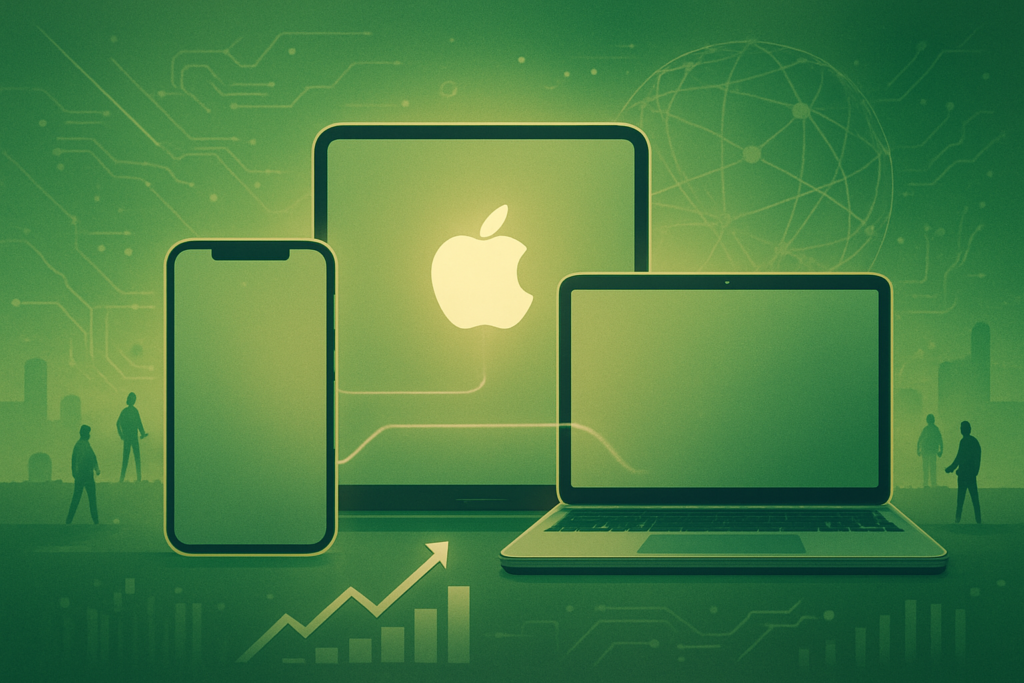
1. IntroductionApple Inc. (NASDAQ: AAPL) remains a dominant force in the global technology sector as of December 5, 2025, distinguished by its strong market position, ongoing innovation, and robust financial performance, making it a continued focus for investors. The company is renowned for designing, manufacturing, and marketing a diverse range of consumer electronics, software, and online services, with its ecosystem including the iPhone, Mac personal computers, iPad tablets, and a suite of wearables and accessories such as AirPods, Apple Watch, and the recently upgraded Apple Vision Pro. As of late 2025, Apple's relevance is underscored by significant executive transitions, including the appointment of Jennifer Newstead as the new General Counsel and the retirement of John Giannandrea, Senior Vice President of Machine Learning and AI Strategy. These changes coincide with an aggressive AI push, marked by the hiring of Amar Subramanya as the new AI Vice-President and the integration of "Apple Intelligence" features across its devices. The phenomenal success of the iPhone 17 series has enabled Apple to regain its lead over Samsung in global smartphone market share, while its high-margin services business continues rapid expansion, crossing $100 billion in annual revenue. With a market capitalization of approximately $4.14 trillion USD, Apple consistently contends for the top spot as the world's most valuable company. Investors remain focused on Apple due to its strong financials, positive analyst sentiment, and the promising prospects of AI-driven growth. The company's sticky ecosystem and consistent share buybacks further enhance shareholder value, positioning it as a relatively "defensive" stock in uncertain markets. Despite these strengths, investors also acknowledge potential risks, including Apple's high valuation, the possibility of demand softening in key markets like China, the critical need for successful AI execution, and ongoing regulatory scrutiny. 2. Historical BackgroundApple Computer Company was founded on April 1, 1976, by Steve Jobs, Steve Wozniak, and Ronald Wayne. Operating initially from Jobs' parents' home, the company's first product, the Apple I, was a circuit board computer designed by Wozniak. Apple Computer, Inc. was incorporated on January 3, 1977, with funding from Mike Markkula. The Apple II, introduced in 1977, became its first major commercial success, establishing Apple as a pioneer in personal computing. The company went public on December 12, 1980, with an IPO that created hundreds of millionaires. A significant leap came with the Macintosh in 1984, one of the first personal computers to feature a graphical user interface (GUI) and a mouse. However, internal conflicts led to Steve Jobs' departure in 1985. Apple struggled through the late 1980s and 1990s, losing market share to the Wintel duopoly. Jobs' return in 1997, following Apple's acquisition of NeXT, marked a critical turning point. He revitalized the company by streamlining product lines and launching the iconic "Think Different" campaign. This era saw the introduction of groundbreaking products: the iMac (1998), the iPod (2001), the iTunes Store (2003), the opening of Apple Stores (2001), and the revolutionary iPhone (2007), which led to the company being renamed Apple Inc. The App Store followed in 2008, creating a new economy for applications. The iPad (2010) further cemented Apple's innovation leadership. Following Steve Jobs' passing in 2011, Tim Cook assumed the CEO role. Under Cook's leadership, Apple continued its trajectory, introducing the Apple Watch (2014) and AirPods (2016). A key transformation has been the strategic shift towards diversifying revenue beyond hardware by heavily investing in services, including Apple Music (2015), Apple TV+, Apple Arcade, and Apple Pay. This focus on subscription-based models has provided steady recurring revenue. Apple reached a $1 trillion market capitalization in 2018, $2 trillion in 2020, and briefly surpassed $4 trillion in October 2025. Recent technological advancements include the transition to custom-designed Apple Silicon (M1 chip in 2020), the introduction of the Apple Vision Pro (2024), and the launch of the iPhone 17 series and macOS Tahoe in 2025, alongside the M5 chip announcement in December 2025. The company has also faced significant antitrust challenges, notably from Epic Games and the U.S. Department of Justice, and increasing regulatory scrutiny in the EU and India. As of November 2025, succession planning for Tim Cook is ongoing, with John Ternus identified as a potential successor. 3. Business ModelApple Inc. (AAPL) operates a highly diversified and integrated business model, characterized by its seamless ecosystem of hardware, software, and services. As of December 5, 2025, the company leverages strong brand loyalty and an innovative product pipeline to drive significant revenue across multiple segments and geographies. Revenue Sources:
Product Lines:
Services:
Operating Segments:
Customer Base:
4. Stock Performance OverviewApple Inc. (AAPL) has demonstrated significant growth and resilience in its stock performance over the past decade, characterized by substantial returns, strategic stock splits, and key drivers ranging from innovative product launches and robust services growth to navigating global economic and geopolitical challenges. As of December 5, 2025, the stock's performance reflects its strong market position, albeit with periods of volatility influenced by external factors. 1-Year Horizon (December 2024 – December 2025): 5-Year Horizon (December 2020 – December 2025): 10-Year Horizon (December 2015 – December 2025): Notable Stock Moves and Splits:
Notable stock moves include a significant early 2025 decline due to tariffs and economic uncertainty, followed by a rebound after a Q3 2025 earnings beat, and reaching record highs in late 2025 with an all-time high closing price of $286.19 on December 2, 2025. Key Drivers:
5. Financial PerformanceAs of December 5, 2025, Apple Inc. (AAPL) has recently reported strong financial results for the fourth fiscal quarter of 2025 (ended September 27, 2025), demonstrating growth across key metrics, primarily driven by its Services segment and the latest iPhone lineup. Latest Earnings (Q4 FY2025, ended Sept 27, 2025):
Revenue Growth:
Profit Margins:
Debt Levels (as of Sept 27, 2025):
Cash Flow:
Key Valuation Metrics (early December 2025):
Apple anticipates strong performance for Q1 fiscal 2026 (December quarter), projecting 10-12% year-over-year revenue growth, double-digit iPhone growth, and sustained Services growth. Gross margin is expected between 47-48%. The company continues to increase its investments in AI. 6. Leadership and ManagementAs of December 5, 2025, Apple Inc. (AAPL) is navigating a period of significant leadership transitions while upholding its core corporate strategies and governance principles. CEO: Tim Cook Current Leadership Team
Board of Directors Corporate Strategy
Governance Reputation 7. Products, Services, and InnovationsApple Inc. (AAPL) continues to solidify its position as a global technology leader through a robust ecosystem of products, an expanding suite of services, aggressive innovation, substantial research and development, a comprehensive patent portfolio, and a well-defined competitive strategy as of December 5, 2025. Current Product and Service Offerings:
Innovation Pipelines and Research & Development Efforts:
Patents:
Competitive Edge:
8. Competitive LandscapeApple Inc. (AAPL) continues to be a dominant force in the technology industry as of December 5, 2025, characterized by a robust ecosystem, strong brand loyalty, and significant market presence across several key segments. However, the company also navigates intense competition, regulatory scrutiny, and supply chain challenges. Primary Industry Rivals:
Market Share in Key Segments (as of Q3 2025 or projections for 2025):
Competitive Strengths:
Competitive Weaknesses:
9. Industry and Market TrendsAs of December 5, 2025, Apple Inc. (AAPL) is navigating a dynamic landscape marked by evolving sector-level trends, significant macroeconomic shifts, a strategic overhaul of its supply chain, and distinct cyclical effects across its product and service offerings. Sector-Level Trends:
Macro Drivers:
Supply Chain Dynamics:
Cyclical Effects:
10. Risks and ChallengesApple Inc. (AAPL) is navigating a complex landscape of operational, regulatory, market, and reputational risks and challenges as of December 5, 2025. These stem from evolving geopolitical dynamics, intense competition, increasing regulatory scrutiny, and the inherent complexities of a global technology giant. Operational Risks and Challenges:
Regulatory Risks and Challenges:
Market Risks and Challenges:
Reputational Risks and Challenges:
11. Opportunities and CatalystsAs of December 5, 2025, Apple Inc. (AAPL) is positioned for continued growth, driven by strategic advancements in its core product lines, aggressive expansion into new markets, a focused M&A strategy, and a robust pipeline of near-term catalysts. The company's financial outlook remains strong, with analysts generally optimistic about its performance heading into 2026. Analysis of Growth Levers:
New Market Opportunities:
Potential Mergers and Acquisitions (M&A): Near-Term Catalysts (as of 12/5/2025):
12. Investor Sentiment and Analyst CoverageAs of December 5, 2025, investor sentiment for Apple Inc. (AAPL) presents a generally positive outlook, underscored by favorable Wall Street analyst ratings, significant institutional holdings, and ongoing discussions among retail investors, despite some mixed signals and concerns regarding valuation and AI strategy. Investor Sentiment Overview: Wall Street Analyst Ratings:
Hedge Fund Activity (as of Q3 2025 13F Filings):
Institutional Investor Positions (as of Q3 2025 13F Filings):
Retail Investor Chatter:
13. Regulatory, Policy, and Geopolitical FactorsAs of December 5, 2025, Apple Inc. (AAPL) navigates a complex global landscape characterized by intensifying regulatory scrutiny, evolving government policies, significant geopolitical risks, and emerging opportunities. Regulatory Landscape:
Government Policies:
Geopolitical Risks:
Opportunities:
14. Outlook and ScenariosApple Inc. (AAPL) is facing a dynamic period characterized by both significant opportunities and notable challenges as of December 5, 2025. The future outlook for the tech giant is shaped by its innovation pipeline, particularly in artificial intelligence (AI) and new product categories, alongside prevailing macroeconomic conditions and intense regulatory scrutiny. Overall Outlook: Bull Case Scenarios:
Bear Case Scenarios:
Short-Term Projections (as of 12/5/2025):
Long-Term Projections (2025-2030 and Beyond):
15. ConclusionApple Inc. (AAPL) enters late 2025 with strong financials, a loyal customer base, and an exciting product and AI roadmap. However, the high valuation, intense regulatory pressures, and evolving competitive landscape mean that future growth is not without challenges. Patient investors might consider dollar-cost averaging, carefully monitoring the company's ability to innovate, adapt to regulatory changes, and successfully monetize its significant investments in AI. Summary of Key Findings: Recent product launches, including the iPhone 17 lineup, AirPods Pro 3, and new Apple Watch models, have seen strong demand, with the iPhone 17 driving expectations for a "best ever" December quarter (Q1 2026) with 10-12% YoY revenue growth. Apple's installed base of active devices is at an all-time high, reflecting strong customer loyalty. The company maintains a robust financial position with $132 billion in cash and marketable securities and actively returns value to shareholders. Future growth is heavily tied to advancements in Artificial Intelligence (AI) and new product cycles. Apple is integrating advanced AI ("Apple Intelligence," revamped Siri, potential Google Gemini partnership) expected to enhance services and add substantial value by 2026. Upcoming innovations include a foldable iPhone (H2 2026), Vision Pro 2 (late 2025/early 2026) with the M5 chip, and new smart home devices, all poised to unlock new market opportunities. Balanced Perspective on Investment:
Bearish Arguments and Risks:
Analyst ratings are mixed but lean towards a "Moderate Buy," with average price targets from $280 to $291. Individual price targets show significant divergence, from $215 to $411, reflecting varied expert views. What Investors Should Watch For:
In conclusion, Apple (AAPL) enters late 2025 with strong financials, a loyal customer base, and an exciting product and AI roadmap. However, the high valuation, intense regulatory pressures, and evolving competitive landscape mean that future growth is not without challenges. Patient investors might consider dollar-cost averaging, carefully monitoring the company's ability to innovate, adapt to regulatory changes, and successfully monetize its significant investments in AI. This content is intended for informational purposes only and is not financial advice More NewsView More
Via MarketBeat
2 Stocks to Avoid as Crypto Momentum Wanes ↗
December 21, 2025
Via MarketBeat

3 Dividend Growth Stocks Analysts Are Upgrading for 2026 ↗
December 21, 2025
Via MarketBeat

These 3 Banks Are Rallying Into Year-End, But Will It Continue? ↗
December 20, 2025
Via MarketBeat

Recent QuotesView More
Stock Quote API & Stock News API supplied by www.cloudquote.io
Quotes delayed at least 20 minutes. By accessing this page, you agree to the Privacy Policy and Terms Of Service.
© 2025 FinancialContent. All rights reserved.
|