Tesla: Navigating the Crossroads of Automotive Innovation and AI Ambition
By:
PredictStreet
December 06, 2025 at 02:22 AM EST
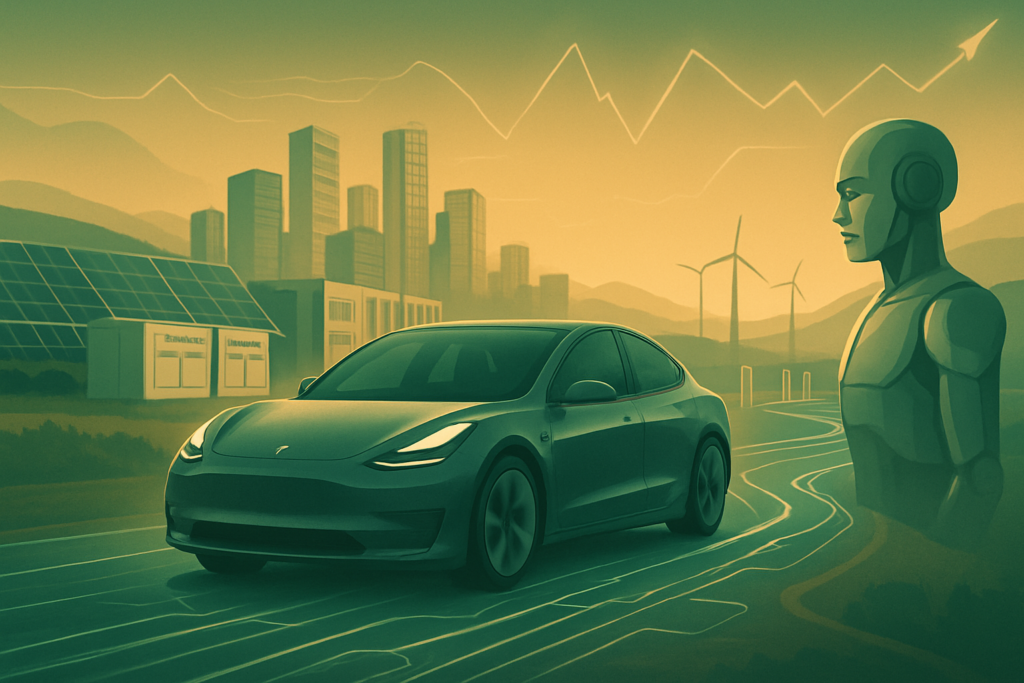
Tesla, Inc. (NASDAQ: TSLA), the American multinational automotive and clean energy company headquartered in Austin, Texas, remains a focal point in global technology and financial markets. Founded in 2003, and famously led by CEO Elon Musk since 2008, Tesla’s mission to accelerate the world's transition to sustainable energy has propelled it to the forefront of the electric vehicle (EV) revolution and into the burgeoning fields of energy storage, artificial intelligence (AI), and robotics. Tesla’s current relevance stems from its continuous technological innovation, particularly in autonomous driving (Full Self-Driving, or FSD), AI, and robotics (Optimus project), positioning it as a pioneer beyond just automotive manufacturing. The company revolutionized the automotive industry by proving the viability and desirability of high-performance electric vehicles, compelling traditional automakers to fast-track their own electrification strategies. As of December 5, 2025, Tesla’s product line has expanded to include a new, lower-priced Model 3 in Europe, an entry-level Model Y Standard trim, and the ongoing rollout of the Cybertruck. The company is also aggressively pushing its FSD (Supervised) system globally, integrating AI with vehicle functions via "Grok with Navigation Commands (Beta)," and planning a dedicated "robotaxi" (Cybercab) for 2026. Its energy generation and storage segment, encompassing Powerwall and Megapack, continues to show robust growth, with over 30% gross margins and 81% year-over-year deployment growth in Q3 2025. Despite facing intensifying competition, particularly from Chinese manufacturers like BYD, and softening demand in some markets, Tesla’s strategic adjustments and relentless pursuit of innovation maintain its high relevance in the global technology and automotive landscape. Its stock has experienced volatility throughout 2025, but shows resilience, up approximately 25.83% over the last 12 months, reflecting investor confidence in its long-term vision to become an AI, Robotics, and Sustainable Energy powerhouse. 2. Historical BackgroundTesla Motors, Inc. was incorporated on July 1, 2003, by engineers Martin Eberhard and Marc Tarpenning, named after the visionary inventor Nikola Tesla. Their initial vision was to create a technology-driven car manufacturer focused on advanced battery technology, software, and electric motors. Elon Musk’s pivotal $6.5 million investment in February 2004 made him the largest shareholder and chairman, eventually leading him to assume the CEO role in October 2008. Early milestones were critical in establishing Tesla’s credibility:
Key transformations over time saw Tesla evolve from a niche sports car maker to a broader mass-market and energy solutions provider. This included the expansion of its product line with the Model X SUV (2015), the mass-market Model 3 (2017), and the Model Y crossover (2020), followed by the Tesla Semi (2022) and Cybertruck (2023). A cornerstone of its strategy has been vertical integration and the construction of Gigafactories in Nevada, New York, Shanghai, Berlin, and Texas, significantly scaling battery and vehicle production. The acquisition of SolarCity in 2016 marked a significant expansion into clean energy, leading to the company’s name change to "Tesla, Inc." in 2017, reflecting its focus on solar panels, solar shingles, and stationary battery storage (Powerwall, Megapack). Tesla also pioneered a direct-to-consumer sales model and continuously developed its advanced driver-assistance systems and software capabilities. 3. Business ModelAs of December 5, 2025, Tesla's business model is a dynamic blend of electric vehicle manufacturing, energy solutions, and increasingly, software and artificial intelligence. While automotive sales remain the primary revenue driver, the company is strategically diversifying into AI and robotics, which are increasingly central to its long-term vision. Revenue Sources:
Product Lines:
Services: Vehicle servicing, Supercharger Network, home charging products, insurance, financing, and a nascent Robotaxi service. Market Segments and Customer Base: Tesla primarily targets affluent, tech-savvy, and environmentally conscious individuals aged 25-55, with a median household income of approximately $144,341. While historically appealing to innovators and early adopters, the introduction of more affordable models is broadening its appeal to middle-income segments. The company is also expanding into fleet operators, commercial vehicles, and industrial sectors, particularly with its energy storage solutions. 4. Stock Performance OverviewTesla (TSLA) has delivered a highly volatile yet substantially rewarding performance across different time horizons, reflecting its disruptive market position and investor sentiment. 1-Year Horizon (December 2024 – December 2025):
5-Year Horizon (December 2020 – December 2025):
10-Year Horizon (December 2015 – December 2025):
In summary, Tesla's stock performance reflects a company with explosive growth and market leadership, but also high volatility influenced by competitive pressures, macroeconomic shifts, and the unpredictable nature of its CEO's public actions. 5. Financial PerformanceTesla's financial performance in Q3 2025, reported on October 22, 2025, presented a mixed picture of record revenue and deliveries alongside significant profitability compression. Recent Earnings:
Revenue Growth:
Gross and Operating Margins:
Debt Levels:
Cash Flow:
Key Valuation Metrics (as of early December 2025):
6. Leadership and ManagementAs of December 5, 2025, Tesla, Inc. (TSLA) is primarily shaped by its charismatic and often controversial CEO, Elon Musk, supported by a focused leadership team and a board of directors that has faced scrutiny regarding governance. CEO: Leadership Team:
Board of Directors:
Corporate Strategy:
Governance Reputation:
7. Products, Services, and InnovationsAs of December 5, 2025, Tesla (TSLA) continues to drive innovation across its core automotive business, expanding energy division, and ambitious ventures into artificial intelligence and robotics. This multifaceted approach is supported by significant R&D investments and a strategic patent portfolio. Current Product and Service Offerings: Vehicle Lineup:
Energy Products:
Services:
Innovation Pipelines: Upcoming Vehicles and Platforms:
AI and Robotics:
Battery Technology and Manufacturing:
R&D Investments: Patents: Sources of Competitive Edge:
8. Competitive LandscapeAs of December 5, 2025, Tesla faces an increasingly competitive landscape across both its electric vehicle (EV) and energy storage segments, with market share shifts driven by aggressive new entrants and established players. Major Industry Rivals: Electric Vehicle (EV) Segment:
Energy Storage Segment (Powerwall, Megapack):
Estimated Market Share in Key Segments (as of 12/5/2025): Electric Vehicles (EVs):
Energy Storage (ESS):
Competitive Strengths:
Competitive Weaknesses:
9. Industry and Market TrendsThe electric vehicle (EV) and renewable energy sectors are undergoing profound transformations as of December 5, 2025, driven by a confluence of macro drivers, evolving supply chain dynamics, and distinct cyclical effects. These trends present both significant opportunities and challenges for Tesla. Macro Drivers:
Supply Chain Dynamics:
Cyclical Effects:
Key Sector-Level Trends Impacting Tesla's Business:
10. Risks and ChallengesTesla (TSLA) faces a multifaceted array of operational, regulatory, and market risks, compounded by ongoing controversies, which could significantly impact its growth and profitability as of December 5, 2025. Operational Risks:
Regulatory Risks:
Ongoing Controversies:
Market Risks:
11. Opportunities and CatalystsTesla (TSLA) is strategically positioning itself for substantial growth, leveraging its diversified business segments and ambitious technological ventures. As of December 5, 2025, key growth levers, potential new markets, and anticipated near-term catalysts underscore its future potential. Key Growth Levers:
Potential New Markets:
M&A Opportunities: Near-term Catalysts (as of 12/5/2025):
12. Investor Sentiment and Analyst CoverageAs of December 5, 2025, investor sentiment for Tesla (TSLA) presents a nuanced picture, characterized by a prevailing "Hold" consensus among Wall Street analysts, mixed movements from hedge funds, and a blend of long-term conviction and increasing skepticism among retail investors. Wall Street Analyst Ratings:
Hedge Fund Moves (Q3 2025 Filings):
Institutional Investors (Q3 2025 Filings): Retail Investor Sentiment:
13. Regulatory, Policy, and Geopolitical FactorsAs of December 5, 2025, Tesla (TSLA) operates within a complex web of regulatory, policy, and geopolitical factors that significantly influence its global strategy, compliance, and supply chain. Relevant Laws and Compliance: United States:
Europe:
China:
Government Incentives: United States:
Europe:
China:
Geopolitical Risks and Opportunities:
14. Outlook and ScenariosAs of December 5, 2025, Tesla (TSLA) is at a critical juncture, attempting to pivot from a leading EV manufacturer to a "full-stack AI physical infrastructure firm." This ambitious transformation shapes its future outlook, with both bullish and bearish scenarios hinging on execution, market acceptance, and competitive dynamics. Strategic Pivots: Bull Case ScenariosShort-Term Projections (2026-2027):
Long-Term Projections (2028-2030+):
Bear Case ScenariosShort-Term Projections (2026-2027):
Long-Term Projections (2028-2030+):
15. ConclusionAs of December 5, 2025, Tesla (TSLA) presents a complex and dynamic investment profile, marked by both significant achievements in its diverse business segments and increasing pressures in its core automotive market. The company continues to push boundaries in electric vehicles (EVs), artificial intelligence (AI), robotics, and energy solutions, while navigating intense competition and macroeconomic headwinds. Summary of Key Findings: Balanced Perspective on its Investment Case: Conversely, the bear case highlights the disconnect between Tesla's lofty valuation and its current automotive fundamentals. Critics point to compressed margins, intense competition, and declining market share as evidence of a maturing EV market where Tesla's dominance is challenged. The ambitious AI and robotics ventures, while promising, carry immense execution risk, high capital requirements, and face formidable competition. Regulatory hurdles and the potential for reputational damage from FSD controversies or Elon Musk's actions are also significant concerns. For bears, the stock is overvalued, pricing in a future that is far from guaranteed. What Investors Should Closely Monitor:
Tesla's journey remains one of high ambition and high risk. Its ability to execute on its vision of becoming an AI and robotics leader, while navigating a fiercely competitive and evolving automotive landscape, will determine its long-term trajectory. This content is intended for informational purposes only and is not financial advice More NewsView More
Via MarketBeat

2 Stocks to Avoid as Crypto Momentum Wanes ↗
December 21, 2025
Via MarketBeat

3 Dividend Growth Stocks Analysts Are Upgrading for 2026 ↗
December 21, 2025
Via MarketBeat

These 3 Banks Are Rallying Into Year-End, But Will It Continue? ↗
December 20, 2025
Via MarketBeat

Recent QuotesView More
Stock Quote API & Stock News API supplied by www.cloudquote.io
Quotes delayed at least 20 minutes. By accessing this page, you agree to the Privacy Policy and Terms Of Service.
© 2025 FinancialContent. All rights reserved.
|