Tesla (TSLA): Navigating the Future of Mobility and AI in a Competitive Landscape
By:
PredictStreet
December 08, 2025 at 11:26 AM EST
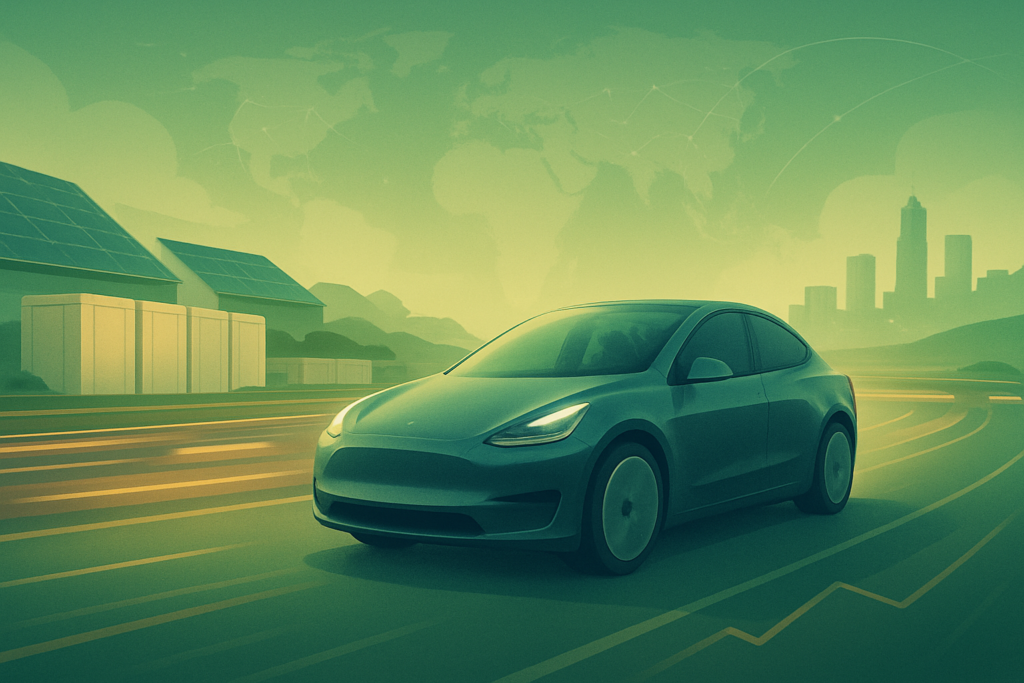
As of December 8, 2025, Tesla, Inc. (NASDAQ: TSLA) remains a highly prominent and often polarizing company in the global financial landscape. Its multifaceted business, ambitious future projects, and the significant influence of CEO Elon Musk consistently place it under intense scrutiny for financial researchers. Headquartered in Austin, Texas, Tesla’s mission is to accelerate the world's transition to sustainable energy. Tesla’s core business segments include Electric Vehicles (EVs) such as the Model S, Model 3, Model X, Model Y, Cybertruck, and Tesla Semi. The company is also a significant player in Energy Generation and Storage, offering Powerwall, Powerpack, and Megapack solutions, alongside solar panels and solar roofs. Furthermore, Tesla is heavily invested in Artificial Intelligence (AI) and Robotics, with its Full Self-Driving (FSD) technology, ambitious robotaxi (Cybercab) plans, and the humanoid robot Optimus. The Supercharging Network and various software and services also contribute to its ecosystem. Tesla is currently in focus due to a confluence of factors: volatile stock performance (surging over 7% year-to-date by December 2, but experiencing a nearly 50% drop earlier in the year), declining profitability amidst revenue growth (Q1 2025 revenue decreased by 9% year-over-year, and Q3 2025 net income plunged by 36.82%), and intensifying competition from both established automakers and aggressive Chinese EV players like BYD. Strategic initiatives like robotaxis, Optimus, and more affordable EVs are key future bets. Elon Musk's unparalleled influence, including the controversial approval of his $1 trillion stock-based pay package in November 2025, also keeps the company in the spotlight, fueling debates on valuation, corporate governance, and the justification of its "AI premium." For financial researchers, Tesla in December 2025 offers a rich case study into market disruption, valuation methodologies in the face of speculative growth, and the complexities of leadership in a rapidly evolving technological landscape. 2. Historical BackgroundTesla, Inc. (TSLA) has transformed from a visionary startup into a global leader in sustainable energy and advanced technology. The company was incorporated on July 1, 2003, by Martin Eberhard and Marc Tarpenning, with a mission to build a technology-driven car manufacturer focused on batteries, software, and proprietary motors. Elon Musk joined as the largest shareholder and chairman in February 2004, eventually becoming CEO in October 2008. Early milestones include the unveiling of the high-performance electric Roadster prototype in 2006, with production starting in 2008, establishing the viability of electric sports cars. Tesla went public on NASDAQ in June 2010, raising $226 million. The acquisition of the former NUMMI plant in Fremont, California, in 2010 became its first large-scale production facility. In 2012, Tesla launched the critically acclaimed Model S luxury sedan and began deploying its Supercharger network. The company posted its first quarterly profit and joined the NASDAQ-100 in 2013. Autopilot was introduced in 2014, and plans for Gigafactory Nevada were announced. In 2015, Tesla diversified into energy storage with Powerwall and Powerpack, and launched the Model X SUV. Key transformations over time include:
As of late 2025, Tesla continues to push boundaries, solidifying its position as a transformative force in the automotive, energy, and AI sectors. 3. Business ModelTesla, Inc. (TSLA) operates a vertically integrated business model centered on accelerating the world's transition to sustainable energy. Its diversified revenue streams, product lines, and services target a distinct, yet evolving, customer base. Revenue Sources
Product Lines
Services
SegmentsTesla primarily reports through two segments: Automotive and Energy Generation and Storage. "Services and Other" is usually categorized within these for official reporting. Customer BaseHistorically, Tesla's customer base has been affluent, tech-savvy, environmentally conscious, white males (median age 48, average household income $144,341). While still predominantly male (74%), the introduction of more affordable models like the Model 3 and Model Y is broadening this demographic. Customers value performance, design, environmental benefits, and the innovative brand status. Geographically, Tesla has focused on urban/suburban regions in economically strong, environmentally conscious countries. The company is actively working to expand its reach beyond the niche luxury segment. 4. Stock Performance OverviewAs of December 8, 2025, Tesla (TSLA) has demonstrated a highly dynamic and often volatile stock performance over the past decade, characterized by significant growth, strategic pivots, and the influence of both company-specific innovations and broader market forces. 1-Year Stock Performance (December 2024 – December 2025)Over the last 12 months, TSLA delivered a total return of 23.14%, closing at approximately $455.00 on December 5, 2025. The 52-week high was $488.54 (Dec 18, 2024), and the low was $214.25 (April 7, 2025).
5-Year Stock Performance (December 2020 – December 2025)An investment in TSLA five years ago would have yielded a total return of 112.70%. The closing price from December 31, 2020, to December 5, 2025, increased by 88.6%.
10-Year Stock Performance (December 2015 – December 2025)Over the past decade, TSLA has delivered an average annual return (CAGR) of 40.24%. $1,000 invested at IPO in 2010 would be worth $284,609 today (45.79% CAGR over 15 years).
In summary, Tesla's stock performance reflects immense growth and disruptive innovation, but also periods of significant correction due to headwinds, competition, and the inherent volatility of a high-growth company led by a charismatic CEO. 5. Financial PerformanceAs of December 8, 2025, Tesla (TSLA) has reported its Third Quarter (Q3) 2025 financial results, showcasing record revenue and free cash flow generation, despite a noticeable contraction in profitability margins. Latest Earnings (Q3 2025)
Revenue Growth (Q3 2025)
Margins (Q3 2025)
Debt (as of September 30, 2025)
Cash Flow (Q3 2025)
Valuation Metrics (as of December 5-8, 2025)
While sales grew through increased deliveries, much attention remains on future initiatives like Robotaxi, Cybercab, Optimus, and AI integration, which are seen as critical for justifying its premium valuation amidst declining profitability margins. 6. Leadership and ManagementAs of December 8, 2025, Tesla (TSLA) continues to be led by its high-profile CEO, Elon Musk, with an ambitious strategic direction centered on electric vehicles, artificial intelligence, robotics, and energy solutions. However, its corporate governance reputation remains a significant point of concern. CEO: Elon MuskElon Musk, co-founder and CEO since October 2008, is the driving force behind Tesla's strategy and product development. He recently committed to remaining CEO for at least five more years. His compensation has been a recurring controversy; in November 2025, shareholders approved a new, potentially trillion-dollar pay package contingent on ambitious performance milestones, following a previous $56 billion package being nullified by a Delaware judge in 2024. Critics argue this raises questions about corporate governance and CEO power. Leadership TeamTesla's executive team is focused on accelerating the world's transition to sustainable energy. Key executives include:
Board of DirectorsThe Tesla Board is responsible for governance and strategy. Its independence has been under scrutiny. Current members include:
Strategic Direction (as of 12/8/2025)Tesla's strategy for 2025 and beyond involves a three-pronged growth approach:
Corporate Governance ReputationTesla's corporate governance reputation faces significant challenges:
7. Products, Services, and InnovationsTesla (TSLA) continues to be a dominant force in the electric vehicle (EV) and sustainable energy sectors, with its product and service offerings, innovation pipelines, R&D efforts, patents, and technological competitive edge evolving rapidly as of December 8, 2025. Current Product and Service Offerings
Innovation Pipelines
Research and Development (R&D) EffortsTesla's R&D expenditure reached $5.904 billion for the twelve months ending September 30, 2025 (35.47% increase year-over-year), primarily supporting AI, autonomous driving, product roadmap, and the next-generation vehicle platform. R&D expenses are expected to continue increasing, with plans for an R&D center in India. PatentsTesla holds 4,060 patents globally (3,028 active), covering power management, solar energy, EV drive systems, battery technology, computer vision, AI, advanced materials, and autonomous vehicle systems. While Tesla famously open-sourced some patents in 2014, it continues to actively file new patents in AI, manufacturing, energy storage, and robotics, balancing collaboration with strategic protection. Competitive Edge in Technology
While competition is increasing, particularly in software ecosystems, Tesla's advancements in FSD and its broad sustainable energy portfolio are critical to maintaining its technology leadership. 8. Competitive LandscapeAs of December 8, 2025, Tesla (TSLA) faces a rapidly evolving competitive landscape across its key segments, marked by increasing pressure from both established automotive giants and aggressive new entrants, particularly from China. Industry Rivals
Market Share Across Segments
Competitive Strengths
Competitive Weaknesses
In conclusion, Tesla is at a crucial juncture, needing strategic adjustments to secure long-term dominance amidst intensified competition and challenges in maintaining market share and managing brand perception. 9. Industry and Market TrendsAs of December 8, 2025, the electric vehicle (EV) and renewable energy industries are undergoing significant transformations, driven by evolving sector-level trends, macro drivers, dynamic supply chain shifts, and notable cyclical effects, all highly relevant to Tesla (TSLA). Sector-Level Trends
Macro Drivers
Supply Chain Dynamics
Cyclical Effects
In conclusion, the EV and renewable energy sectors are navigating a complex landscape of continued growth, innovation, and geopolitical and economic pressures. Tesla remains at the forefront, adapting to these trends through strategic product development, energy storage expansion, and supply chain management. 10. Risks and ChallengesTesla (TSLA) is navigating a complex landscape of operational, regulatory, controversial, and market risks as of December 8, 2025, posing significant challenges for the electric vehicle (EV) giant. Operational Risks
Regulatory Risks
Controversies
Market Risks
In summary, Tesla faces significant headwinds from operational inefficiencies, stringent regulatory oversight, brand damage from controversies, and a highly competitive market, all impacting its ability to justify its premium valuation. 11. Opportunities and CatalystsAs of December 8, 2025, Tesla (TSLA) is poised for significant strategic shifts and product introductions, aiming to reinforce its position as a leader in electric vehicles (EVs), sustainable energy, and artificial intelligence (AI). Growth Levers
New Market Potential
M&A Opportunities
Near-Term Events (Catalysts) – As of 12/8/2025
Overall, Tesla's trajectory for late 2025 and 2026 is characterized by a strategic shift towards AI, robotics, and energy, alongside efforts to make its EV offerings more affordable and widespread, presenting a compelling narrative for future growth. 12. Investor Sentiment and Analyst CoverageAs of December 8, 2025, investor sentiment for Tesla (TSLA) presents a complex picture, marked by a blend of cautious optimism from Wall Street analysts, mixed movements among hedge funds and institutional investors, and diverse chatter within the retail investor community. Wall Street Analyst Ratings
Hedge Fund MovesHedge fund activity in Q3 2025 shows a mixed but net positive trend in institutional accumulation. Institutional investors and hedge funds collectively own approximately 66.20% of Tesla's stock.
Institutional InvestorsTesla has 5,394 institutional owners, holding 1.78 billion shares. In Q3 2025, 2,089 increased positions, while 1,653 decreased, indicating net accumulation. Major holders include Vanguard, BlackRock, State Street, Geode Capital, and JPMorgan. Many view Tesla as a diversified technology and energy company with significant growth potential in energy storage, FSD, Robotaxi, and Optimus. Retail Investor Sentiment and ChatterRetail sentiment is highly dynamic, with both strong bullish convictions and significant skepticism.
In conclusion, Tesla investor sentiment is a battleground between future-oriented growth prospects (AI, robotics) and present-day challenges (high valuation, stiffening EV competition, volatile deliveries). While institutional investors show net accumulation, Wall Street is divided, and retail investors exhibit a wide spectrum of views. 13. Regulatory, Policy, and Geopolitical FactorsTesla (TSLA) navigates a complex global landscape shaped by evolving regulatory frameworks, government incentives, and significant geopolitical pressures as of December 8, 2025. Laws, Compliance, and Regulatory Factors
Government Incentives
Geopolitical Risks and Opportunities
In conclusion, Tesla's financial outlook is significantly influenced by its ability to adeptly navigate these multifaceted regulatory and geopolitical challenges while capitalizing on strategic opportunities for localization and technological advancement. 14. Outlook and ScenariosAs of December 8, 2025, Tesla (TSLA) faces a complex and dynamic future, with analysts presenting widely divergent outlooks. The company's trajectory is heavily influenced by its core electric vehicle (EV) business, ambitious ventures into artificial intelligence (AI) and robotics, and an evolving global economic and competitive landscape. Bull Case ScenariosThe bull case for Tesla hinges on the success and widespread adoption of its non-automotive initiatives:
Bear Case ScenariosThe bear case for Tesla emphasizes increasing competition, margin pressures, regulatory hurdles, and valuation concerns:
Short-Term Projections (2025-2026)
Long-Term Projections (2027-2030 and Beyond)
Potential Strategic PivotsTesla is actively undergoing a strategic pivot:
In conclusion, Tesla's future outlook is one of high potential coupled with significant risk. Its ability to successfully execute its strategic pivot towards AI, robotics, and energy will be crucial in determining whether bullish long-term projections materialize, or if increasing competition and execution challenges lead to a more bearish outcome. 15. ConclusionAs of December 8, 2025, Tesla (TSLA) stands at a pivotal juncture, navigating intense competition in its core automotive business while simultaneously betting heavily on ambitious future technologies like artificial intelligence (AI), autonomous driving, and robotics. A comprehensive analysis reveals a mixed financial picture, significant market challenges, and long-term opportunities that underpin its highly debated valuation. Summary of Key FindingsTesla’s financial performance in 2025 has been characterized by record revenues and deliveries in some quarters, yet accompanied by declining profitability in its core automotive segment. Q3 2025 saw record revenue of $28.1 billion and record vehicle deliveries, alongside a 40% year-over-year decrease in operating income and declining gross margins. The EV market has become intensely competitive, with Tesla's global market share shrinking as rivals like BYD and Xiaomi gain ground. While the Model Y and Model 3 remain top-selling BEVs, their individual market shares have decreased, and European sales have seen significant declines. Beyond vehicles, Tesla's energy storage business is a standout performer, achieving record deployments and demonstrating impressive margins. The company’s future growth narrative is heavily tied to its advancements in Full Self-Driving (FSD) software, the planned Cybercab robotaxi service, and the Optimus humanoid robot. A Balanced Perspective on Tesla (TSLA)Strengths: Tesla maintains strong innovation capabilities, a powerful brand, and a rapidly growing, high-margin energy business. Its strong balance sheet provides flexibility for capital-intensive projects. The company's focus on AI, FSD, and robotics positions it as a potential leader in future high-growth technology sectors. What Investors Should Watch in the FutureInvestors considering Tesla should closely monitor several key areas:
In conclusion, Tesla remains a company with immense potential driven by its technological ambitions in AI, autonomy, and sustainable energy. However, investors must weigh this long-term vision against increasing competitive pressures, current margin contractions in its core business, and a valuation that already prices in substantial future success. The coming years, especially 2026, will be critical in determining whether Tesla can effectively execute on its ambitious projects and maintain its growth trajectory amidst a rapidly evolving market. This content is intended for informational purposes only and is not financial advice More NewsView More
Via MarketBeat
2 Stocks to Avoid as Crypto Momentum Wanes ↗
December 21, 2025
Via MarketBeat

3 Dividend Growth Stocks Analysts Are Upgrading for 2026 ↗
December 21, 2025
Via MarketBeat

These 3 Banks Are Rallying Into Year-End, But Will It Continue? ↗
December 20, 2025
Via MarketBeat

Recent QuotesView More
Stock Quote API & Stock News API supplied by www.cloudquote.io
Quotes delayed at least 20 minutes. By accessing this page, you agree to the Privacy Policy and Terms Of Service.
© 2025 FinancialContent. All rights reserved.
|